
Q-Lab Q-FOG CRH Cyclic Corrosion Test Chamber
| Brand | Q-Lab |
|---|---|
| Origin | USA |
| Model | CRH |
| Chamber Capacity | 640 L (CRH600-HSC) / 1103 L (CRH1100-HSC) |
| Temperature Range | Ambient to 50 °C (operational control range) |
| Relative Humidity Control | 30–95% RH (with air pre-conditioning system) |
| Salt Spray Deposition Rate | Adjustable via variable-speed peristaltic pump and regulated air pressure |
| Spray Nozzle Type | Self-cleaning, corrosion-resistant ceramic nozzles |
| Internal Solution Reservoir | 120 L (supports ≥7 days unattended operation) |
| Compliance | ASTM B117, ISO 9227, GMW 14872, SAE J2334, Ford CETP, VW PV1210, Renault D17 2025, GB/T 10125, Prohesion™ protocol |
Overview
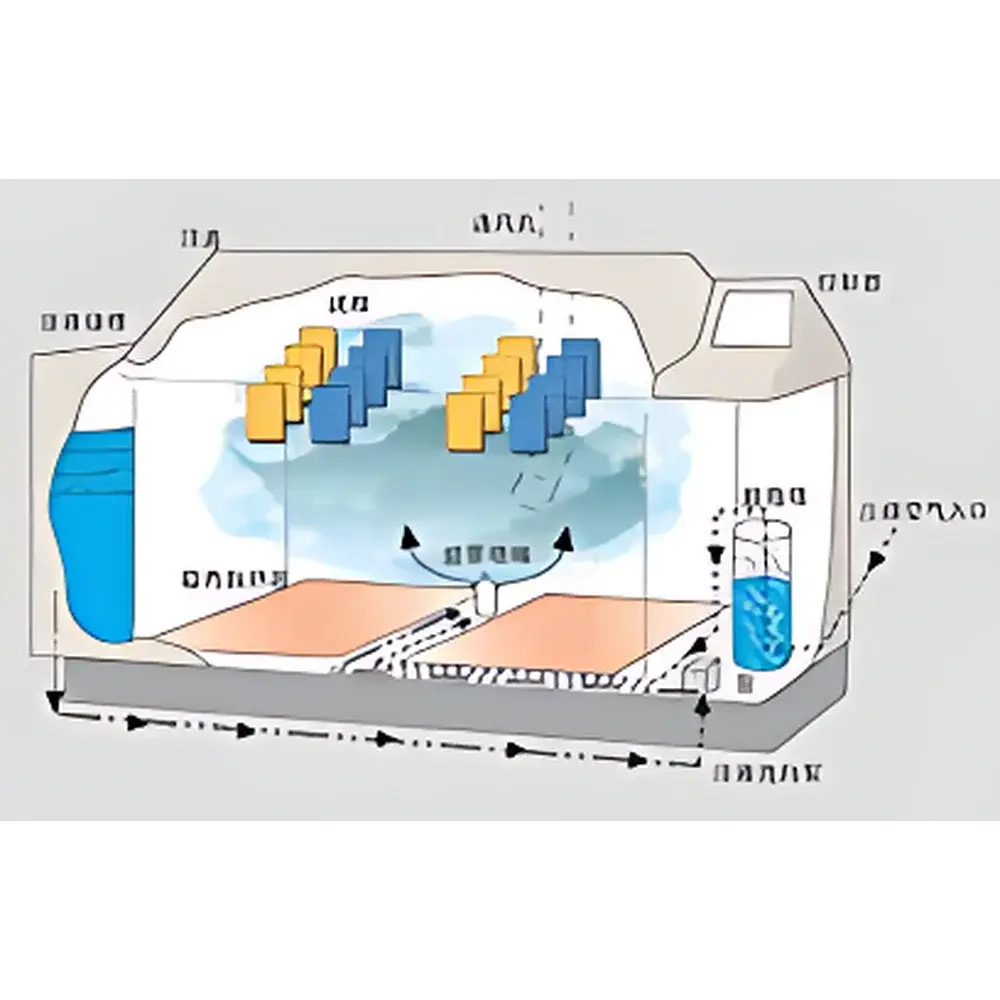
The Q-Lab Q-FOG CRH Cyclic Corrosion Test Chamber is an engineered solution for accelerated environmental corrosion testing under precisely controlled, multi-phase exposure conditions. Unlike conventional salt spray chambers limited to static or single-mode operation, the CRH integrates three distinct exposure modes—salt fog, high-humidity conditioning, and water spray—within a single chamber, enabling fully programmable cyclic sequences that replicate real-world atmospheric degradation mechanisms. Its core innovation lies in the patented air pre-conditioning system, which delivers stable, repeatable relative humidity (RH) control across the full operational range (30–95% RH) without compromising temperature stability or introducing condensation artifacts. This capability satisfies the stringent requirements of modern automotive OEM specifications—including GMW 14872, SAE J2334, Ford CETP 00.00-L-467, and VW PV1210—as well as international standards such as ISO 16701 and ASTM G85 Annex A5 (Prohesion™). The chamber operates exclusively with deionized water to prevent mineral deposition, ensuring long-term sensor integrity and reproducible test outcomes.
Key Features
- Triple-mode exposure control: Salt fog (ASTM B117-compliant), RH-controlled humidification, and programmable water spray—each independently configurable in duration, intensity, and sequence order.
- Air pre-conditioning module with integrated heating/cooling and humidity saturation stages ensures rapid, stable RH transitions without thermal overshoot or chamber wall condensation.
- Self-cleaning ceramic spray nozzles with automated purge cycle minimize downtime and eliminate manual descaling—a known failure point in legacy systems.
- Variable-speed peristaltic pump and precision air-pressure regulation enable independent control of salt solution flow rate and droplet trajectory, delivering consistent deposition uniformity per ISO 9227 Annex B.
- 120 L internal reservoir with particulate filtration, level monitoring, and low-level audible/visual alarm reduces operator intervention and supports uninterrupted 7+ day test cycles.
- Robust stainless-steel construction with reinforced load-bearing floor (544 kg max distributed capacity) accommodates heavy 3D automotive components including wheel hubs, engine blocks, and structural assemblies.
- Intuitive Q-FOG controller with real-time status display, self-diagnostic routines, service reminders, and audit-trail-capable event logging compliant with GLP/GMP documentation practices.
Sample Compatibility & Compliance
The CRH series accommodates standardized flat panels (75 mm × 150 mm), up to 160 specimens in the CRH600-HSC model and 240 in the CRH1100-HSC. Optional fixtures include 20 mm diameter suspension rods for irregular geometries and modular grid racks for oversized parts. All mounting hardware is non-reactive and calibrated for zero galvanic interference. The system meets calibration traceability requirements per ISO/IEC 17025 and supports periodic verification of chamber air temperature and RH sensors using NIST-traceable reference instruments—recommended every six months per Q-Lab’s maintenance protocol. Full compliance documentation—including test method alignment matrices for ASTM, ISO, SAE, and OEM-specific protocols—is available upon request and embedded in the controller firmware.
Software & Data Management
The embedded Q-FOG controller runs deterministic real-time firmware with password-protected user levels (Operator, Technician, Administrator). Test programs are structured as hierarchical cycles comprising up to 99 steps, each specifying mode type, setpoint values, ramp rates, dwell times, and inter-step transitions. All parameter changes, alarm events, and system diagnostics are timestamped and stored locally with optional USB export. For regulated environments, the controller supports 21 CFR Part 11-compliant electronic signatures, audit trails, and data integrity safeguards—including write-protection of historical logs and tamper-evident file hashing. Remote monitoring via Ethernet (Modbus TCP) enables integration into centralized laboratory information management systems (LIMS) without proprietary middleware.
Applications
The CRH is routinely deployed in Tier 1 automotive supplier QC labs, OEM validation centers, and independent materials testing facilities for evaluating coating adhesion, galvanized steel performance, aluminum alloy pitting resistance, and multi-layer paint system durability. Its ability to emulate coastal/marine, industrial, and cyclic urban exposure profiles makes it suitable for validating corrosion inhibitors, sealants, and cathodic protection systems. Academic research applications include fundamental studies on chloride ion diffusion kinetics in polymer electrolytes and electrochemical impedance spectroscopy (EIS) sample preconditioning. The water spray function specifically addresses Ford’s “Wet/Dry” cycling requirements and SAE J2334’s aggressive wetting phase, where high-volume, low-velocity impingement accelerates underfilm corrosion propagation.
FAQ
What distinguishes the CRH from standard salt spray chambers?
The CRH introduces active RH control via air pre-conditioning—not achievable in basic ASTM B117 chambers—and adds programmable water spray, enabling true multi-stress cyclic testing rather than static fog exposure.
Is deionized water mandatory for operation?
Yes. DI water (resistivity ≥1 MΩ·cm) is required for both humidification and salt solution preparation to prevent scaling, sensor drift, and inconsistent deposition rates.
How often must temperature and RH sensors be verified?
Q-Lab recommends biannual verification using traceable reference instruments; calibration records should be retained for ISO/IEC 17025 or IATF 16949 audits.
Can the CRH perform Prohesion™ testing?
Yes. The CRH600-HSC and CRH1100-HSC models natively support ASTM G85 Annex A5 (Prohesion™) through synchronized alternating cycles of acidified salt fog and dry heat.
What maintenance is required for the spray nozzles?
The self-cleaning function activates automatically during idle periods; additionally, the F-8064-K nozzle cleaning kit (including acetic acid solution and spare nozzles) is supplied for annual preventive maintenance.
Related Products



