
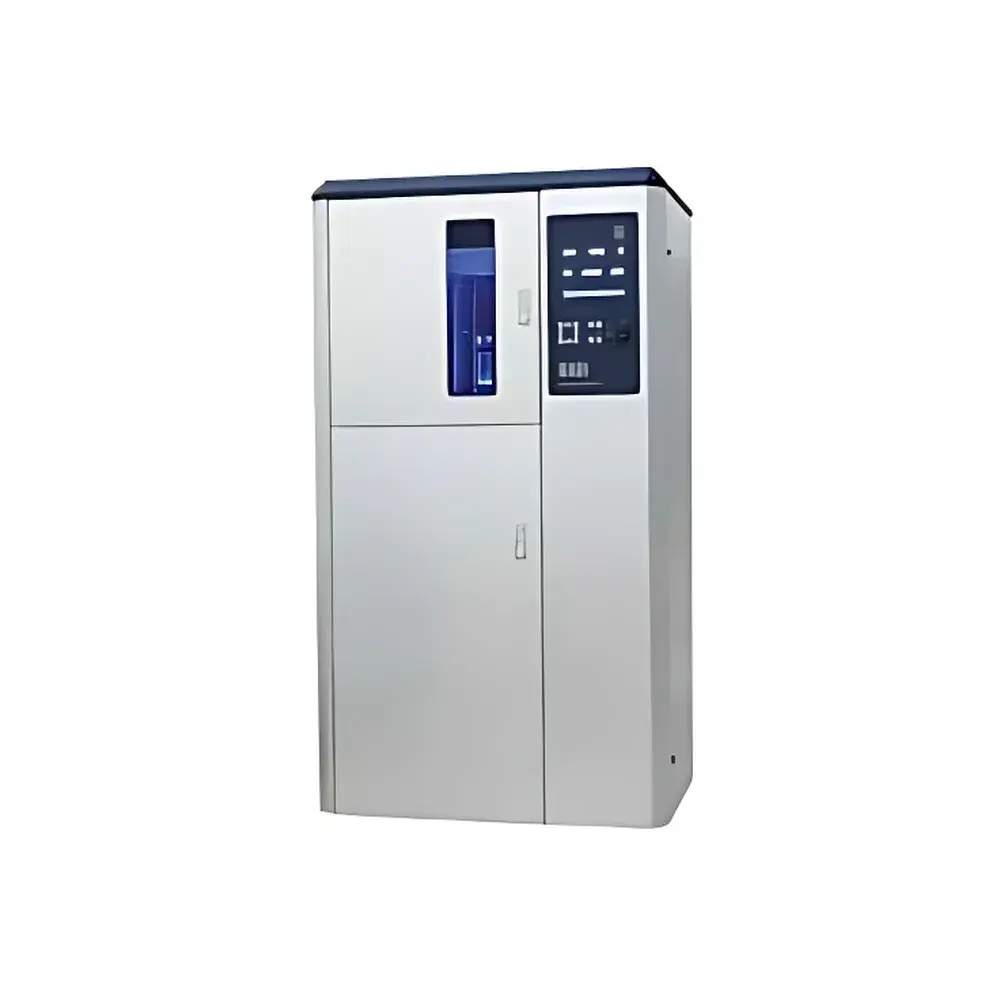
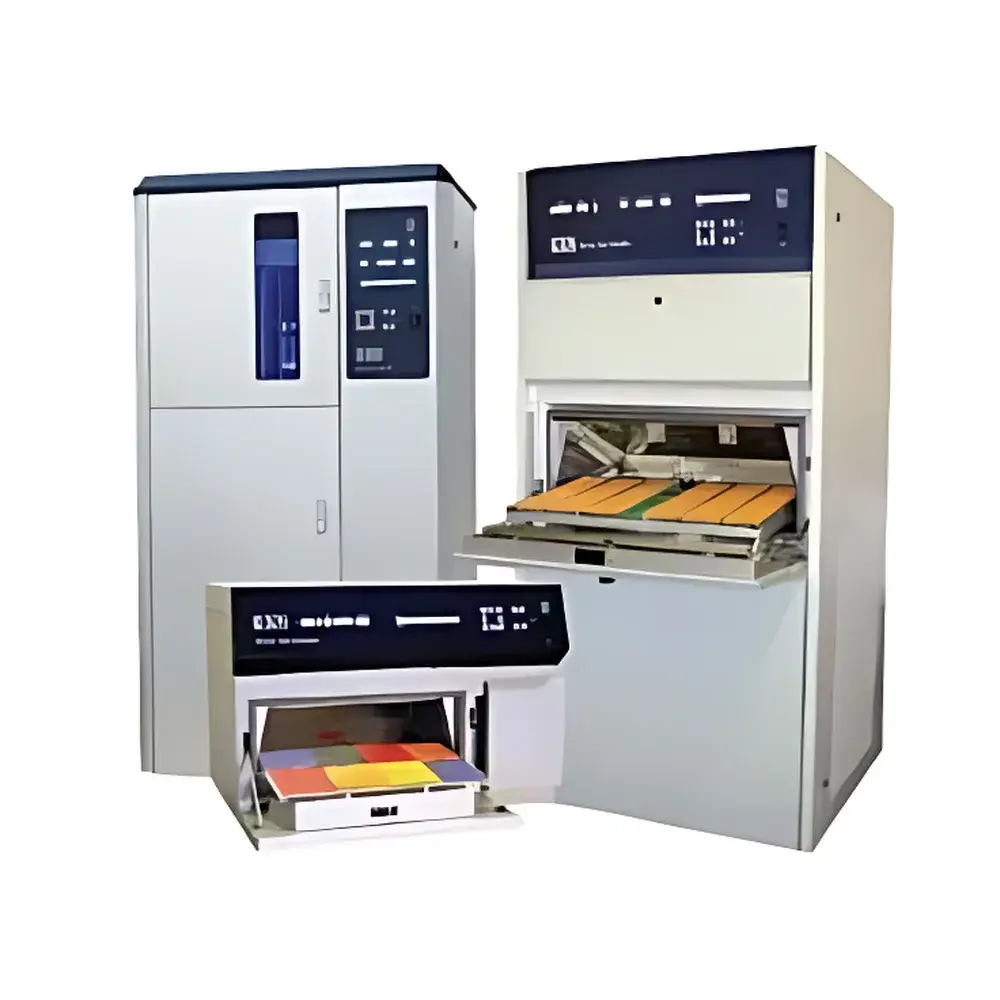
Q-LAB Q-SUN Xe-2 Xenon Arc Weathering Tester for Color Fastness Testing
| Brand | Q-LAB |
|---|---|
| Origin | USA |
| Model | Q-SUN Xe-2 |
| Lamp | 1 × 1800 W air-cooled xenon arc lamp |
| Sample capacity | 31 specimens (46 mm × 122 mm) |
| Sample orientation | vertical (90° to horizontal) |
| Irradiance control points | 340 nm, 420 nm, or TUV (300–400 nm) |
| Black panel temperature range | 25–105 °C |
| Relative humidity range | 20–95 % RH |
| Dimensions (W×H×D) | 91 × 166 × 69 cm |
| Weight | 172 kg |
| Power supply | 220 V, 50/60 Hz |
| Optional features | humidity control, water spray system, SOLAR EYE irradiance feedback control |
Overview
The Q-LAB Q-SUN Xe-2 Xenon Arc Weathering Tester for Color Fastness Testing is an engineered solution for accelerated lightfastness and weathering evaluation of textiles, dyes, automotive interior materials, and other light-sensitive substrates. It employs a single 1800 W air-cooled xenon arc lamp to reproduce the full solar spectrum—from UV through visible to near-infrared—enabling physiologically and photochemically relevant simulation of natural sunlight exposure. Unlike narrowband UV sources, the xenon arc lamp delivers continuous spectral output that closely matches terrestrial solar irradiance when paired with appropriate optical filters (e.g., Daylight, Window Glass, or Extended UV). This spectral fidelity is essential for accurate prediction of color change (ΔE), fading, chalking, cracking, and loss of tensile strength in textile and polymer systems per ISO 105-B02, AATCC TM16, ASTM D4329, and GB/T 8427 standards. The instrument operates on a continuous 24-hour irradiation cycle at controlled irradiance levels—significantly accelerating degradation kinetics compared to outdoor exposure, where peak solar intensity occurs only briefly each day.
Key Features
- Single-air-cooled xenon lamp architecture: Lower operational cost, simplified maintenance, and reduced infrastructure requirements versus water-cooled systems; typical lamp life ≈ 1500 hours.
- SOLAR EYE irradiance feedback control: Real-time monitoring and dynamic regulation of spectral irradiance at user-selectable wavelengths (340 nm, 420 nm, or TUV band), ensuring test repeatability and compliance with method-defined exposure dosages.
- Integrated environmental control: Independent regulation of black panel temperature (25–105 °C), chamber air temperature, and relative humidity (20–95 % RH) using pure water—critical for simulating diurnal thermal and hygric stress cycles.
- Optional water spray function: Front-mounted nozzles deliver calibrated wetting during both light and dark phases, replicating dew, rain, and condensation effects per ISO 20490 and AATCC TM192.
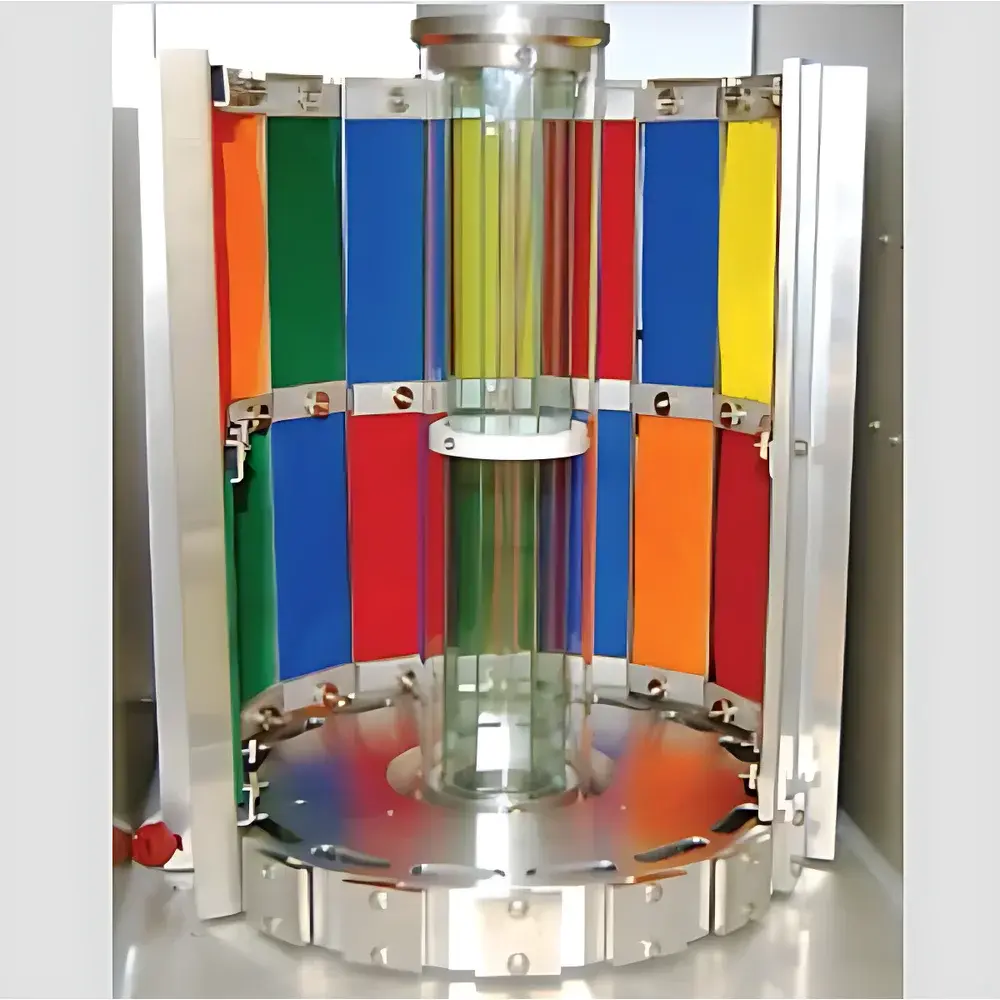
- Vertical drum-style sample holder: Accommodates 31 specimens (46 mm × 122 mm) at 90° orientation—optimized for textile strip mounting and alignment with ISO/AATCC specimen geometry requirements.
- Ethernet-enabled controller: Supports remote monitoring, automated data logging, audit-trail-capable operation logs, and export of exposure parameters (irradiance, temperature, RH, elapsed time) in CSV or PDF format for GLP/GMP documentation.
Sample Compatibility & Compliance
The Q-SUN Xe-2 is validated for use with standard textile substrates—including woven/knitted fabrics, yarns, printed media, and dyed leathers—as well as non-textile materials such as automotive trim, coatings, and plastics requiring photostability assessment. Its optical configuration satisfies mandatory spectral power distribution (SPD) criteria defined in ISO 105-B02 (xenon arc method), AATCC TM16-2023 (Option 3), ASTM G155, and JIS L 0842. Filter selection (Daylight-Q/B, Window Glass-Q/B, or UV-extended) enables compliance with region- and application-specific protocols—for instance, automotive interior testing typically requires Window Glass filtration to simulate dashboard exposure behind laminated glass. All operational parameters—including irradiance setpoint, temperature ramp profiles, and humidity dwell times—are programmable and traceable, supporting regulatory submissions under FDA 21 CFR Part 11 (when paired with compliant software), ISO/IEC 17025 accredited lab workflows, and internal quality assurance audits.
Software & Data Management
The embedded controller firmware includes self-diagnostic routines that continuously monitor lamp output stability, sensor integrity, cooling airflow, and water purity status—triggering context-aware alerts (e.g., “Lamp aging >1200 h”, “RH sensor drift detected”) and initiating safe shutdown if critical thresholds are exceeded. Test condition history is stored locally with timestamped entries for irradiance, black panel temperature, chamber RH, and cumulative radiant exposure (kJ/m²). Via Ethernet connectivity, users can deploy Q-LAB’s optional “Virtual Bar Chart” software to remotely configure test sequences, visualize real-time parameter trends, and generate calibration-ready reports. All logged data adhere to ALCOA+ principles (Attributable, Legible, Contemporaneous, Original, Accurate, Complete, Consistent, Enduring, Available) for regulated environments. Sensor calibration—performed annually using NIST-traceable irradiance and black panel temperature calibrators—is fully documented within the system’s service log.
Applications
- Textile color fastness to light (ISO 105-B02, AATCC TM16, GB/T 8427)
- Fading resistance of automotive interior trims and seat fabrics (SAE J2412, ISO 11341)
- Photostability screening of organic pigments and dye formulations
- UV-induced degradation studies of polymeric films, adhesives, and elastomers
- Validation of UV-stabilized packaging materials for pharmaceutical and food applications
- Accelerated weathering of coated substrates per ASTM D4587 (xenon arc version)
FAQ
What standards does the Q-SUN Xe-2 support for textile color fastness testing?
It complies with ISO 105-B02, AATCC TM16 (Options 1, 2, and 3), GB/T 8427, and JIS L 0842 when configured with appropriate filters and specimen holders.
Is distilled or deionized water required for humidity and spray functions?
Yes—only high-purity water (conductivity ≤ 5 µS/cm) must be used to prevent mineral buildup in humidifiers and nozzles, ensuring long-term reliability and avoiding spectral interference from deposits.
How often must the xenon lamp and irradiance sensor be calibrated?
The lamp should be replaced after ~1500 hours of operation; the SOLAR EYE sensor requires annual calibration using a NIST-traceable irradiance meter, and its associated black panel temperature sensor must also be recalibrated annually.
Can the Q-SUN Xe-2 operate unattended for extended test durations?
Yes—its robust architecture, redundant safety interlocks, and Ethernet-based remote supervision enable 7×24 operation in accredited laboratories without manual intervention.
What is the maximum allowable specimen thickness for the vertical drum holder?
Specimens up to 3 mm thick may be mounted without impeding airflow or irradiance uniformity across the exposure plane; thicker samples require validation per ISO 105-B02 Annex A.




