
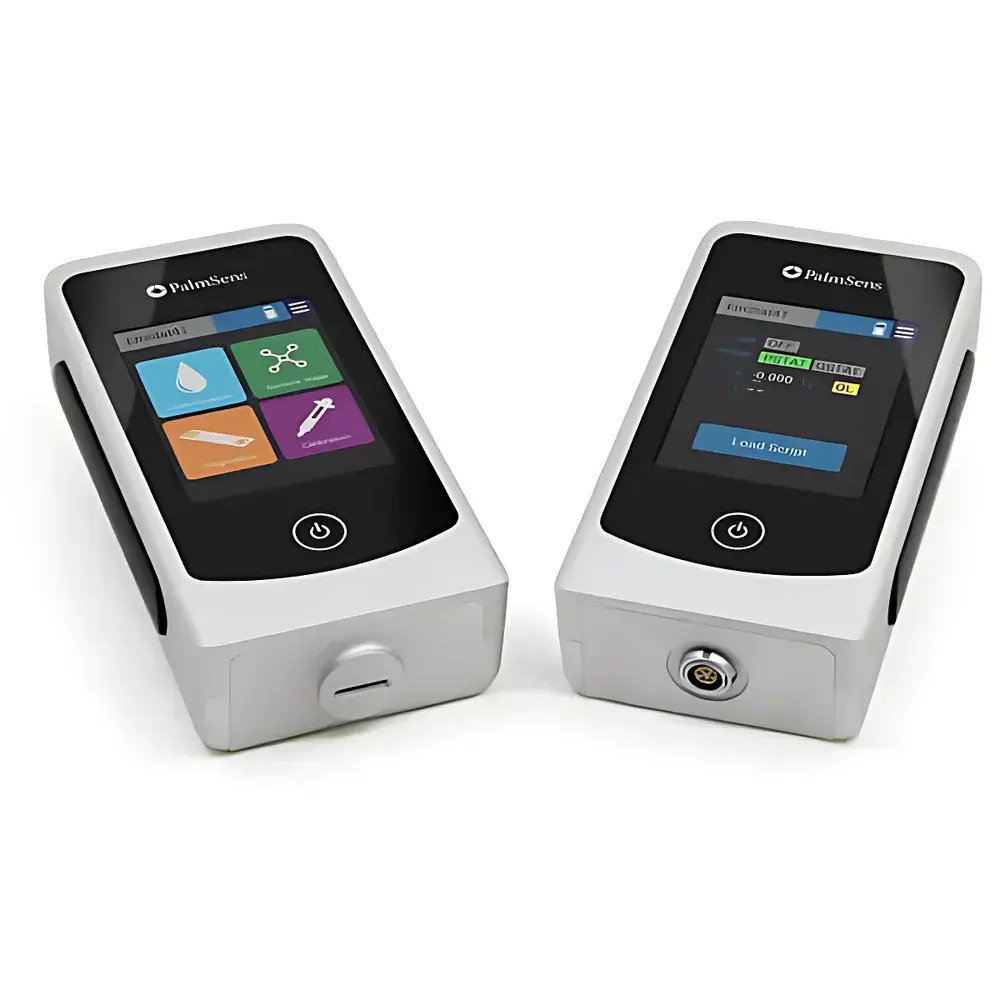
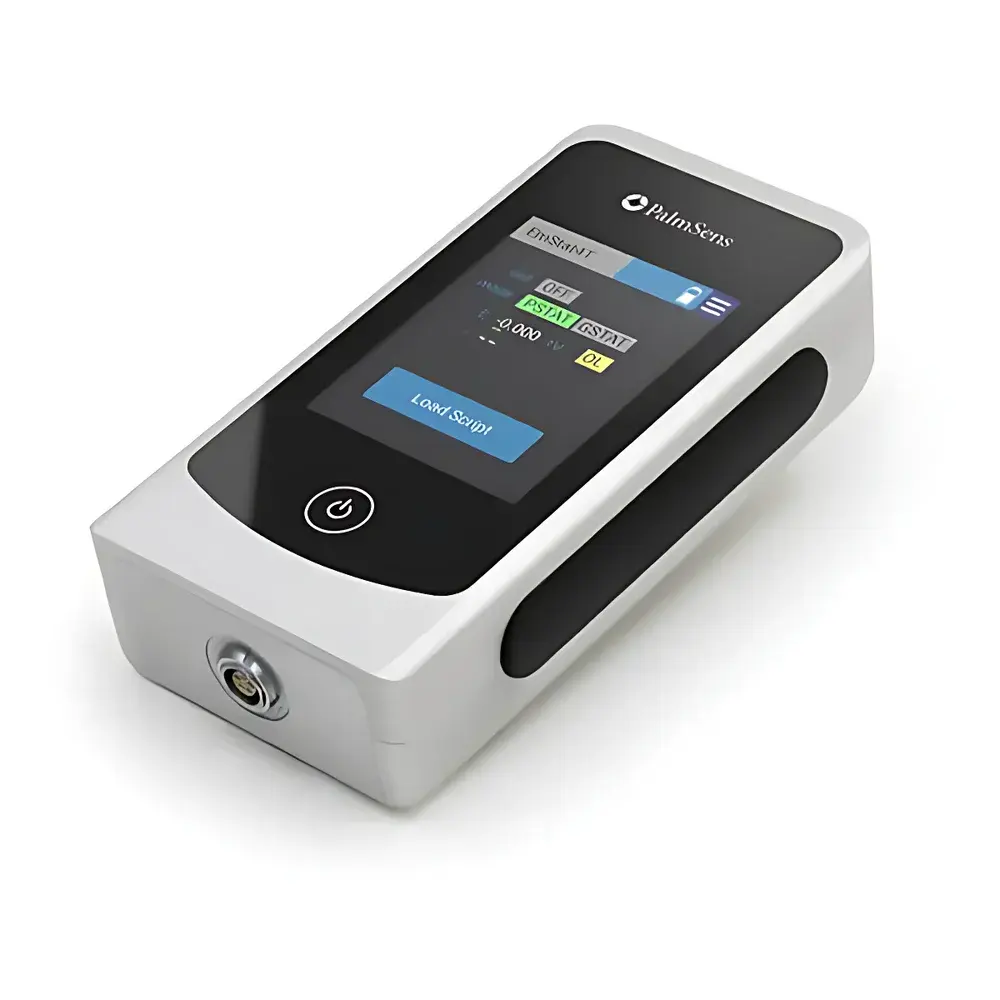
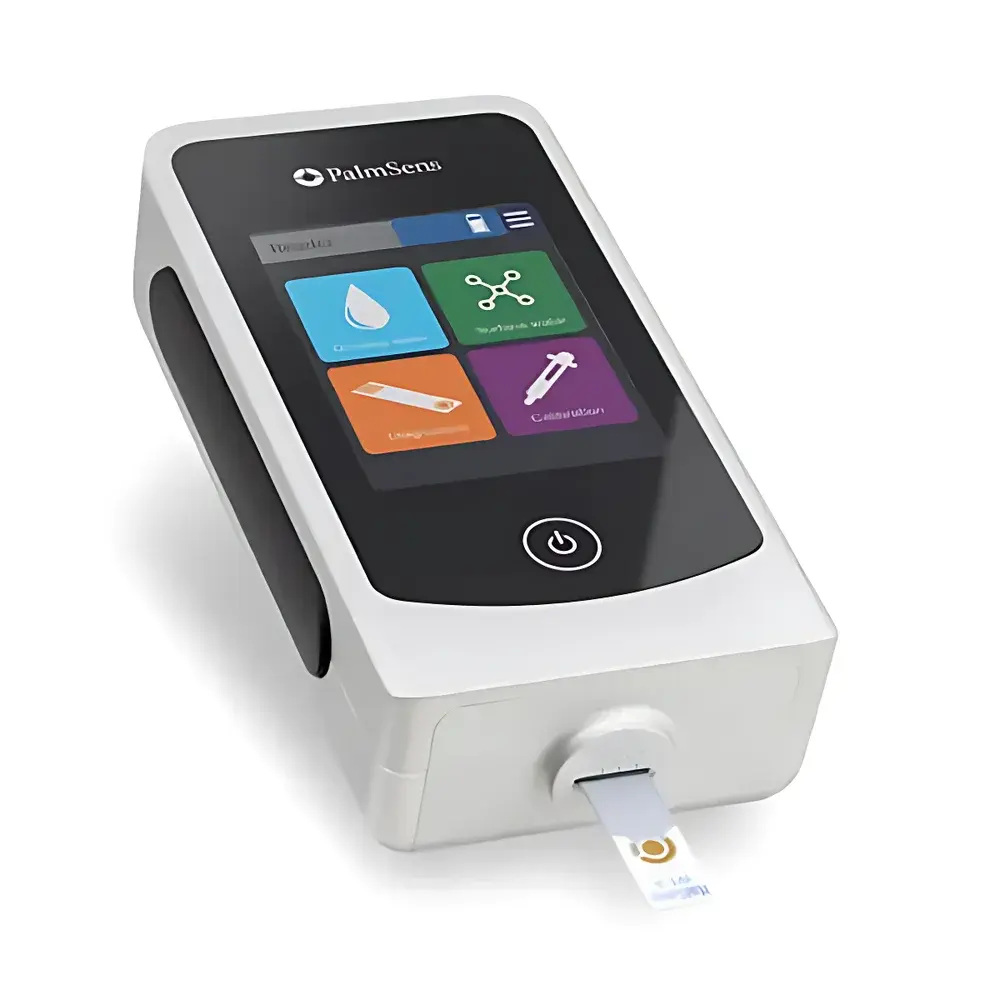
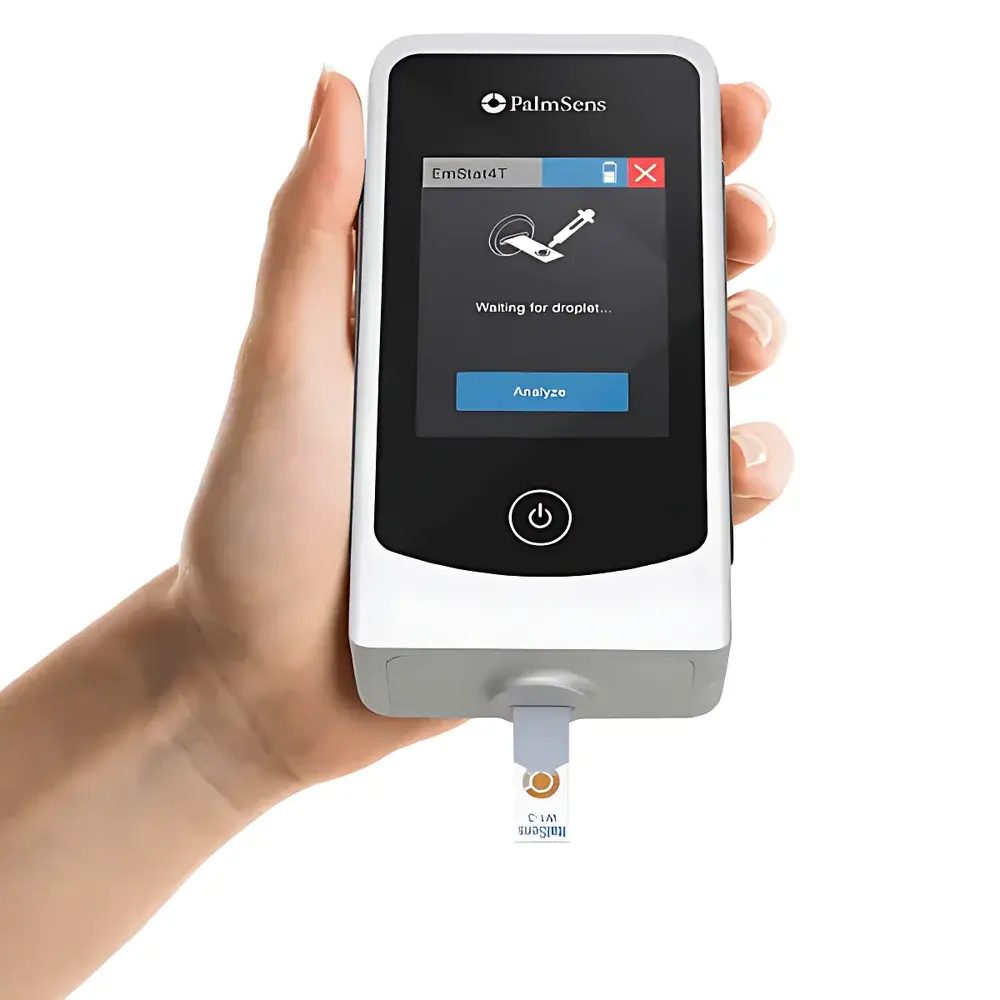
PalmSens EmStat4T Touchscreen Portable Electrochemical Workstation
| Brand | PalmSens |
|---|---|
| Origin | Netherlands |
| Model | EmStat4T |
| Instrument Type | Portable Electrochemical Workstation |
| Channel Count | Single-Channel |
| Current Range | ±30 mA |
| Current Accuracy | ≤ 0.2% |
| Potential Accuracy | ≤ 0.2% |
| Potentiostatic Range | ±3 V |
| EIS Frequency Range | 10 µHz to 200 kHz |
Overview
The PalmSens EmStat4T is a compact, touchscreen-enabled portable electrochemical workstation engineered for high-fidelity electrochemical measurements in resource-constrained or field-deployable environments. Based on potentiostatic/galvanostatic control architecture compliant with classical three-electrode electrochemistry (working, reference, and counter electrodes), the EmStat4T delivers laboratory-grade performance in a handheld form factor. Its core design prioritizes operational autonomy—enabling full method execution, real-time data visualization, and on-device analysis without external computing hardware. This makes it particularly suited for point-of-care testing (POCT), environmental field monitoring (e.g., heavy metal detection in water, corrosion rate assessment on infrastructure), and rapid biosensor validation during R&D or quality control workflows. The instrument supports both traditional PC-based operation via Windows PSTrace software and fully standalone touchscreen operation using guided application wizards—eliminating dependency on laptops, tablets, or smartphones during measurement.
Key Features
- Integrated 4.3-inch capacitive touchscreen with intuitive graphical user interface for direct instrument control and real-time plot rendering
- Single-channel potentiostat/galvanostat with ±3 V potential range and ±5 V compliance voltage
- Eight-range current measurement system (1 nA to 10 mA) plus extended ±30 mA high-current mode for demanding applications such as battery cycling or corrosion studies
- Electrochemical Impedance Spectroscopy (EIS) capability spanning 10 µHz to 200 kHz—fully supported in both PC-connected and standalone modes
- Modular electrode interface supporting two interchangeable connection standards: SNS (banana-jack compatible, 2 mm pitch) and SPE (screen-printed electrode module with 2.54 mm pin spacing, accommodating substrates 0.1–0.8 mm thick and ≤10 mm wide)
- MethodSCRIPT visual programming environment integrated into PSTrace software—enabling users to construct custom electrochemical protocols without coding knowledge
- Onboard storage for up to 100 preloaded methods and 500 MB of measurement data, with USB-C export capability
Sample Compatibility & Compliance
The EmStat4T accommodates standard three-electrode configurations including conventional lab electrodes (e.g., Pt wire, Ag/AgCl, glassy carbon) as well as disposable screen-printed electrodes (SPEs) widely used in clinical diagnostics and environmental sensing. Its modular electrode interface allows seamless transition between benchtop and field configurations—facilitating GLP-aligned method transfer from development to deployment. While not certified for IVD use under EU IVDR or FDA 510(k), the device meets essential electromagnetic compatibility (EMC) requirements per EN 61326-1 and operates within safety limits defined by IEC 61010-1. Data integrity is maintained through timestamped acquisition, internal calibration traceability, and optional audit-trail logging when used with PSTrace under controlled laboratory conditions compliant with ISO/IEC 17025 guidelines.
Software & Data Management
PSTrace (Windows) serves as the primary desktop interface, providing full access to all electrochemical techniques, advanced curve fitting (e.g., Randles–Sevcik analysis, EIS equivalent circuit modeling), and batch processing tools. PStouch (Android) extends remote monitoring and basic method initiation capabilities to mobile devices. Critically, PSTrace includes the MethodSCRIPT editor—a drag-and-drop environment for building repeatable, parameterized sequences (e.g., multi-step CV followed by DPV quantification). All raw data are stored in open-format .txt and .csv files; binary .pstat files retain metadata including instrument firmware version, calibration history, and user-defined annotations. No proprietary database or cloud dependency is required—ensuring full data sovereignty and compatibility with institutional LIMS or ELN systems.
Applications
- Biosensor development and characterization—including amperometric glucose sensors, DNA hybridization assays, and immunosensors based on redox-labeled antibodies
- Environmental field analysis—trace metal detection (e.g., Pb²⁺, Cd²⁺) via anodic stripping voltammetry (ASV) using mercury-free bismuth-film electrodes
- Corrosion monitoring—electrochemical noise (EN), zero-resistance ammetry (ZRA), and polarization resistance (Rp) measurements on coated steel or aluminum alloys
- Academic teaching labs—introducing fundamental electrochemical concepts with immediate visual feedback and minimal setup overhead
- Quality assurance of electroplating baths—real-time monitoring of metal ion concentration and additive degradation via cyclic voltammetry
FAQ
Does the EmStat4T support ASTM or ISO-standardized test methods?
Yes—common protocols such as ASTM G59 (potentiodynamic polarization), ASTM G102 (electrochemical impedance calculations), and ISO 16773-2 (biosensor performance evaluation) can be implemented using built-in or custom MethodSCRIPT routines.
Can multiple EmStat4T units be synchronized for parallel measurements?
No—each unit operates independently with no hardware-level synchronization interface; however, time-stamped data from multiple devices can be aligned post-acquisition using external GPS or NTP-synchronized PCs.
Is firmware update capability available in standalone mode?
Firmware updates require connection to a Windows PC running PSTrace; no over-the-air or touchscreen-initiated update mechanism is provided.
What is the typical battery life during continuous EIS acquisition?
With default settings and active display, battery endurance is approximately 6 hours; disabling the touchscreen backlight and reducing sampling rate extends runtime to >10 hours.
Are calibration certificates included with shipment?
Factory calibration reports (traceable to NIST standards) are supplied with each unit; optional UKAS-accredited calibration services are available upon request.






