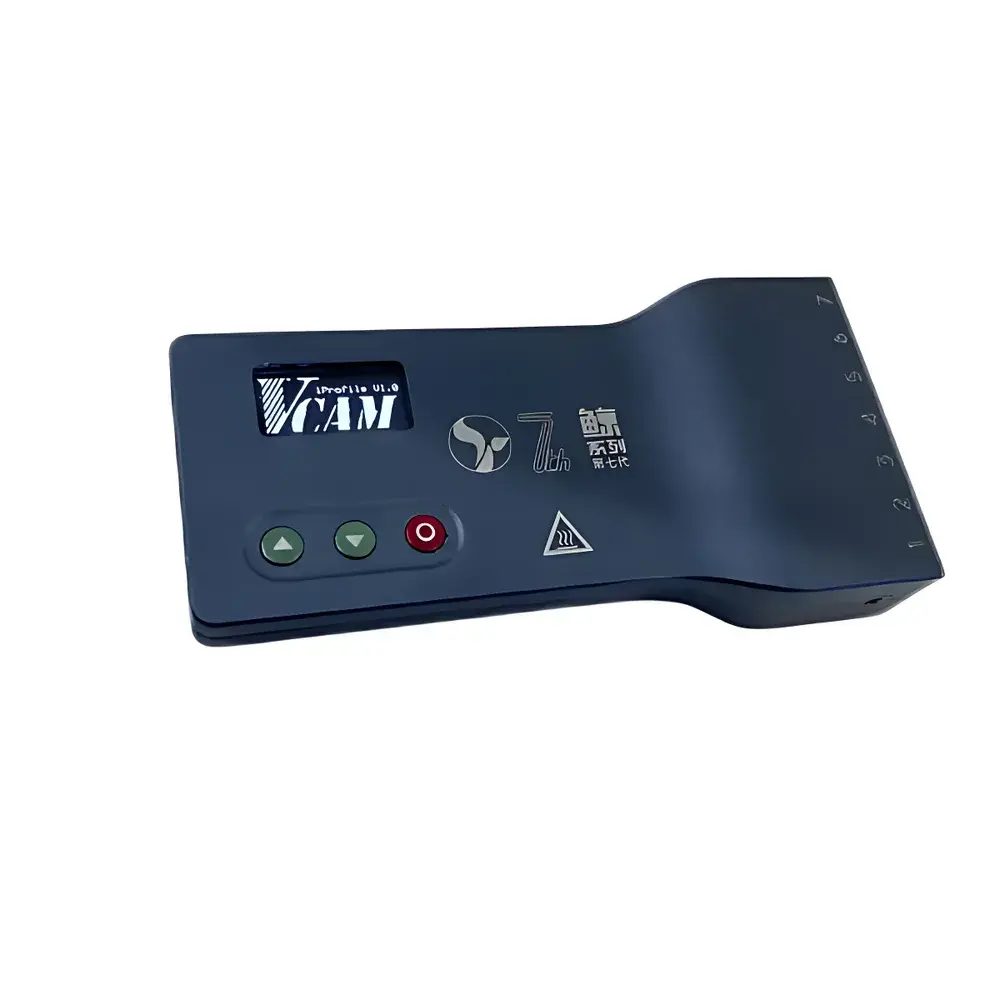
SonTek RiverSurveyor S5/M9 Acoustic Doppler Current Profiler (ADCP)
| Brand | SonTek |
|---|---|
| Origin | USA |
| Model | RiverSurveyor S5/M9 |
| Velocity Range | ±20 m/s |
| Depth Range | 0.2–15 m (S5), 0.2–80 m (M9) |
| Velocity Resolution | 0.001 m/s |
| Velocity Accuracy | ±0.25% of measured value ± 0.002 m/s |
| Cell Size | 0.02–0.5 m (S5), 0.02–4 m (M9) |
| Number of Cells | up to 128 |
| Transducer Configuration | S5 — five transducers (four 3.0 MHz at 25° tilt, one 1.0 MHz vertical) |
| Depth Accuracy | ±1% |
| Temperature Sensor Accuracy | ±0.1 °C, Resolution: 0.01 °C |
| Compass/Tilt Accuracy | Heading ±2°, Roll/Pitch ±1° |
| Internal Memory | 8 GB |
| Operating Voltage | 12–18 V DC |
| Battery Life | 8 h (standard), 4 h (with RTK GPS) |
| Max Output Rate | 2 Hz |
| Internal Sampling Rate | up to 70 Hz |
| Wireless Options | Bluetooth (60 m smartphone / 200 m laptop), Spread-Spectrum Radio (2000 m) |
| GPS Accuracy | GGA/VTG — 1 m |
| Operating Temperature | –5 to 45 °C |
| Storage Temperature | –10 to 70 °C |
| S5 Dimensions | Ø6.1 cm (top), Ø12.7 cm (bottom), H25.4 cm |
| Weight | 1.1 kg (air), –0.3 kg (water) |
| M9 Dimensions | Ø12.8 cm, H25.2 cm |
| Weight | 2.3 kg (air), –0.6 kg (water) |
Overview
The SonTek RiverSurveyor S5/M9 Acoustic Doppler Current Profiler (ADCP) is an engineered solution for high-precision, field-deployable river discharge measurement. Based on the physical principle of acoustic Doppler shift, the instrument transmits ultrasonic pulses into the water column and analyzes frequency shifts in backscattered signals from suspended particles to compute three-dimensional velocity profiles across depth. Unlike single-point current meters, the S5/M9 resolves flow structure with configurable cell layers—up to 128 discrete depth bins—enabling rigorous integration of velocity-area methods per ISO 748 and ASTM D5766 standards. Its dual-frequency architecture (1.0 MHz and 3.0 MHz for S5; 0.5 MHz, 1.0 MHz, and 3.0 MHz for M9) enables adaptive operation: higher frequencies support fine-resolution profiling in shallow, low-turbidity environments (<5 m depth), while lower frequencies penetrate deeper, sediment-laden flows up to 80 m. The integrated vertical beam provides direct, independent water depth and bed profile acquisition—eliminating reliance on external echosounders or manual sounding.
Key Features
- Multi-frequency transducer array with automatic mode switching: dynamically selects optimal frequency, cell size, pulse length, and sampling strategy based on real-time water depth, signal-to-noise ratio, and bottom tracking status.
- Dual-platform design: S5 optimized for wading, small-boat, and UAV-mounted deployment in low-flow, shallow rivers (≤15 m depth); M9 engineered for large-river, high-velocity, and deep-channel applications (≤80 m depth) with enhanced bottom tracking robustness.
- Onboard microprocessor performs full discharge computation—including cross-sectional area integration, velocity weighting, and uncertainty propagation—in real time, storing complete raw and processed datasets internally (8 GB flash memory) without dependency on external PCs or continuous telemetry.
- Integrated inertial navigation suite: solid-state compass and dual-axis tilt sensor (±1° roll/pitch, ±2° heading) enable motion correction for vessel-based measurements, meeting USGS TWRI 3-A1 and ISO 11827 requirements for moving-boat ADCP surveys.
- RTK GPS-ready architecture: supports fully integrated centimeter-level positioning (0.03 m horizontal accuracy) via NTRIP or radio-link corrections, enabling georeferenced discharge mapping compliant with GIS-based hydrologic modeling workflows and FEMA floodplain delineation protocols.
- Flexible communication stack: RS232 serial interface for legacy GPS and auxiliary sensors; Bluetooth 5.0 (200 m range to laptop, 60 m to mobile); optional spread-spectrum radio (2 km line-of-sight) for remote base-station telemetry in isolated watersheds.
Sample Compatibility & Compliance
The RiverSurveyor S5/M9 is validated for use in natural open-channel flows containing naturally occurring acoustic scatterers (e.g., silt, clay, plankton, air bubbles). It operates reliably across turbidity ranges typical of gravel-bed rivers, glacial meltwater, and regulated reservoir outflows. Device firmware and data processing algorithms conform to ISO/IEC 17025 metrological traceability frameworks when used with calibrated reference GPS and temperature sensors. Raw velocity and depth data meet USGS National Streamflow Information Program (NSIP) Level 2 validation criteria and support GLP-compliant audit trails when paired with RiverSurveyor Live software’s encrypted project logs and user-authenticated session metadata. All hardware components comply with FCC Part 15 Subpart C (unintentional radiator) and IEC 60529 IP68 ingress protection ratings for continuous submersion.
Software & Data Management
RiverSurveyor Live is a platform-independent desktop and mobile application (Windows/macOS/iOS/Android) supporting concurrent multi-file visualization, spectral quality assessment, and discharge uncertainty quantification per ISO 748 Annex B. It implements FDA 21 CFR Part 11–compliant electronic signatures, role-based access control, and immutable audit logs for all data export, calibration update, and configuration change events. Processed datasets export natively to CSV, GeoJSON, and USGS-compatible .adcp formats; raw PD0 binary files retain full beam geometry, correlation statistics, and echo intensity for third-party reprocessing (e.g., using WinRiver II or Python-based PyADCP libraries). Firmware updates are delivered via signed OTA packages with SHA-256 verification to ensure integrity and authenticity.
Applications
- Routine stream gaging under USGS, Environment Agency (UK), and BfG (Germany) operational protocols.
- Flood response hydrology: rapid deployment for emergency discharge estimation during high-flow events.
- Sediment transport studies requiring synchronized velocity–turbidity–depth time series.
- Regulatory compliance monitoring for NPDES permits, hydropower bypass flows, and ecological flow assessments.
- Calibration and validation of 2D/3D hydraulic models (e.g., HEC-RAS, TELEMAC, Delft3D).
- Long-term watershed-scale water balance studies integrating with GNSS meteorological networks and soil moisture sensor arrays.
FAQ
What distinguishes the S5 from the M9 model in practice?
The S5 uses a compact 5-transducer array optimized for shallow-water efficiency and portability; the M9 employs a 9-transducer configuration with extended low-frequency capability (0.5 MHz) and enhanced bottom-lock stability in deep, high-velocity channels—making it suitable for large-river gauging where signal penetration and motion compensation are critical.
Can the RiverSurveyor operate without GPS or bottom tracking?
Yes—when configured in “static” or “moored” mode, the device records raw velocity profiles and depth data independently; however, discharge computation requires either bottom-tracking-derived boat velocity or externally supplied position/heading data.
Is firmware upgrade supported in-field?
Yes—firmware updates are performed via USB or Bluetooth using RiverSurveyor Live; all updates include cryptographic signature verification and rollback capability to preserve measurement continuity during field campaigns.
How is measurement uncertainty quantified?
RiverSurveyor Live applies ISO 748–based uncertainty propagation, incorporating instrument-specific error terms (velocity accuracy, depth accuracy, heading error, cell size uncertainty) and user-input parameters (cross-section survey precision, number of transects) to generate total discharge uncertainty at 95% confidence.
Does the system support integration with SCADA or telemetry infrastructure?
Yes—via optional spread-spectrum radio or cellular modem modules, the S5/M9 can transmit summary discharge metrics (Q, A, Vmean) in real time using Modbus TCP or custom ASCII protocols compatible with industry-standard supervisory control systems.