
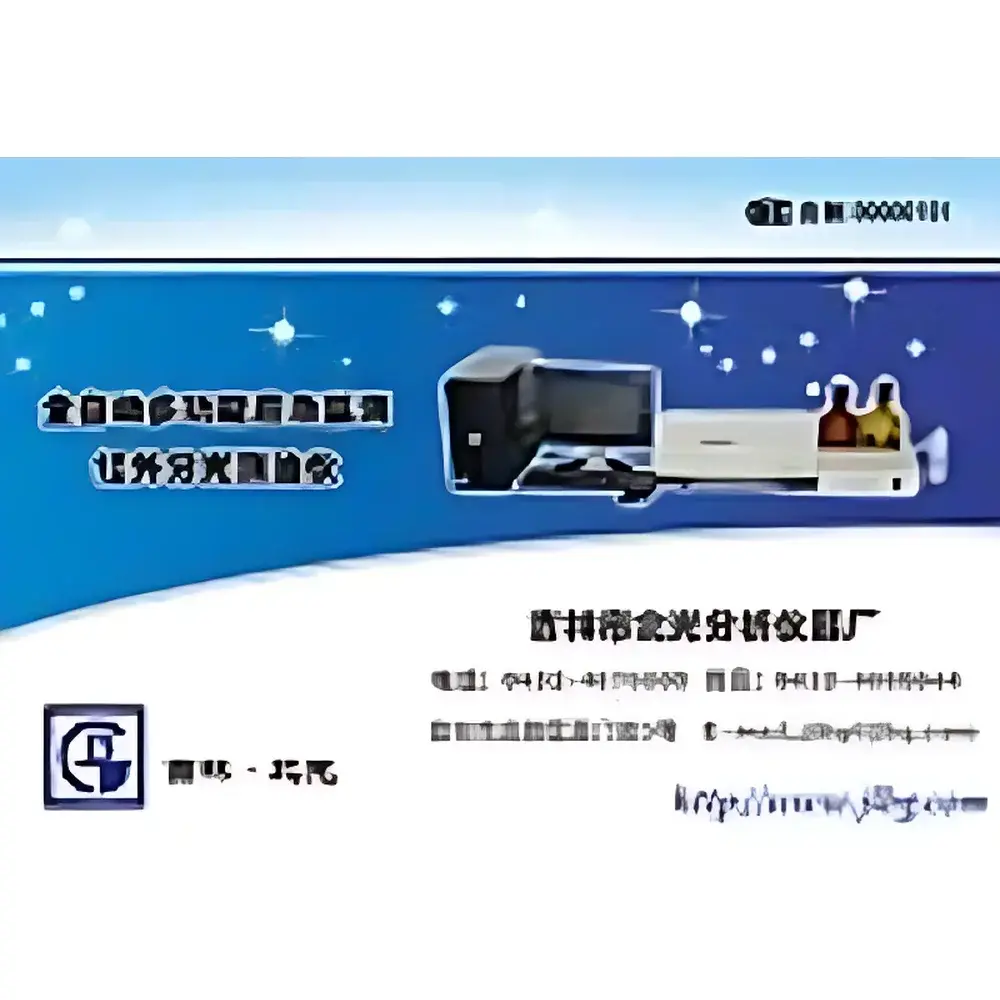
Beiguang JDS-Q10U Fully Automated Multi-Functional Infrared Spectrophotometric Oil Analyzer
| Brand | Beiguang |
|---|---|
| Origin | Jilin, China |
| Model | JDS-Q10U |
| Instrument Type | Laboratory-Based Oil Content Analyzer |
| Wavenumber Range | 3400–2400 cm⁻¹ |
| Absorbance Range | 0.0000–1.0000 AU (Transmittance: 10–100% T) |
| Measurement Range | 0.02–100 mg/L (oil in water) |
| Detection Limit | ≤1 mg/L |
| Linearity | r > 0.999 |
| Repeatability | RSD < 5% (for 30–50 mg/L samples) |
| Analysis Time | 2 min per sample |
| Sample Volume | 10–100 mL |
| Power Supply | 220 VAC ±10%, 50 Hz, 70 VA |
| Controller Dimensions | 300 × 200 × 80 mm (W×D×H), Weight: 2 kg |
| Main Unit Dimensions | 500 × 350 × 125 mm (W×D×H), Weight: 16 kg |
Overview
The Beiguang JDS-Q10U Fully Automated Multi-Functional Infrared Spectrophotometric Oil Analyzer is a laboratory-grade instrument engineered for precise, trace-level quantification of total petroleum hydrocarbons (TPH) in aqueous environmental samples. It operates on the principle of non-dispersive infrared (NDIR) absorption spectroscopy at specific C–H stretching vibrational bands—primarily within the 3400–2400 cm⁻¹ spectral window—where aliphatic and aromatic hydrocarbon moieties exhibit strong, characteristic absorbance. Unlike conventional liquid–liquid extraction methods requiring direct handling of hazardous solvents, the JDS-Q10U implements a sealed, contactless solvent delivery and measurement architecture. This eliminates physical contact between the aqueous sample and carbon tetrachloride (CCl₄), thereby preventing emulsification, operator exposure, and residual solvent discharge—fully aligning with the Montreal Protocol’s phase-out schedule for ozone-depleting substances, including CCl₄, effective since 2010.
Key Features
- Two operational modes: single-wavelength and triple-wavelength non-dispersive IR measurement—enabling compensation for interferences such as turbidity, suspended solids, and background organic absorbance;
- Stabilized broadband infrared source with extended lifetime and thermal drift minimization, ensuring long-term photometric stability (±0.001 AU over 8 hours);
- Fully automated analytical sequence—including programmable sample aspiration, solvent metering, cell rinsing, optical path conditioning, and spectral acquisition—executed without manual intervention;
- USB 2.0 interface for real-time data streaming, firmware updates, and integration with LIMS or centralized lab informatics platforms;
- No solvent vapor release or aqueous-phase CCl₄ carryover: post-analysis effluent contains zero detectable CCl₄, satisfying zero-emission requirements under ISO 14001-compliant environmental management systems;
- Robust mechanical architecture with corrosion-resistant fluidic pathways and sealed optical chamber, optimized for unattended operation in municipal, industrial, and regulatory testing laboratories.
Sample Compatibility & Compliance
The JDS-Q10U is validated for use with surface water, groundwater, wastewater effluents, and leachate samples per standard regulatory frameworks including EPA Method 1664 (revision B), ISO 9377-2:2000 (Water quality — Determination of hydrocarbon oil index — Part 2: Infrared spectrometric method), and China’s HJ 637-2018 standard. Its contactless design ensures compatibility with high-turbidity or surfactant-laden matrices that commonly induce CCl₄ emulsification in traditional extraction workflows. The instrument meets functional safety requirements per IEC 61010-1 for laboratory electrical equipment and supports audit-ready operation under GLP and ISO/IEC 17025 environments through timestamped, user-logged event records and calibration traceability to NIST-traceable reference oils.
Software & Data Management
Bundled PC-based control software provides intuitive workflow configuration, real-time spectral visualization, automatic baseline correction, and multi-point calibration curve generation with forced-zero intercept. All measurement data—including raw absorbance values, calculated concentrations, QC flag status, and system diagnostic logs—are stored in encrypted SQLite databases compliant with ALCOA+ principles (Attributable, Legible, Contemporaneous, Original, Accurate, Complete, Consistent, Enduring, Available). Audit trails record user logins, method modifications, calibration events, and result approvals—supporting FDA 21 CFR Part 11 compliance when deployed with electronic signature modules and role-based access controls.
Applications
- Regulatory monitoring of petroleum hydrocarbons in drinking water sources and receiving waters;
- Compliance verification for industrial discharge permits (e.g., NPDES, EU Industrial Emissions Directive);
- Leak detection and plume delineation in soil and groundwater remediation projects;
- Process water quality assurance in petrochemical, refinery, and offshore platform operations;
- Method validation and reference analysis in certified environmental testing laboratories accredited to ISO/IEC 17025.
FAQ
Does the JDS-Q10U require certified reference standards for calibration?
Yes—calibration must be performed using NIST-traceable or equivalent hydrocarbon oil standards (e.g., mineral oil in CCl₄), prepared gravimetrically at concentrations spanning the 0.02–100 mg/L range.
Can the instrument analyze seawater or brine samples?
It is compatible with saline matrices up to 3.5% NaCl; however, high salinity may necessitate matrix-matched calibration and optional filtration to prevent particulate deposition in flow cells.
Is CCl₄ the only solvent supported?
The system is optimized for CCl₄ due to its spectral transparency and regulatory acceptance; alternative solvents (e.g., cyclohexane) are not supported without hardware and algorithm recalibration.
What maintenance intervals are recommended?
Optical alignment verification every 6 months; fluidic path cleaning after 200 analyses; annual performance qualification per ISO/IEC 17025 Section 6.4.10.
How is measurement uncertainty estimated?
Combined standard uncertainty is derived per GUM (JCGM 100:2008) incorporating repeatability (RSD 0.999), volumetric delivery tolerance (±0.5%), and detector linearity deviation (<±0.3% AU).







