
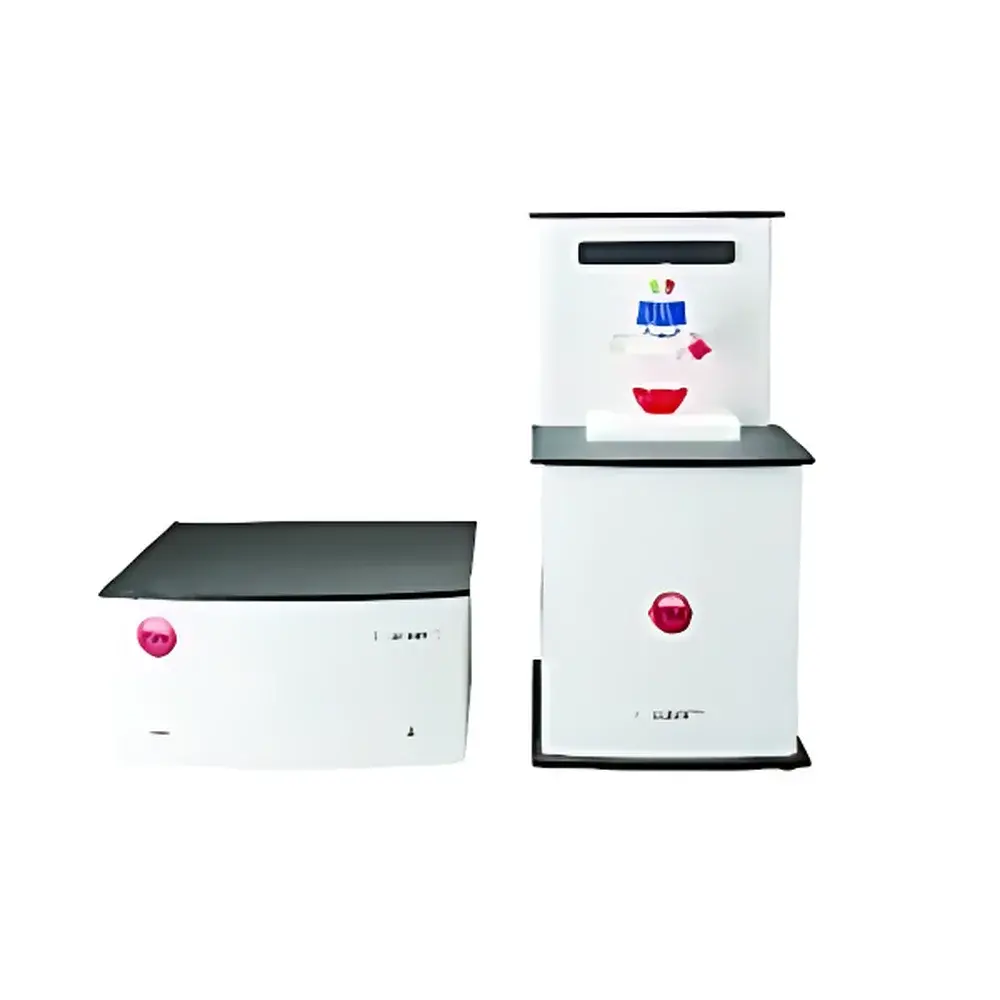
PSS AccuSizer 780 A7000 AD Automated Particle Counter and Sizer
| Brand | PSS (Particle Sizing Systems) |
|---|---|
| Origin | USA |
| Model | AccuSizer 780 A7000 AD |
| Detection Principle | Single Particle Optical Sensing (SPOS) |
| Measurement Range | 0.5 µm – 400 µm |
| Sensor Type | LE Series (Light Obscuration + Light Scattering) |
| Channel Resolution | 512 channels |
| Maximum Sample Concentration | 1 × 10⁹ particles/mL |
| Particle Sensitivity | ≤10 ppt (parts per trillion, by volume) |
| Automation Features | Auto-dilution, auto-sampling, auto-cleaning, auto-calibration |
| Compliance Context | Designed for USP <788>, USP <789>, ISO 21501-4, ISO 13322-2, and FDA 21 CFR Part 11–ready data integrity workflows |
Overview
The PSS AccuSizer 780 A7000 AD is an automated, high-fidelity particle counter and sizer engineered for quantitative analysis of insoluble particulates in low-turbidity, high-value liquid formulations. It employs Single Particle Optical Sensing (SPOS), a direct-imaging and counting methodology that combines light obscuration (LO) and light scattering (LS) within a single flow cell to resolve individual particles across a broad dynamic range. Unlike ensemble-averaging techniques such as laser diffraction or dynamic light scattering, SPOS delivers statistically robust, number-weighted distributions with exceptional sensitivity to rare large particles — the critical “tail-end” population that governs product safety, stability, and regulatory compliance in parenteral drug products, ophthalmic solutions, and advanced colloidal dispersions.
Key Features
- Integrated auto-dilution module enabling precise, programmable dilution ratios (1:1 to 1:10,000) without manual intervention — essential for maintaining count accuracy at concentrations up to 1 × 10⁹ particles/mL.
- LE-series dual-mode sensor with 512 independent detection channels, providing sub-micron resolution from 0.5 µm through 400 µm in a single run.
- Fully automated workflow: auto-sampling, auto-flushing, auto-cleaning, and auto-calibration using NIST-traceable polystyrene latex (PSL) standards.
- Real-time particle-by-particle acquisition with timestamped event logging, supporting full audit trail generation per FDA 21 CFR Part 11 requirements.
- Robust fluidic architecture with low-dead-volume pathways, chemically resistant wetted materials (e.g., sapphire flow cell, PEEK tubing), and pressure-regulated syringe pump delivery for laminar, pulse-free flow.
Sample Compatibility & Compliance
The AccuSizer 780 A7000 AD is validated for use with aqueous and organic-phase pharmaceutical suspensions, injectables, liposomal emulsions, CMP slurries, pigment dispersions, and inkjet inks. Its performance aligns with pharmacopeial standards including USP (Particulate Matter in Injections), USP (Particulate Matter in Ophthalmic Solutions), and EP 2.9.19. It satisfies ISO 21501-4 (determination of particle size distribution by single particle optical sensing) and ISO 13322-2 (static image analysis). Instrument qualification documentation supports IQ/OQ/PQ protocols under GMP environments, and raw data files include embedded metadata for GLP/GMP traceability.
Software & Data Management
AccuSizer software v8.x provides compliant data acquisition, visualization, and reporting. Key capabilities include customizable pass/fail criteria per size bin, automatic report generation (PDF/CSV/XLSX), multi-user role-based access control, electronic signature support, and secure database archiving. All analytical sessions are recorded with operator ID, instrument ID, calibration history, and environmental logs. Data integrity safeguards include write-once file storage, hash-verified backups, and immutable audit trails meeting ALCOA+ principles (Attributable, Legible, Contemporaneous, Original, Accurate, Complete, Consistent, Enduring, Available).
Applications
- Quality control of sterile injectables and biologics where subvisible particles ≥10 µm and ≥25 µm must be quantified per USP .
- Stability studies tracking aggregation onset in monoclonal antibody formulations and nanoparticle drug carriers.
- CMP slurry monitoring for semiconductor manufacturing — detecting oversized abrasive agglomerates that cause wafer defects.
- Development and release testing of lipid emulsions, microspheres, and polymeric nanocarriers where tail-end outliers correlate with immunogenic risk.
- Raw material screening of excipients (e.g., polysorbates, phospholipids) for contaminant particles prior to formulation.
FAQ
How does SPOS differ from laser diffraction in detecting large particles?
SPOS counts and sizes each particle individually; laser diffraction infers distribution from ensemble scattering patterns and under-reports low-abundance large particles due to signal masking by smaller, more numerous particles.
Can the system analyze viscous samples like silicone oil or concentrated polymer solutions?
Yes — optional high-viscosity modules with heated flow cells and variable-speed peristaltic pumps accommodate viscosities up to 500 cP; sample compatibility must be verified per wetted material chemical resistance charts.
Is method transfer supported between AccuSizer platforms?
Yes — standardized SOP templates, calibration protocols, and exportable method files ensure reproducible operation across AccuSizer 780, 780S, and A7000 AD installations.
What validation documentation is provided with the system?
Factory acceptance test (FAT) reports, installation qualification (IQ), operational qualification (OQ), and user requirement specification (URS)-aligned performance verification packages are included.
Does the instrument support 21 CFR Part 11 compliance out-of-the-box?
Yes — with enabled electronic signatures, audit trail configuration, and secure user authentication; full compliance requires site-specific procedural controls and IT infrastructure alignment.





