
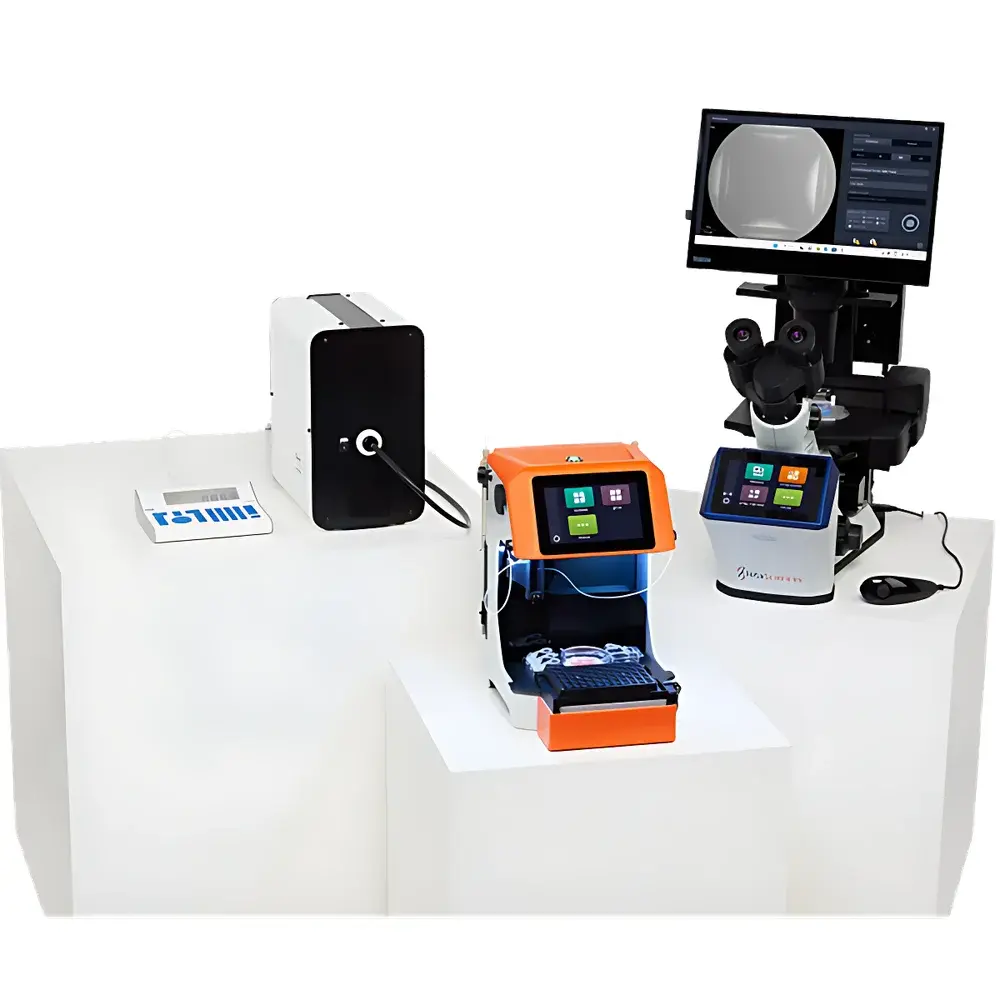
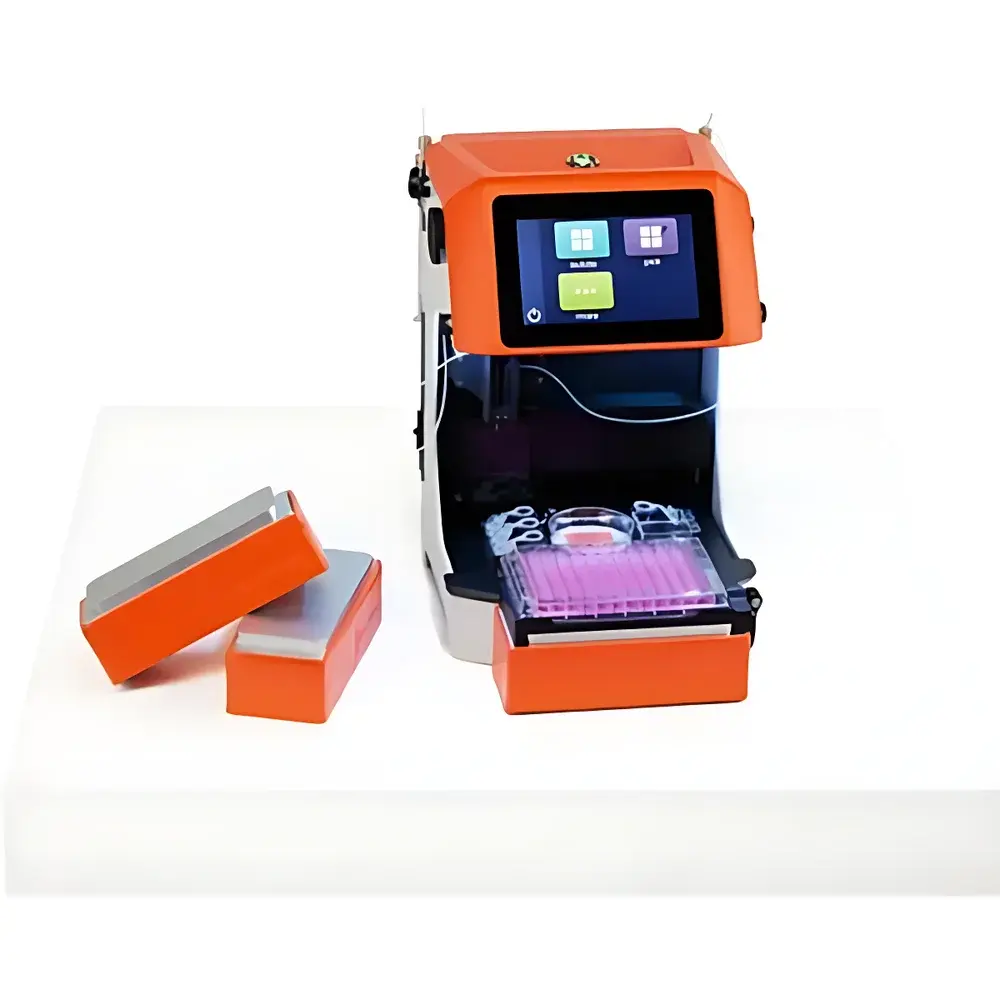
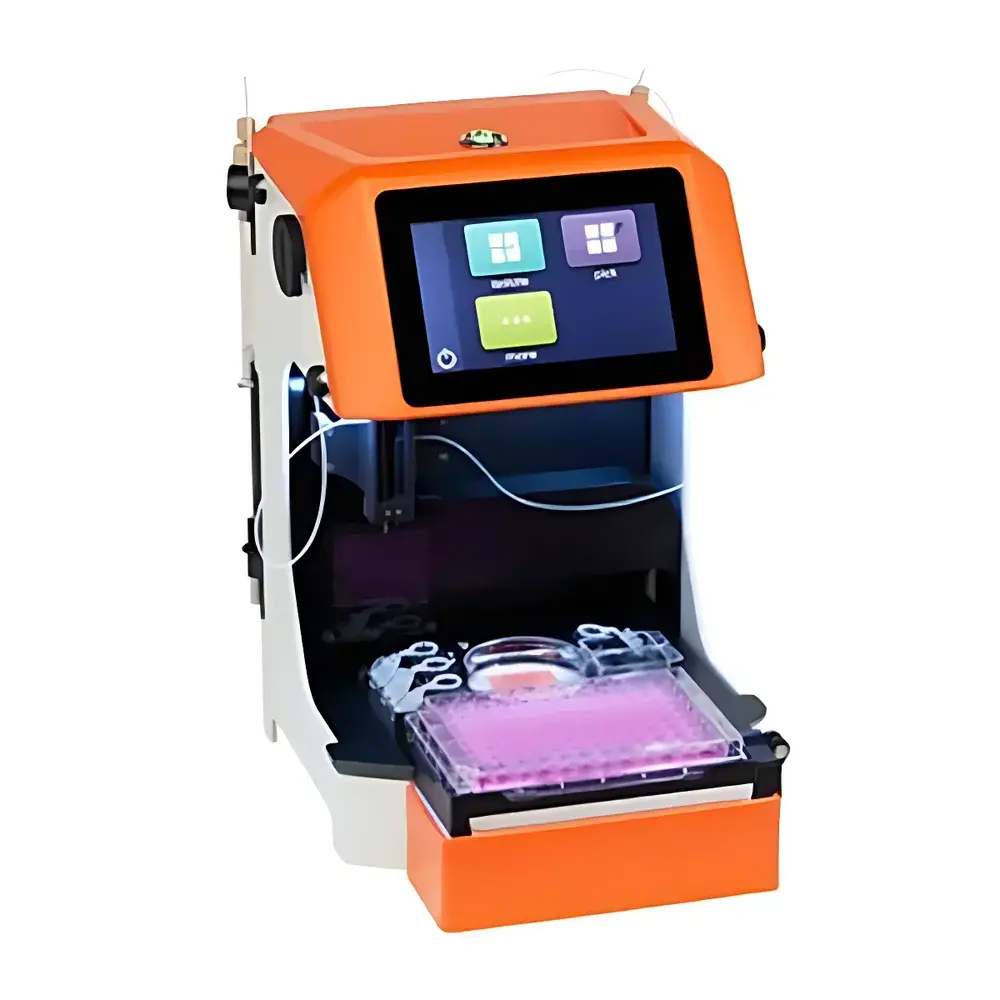
iotaSciences isoPick Automated Single-Cell Visualization and Isolation System
| Brand | iotaSciences |
|---|---|
| Origin | United Kingdom |
| Model | isoPick |
| Type | Fully Automated |
| Sorting Speed | High-throughput |
| Core Technology | GRID Microfluidic Patterning (Patent WO2019197373A1) |
| Chamber Density | 256 single-cell cavities per 6 cm dish |
| Dispense Volume | Nanoliter-scale precision |
| Imaging | Integrated high-resolution optical microscopy |
| Sample Transfer Compatibility | Direct transfer to PCR tubes or 96-well plates |
| Cell Viability | Optimized for minimal mechanical stress |
Overview
The iotaSciences isoPick Automated Single-Cell Visualization and Isolation System is an engineered platform for deterministic, image-guided single-cell isolation. Unlike conventional fluorescence-activated or droplet-based cell sorters, isoPick operates on a fundamentally distinct principle: it uses patented GRID microfluidic patterning technology (WO2019197373A1) to physically confine individual cells within discrete, optically addressable nanoliter-scale cavities etched into standard tissue culture dishes. This approach eliminates stochastic seeding and post-sort verification bottlenecks. The system combines surface-tension-driven microjet dispensing with real-time brightfield and phase-contrast imaging to achieve deterministic placement and visual confirmation of single-cell occupancy in each cavity—ensuring 100% verified monoclonality prior to downstream transfer. Designed for integration into GLP-compliant workflows, isoPick delivers traceable, coordinate-mapped cell isolation without requiring specialized consumables or complex fluidic infrastructure.
Key Features
- Fully automated workflow—from cell suspension loading to final deposition in PCR tubes or 96-well plates—minimizing manual intervention and operator variability.
- GRID cavity array generation: Creates 256 spatially registered, chemically inert microwells (each ~100–200 µm in diameter) on standard 6 cm Petri dishes using biocompatible interface remodeling.
- Nanoliter-volume precision dispensing: Delivers cell suspensions with sub-100 nL accuracy, enabling low-volume compatibility with scWGA, scRNA-seq library prep, and single-cell metabolomics protocols.
- Integrated optical imaging module: Equipped with motorized stage, autofocus, and multi-modal contrast (brightfield/phase) for real-time cavity-level cell identification and viability assessment.
- Coordinate-based traceability: Every isolated cell is assigned a unique (x,y,z) position in the dish coordinate system; all transfer events are logged with timestamp, cavity ID, and image snapshot for audit trail compliance.
- Non-invasive handling: No electrical fields, lasers, or hydrodynamic shear forces—preserving native cell morphology, membrane integrity, and transcriptional fidelity.
Sample Compatibility & Compliance
isoPick accommodates adherent and suspension cells across diverse lineages—including primary human PBMCs, K562, iPSCs, and organoid-derived dissociates—without requiring surface labeling or antibody conjugation. The GRID substrate is compatible with standard culture media formulations (e.g., serum-free albumin-buffered PBS), enabling direct transition from expansion to isolation. The system meets ISO 13485-aligned design controls and supports 21 CFR Part 11-compliant electronic records when deployed with validated LIMS integration. All image metadata, positional logs, and transfer timestamps are exportable in CSV and TIFF formats for regulatory submission (e.g., FDA IND/CTA dossiers, EMA scientific advice packages). It has been successfully used in studies published in Cell, Nature Communications, and Advanced Science under GLP-aligned experimental reporting standards.
Software & Data Management
The isoPick Control Suite provides a modular, role-based interface supporting acquisition, review, annotation, and batch export. Users define sorting criteria via intuitive ROI selection tools and apply conditional logic (e.g., “isolate only round-phase-bright cells in cavities with no neighboring debris”). All images and positional data are stored locally with SHA-256 checksum validation. Audit trails include user login sessions, parameter changes, and hardware status logs. Raw image stacks and cavity maps can be exported in OME-TIFF format for third-party analysis in Fiji/ImageJ, QuPath, or commercial bioinformatics pipelines. Optional API access enables integration with laboratory information management systems (LIMS) and ELN platforms for end-to-end digital sample tracking.
Applications
- Single-cell genomics: Direct transfer of verified single cells into 3.5 µL scWGA reactions with >95% amplification success rate and minimal allelic dropout—validated in K562 WGA gel electrophoresis assays.
- Single-cell lipidomics: Seamless coupling with capillary LC-MS workflows; demonstrated in peer-reviewed studies achieving quantitative reproducibility across >1,000 individual HEK293 and MCF-7 cells.
- Clonal lineage tracing: Long-term tracking of monoclonal progeny derived from individually isolated stem cells, with full positional provenance retained across passaging events.
- Functional phenotyping: Integration with time-lapse imaging modules for pre-isolation behavioral screening (e.g., motility, division timing, drug response) prior to physical retrieval.
- Biobanking & QC: Generation of reference monoclonal populations for assay calibration, cell therapy lot release testing, and reference material certification.
FAQ
How does isoPick guarantee 100% monoclonality?
By combining physical confinement in optically resolved GRID cavities with real-time image-based verification—no statistical inference or post-hoc validation is required.
Can isoPick handle rare or low-abundance cell types?
Yes; the system accepts input concentrations as low as 1,500 cells/mL and uses adaptive cavity filling algorithms to maximize capture efficiency without overloading.
Is the GRID pattern reusable or disposable?
Each GRID pattern is fabricated *in situ* on standard polystyrene dishes and is single-use—eliminating cross-contamination risk and ensuring consistent surface chemistry between runs.
What downstream molecular assays has isoPick been validated with?
Published applications include scWGA, scRNA-seq (10x Genomics, Smart-seq2), scATAC-seq, targeted lipidomics (LC-MS/MS), and single-cell proteomics (SomaScan).
Does isoPick require specialized training or dedicated infrastructure?
No; it operates on standard lab bench space (60 × 60 × 45 cm), requires only ambient power and USB 3.0 connectivity, and is operated via intuitive graphical interface—training typically completed in <4 hours.
Related Products





