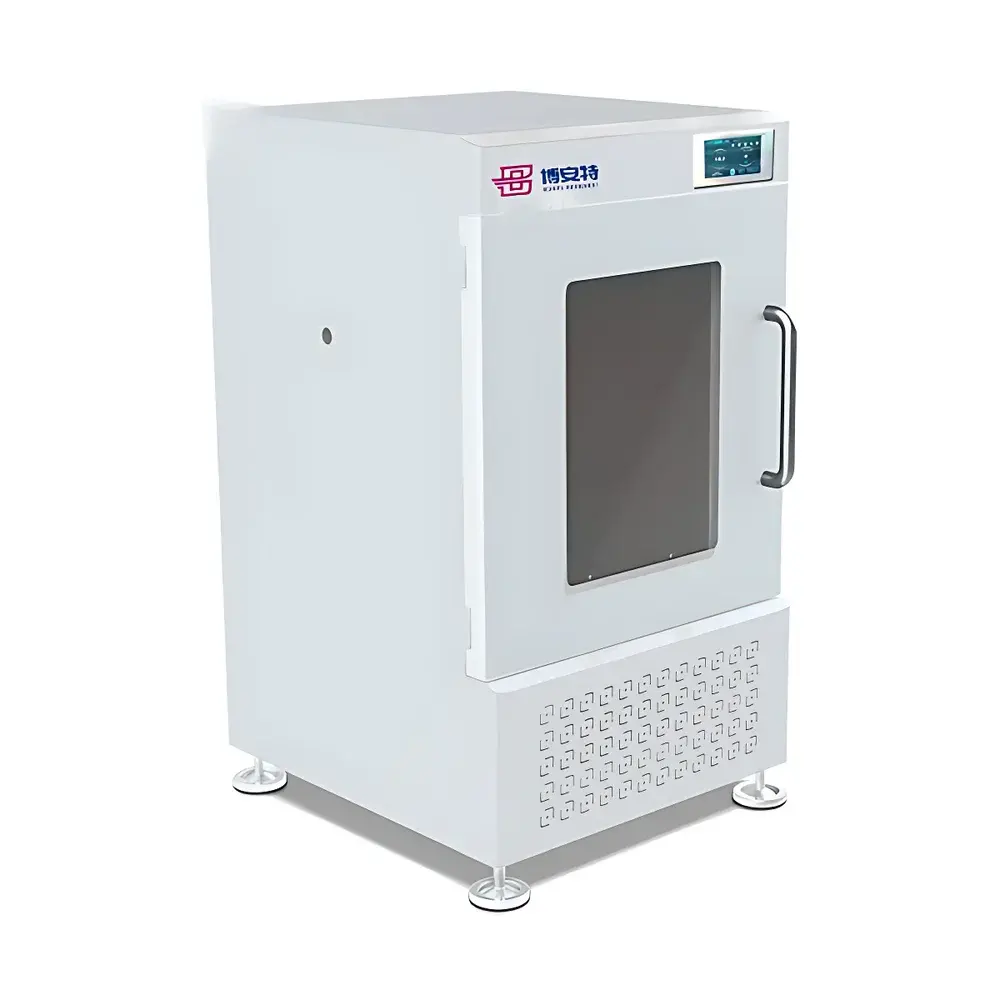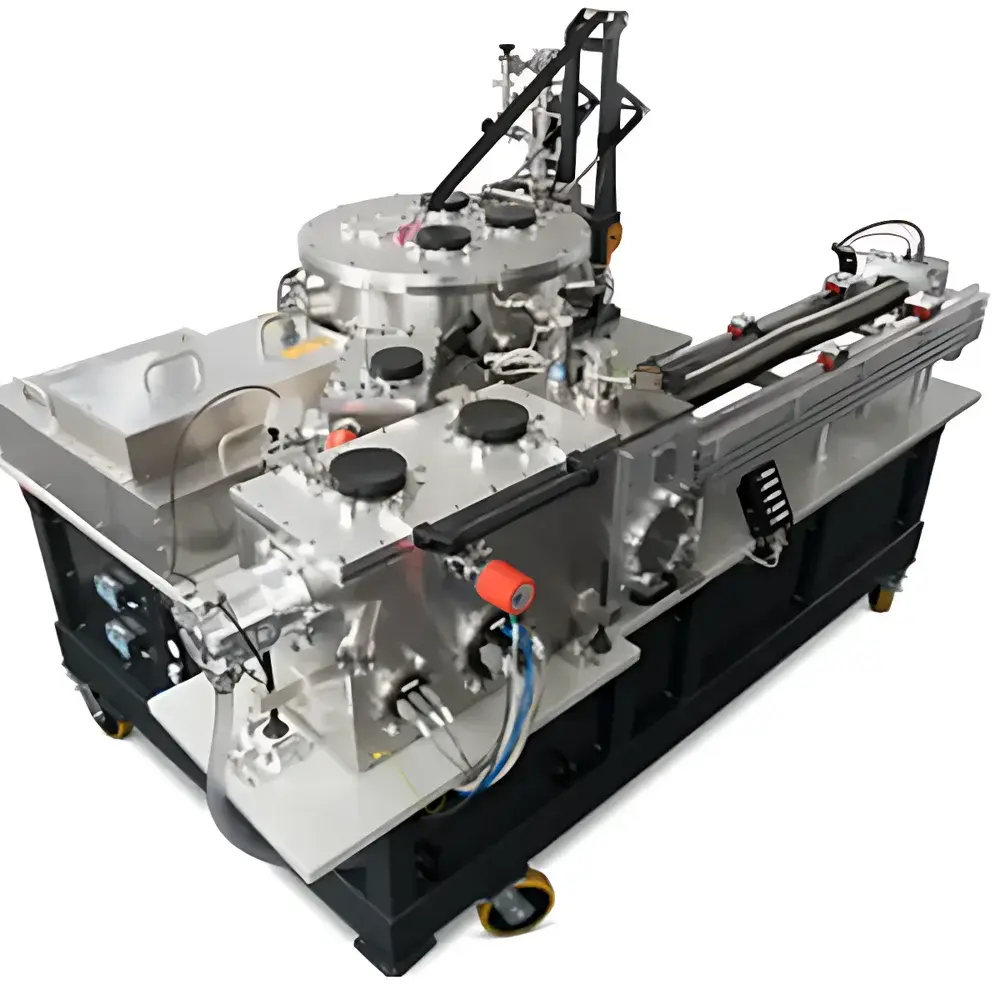
SiriusXT SXT-100 Laboratory-Scale Soft X-ray Tomographic Microscope
| Brand | SiriusXT Ltd. |
|---|---|
| Origin | Ireland |
| Model | SXT-100 |
| Resolution | 40 nm (3D half-pitch ~30 nm) |
| Light Source | Compact laboratory soft X-ray source (λ = 2.3–4.4 nm, “water window”) |
| Field of View | 30 µm (900× magnification) |
| Acquisition Time | <2 hours per 100 projection images |
| Sample Thickness Capacity | Up to 15 µm hydrated specimens |
| Sample Handling | Carbon-supported copper grids (±60° tilt) or ultra-thin glass capillaries (±90° rotation) |
| Fluorescence Channels | 5-channel (DAPI, GFP, RFP, Cy5, Cy7) |
| Compliance | Designed for GLP-compliant correlative workflows |
| compatible with cryo-preparation protocols per ISO 21530 | 2021 and ASTM E3186-22 |
Overview
The SiriusXT SXT-100 is a turnkey laboratory-scale soft X-ray tomographic microscope engineered for high-fidelity, label-free 3D structural imaging of fully hydrated, near-native biological specimens. Unlike conventional soft X-ray microscopes requiring synchrotron radiation facilities, the SXT-100 integrates a compact, high-brightness laser-driven plasma soft X-ray source operating within the “water window” spectral range (2.3–4.4 nm). In this region, liquid water exhibits minimal absorption while carbon-, nitrogen-, and oxygen-rich biomolecules strongly attenuate incident photons—enabling intrinsic, quantitative contrast without chemical fixation, staining, dehydration, or sectioning. The system employs a self-repairing multilayer-coated condenser optic and zone-plate objective to deliver diffraction-limited focusing and high-throughput tomographic data acquisition. Its architecture supports cryogenic sample handling (vitrified state), ensuring preservation of native ultrastructure and enabling direct correlation with cryo-fluorescence and cryo-electron microscopy modalities.
Key Features
- Label-free, quantitative 3D imaging of intact, hydrated cells up to 15 µm thick—preserving native biochemical and spatial context
- True sub-40 nm isotropic resolution in tomographic reconstruction (30 nm half-pitch demonstrated in published benchmark studies)
- Integrated dual-modality platform: simultaneous soft X-ray tomography (SXT) and five-channel cryo-fluorescence microscopy (CFM)
- Automated multi-angle sample rotation (±60° on Cu grids; ±90° in fused-silica capillaries) with precision motorized stage and real-time fiducial tracking
- Optimized for rapid data collection: full tomographic tilt series (100 projections) acquired in under two hours
- Modular optical path design supporting future integration of phase retrieval algorithms and ptychographic reconstruction capabilities
Sample Compatibility & Compliance
The SXT-100 accommodates diverse biological samples in their near-physiological states. Adherent cells are imaged on standard carbon-coated copper EM grids; suspension cells—including primary isolates and organoids—are loaded into ultra-thin-walled glass capillaries to minimize background scattering and maintain ice thickness uniformity during vitrification. All sample preparation follows established cryo-EM best practices aligned with ISO 21530:2021 (“Biotechnology — Cryopreservation of mammalian cells”) and ASTM E3186-22 (“Standard Guide for Correlative Cryo-Soft X-ray Tomography”). Data provenance and instrument metadata are logged in accordance with ALCOA+ principles (Attributable, Legible, Contemporaneous, Original, Accurate, Complete, Consistent, Enduring, Available), supporting audit readiness for GLP and early-stage GMP-aligned research environments.
Software & Data Management
Acquisition and reconstruction are managed via SiriusXT’s proprietary SXT-Studio software suite, compliant with FAIR (Findable, Accessible, Interoperable, Reusable) data principles. The software provides automated alignment of tilt-series projections using cross-correlation and iterative refinement, followed by constrained SART (Simultaneous Algebraic Reconstruction Technique) or GPU-accelerated CGLS (Conjugate Gradient Least Squares) reconstruction. Output volumes are stored in standardized HDF5 format with embedded metadata (including dose history, detector gain, and optical alignment parameters). Integrated export modules support direct import into IMOD, Amira, ChimeraX, and MATLAB-based analysis pipelines. Audit trail functionality meets requirements for FDA 21 CFR Part 11-compliant environments when deployed with validated network authentication and electronic signature modules.
Applications
The SXT-100 enables rigorous investigation of dynamic subcellular architecture across multiple life science domains. Published use cases include: quantifying membrane remodeling in Huh-7.5 hepatoma cells during antiviral treatment with direct observation of replication organelle disassembly; mapping intracellular trafficking and aggregation kinetics of ZrO₂ nanoparticles in human bronchial epithelial and HeLa cells; resolving mitochondrial cristae architecture in unstained, frozen-hydrated mitochondria; and characterizing malaria pigment crystallization in Plasmodium-infected erythrocytes at nanoscale resolution. Its capacity for volumetric, label-free imaging makes it particularly valuable for virology, nanomedicine delivery validation, organelle biogenesis studies, and preclinical assessment of cytotoxic mechanisms where artifact-free structural fidelity is non-negotiable.
FAQ
Does the SXT-100 require synchrotron infrastructure or dedicated radiation shielding?
No. The integrated laser-plasma soft X-ray source operates at low average power (<50 mW) and is fully enclosed within a Class I laser safety-rated cabinet meeting IEC 60825-1:2014 standards. No external beamline or vault installation is required.
Can the SXT-100 image live cells?
The current configuration is optimized for cryo-fixed, vitrified specimens. While time-resolved imaging of chemically fixed or rapidly frozen samples is routine, live-cell imaging remains outside the operational envelope due to radiation dose constraints and motion artifacts.
How does SXT compare to cryo-EM and super-resolution fluorescence microscopy?
SXT bridges resolution and context gaps: it delivers higher resolution than widefield fluorescence (~30 nm vs. ~200 nm), greater depth penetration than STED/PALM (~15 µm vs. <1 µm), and broader field-of-view than single-particle cryo-EM—without the need for averaging or molecular labeling.
Is correlative workflow support validated?
Yes. Peer-reviewed publications (e.g., Fahy et al., JPhys Photonics 2021; Kapishnikov et al., PNAS 2019) demonstrate robust registration between SXT volumes and multi-channel cryo-fluorescence maps, with fiducial-based alignment accuracy better than 50 nm RMS error.
What maintenance and service options are available?
SiriusXT Ltd. offers annual preventive maintenance contracts including source lifetime monitoring, optic contamination assessment, vacuum system integrity verification, and remote diagnostics—aligned with ISO/IEC 17025:2017 calibration traceability frameworks.