
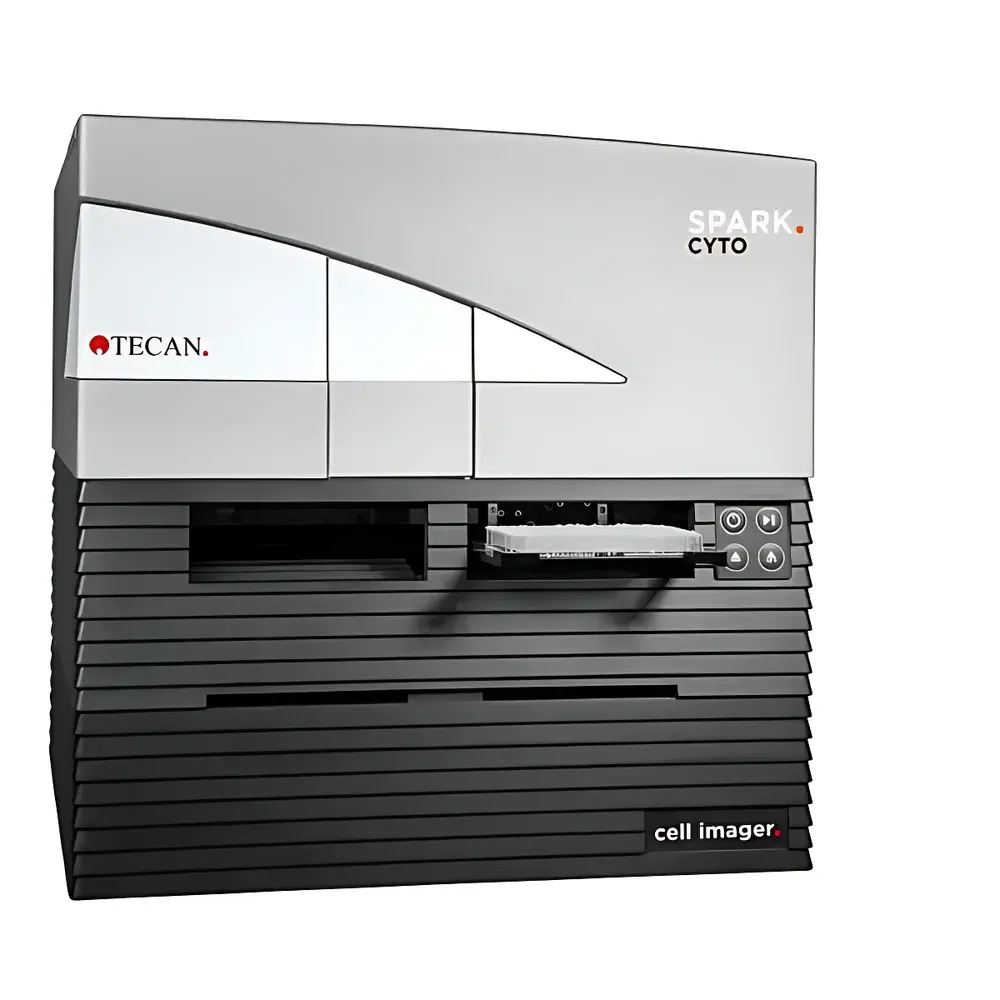
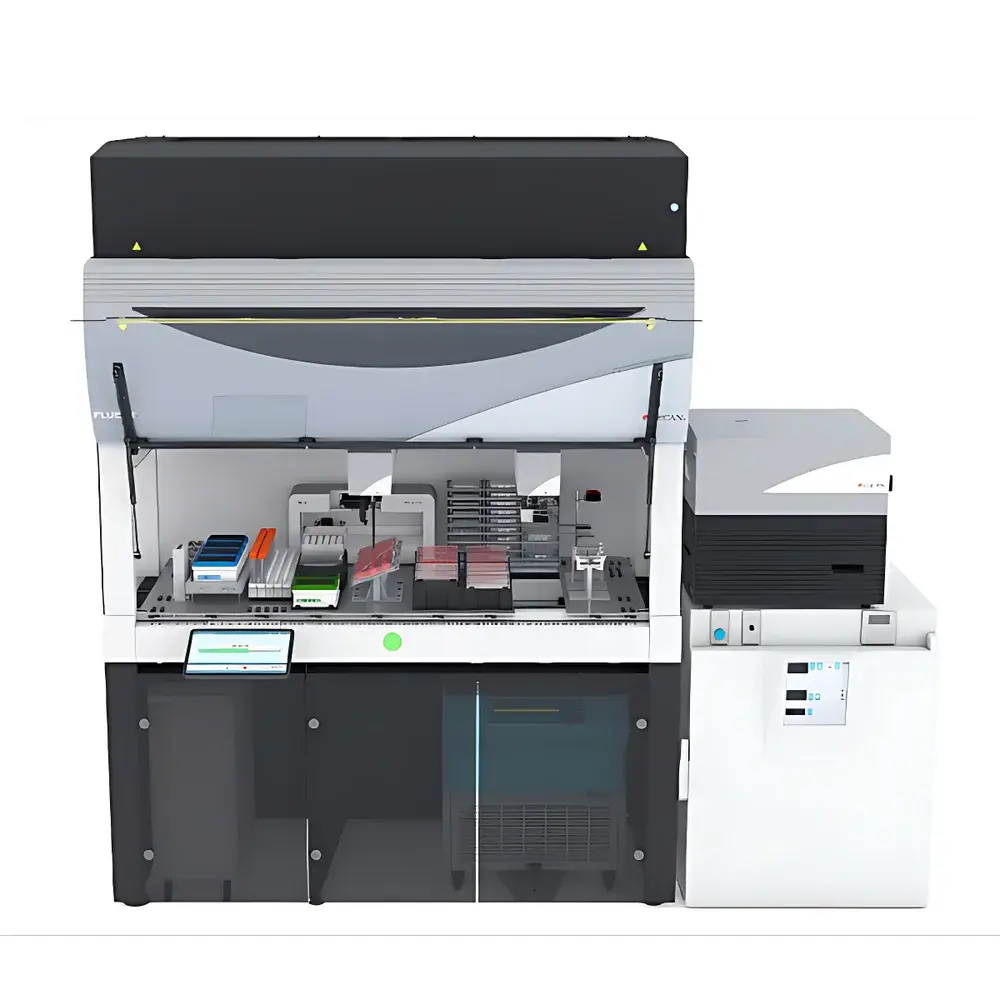
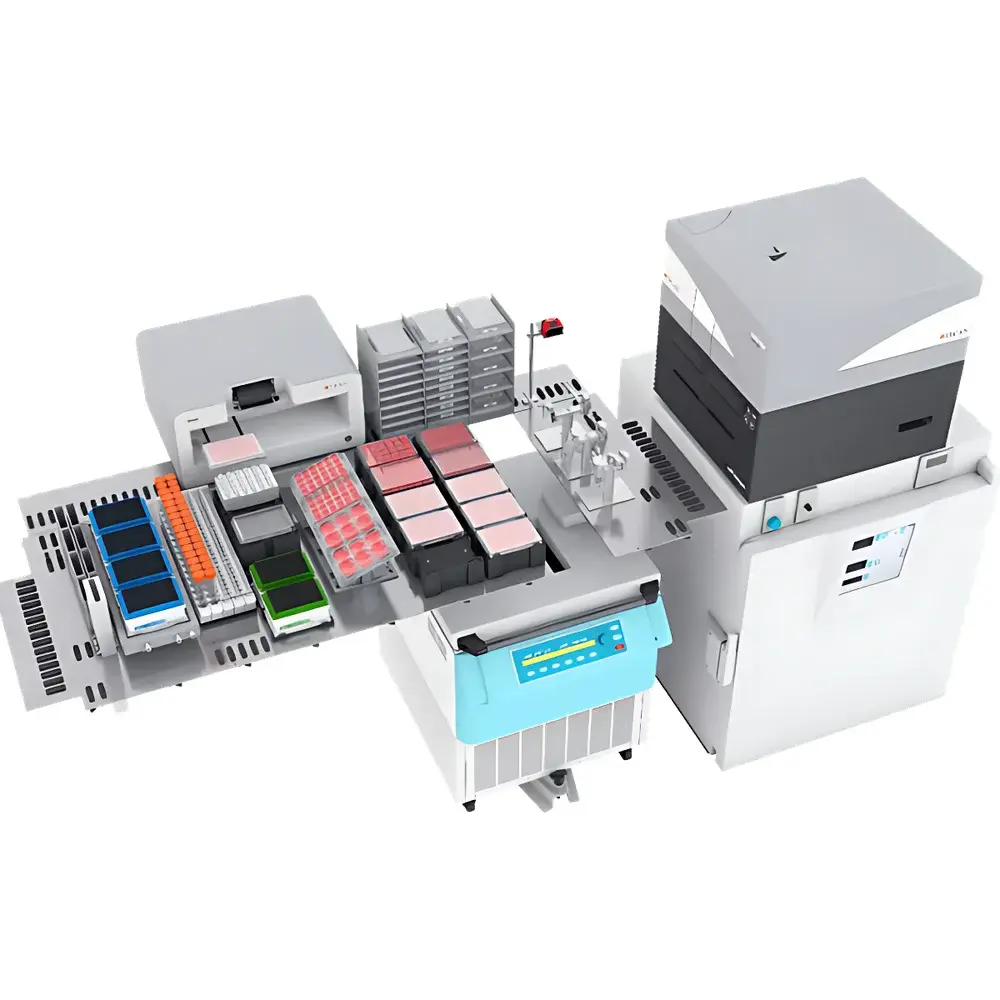
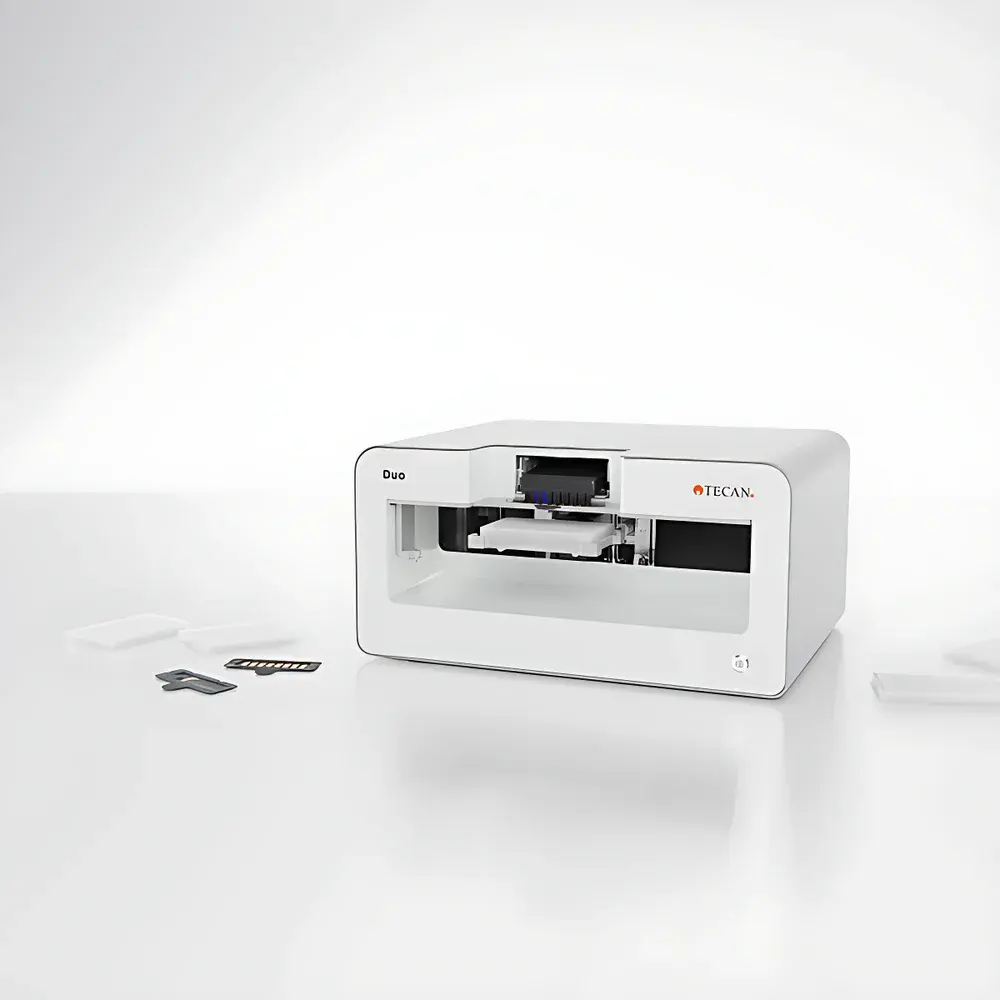
Tecan Fluent 480/780/1080 Organoid Culture, Drug Sensitivity Screening & Functional Assessment Automation Platform
| Brand | Tecan |
|---|---|
| Origin | Switzerland |
| Model | Fluent 480 / Fluent 780 / Fluent 1080 |
| Deck Positions | 30 / 48 / 72 (excluding expandable positions) |
| Pipetting Range | D300e module: 11 pL – 10 µL |
| Main pipetting arm | 0.5 µL – 1000 µL |
| Dimensions | Model-dependent |
| Compliance | Designed for GLP/GMP-aligned workflows |
Overview
The Tecan Fluent 480/780/1080 Organoid Culture, Drug Sensitivity Screening & Functional Assessment Automation Platform is an integrated liquid handling workstation engineered to address the unique operational and biological constraints of three-dimensional (3D) organoid-based research. Unlike conventional 2D monolayer cell culture automation, organoid workflows demand precise thermal management of extracellular matrix hydrogels (e.g., Matrigel®, BME), gentle mechanical dissociation to preserve spheroid integrity, real-time viability monitoring, and long-duration scheduling across heterogeneous plate formats (6–384-well). This platform leverages Tecan’s four-decade legacy in life science automation to deliver reproducible, traceable, and scalable execution of organoid derivation, expansion, cryopreservation, drug response profiling, and functional endpoint assessment — all within a single, modular architecture compliant with evolving standards for human-relevant model systems.
Key Features
- Modular deck architecture supporting 30, 48, or 72 fixed positions — configurable with optional extensions for incubators, centrifuges, imagers, or refrigerated storage units.
- Dual-pipetting capability: High-precision D300e acoustic dispensing (11 pL–10 µL) for compound dilution and assay reagent spotting; high-volume positive-displacement pipetting (0.5 µL–1000 µL) for matrix gel handling, media exchange, and passaging.
- Integrated temperature-controlled modules: Peltier-cooled deck zones (4–40 °C) for on-deck Matrigel® liquefaction and dispensing; heated incubator options (up to 40 °C, ±0.3 °C stability) for extended organoid culture under controlled CO₂/O₂ conditions.
- Gentle agitation protocols: Programmable orbital shaking and low-shear aspiration/dispensing routines optimized to minimize mechanical stress during organoid dissociation and resuspension.
- Resource-aware scheduling engine: FC Scheduler software dynamically allocates robotic arms, pipetting tools, and deck resources based on protocol dependencies, runtime estimates, and priority queues — essential for multi-day organoid maturation and time-resolved drug exposure studies.
Sample Compatibility & Compliance
The platform accommodates standard and custom microplate formats from 6-well to 384-well, including ultra-low-attachment (ULA) plates, glass-bottom imaging plates, and microfluidic organoid chips. It supports integration with third-party analyzers (e.g., Incucyte®, Opera Phenix™, Celigo®) for automated image acquisition and analysis. All hardware and firmware are designed in alignment with ISO 13485 principles for medical device-related R&D environments. When deployed with validated software configurations, the system meets requirements for audit trail generation, electronic signature enforcement, and data integrity per FDA 21 CFR Part 11 and EU Annex 11 guidelines. Routine calibration and maintenance procedures follow Tecan’s GxP-compliant service documentation framework.
Software & Data Management
FC Scheduler serves as the central orchestration layer, enabling drag-and-drop protocol building, conditional logic branching, and cross-instrument synchronization. It logs every liquid transfer, temperature event, and positional movement with timestamped metadata and user attribution. Raw data export supports CSV, XML, and JSON formats compatible with LIMS (e.g., LabVantage, STARLIMS) and ELN platforms (e.g., Benchling, LabArchives). Integrated APIs allow bidirectional communication with compound management systems (e.g., Dotmatics, CDD Vault) and bioinformatics pipelines for downstream analysis of dose-response curves, IC₅₀ estimation, and organoid growth kinetics modeling.
Applications
- Standardized derivation and serial passaging of patient-derived organoids (PDOs) and pluripotent stem cell (PSC)-derived organoids across gastrointestinal, hepatic, neural, and pulmonary lineages.
- High-throughput drug sensitivity testing using multi-concentration compound matrices, including co-culture models with immune cells or stromal components.
- Functional phenotyping via ATP-based viability assays, caspase activation, mitochondrial membrane potential, and secreted biomarker quantification (e.g., ELISA, MSD).
- Cryobanking workflows with automated DMSO gradient addition, controlled-rate freezing initiation, and vial barcode tracking linked to donor metadata and passage history.
- Longitudinal toxicity assessment incorporating repeated dosing, washout periods, and recovery-phase monitoring over 7–28 days.
FAQ
Can the Fluent platform handle cold-sensitive hydrogels without premature solidification?
Yes — the system integrates Peltier-cooled deck zones (4 °C) and pre-chilled tips to maintain matrix gels in liquid phase during aspiration and dispensing, followed by rapid transfer to pre-warmed culture plates.
Is it possible to integrate live-cell imaging during organoid culture runs?
Absolutely — the Fluent supports synchronized handoff to compatible incubator-integrated imagers via standardized API triggers and plate barcode handshaking.
Does Tecan provide validation documentation for GxP environments?
Tecan offers IQ/OQ documentation packages, risk assessments, and vendor-supplied test scripts; final PQ must be conducted by the end user in context of their specific SOPs and regulatory scope.
How does the system manage cross-contamination risks during high-density organoid processing?
It employs disposable tips for all liquid transfers, HEPA-filtered laminar airflow enclosures (optional), and automated tip-waste washing protocols validated for residual DNA/protein removal.
Can FC Scheduler accommodate adaptive experimental designs, such as dose escalation based on intermediate readouts?
Yes — through external data ingestion hooks and conditional scripting, the scheduler can pause, reroute, or modify subsequent steps upon receipt of analysis results from connected instruments or external databases.



