
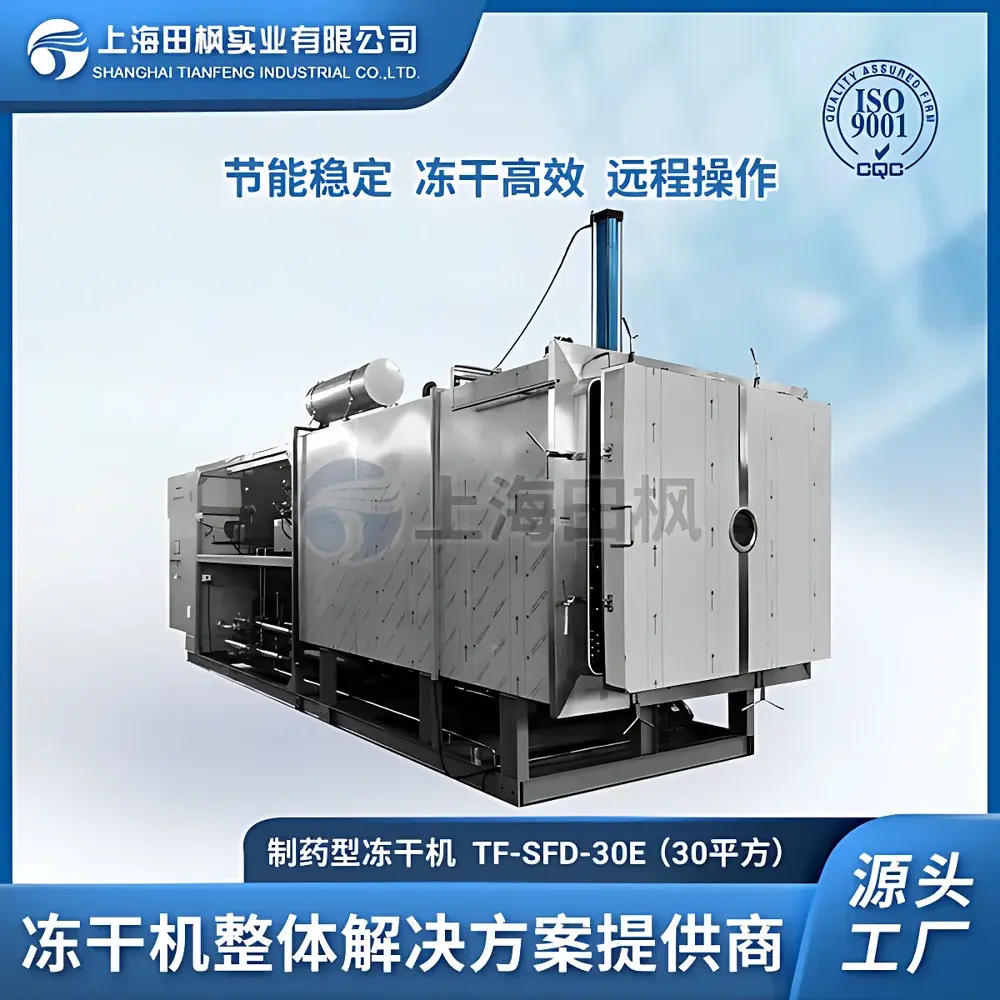
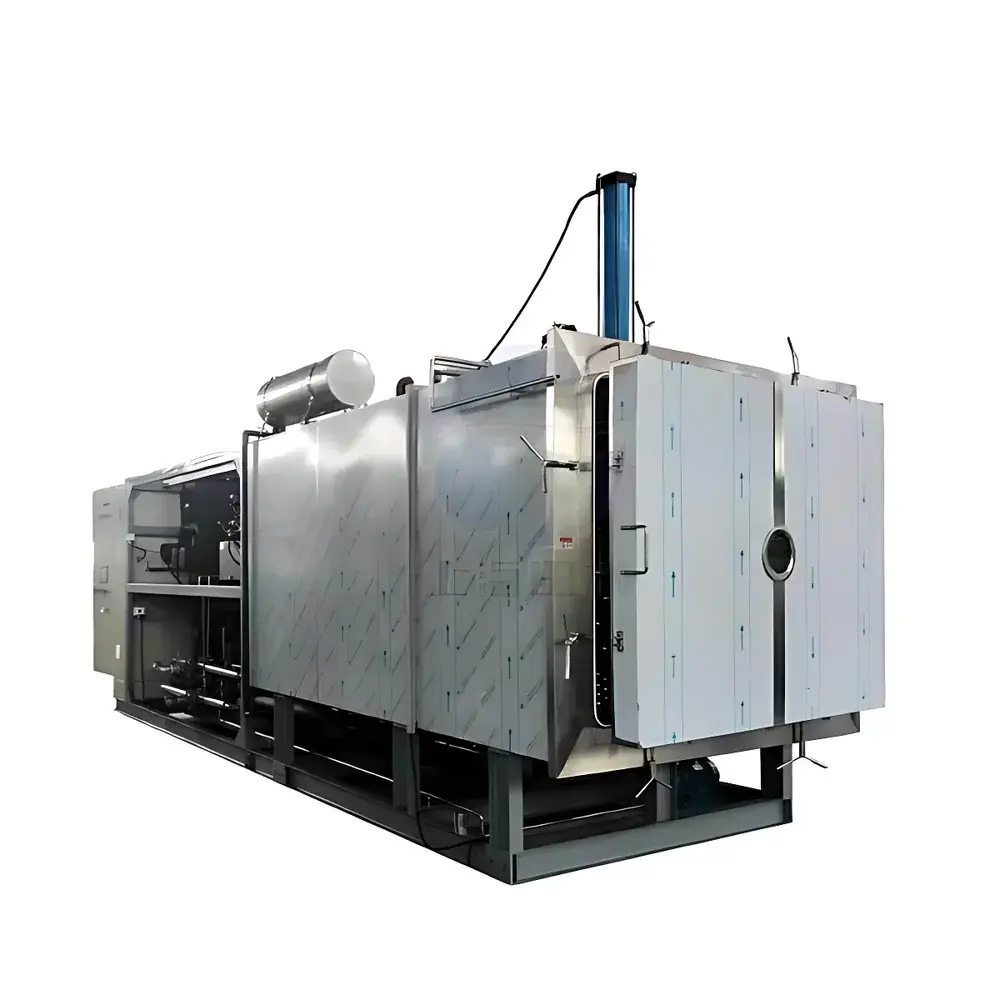
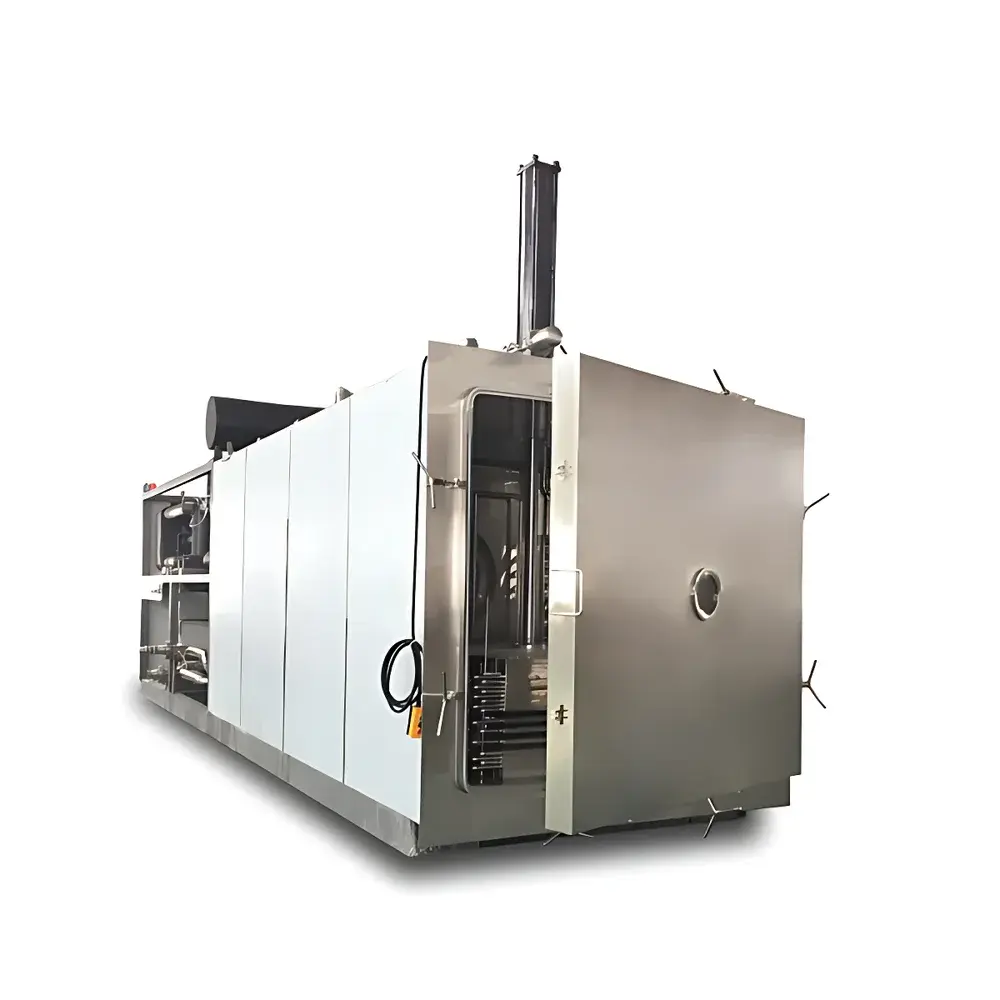
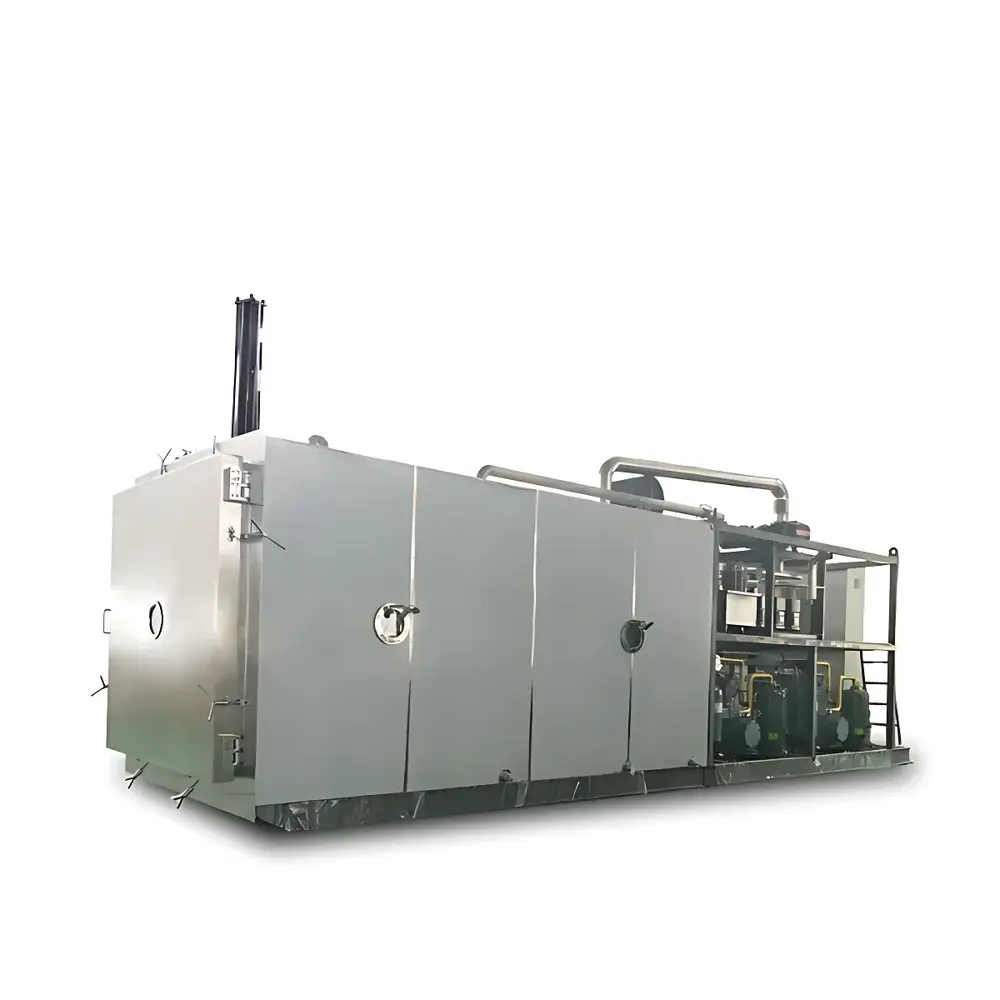
Tianfeng TF-SFD-30 Explosion-Proof Vacuum Freeze Dryer
| Brand | Tianfeng |
|---|---|
| Origin | Shanghai, China |
| Manufacturer Type | Direct Manufacturer |
| Equipment Type | Standard Shelf-Type Freeze Dryer |
| Application Scope | Pilot/Production Scale |
| Lyophilization Area | 3 m² |
| Ultimate Vacuum | ≤10 Pa |
| Condensate Capacity (24 h) | 30 kg |
| Cold Trap Temperature | ≤−70 °C (no-load) |
| Overall Dimensions | 4250 × 1150 × 2760 mm |
| Shelf Configuration | 6+1 shelves |
| Shelf Temperature Range | −50 °C to +70 °C |
| Shelf Temperature Uniformity | ±1 °C |
| Shelf Spacing | 100 mm |
| Shelf Dimensions | 900 × 600 × 15 mm |
| Vial Capacity (Ø22 mm) | 7,600 pcs |
| Vial Capacity (Ø16 mm) | 14,500 pcs |
| Vial Capacity (Ø12 mm) | 26,490 pcs |
| Tray Liquid Load | 30 L |
| Defrosting Option | Electric (optional) |
| Total Power Consumption | 23 kW (including 3 kW shelf heating) |
Overview
The Tianfeng TF-SFD-30 Explosion-Proof Vacuum Freeze Dryer is an industrial-grade, certified Class I Division 1 explosion-proof lyophilization system engineered for safe, scalable freeze drying of thermolabile, oxygen-sensitive, or highly flammable materials. It operates on the principle of sublimation-based dehydration: aqueous samples are first frozen solid at cryogenic temperatures (≤−70 °C), then subjected to high vacuum (≤10 Pa) to enable direct phase transition of ice to vapor without passing through the liquid state. This low-temperature, low-oxygen process preserves structural integrity, bioactivity, and chemical stability—critical for pharmaceutical intermediates, specialty food matrices (e.g., citrus extracts, functional fruit powders), fine chemicals, and battery electrolyte precursors requiring inert handling. The system complies with IEC 60079-0 and IEC 60079-1 standards for explosive atmospheres and integrates intrinsically safe instrumentation, explosion-proof motors, sealed electrical enclosures, and static-dissipative chamber components.
Key Features
- Explosion-proof certified architecture meeting ATEX/IECEx Zone 1 requirements for operation in hazardous environments containing flammable vapors or dusts.
- Stainless steel 304 main chamber and cold trap housing with electropolished interior surfaces; fully welded construction ensures leak-tightness and cleanability per ISO 14644-1 Class 7 (10,000) cleanroom compatibility.
- Seven-shelf configuration (6 active + 1 bottom shelf) with precise ±1 °C temperature uniformity across all shelves; independent shelf temperature control enables multi-step drying protocols including annealing and controlled primary drying ramping.
- High-efficiency dual-stage cascade refrigeration system achieving ≤−70 °C cold trap temperature under no-load conditions and sustaining ≥30 kg/24 h water vapor capture capacity at ≤10 Pa operating vacuum.
- Integrated vacuum regulation via variable-speed dry scroll pump and pneumatic butterfly valve, enabling dynamic pressure control during primary and secondary drying phases.
- Shelf heating power up to +70 °C supports efficient desorption drying of residual bound water, critical for achieving residual moisture levels <1.5% w/w in GMP-compliant applications.
Sample Compatibility & Compliance
The TF-SFD-30 accommodates diverse sample formats including bulk liquids (up to 30 L per cycle), vials (Ø12–Ø22 mm; total capacity up to 26,490 units), trays, and ampoules. Its explosion-proof design permits safe processing of low-flashpoint solvents (e.g., ethanol, acetone, ethyl acetate), volatile natural extracts (e.g., lemon oil emulsions, terpene-rich botanicals), and reactive organic compounds. System validation documentation supports IQ/OQ/PQ execution per ASTM F2476 and ISO 22042. Data integrity features—including electronic signatures, audit trails, and user-level access control—align with FDA 21 CFR Part 11 and EU Annex 11 requirements for regulated environments.
Software & Data Management
Equipped with a Windows-based HMI (Human-Machine Interface) running proprietary Tianfeng LyoControl™ software, the system provides real-time monitoring of shelf temperature, chamber pressure, condenser temperature, and vacuum pump status. All process parameters are logged at configurable intervals (1–60 s) and stored in encrypted CSV and PDF formats. The software supports recipe-driven operation, alarm event logging with timestamped cause-and-effect mapping, and exportable reports compliant with GLP and GMP documentation standards. Optional Ethernet/IP or Modbus TCP connectivity enables integration into centralized MES or SCADA systems.
Applications
- Pharmaceutical: Lyophilization of sterile APIs, vaccine candidates, and diagnostic reagents where thermal degradation or oxidation must be avoided.
- Food Technology: Production of high-value citrus powders (e.g., lemon, lime, bergamot) retaining volatile aroma compounds, enzymatic activity, and antioxidant capacity.
- Materials Science: Drying of lithium-ion battery cathode slurries, MOF precursors, and conductive hydrogels under inert, spark-free conditions.
- Biotechnology: Stabilization of probiotics, enzymes, and labile monoclonal antibody formulations prior to long-term storage or transport.
- Chemical Synthesis: Solvent removal from pyrophoric organometallic intermediates or peroxide-forming ethers without thermal runaway risk.
FAQ
What explosion protection standard does the TF-SFD-30 meet?
It conforms to IEC 60079-0 (general requirements) and IEC 60079-1 (flameproof “d” enclosure), certified for use in Zone 1 hazardous areas.
Can the system be validated for GMP manufacturing?
Yes—full IQ/OQ documentation packages, traceable calibration certificates, and 21 CFR Part 11-compliant software are available upon request.
Is electric defrosting standard or optional?
Electric defrosting is an optional add-on; standard configuration uses manual or ambient-air thawing.
What is the maximum allowable load volume for vial-based cycles?
Based on Ø16 mm vials, the system supports up to 14,500 units per batch with full shelf utilization and validated heat transfer uniformity.
Does the system support remote monitoring and control?
Remote access is enabled via secure VPN-connected RDP or web-based HMI interface, subject to network security policy approval.



