
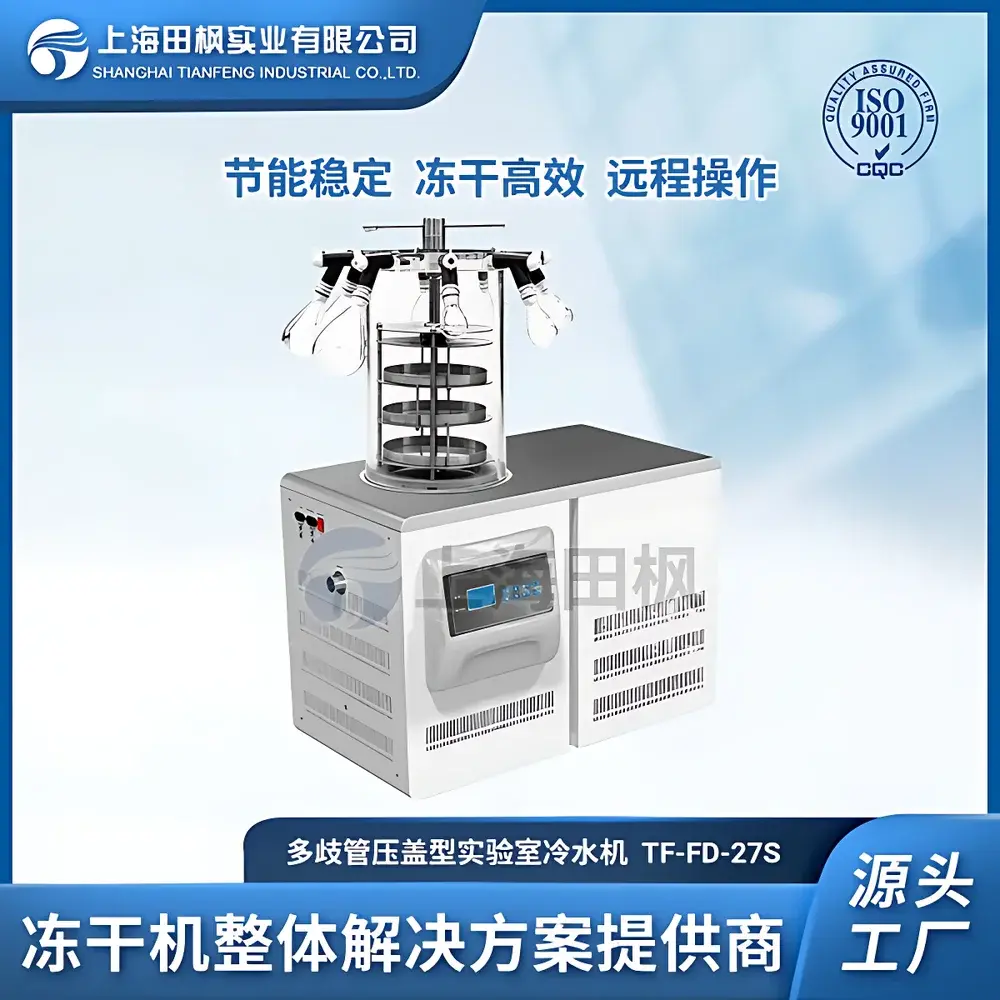
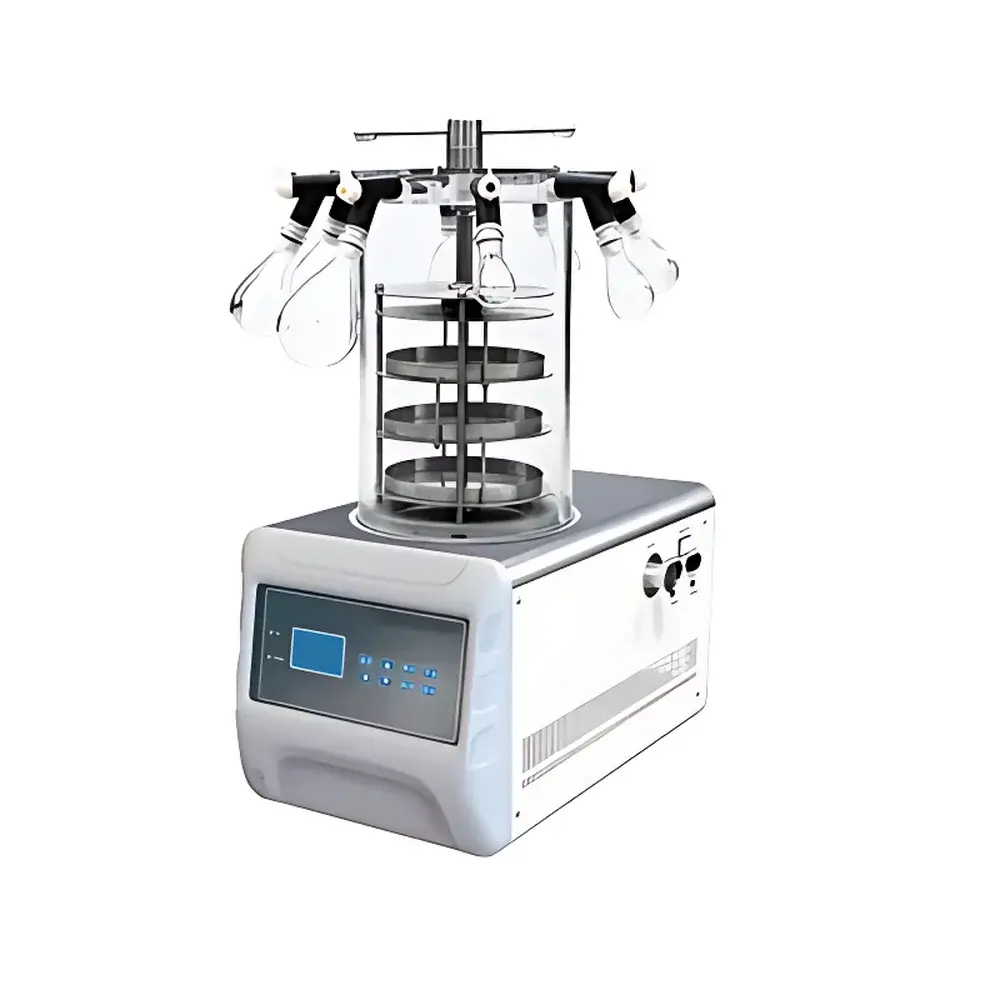
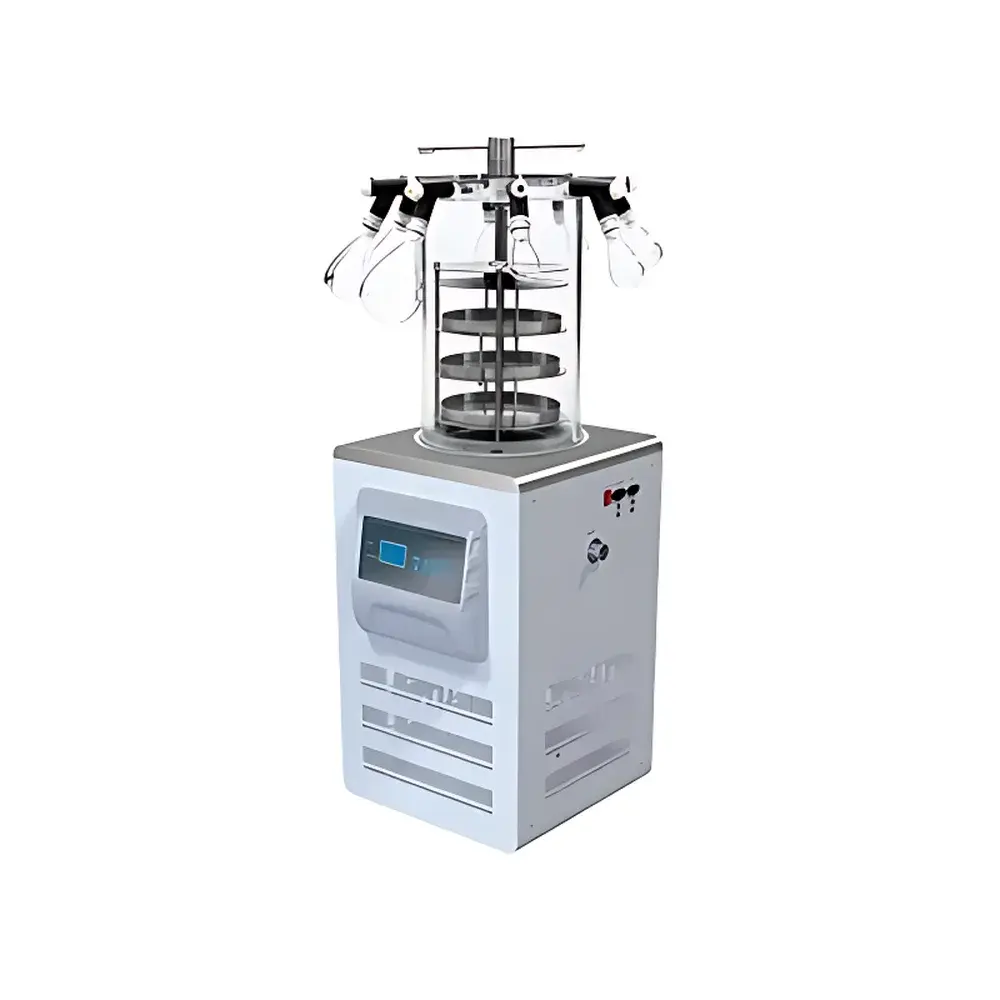
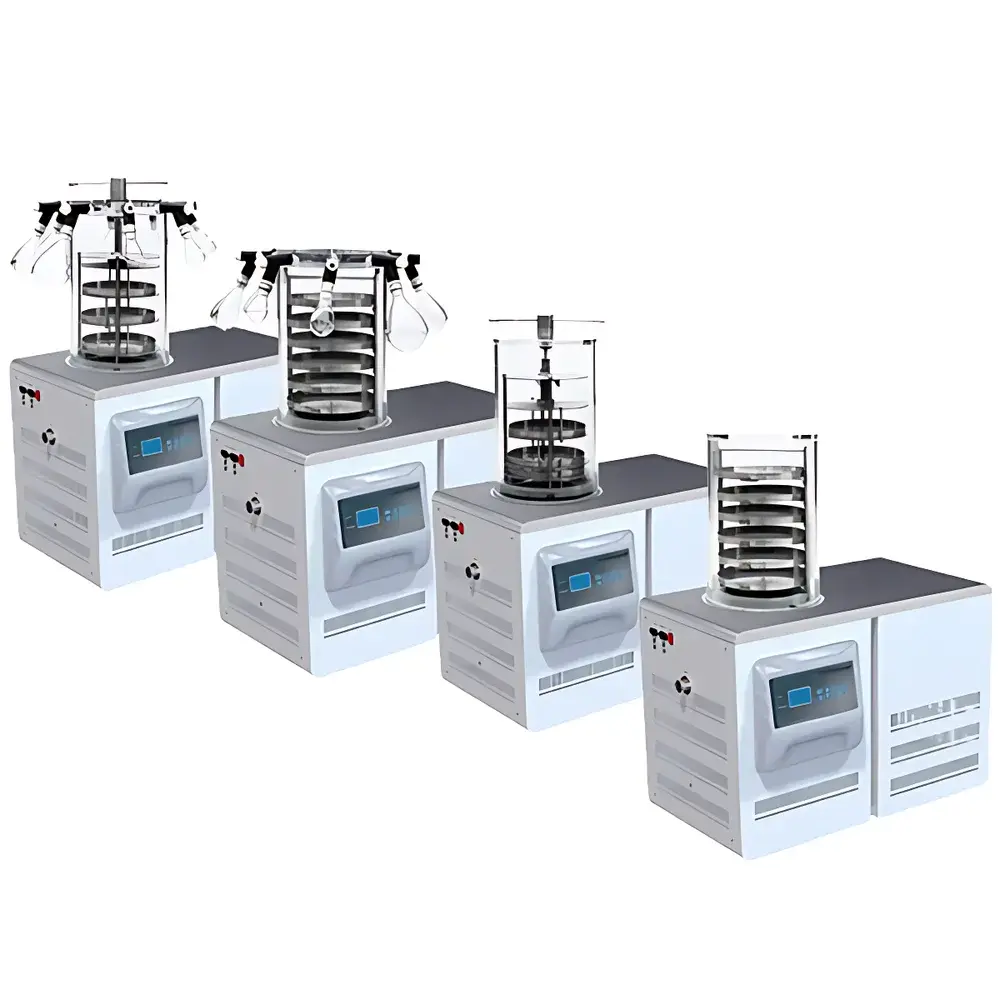
Tianfeng TF-FD-27S Multi-Manifold Freeze Dryer for Astaxanthin Lyophilization
| Brand | Tianfeng |
|---|---|
| Origin | Shanghai, China |
| Manufacturer Type | Direct Manufacturer |
| Product Category | Domestic |
| Model | TF-FD-27S |
| Instrument Type | Multi-Manifold |
| Application Scope | Laboratory Use |
| Shelf Area | 0.11 m² |
| Ultimate Vacuum (Empty Chamber) | <10 Pa |
| Ice Capacity (24 h) | 6 kg/24 h |
| Cold Trap Temperature | <−80 °C |
| Dimensions (W×D×H) | 1200 × 550 × 870 mm |
Overview
The Tianfeng TF-FD-27S is a high-performance, multi-manifold laboratory freeze dryer engineered for precise lyophilization of thermolabile compounds—including astaxanthin, peptides, enzymes, vaccines, and other sensitive biologics—under controlled low-temperature and high-vacuum conditions. It operates on the fundamental principle of sublimation: frozen water in the sample transitions directly from solid to vapor phase under vacuum, bypassing the liquid state and thereby preserving structural integrity, bioactivity, and chemical stability. This process is critical for pharmaceutical R&D, nutraceutical formulation development, and academic research where long-term storage stability and reconstitution fidelity are mandatory. Designed specifically for small-batch experimental workflows, the TF-FD-27S integrates a dual-stage cascade refrigeration system capable of achieving cold trap temperatures below −80 °C, enabling efficient capture of both aqueous and moderately volatile organic solvents (e.g., ethanol, acetone) commonly used in astaxanthin extraction and purification protocols.
Key Features
- Dual-compressor cascade refrigeration system delivering sustained cold trap performance at ≤−80 °C, enhancing ice entrapment efficiency and extending operational uptime during extended cycles.
- Multi-manifold configuration with eight standardized ports (compatible with 50 mL, 100 mL, 250 mL, 500 mL, and 1000 mL Schott-type flasks), allowing parallel processing of heterogeneous samples without cross-contamination.
- LED-digital vacuum and cold trap temperature monitoring with real-time display, ensuring continuous process visibility and reproducible endpoint determination.
- Stainless steel cold trap and chamber base, combined with a transparent acrylic drying chamber, facilitate visual inspection of sublimation progress and ice formation dynamics throughout the cycle.
- Modular design featuring ISO-KF vacuum fittings for rapid assembly/disassembly; all seals conform to ASTM F2339 standards for elastomeric vacuum compatibility.
- Touch-sensitive soft-key interface supporting intuitive parameter input, password-protected access control, and user-defined shutdown sequences.
- Integrated heating function with programmable shelf temperature ramping (optional curve logging), supporting primary drying optimization and secondary drying validation per ICH Q5C guidelines.
Sample Compatibility & Compliance
The TF-FD-27S accommodates a broad spectrum of sample formats—including vials, serum bottles, and conical flasks—and supports lyophilization of aqueous buffers, glycerol-based suspensions, and solvent mixtures containing ≤20% vol/vol low-boiling organics. Its −80 °C cold trap ensures >95% capture efficiency for methanol, acetonitrile, and ethyl acetate vapors, reducing pump oil contamination and extending vacuum pump service intervals. The system meets essential requirements for GLP-compliant laboratories: vacuum sensors are NIST-traceable, temperature probes are calibrated per ISO/IEC 17025, and all electronic controls support audit trail generation (when paired with optional data logger). While not FDA 21 CFR Part 11–certified out-of-the-box, its architecture permits integration with compliant LIMS or ELN platforms via RS-485 or Ethernet interfaces.
Software & Data Management
The onboard controller records time-stamped data for chamber pressure, cold trap temperature, and shelf temperature (if equipped) at user-configurable intervals (1–60 s). Exported CSV files are compatible with MATLAB, Python Pandas, and commercial statistical analysis tools. Optional PC-based software enables remote monitoring, multi-unit fleet management, and automated report generation aligned with ISO 22000 and USP documentation standards. All data logs include operator ID, cycle start/stop timestamps, and deviation flags—supporting full traceability for internal QA reviews and external regulatory inspections.
Applications
- Astaxanthin powder stabilization for nutraceutical encapsulation and shelf-life extension studies.
- Lyophilization of monoclonal antibody formulations prior to accelerated stability testing (ICH Q1A–Q1E).
- Preservation of microbial cultures (e.g., lactic acid bacteria) and probiotic strains without cryoprotectant additives.
- Preparation of reference standards for HPLC and LC-MS quantification of carotenoids and polyphenols.
- Process development for sterile drug product candidates requiring terminal sterilization alternatives.
- Academic research on freeze-concentration kinetics and pore structure evolution in porous matrices.
FAQ
What types of solvents can be safely processed in the TF-FD-27S?
The system is validated for aqueous solutions and binary mixtures containing up to 20% (v/v) methanol, ethanol, or acetone. Higher concentrations require additional condenser pre-cooling or auxiliary cold traps.
Is the cold trap temperature uniform across the entire surface?
Yes—the stainless steel cold trap features optimized fin geometry and direct compressor coupling to maintain ±1.5 °C thermal homogeneity across its active surface area.
Can the unit operate continuously for more than 24 hours?
Yes, provided ambient room temperature remains ≤25 °C and relative humidity stays below 60%; continuous operation beyond 48 h requires scheduled defrost cycles to prevent frost accumulation.
Does the system comply with CE or UL safety standards?
The TF-FD-27S conforms to IEC 61010-1:2010 for laboratory electrical equipment and carries CCC certification for the Chinese market; CE marking is available upon request with EU Representative designation.
How is calibration performed for vacuum and temperature sensors?
Vacuum transducers are factory-calibrated against a Baratron reference standard; temperature probes are certified with a 3-point NIST-traceable calibration certificate included with each shipment.



