
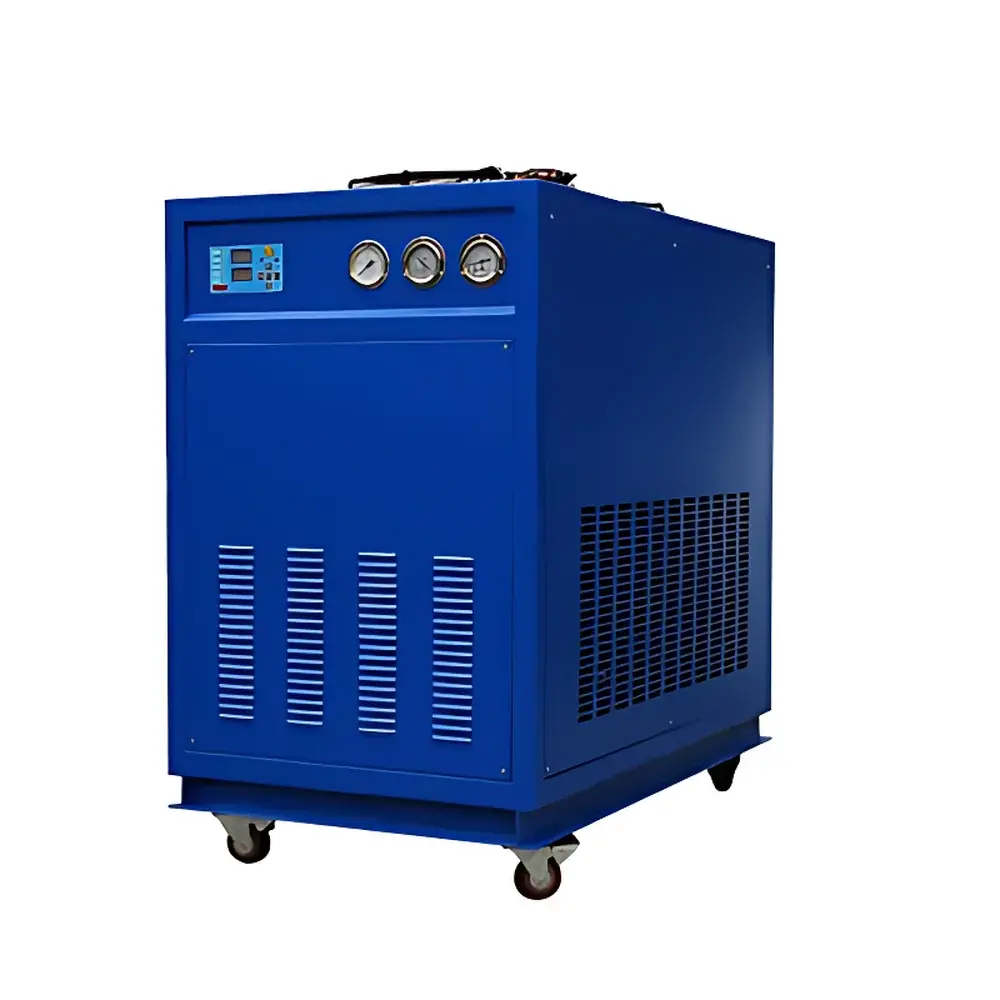
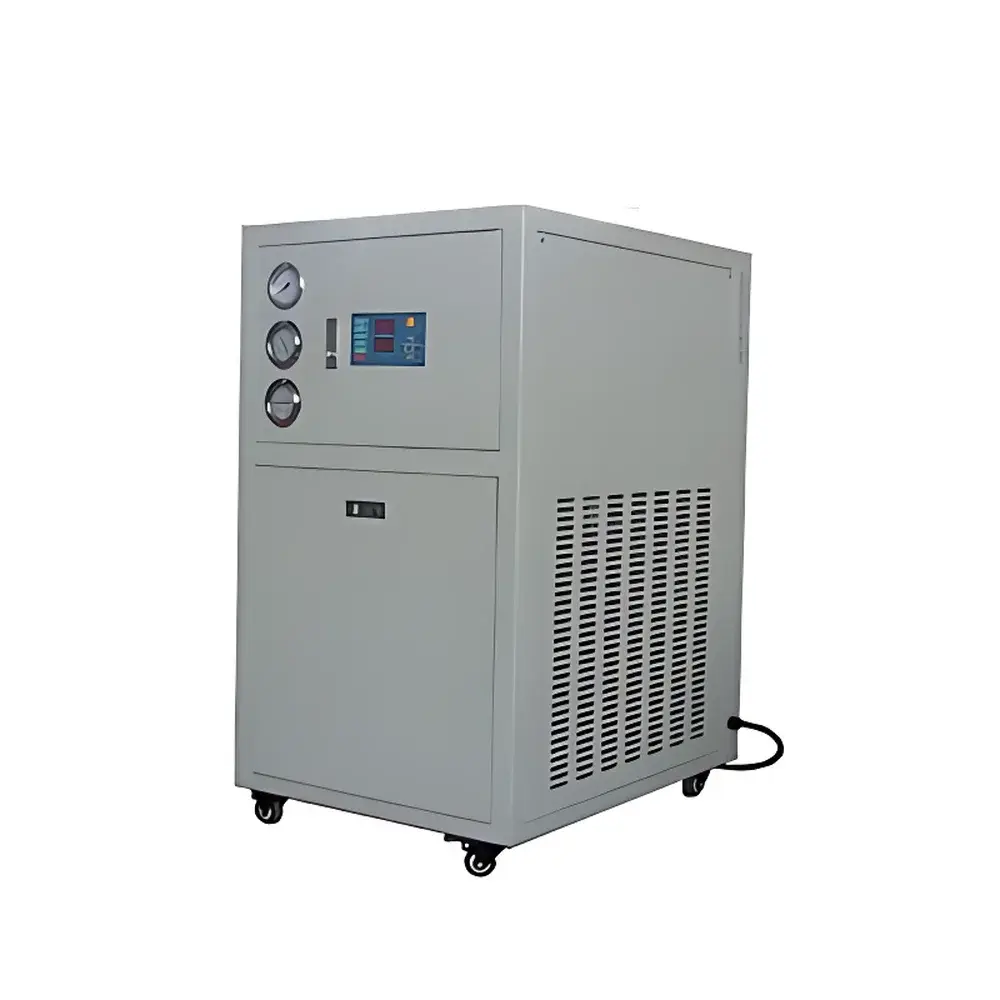
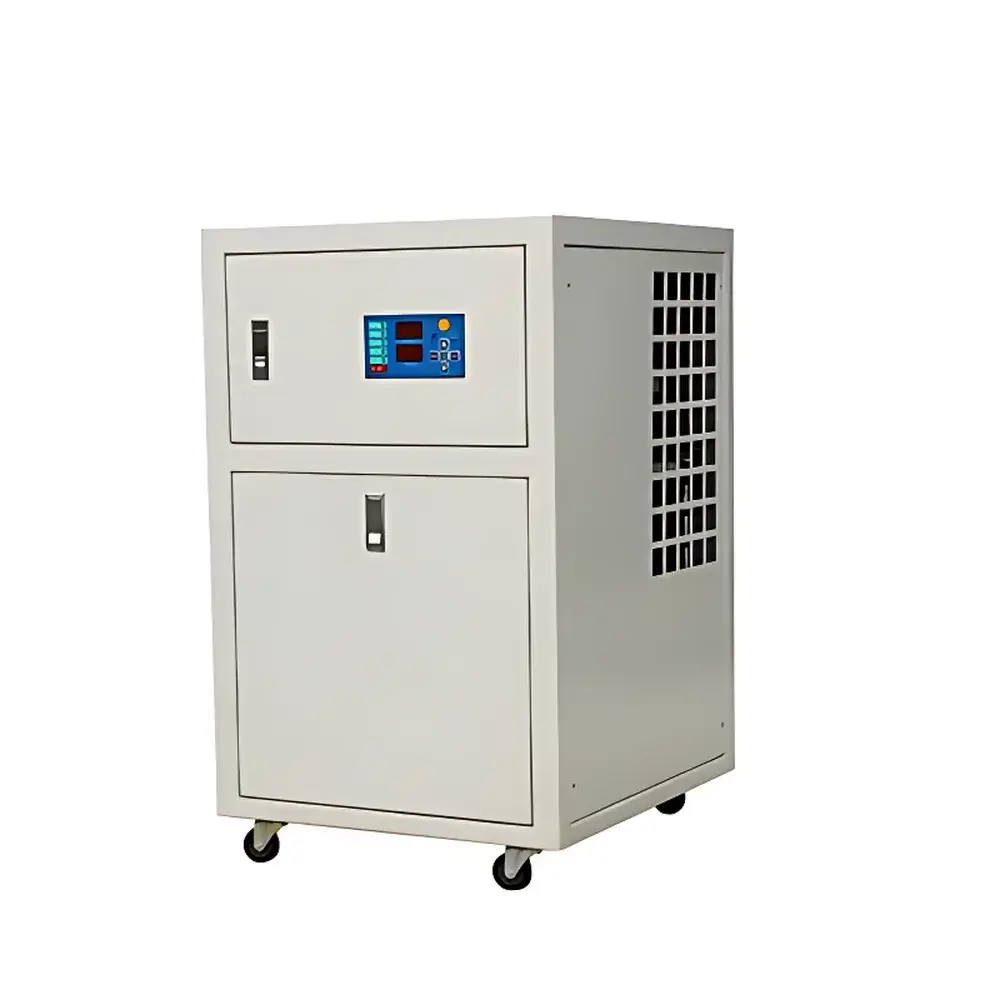
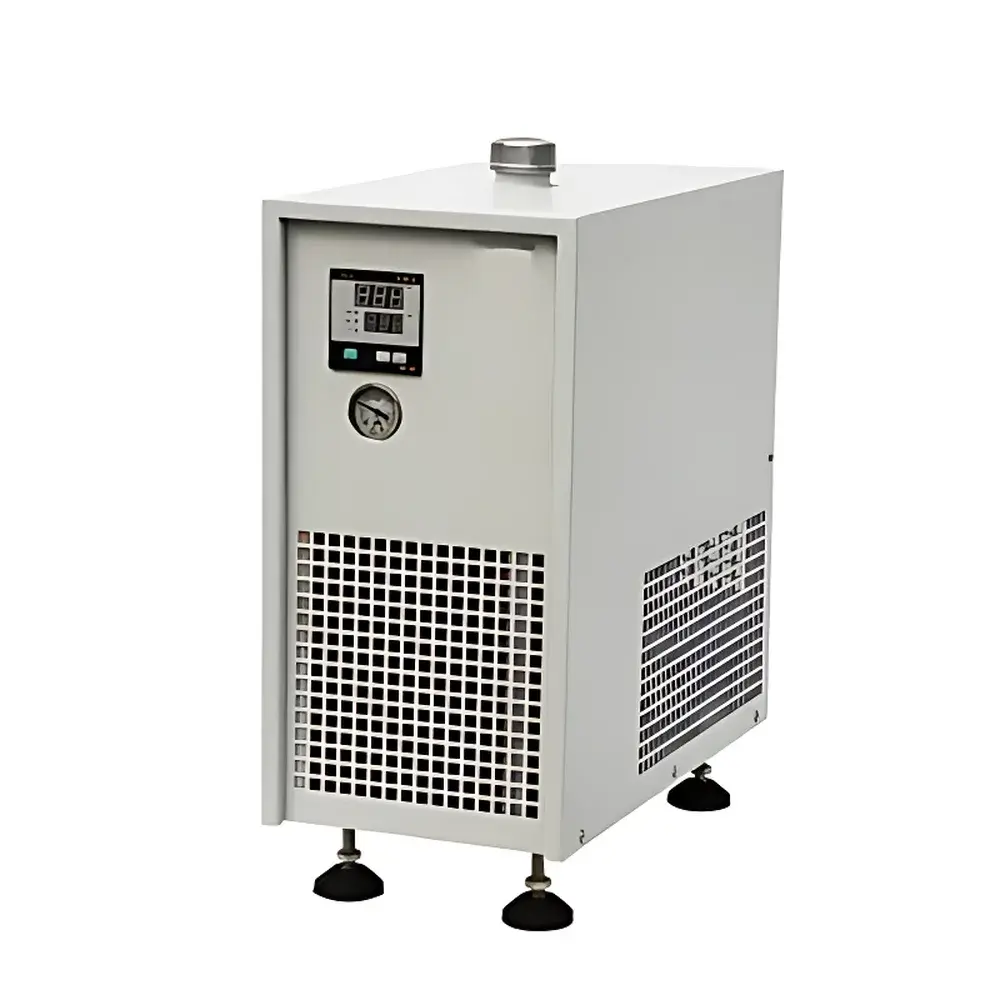
Tianfeng TF-LS-25KW Explosion-Proof Circulating Chiller
| Brand | Tianfeng |
|---|---|
| Origin | Shanghai, China |
| Manufacturer Type | Direct Manufacturer |
| Instrument Type | Integrated Unit |
| Cooling Method | Water-Cooled |
| Refrigeration Capacity | 25 kW |
| Temperature Stability | ±0.3°C (typical, at 20°C setpoint) |
| Circulating Pump Pressure | 0–2 kgf/cm² |
| Circulating Flow Rate | 0–60 L/min |
| Reservoir Volume | 200 L |
| Power Consumption | 9.9 kW |
| Input Voltage | 220 V, 50 Hz |
| Dimensions (L×W×H) | 1350 × 900 × 1845 mm |
| Safety Protections | Compressor overheat protection, overcurrent protection, high/low pressure cutoff, and overtemperature alarm |
| Construction | Stainless steel reservoir and pump |
| Compressor | High-efficiency scroll type |
| Control System | Digital PID temperature controller (standard Chinese-made |
| Electrical Components | Siemens, Schneider, Omron |
| Expansion Valve & Solenoid Valve | Imported (Italy/Germany) |
| Noise Level | ≤72 dB(A) |
| Operating Ambient Temperature | ≤35°C |
| Coolant Inlet/Outlet Temp Range | 5–30°C (recommended ΔT = 5°C) |
Overview
The Tianfeng TF-LS-25KW Explosion-Proof Circulating Chiller is an intrinsically safe, industrial-grade refrigeration system engineered for continuous, stable thermal management in hazardous environments where flammable vapors, dust, or gases may be present—such as analytical laboratories housing ICP-MS, XRD, SEM/TEM, or laser-based instrumentation. It operates on a vapor-compression refrigeration cycle using R410A or R134a refrigerant (configurable per regional compliance), with dual-stage heat exchange optimized for precise coolant delivery across demanding load profiles. Unlike standard chillers, its explosion-proof design conforms to GB 3836.1–2021 (equivalent to IEC 60079-0) for Class I, Division 1 / Zone 1 hazardous area classification, featuring hermetically sealed electrical enclosures, non-sparking motor windings, and certified grounding continuity. The unit delivers consistent cooling capacity of 25 kW at standard conditions (chilled water inlet 12°C, outlet 7°C; ambient cooling water 30/40°C), supporting equipment requiring tight thermal regulation—including graphite furnace AAS, plasma sources, high-power laser diodes, and vacuum deposition systems.
Key Features
- Explosion-proof certification compliant with GB 3836.1–2021 (IEC 60079-0), suitable for installation in classified laboratory zones without additional barrier systems.
- High-efficiency scroll compressor with low-vibration operation and extended service life under continuous duty cycles.
- Digital PID temperature controller with real-time display, adjustable setpoint range (5–30°C), and ±0.3°C typical stability at steady state.
- Full stainless steel reservoir (200 L) and circulation pump, resistant to corrosion from deionized water, glycol-water mixtures, or mild chemical coolants.
- Programmable dual-mode operation: constant-temperature mode for fixed-setpoint applications; intelligent adaptive mode that modulates pump speed and compressor staging based on real-time thermal load feedback.
- Comprehensive safety suite including high/low refrigerant pressure monitoring, compressor winding temperature sensing, flow rate verification, and overtemperature shutdown with fault-code logging.
- Modular electrical architecture using Siemens PLC-grade relays, Schneider contactors, and Omron sensors—designed for GLP-aligned traceability and long-term reliability.
- Noise-optimized acoustic enclosure (<72 dB[A]) enabling deployment in shared lab spaces without acoustic isolation infrastructure.
Sample Compatibility & Compliance
The TF-LS-25KW is compatible with a broad spectrum of laboratory instruments requiring stable, low-particulate coolant circulation—including but not limited to: Inductively Coupled Plasma Mass Spectrometers (ICP-MS), X-ray Fluorescence (XRF) spectrometers, X-ray Diffraction (XRD) systems, Scanning/Transmission Electron Microscopes (SEM/TEM), Laser Ablation ICP-MS setups, and high-power fiber lasers used in ablation or micro-machining. Its coolant loop supports aqueous solutions up to 30% ethylene glycol concentration and maintains particulate levels below ISO 4406 16/14/11 when paired with optional inline filtration. From a regulatory standpoint, the chiller meets CE marking requirements for electromagnetic compatibility (EMC Directive 2014/30/EU) and low voltage safety (LVD Directive 2014/35/EU). While not inherently 21 CFR Part 11 compliant, its optional RKC controller supports audit-trail-enabled operation when integrated into validated laboratory networks adhering to GMP/GLP workflows.
Software & Data Management
The standard control interface provides local setpoint adjustment, real-time temperature/pressure/flow readouts, and event-triggered alarm status via a backlit LCD panel. Optional RS485 Modbus RTU or Ethernet TCP/IP communication enables integration into centralized facility monitoring platforms (e.g., LabVantage, DeltaV, or custom SCADA). Logged parameters—including compressor run time, cumulative energy consumption (kWh), fault history with timestamps, and thermal deviation statistics—are exportable as CSV files for QA documentation. For regulated environments, the optional RKC RP960 controller adds electronic signature capability, user-level access control (three-tier authentication), and tamper-evident audit trails aligned with FDA 21 CFR Part 11 Annex 11 expectations.
Applications
This chiller serves critical thermal stabilization roles across multiple laboratory domains. In elemental analysis labs, it maintains optimal operating temperatures for ICP torches and detector cooling stages, minimizing spectral drift and improving detection limits. In materials characterization facilities, it stabilizes electron beam columns in TEMs and prevents thermal lensing in high-resolution XRD optics. In laser spectroscopy suites, it ensures wavelength stability in tunable OPOs and Ti:sapphire oscillators by maintaining sub-0.5°C coolant temperature consistency. In pharmaceutical QC labs, it supports controlled cooling during dissolution testing per USP and maintains jacketed reactors for stability-indicating assays. Its robust construction also supports industrial crossover use—such as mold temperature control in polymer analytics, hydraulic oil cooling for tribology test rigs, and cryo-stage conditioning in semiconductor metrology.
FAQ
What certifications does this chiller hold for hazardous location use?
It complies with GB 3836.1–2021 (China Ex standard), equivalent to IEC 60079-0, rated for Class I, Zone 1 / Division 1 environments involving Group IIA–IIB explosive atmospheres.
Can it operate with deionized water or glycol mixtures?
Yes—compatible with DI water, 10–30% ethylene or propylene glycol solutions, and inhibited coolants meeting ASTM D1384 specifications.
Is remote monitoring supported out of the box?
Standard configuration includes RS485 Modbus RTU; Ethernet/IP and OPC UA require optional communication module installation.
What is the maximum allowable return water temperature?
For sustained compressor longevity, inlet coolant temperature must remain ≤40°C; exceeding this threshold triggers automatic derating and thermal alarm.
Does the unit include flow and temperature calibration certificates?
Factory calibration reports are provided; NIST-traceable third-party certification is available upon request (lead time +5 business days).



