
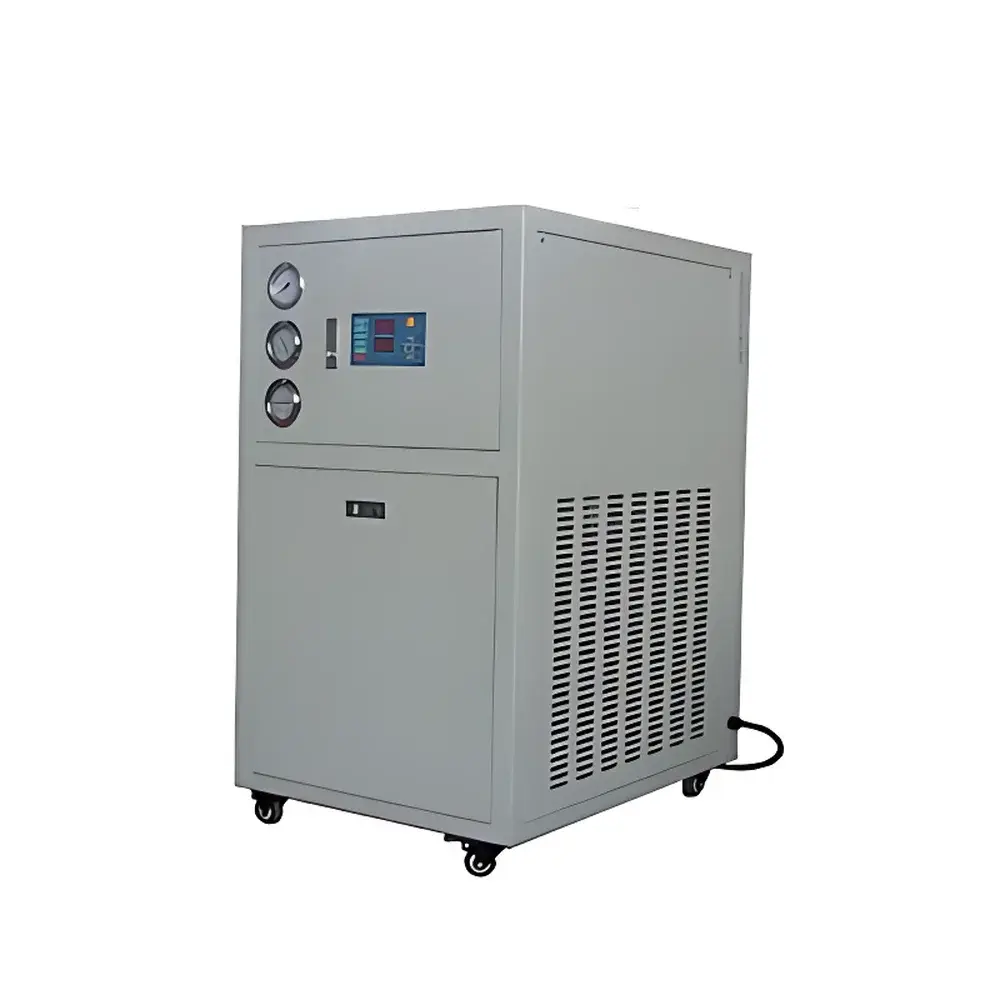
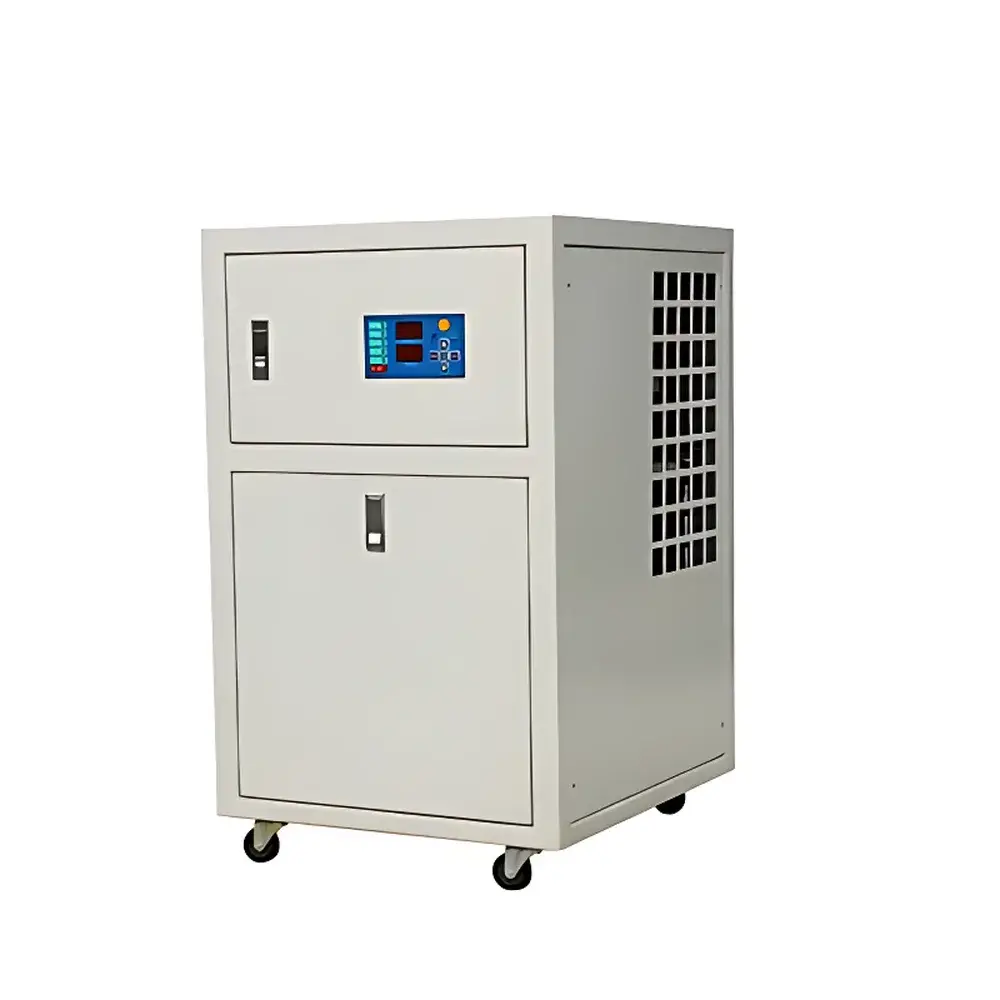
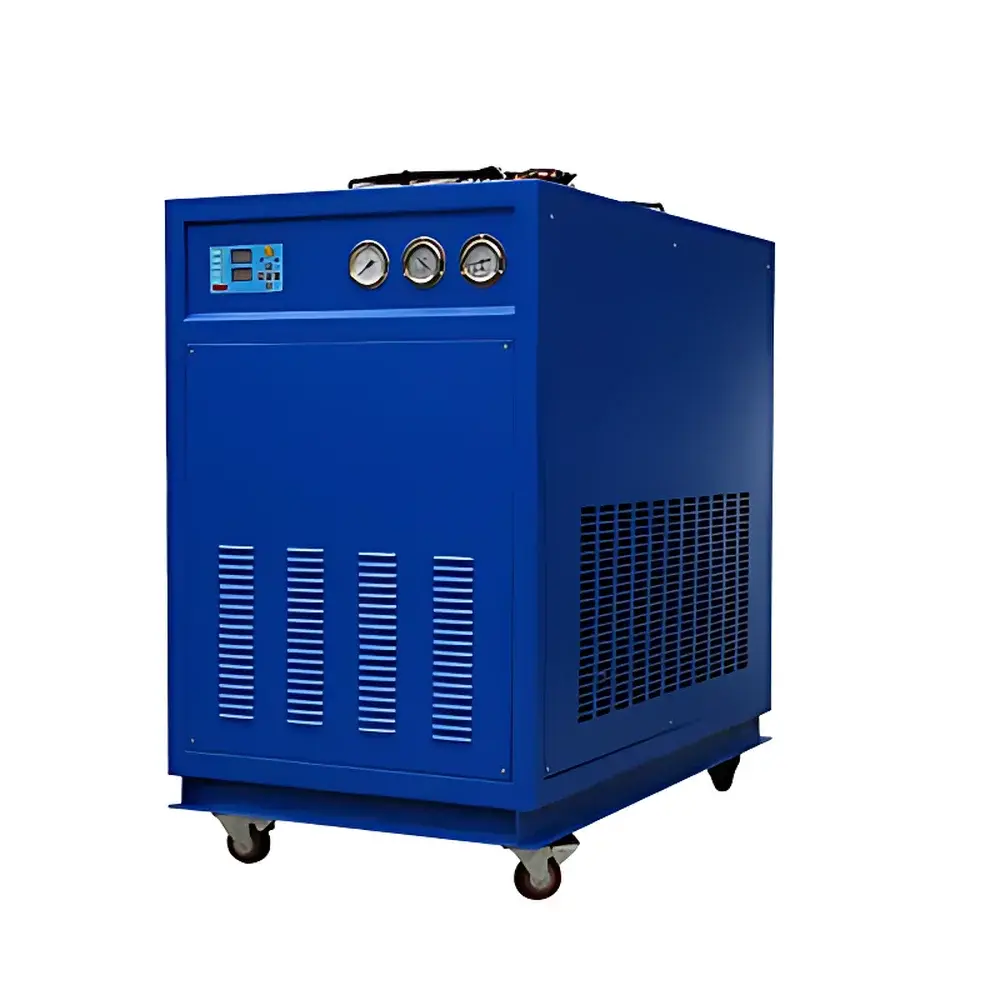
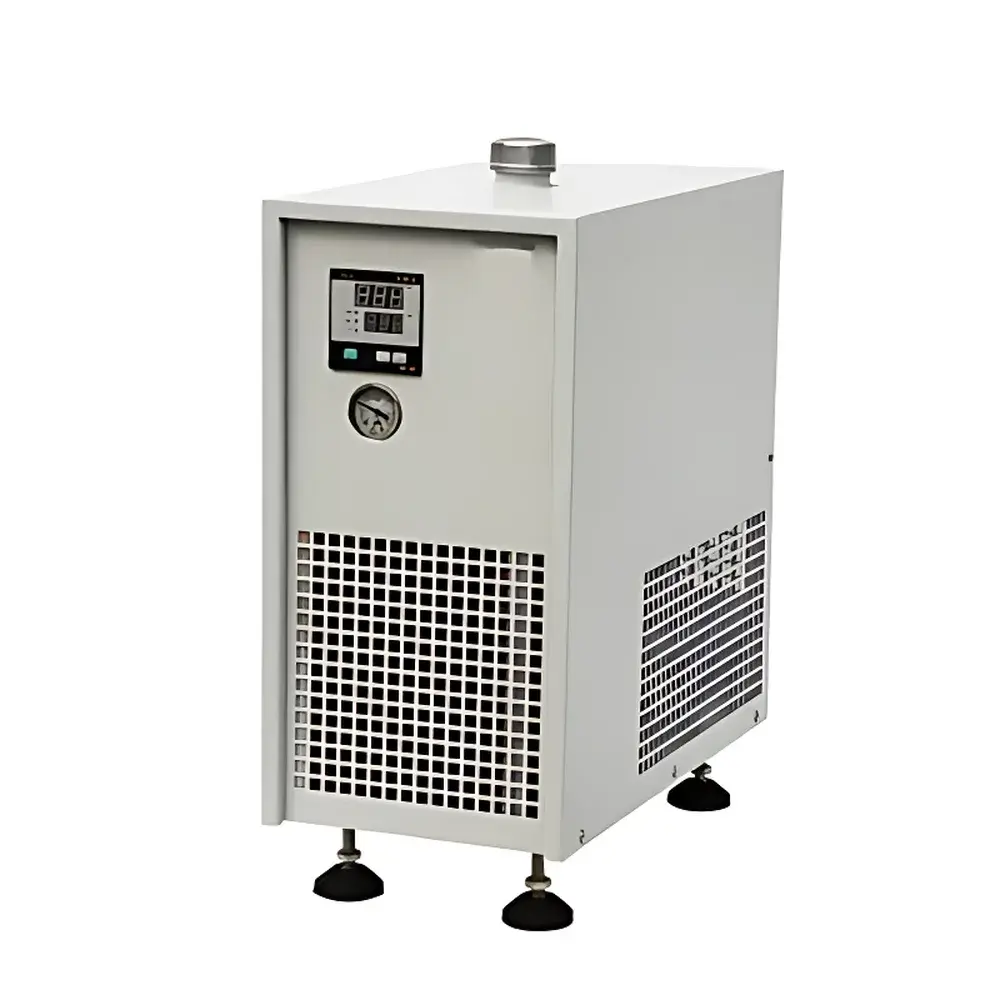
Tianfeng TF-LS-6.5 kW Industrial Circulating Chiller
| Brand | Tianfeng |
|---|---|
| Origin | Shanghai, China |
| Manufacturer Type | Direct Manufacturer |
| Equipment Type | Integrated Circulating Chiller |
| Cooling Method | Water-Cooled |
| Temperature Control Range | 0–40 °C |
| Temperature Stability | ±0.1 °C |
| Refrigeration Capacity | 6.5 kW (5,586 kcal/h) |
| Circulating Pump Pressure | 0–2.0 bar |
| Circulating Flow Rate | 0–38 L/min |
| Reservoir Volume | 45 L |
| Power Input | 2.76 kW |
| Supply Voltage | 220 V, 50 Hz |
| Dimensions (L×W×H) | 800 × 600 × 1065 mm |
| Compressor Type | Scroll Compressor |
| Safety Protections | High/Low Pressure Switch, Overcurrent Protection, Compressor Overheat Protection, Overtemperature Alarm |
| Construction | Stainless Steel Reservoir & Pump |
| Controller | Digital PID Temperature Controller (Optional RKC Unit Available) |
| Certifications | ISO 9001:2000 Certified |
Overview
The Tianfeng TF-LS-6.5 kW Industrial Circulating Chiller is a precision-engineered, water-cooled thermal management system designed for continuous-duty operation in demanding laboratory and industrial environments. It employs a closed-loop refrigeration cycle based on vapor-compression thermodynamics, utilizing a high-efficiency scroll compressor, imported expansion valves (Italy/Germany), and optimized heat exchanger geometry to deliver stable, low-drift temperature control. The unit maintains setpoint accuracy within ±0.1 °C across its operational range of 0–40 °C—critical for applications requiring thermal stability of sensitive instrumentation or process-critical components. Its integrated architecture eliminates external piping complexity while ensuring compact footprint (800 × 600 × 1065 mm) and ease of deployment in constrained lab spaces or near analytical equipment such as ICP-OES, XRD, SEM, TEM, and graphite furnace AAS systems.
Key Features
- Stainless steel reservoir (45 L capacity) and corrosion-resistant circulation pump ensure long-term fluid integrity and compatibility with deionized water or inhibited glycol-water mixtures.
- Digital PID temperature controller with real-time display and adjustable setpoint resolution of 0.1 °C; optional RKC controller available for enhanced repeatability and protocol-based ramp/soak profiles.
- Multi-layer safety architecture: dual-pressure monitoring, compressor overheat cutoff, overcurrent protection, and overtemperature alarm with dry-contact fault signal output for integration into facility SCADA or lab monitoring networks.
- Low-noise operation (<65 dB(A) at 1 m) achieved via acoustic insulation, vibration-dampened compressor mounting, and optimized fan blade design—essential for quiet laboratory zones.
- Wide-flow adaptability: adjustable flow rate (0–38 L/min) and pressure delivery (0–2.0 bar) support both low-resistance cooling loops (e.g., laser diode mounts) and high-head applications (e.g., multi-instrument manifolds).
- Energy-efficient scroll compressor paired with high-COP condenser coils and intelligent load-matching logic minimizes power consumption (2.76 kW nominal input) without compromising thermal response.
Sample Compatibility & Compliance
The TF-LS-6.5 kW chiller is compatible with standard laboratory coolants including deionized water, 20–30% ethylene glycol/water blends, and proprietary inhibited heat-transfer fluids meeting ASTM D1384 and ISO 2105 standards. Its stainless steel wetted parts comply with USP Class VI requirements for non-leaching contact surfaces. The unit meets CE marking requirements for electromagnetic compatibility (EN 61000-6-3/6-4) and low-voltage directive (2014/35/EU). While not intrinsically rated for hazardous locations, it supports GLP/GMP-aligned operation when configured with audit-trail-capable controllers (RKC variant) and integrated into validated cooling loops per FDA 21 CFR Part 11 data integrity guidelines.
Software & Data Management
The base model features a local digital interface with password-protected parameter access, real-time temperature logging (internal buffer for 72 h of 1-min intervals), and configurable alarm thresholds. When equipped with the optional RKC controller, the system supports RS-485 Modbus RTU communication for remote setpoint adjustment, status polling, and event-triggered data export. Logged data can be exported via USB or serial connection in CSV format for traceability in IQ/OQ/PQ documentation. All firmware updates are performed offline using certified binaries; no cloud connectivity or third-party telemetry is implemented—ensuring full data sovereignty and alignment with institutional IT security policies.
Applications
- Instrument Cooling: Stable thermal management for high-power lasers (CO₂, fiber, excimer), plasma sources (ICP torches), X-ray generators, electron optics (SEM/TEM column chillers), and spectroscopic detectors requiring sub-degree thermal drift control.
- Materials Analysis: Maintaining constant bath temperature during XRD sample stages, DSC calibration runs, or rheometer Peltier plates where thermal inertia must be minimized.
- Process Support: Cooling vacuum chamber cold traps, semiconductor wafer chucking plates, or high-speed spindle housings in metrology-grade CNC systems.
- Pharmaceutical & Biotech: Temperature stabilization of fermentation bioreactors, chromatography column ovens, and lyophilizer condenser plates in compliance with ICH Q5C stability testing protocols.
- Quality Control Labs: Enabling repeatable thermal conditioning of polymer samples prior to tensile testing (ASTM D638) or maintaining consistent mold temperatures in injection molding validation studies.
FAQ
What is the maximum allowable return water temperature for continuous operation?
The unit is rated for continuous duty with inlet water temperature ≤40 °C. Exceeding this threshold increases compressor discharge pressure and reduces system efficiency and service life.
Can this chiller operate with propylene glycol solutions?
Yes—up to 30% v/v propylene glycol/water mixtures are supported; however, viscosity increase requires recalibration of flow sensors and may reduce maximum achievable flow by ~15% at 20 °C.
Is remote monitoring possible without upgrading to the RKC controller?
No. The standard controller provides only local display and relay-based alarms. Modbus-enabled remote supervision requires the optional RKC module.
Does the chiller meet ISO 17025 calibration traceability requirements?
While the chiller itself is not a measuring instrument, its temperature control loop—including sensor, controller, and actuator—is factory-calibrated against NIST-traceable references. Calibration certificates are provided upon request for IQ/OQ validation.
What maintenance intervals are recommended for laboratory-grade operation?
Compressor oil and refrigerant charge require verification every 24 months under continuous use; condenser coil cleaning and coolant replacement every 12 months; and annual verification of pressure switch setpoints and PID tuning parameters.



