
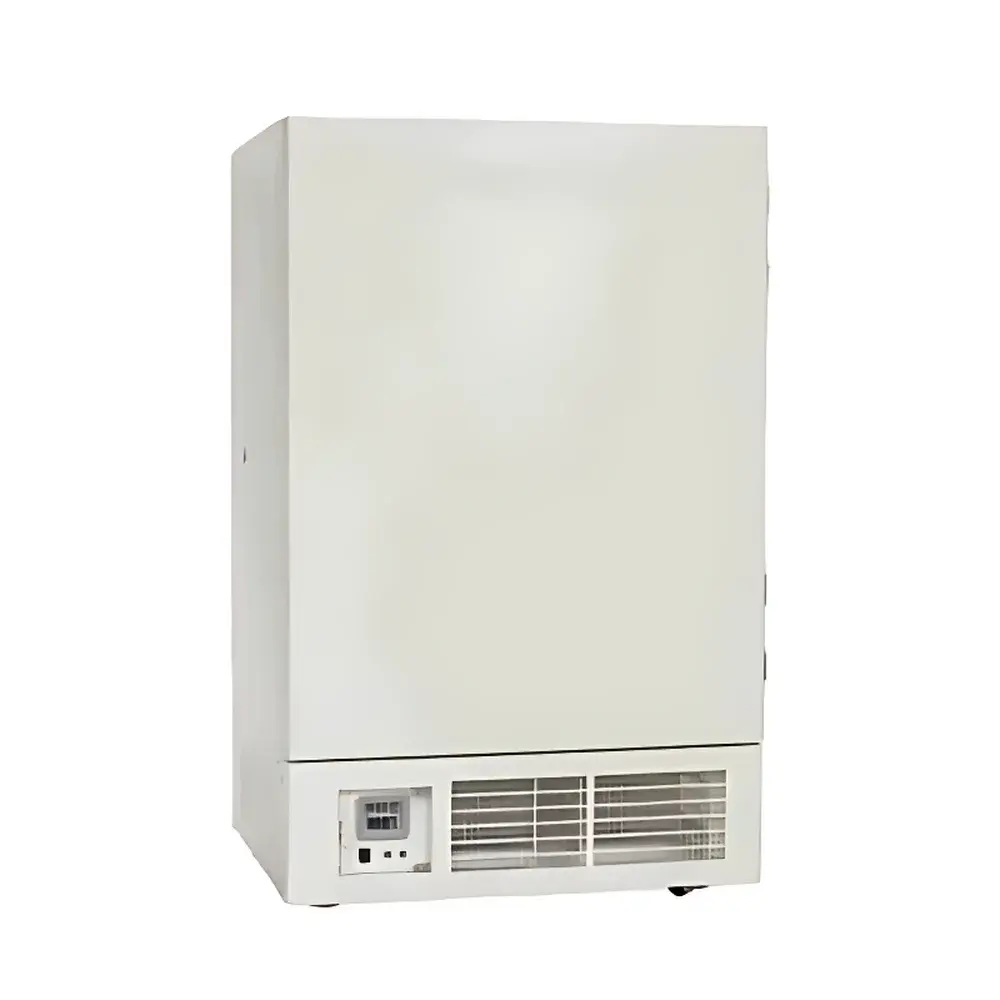
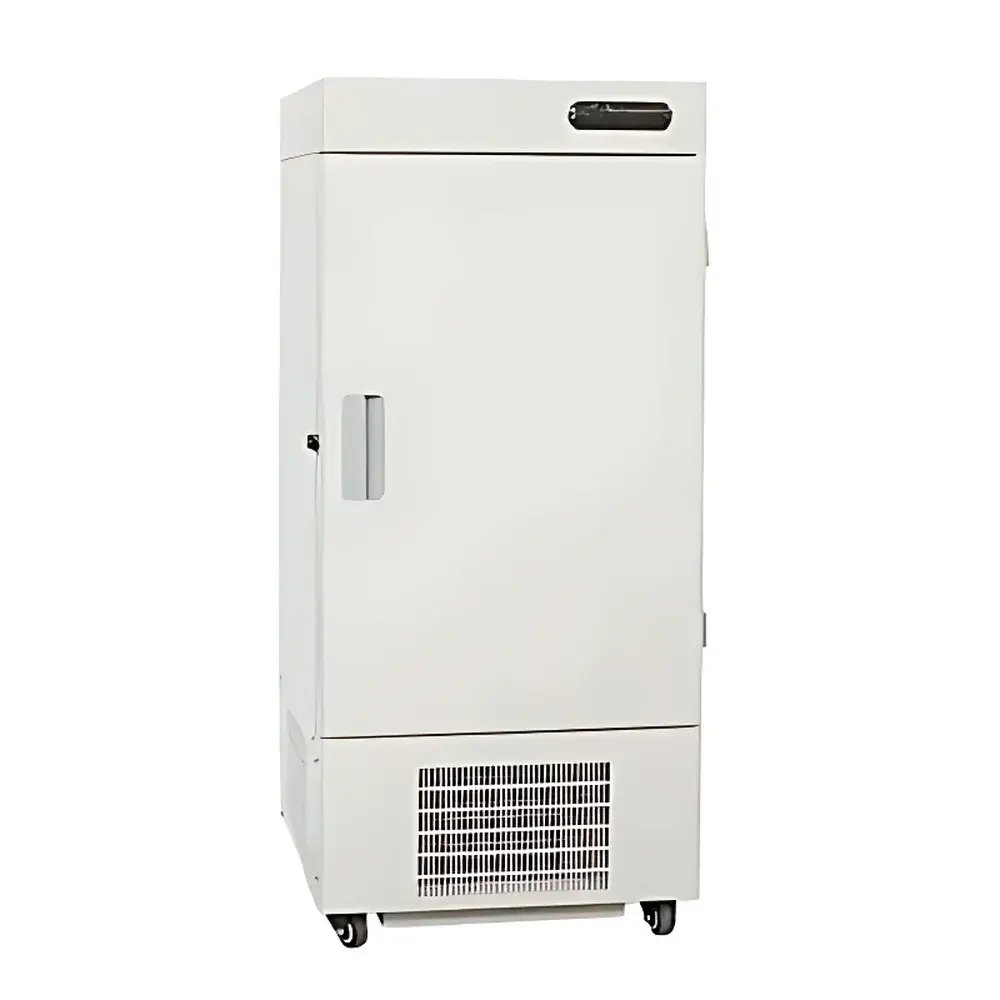
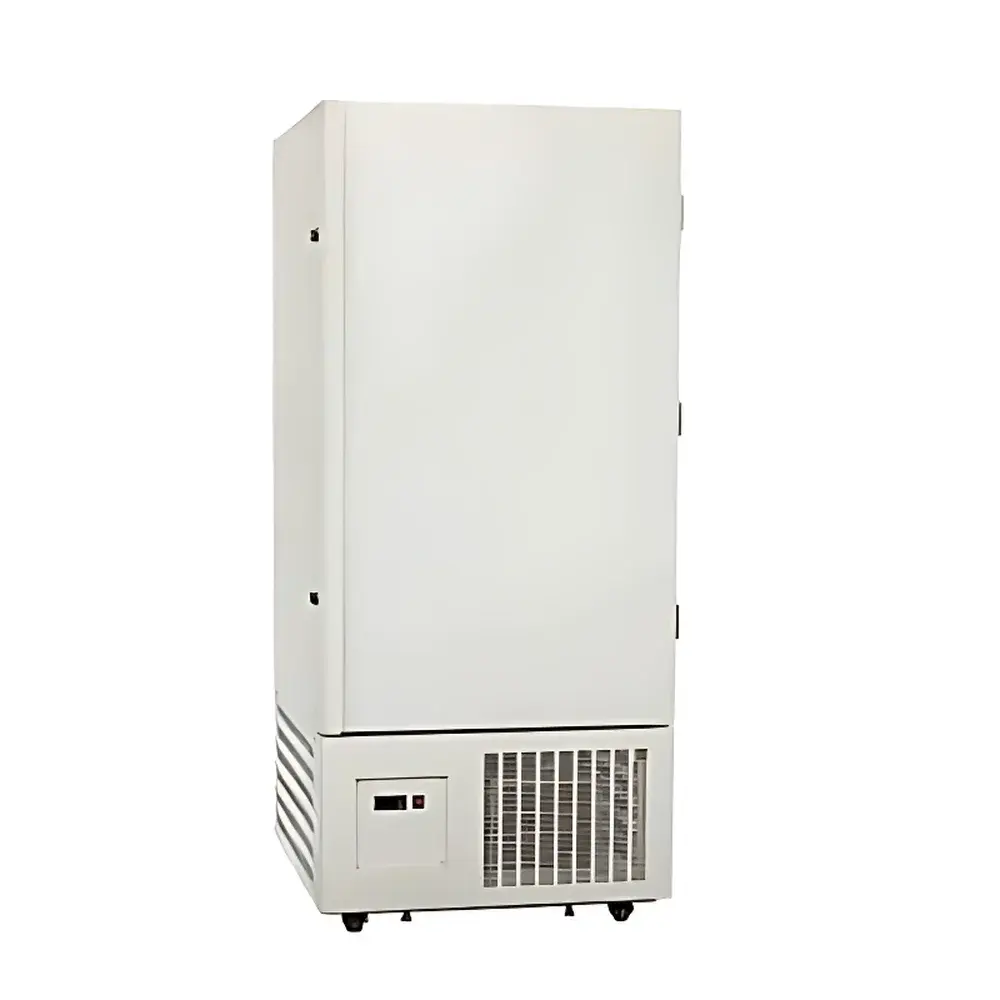
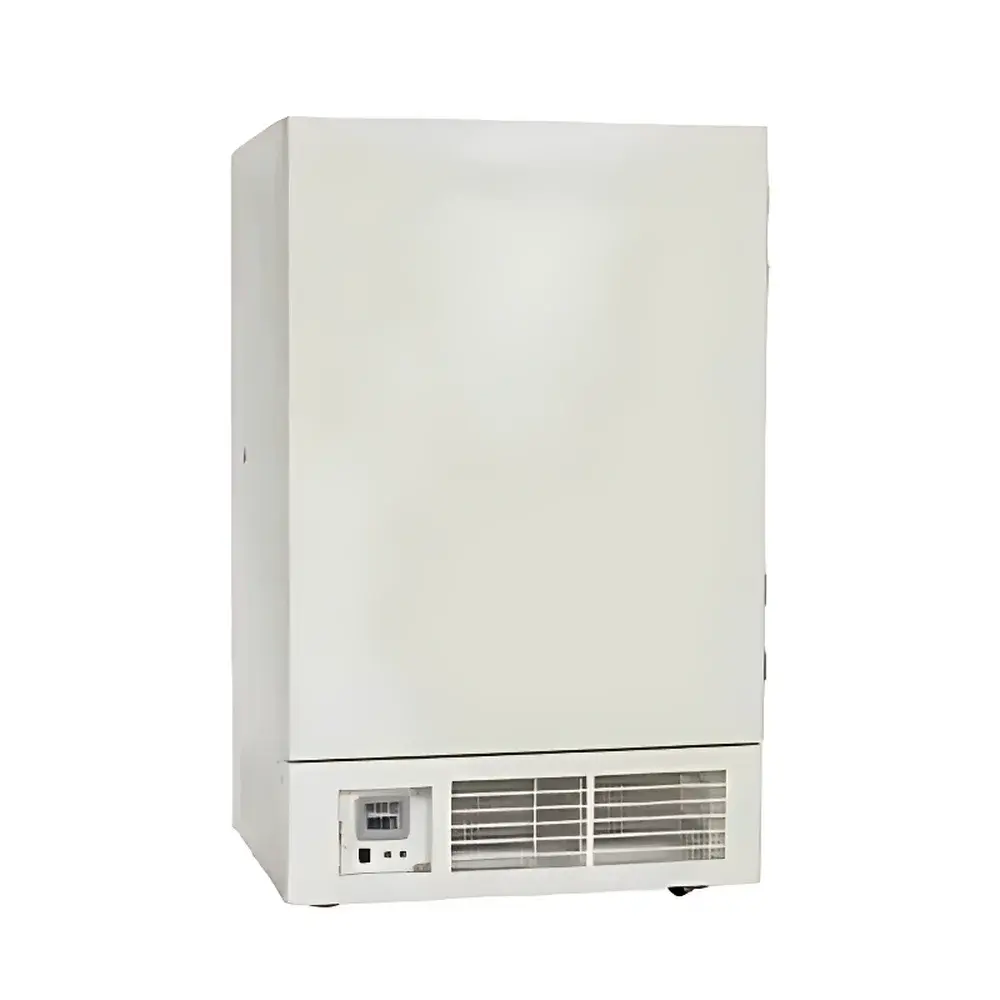
Tianfeng TF-60-938-LA Ultra-Low Temperature Medical Freezer
| Brand | Tianfeng |
|---|---|
| Origin | Shanghai, China |
| Manufacturer Type | Direct Manufacturer |
| Product Category | Domestic |
| Model | TF-60-938-LA |
| Effective Volume | 50–1000 L |
| Inner Dimensions (mm) | As per specification sheet |
| External Dimensions (mm) | As per specification sheet |
| Power Supply | 220 V / 50 Hz |
| Rated Power | 300–1100 W |
| Temperature Range | −40 °C to −86 °C |
| Noise Level | ≤57 dB(A) |
| Refrigerant | Eco-friendly HFC blend (non-ozone-depleting) |
| Inner Liner Material | Stainless steel (304) |
| Door Configuration | Four independent inner doors |
| Shelving | Three adjustable stainless-steel shelves |
| Cooling Method | Hybrid — partial natural convection + forced-air condenser |
| Interface Option | RS-232 (optional) |
| Compliance | ISO 9001:2000 certified manufacturing |
| Safety Features | Dual lock (door + power), over-temperature alarm, door-open alert, voltage fluctuation detection |
Overview
The Tianfeng TF-60-938-LA Ultra-Low Temperature Medical Freezer is an engineered solution for long-term cryogenic preservation of biologics, clinical specimens, and temperature-sensitive reagents. Designed specifically for regulated healthcare and life science environments, it maintains stable operating temperatures between −40 °C and −86 °C using a dual-stage cascade refrigeration system powered by imported compressors and high-efficiency heat exchangers. Its hybrid cooling architecture—combining passive natural convection with active forced-air condensation—ensures thermal stability under ambient conditions up to 35 °C and in non-ideal laboratory settings (e.g., limited ventilation, dust-prone areas). The unit complies with fundamental design principles outlined in ISO 13485:2016 (for medical device manufacturers) and supports adherence to Good Laboratory Practice (GLP) and Good Manufacturing Practice (GMP) requirements through consistent thermal performance and traceable operational parameters.
Key Features
- Stainless-steel (grade 304) interior liner and inner doors—corrosion-resistant, non-porous, and compatible with standard disinfectants used in clinical and research labs.
- Four independently sealed inner doors minimize cold air loss during frequent access, preserving chamber uniformity and reducing compressor cycling.
- Three-tier adjustable shelving system enables flexible configuration for vials, cryoboxes, racks, or bulk containers without compromising airflow integrity.
- Smooth, radius-cornered internal cavity facilitates complete cleaning and residue-free decontamination—critical for biosafety compliance and cross-contamination prevention.
- Hybrid condenser design mitigates risk of compressor overload due to dust accumulation; even with partial airflow restriction, thermal load is redistributed via convection pathways.
- Acoustically optimized enclosure achieves ≤57 dB(A) at 1 m distance—suitable for shared lab spaces where noise-sensitive instrumentation (e.g., mass spectrometers, microscopes) operates nearby.
- Integrated alarm system monitors door status, ambient voltage fluctuations, sensor drift, and temperature excursions beyond user-defined thresholds (±2 °C default).
- RS-232 serial interface (optional) enables connection to laboratory information management systems (LIMS) or centralized environmental monitoring platforms for audit-ready data logging.
Sample Compatibility & Compliance
The TF-60-938-LA accommodates a broad spectrum of biological and chemical storage formats—including cryovials (1.2–5.0 mL), Nunc™-style boxes, Corning® freezing containers, plasma bags (up to 500 mL), and tissue cassettes—without requiring custom racking. Its validated temperature uniformity (±3 °C at −80 °C, per IEC 61000-4-30-based mapping protocol) ensures viability retention for hematopoietic stem cells, primary human tissues, monoclonal antibodies, and lyophilized vaccines. Units are manufactured under ISO 9001:2000-certified quality management systems, with full traceability of critical components (compressors, expansion valves, temperature sensors). While not FDA 510(k)-cleared as a Class II medical device, the freezer meets functional equivalency benchmarks referenced in USP (Good Storage and Distribution Practices) and supports compliance with CLIA, CAP, and AABB accreditation standards when deployed within documented storage SOPs.
Software & Data Management
No proprietary software suite is bundled; however, the optional RS-232 port permits integration with third-party environmental monitoring platforms (e.g., DicksonOne, SensiNet, or custom Python/Node.js daemons) supporting ASCII-based polling at configurable intervals (1–300 sec). All alarms generate timestamped event logs stored locally in non-volatile memory (retention ≥90 days). Audit trail functionality—including operator ID (via external authentication gateway), parameter change history, and alarm acknowledgment records—is achievable when interfaced with compliant LIMS or electronic lab notebooks (ELN). The system does not natively support 21 CFR Part 11 electronic signatures but provides raw data export (CSV/TXT) suitable for post-hoc validation workflows.
Applications
This ultra-low temperature freezer serves mission-critical roles across clinical diagnostics, translational research, and biobanking infrastructure. It is routinely deployed for: cryopreservation of peripheral blood mononuclear cells (PBMCs) and induced pluripotent stem cells (iPSCs); long-term archiving of genomic DNA/RNA libraries; storage of WHO-prequalified vaccines (e.g., mRNA-LNP formulations requiring −70 °C stability); stabilization of thermolabile enzymes (e.g., Cas9 variants, reverse transcriptases); and secure holding of forensic evidence samples prior to toxicological analysis. End users include blood banks, university core facilities, contract research organizations (CROs), pharmaceutical QC laboratories, and national public health institutes maintaining reference strain collections.
FAQ
What maintenance intervals are recommended for optimal performance?
Perform visual inspection of condenser coils and dust filter every 30 days; clean with dry compressed air or soft brush. Verify door gasket integrity quarterly using the “dollar bill test.” Calibrate temperature sensors annually using NIST-traceable reference probes.
Can this unit operate reliably in tropical climates with high ambient humidity?
Yes—its hybrid cooling architecture and corrosion-resistant stainless-steel construction enable continuous operation at ambient temperatures up to 35 °C and relative humidity ≤80% RH (non-condensing), provided minimum clearance (10 cm rear/side, 15 cm top) is maintained.
Is remote monitoring supported out-of-the-box?
Not natively—but RS-232 output allows integration with Ethernet-to-serial gateways (e.g., Lantronix UDS-10/12) for SNMP or MQTT-based telemetry in enterprise IT environments.
Does the freezer comply with environmental regulations regarding refrigerants?
Yes—it uses a zero-ozone-depletion-potential (ODP = 0) HFC blend compliant with EU F-Gas Regulation (EU) No 517/2014 and EPA SNAP Program guidelines for laboratory ultra-low temperature applications.
What documentation is provided for IQ/OQ validation?
Factory-installed calibration certificates (temperature sensors, voltage input), electrical safety test reports (IEC 61010-1), and a comprehensive user manual containing installation, commissioning, and preventive maintenance procedures are included. Custom IQ/OQ protocols can be developed in collaboration with qualified third-party validation partners.
Related Products




