
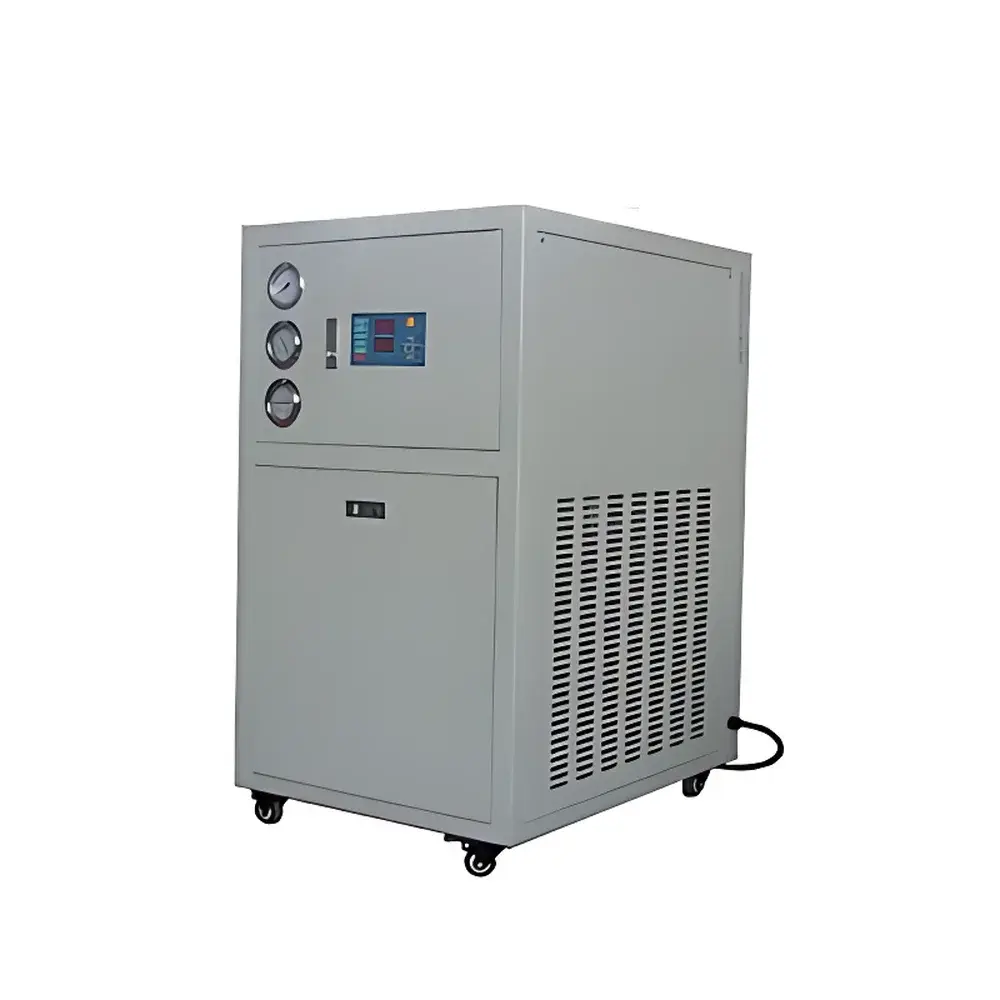
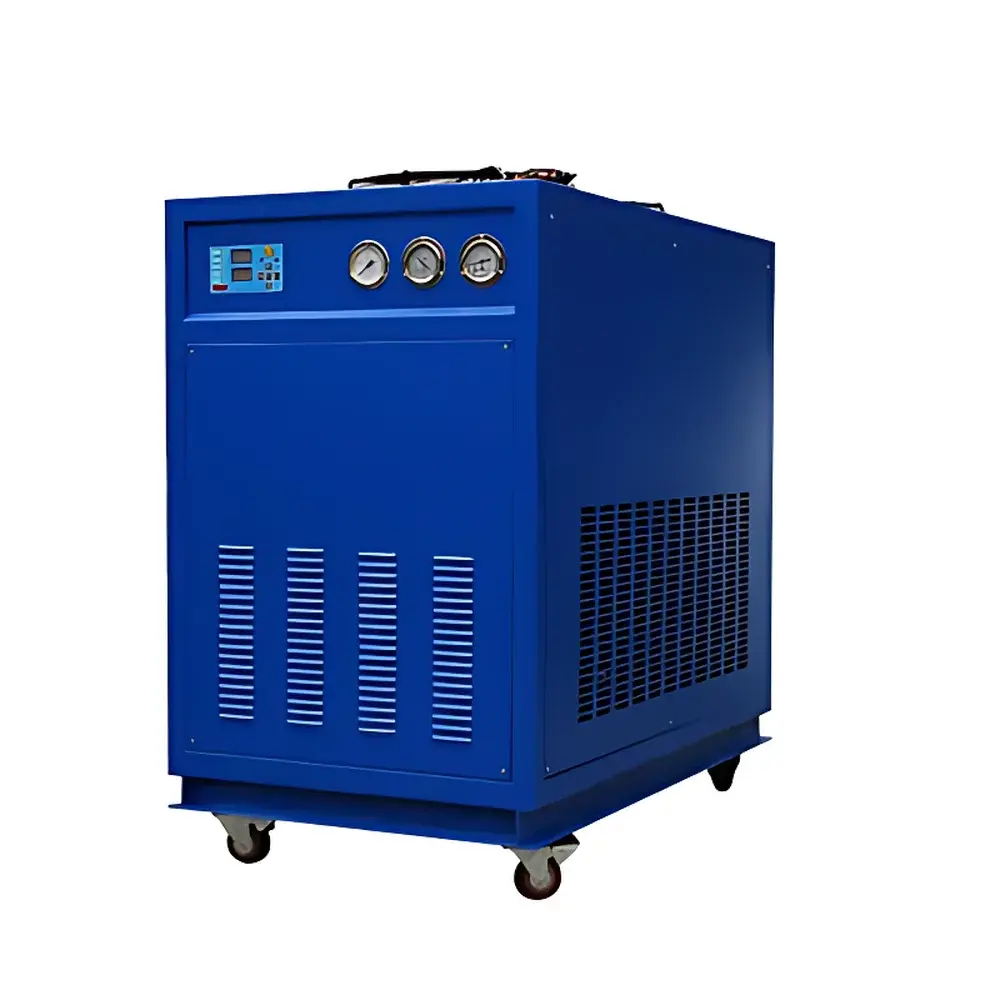
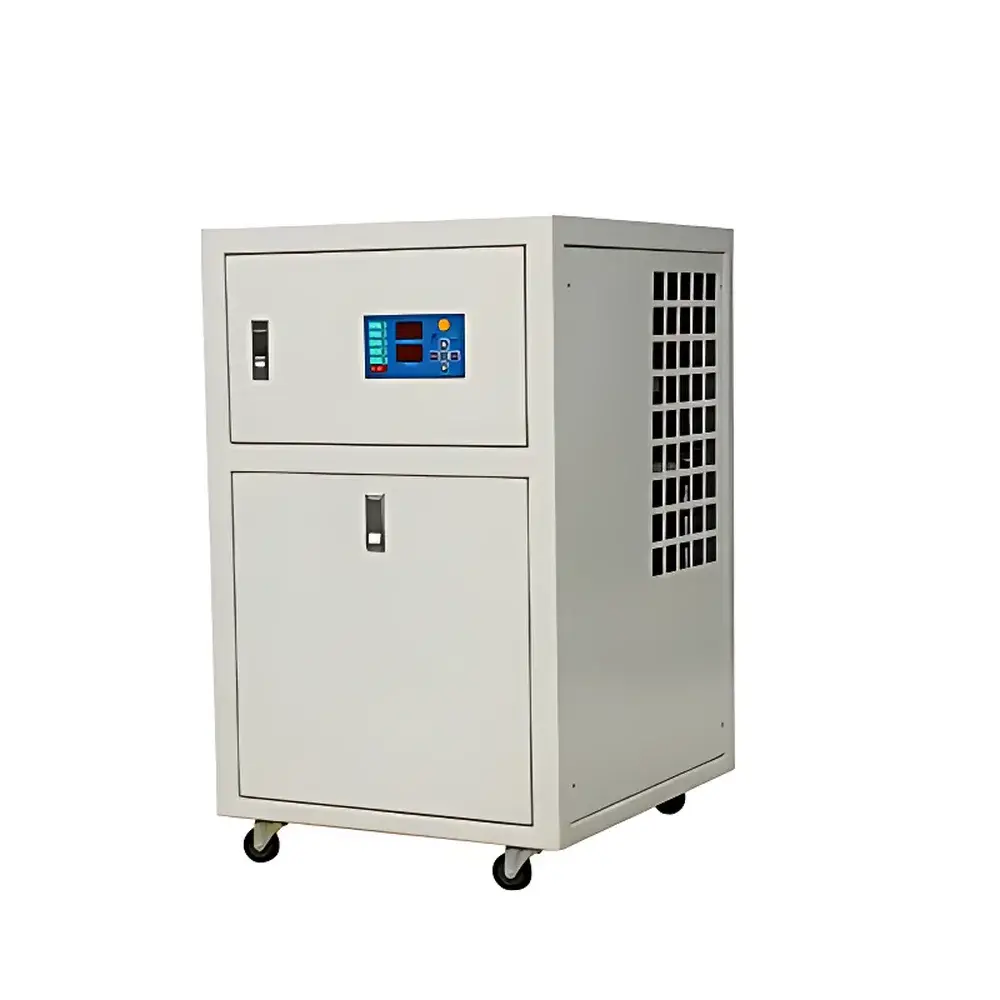
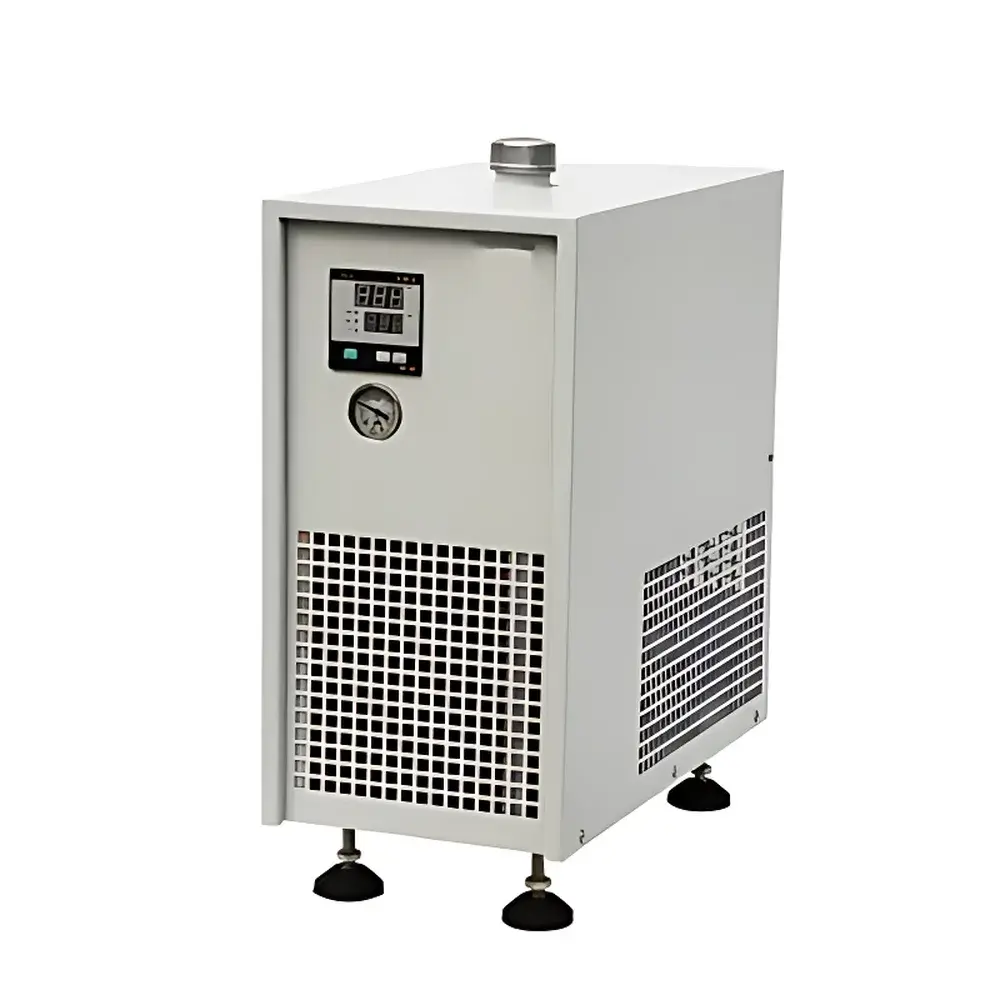
Tianfeng TF-LS Series Circulating Chillers
| Brand | Tianfeng |
|---|---|
| Origin | Shanghai, China |
| Manufacturer Type | Direct Manufacturer |
| Product Type | Integrated Circulating Chiller |
| Cooling Method | Water-Cooled |
| Temperature Control Range | 0–40 °C |
| Refrigeration Capacity | 300–9000 W |
| Temperature Stability | ±0.1 °C |
| Circulation Pump Pressure | 2.0 bar |
| Circulation Flow Rate | 38 L/min |
| Reservoir Volume | 5–550 L |
| Operation Mode | Continuous Duty |
Overview
The Tianfeng TF-LS Series Circulating Chillers are engineered for precision thermal management in demanding laboratory and industrial environments. These water-cooled, integrated chillers employ vapor-compression refrigeration with scroll compressors, PID-based digital temperature control, and closed-loop liquid circulation to maintain stable coolant temperatures across a wide operational range (0–40 °C). Designed to meet the stringent thermal stability requirements of analytical instrumentation—including graphite furnace atomic absorption spectrometers (GFAAS), inductively coupled plasma optical emission spectrometers (ICP-OES), ICP-mass spectrometers (ICP-MS), X-ray fluorescence (XRF) and X-ray diffraction (XRD) systems, scanning electron microscopes (SEM), and transmission electron microscopes (TEM)—the TF-LS series ensures consistent heat dissipation from critical components such as laser sources, detectors, RF generators, and high-voltage power supplies. The system’s low temperature fluctuation (±0.1 °C) and continuous-duty architecture support uninterrupted operation under GLP- and GMP-aligned workflows.
Key Features
- Integrated design with stainless-steel reservoir and circulation pump—corrosion-resistant and compatible with deionized water, glycol-water mixtures, and other common laboratory coolants
- High-efficiency scroll compressor (European or Japanese origin) delivering stable refrigeration output with low acoustic noise (<65 dB(A) at 1 m)
- Digital PID temperature controller with real-time display of outlet/inlet temperature, flow status, and fault diagnostics
- Comprehensive safety protection: compressor overheat, high/low pressure cutoff, overcurrent, and overtemperature alarms with relay output for external interlock integration
- Adjustable flow rate (0–60 L/min) and outlet pressure (0–2 bar) via calibrated bypass and variable-speed pump control
- Modular electrical architecture using Siemens, Schneider, or Omron PLC-grade components for long-term reliability and EMC compliance
- Optional RKC temperature controller (Japan) available for applications requiring enhanced traceability and tighter process control
- Configurable for both constant-temperature and intelligent adaptive cooling modes—responding dynamically to load-induced temperature drift
Sample Compatibility & Compliance
The TF-LS chiller is compatible with a broad spectrum of laboratory instruments requiring active cooling of heat-generating subsystems. Its coolant loop interfaces seamlessly with OEM fluid ports on spectrometers, electron microscopes, laser systems, and vacuum deposition tools. All models comply with ISO 9001:2015 quality management standards and incorporate safety-rated components certified to IEC 61000-6-2 (EMC immunity) and IEC 61000-6-4 (EMC emissions). For regulated laboratories, the system supports audit-ready operation when paired with optional data logging modules compliant with FDA 21 CFR Part 11 requirements—including electronic signature, user access control, and immutable event history. While not intrinsically rated for hazardous locations, units can be adapted for Class I, Division 2 environments upon request.
Software & Data Management
Standard models feature RS-485 Modbus RTU communication for integration into facility-wide monitoring networks (e.g., LabVantage, Thermo Fisher SampleManager, or custom SCADA). Optional Ethernet-enabled controllers provide web-based configuration, remote setpoint adjustment, real-time trend visualization, and alarm email/SMS notification. Data logging intervals are programmable from 1 second to 24 hours; all records include timestamp, temperature differential (ΔT), flow rate, compressor run time, and fault codes. Audit trails retain ≥12 months of operational history with SHA-256 hashing for integrity verification—supporting ISO/IEC 17025 and CAP accreditation requirements.
Applications
- Atomic Spectroscopy: Stabilizes graphite furnace temperature gradients in GFAAS and maintains RF plasma torch stability in ICP-OES/ICP-MS
- Materials Characterization: Controls detector and source temperatures in XRF, XRD, SEM, and TEM to minimize thermal drift in spectral resolution and imaging fidelity
- Laser Systems: Manages thermal lensing in CW/pulsed lasers used in LIBS, Raman spectroscopy, and laser ablation setups
- Vacuum & Thin-Film Equipment: Regulates target and substrate temperatures during sputtering, evaporation, and CVD processes
- Pharmaceutical QC: Supports controlled cooling in dissolution testers, stability chambers, and HPLC column ovens per USP & EP monographs
- Industrial Process Support: Provides secondary cooling for CNC spindles, injection molding tooling, and ultrasonic cleaning baths where thermal consistency directly impacts dimensional repeatability
FAQ
What is the recommended maximum return coolant temperature?
For optimal compressor longevity and refrigeration efficiency, inlet coolant temperature should not exceed 40 °C. Sustained operation above this threshold accelerates oil degradation and increases discharge pressure—potentially triggering high-pressure cutout protection.
Can the chiller operate with deionized water alone?
Yes—stainless-steel wetted parts are fully compatible with DI water. However, for extended service life (>12 months), we recommend adding 15–25% USP-grade propylene glycol to inhibit microbial growth and reduce corrosion potential in non-circulating standby periods.
Is remote monitoring supported out of the box?
Basic RS-485 Modbus interface is standard. Full Ethernet/IP or OPC UA connectivity requires the optional TF-NET module, which includes embedded TLS 1.2 encryption and configurable SNMP v3 traps.
How is temperature uniformity verified during calibration?
Each unit undergoes factory calibration using NIST-traceable PT100 sensors at inlet/outlet ports and reservoir midpoint. Calibration certificates document deviation against reference bath (±0.05 °C uncertainty) at three setpoints: 10 °C, 25 °C, and 35 °C—per ISO/IEC 17025 Clause 6.5.
What maintenance intervals are required for continuous lab operation?
Filter cartridges and coolant should be replaced every 6 months under 24/7 use. Compressor oil analysis is recommended annually. Full preventive maintenance—including refrigerant charge verification and heat exchanger inspection—is advised every 24 months by authorized service personnel.



