
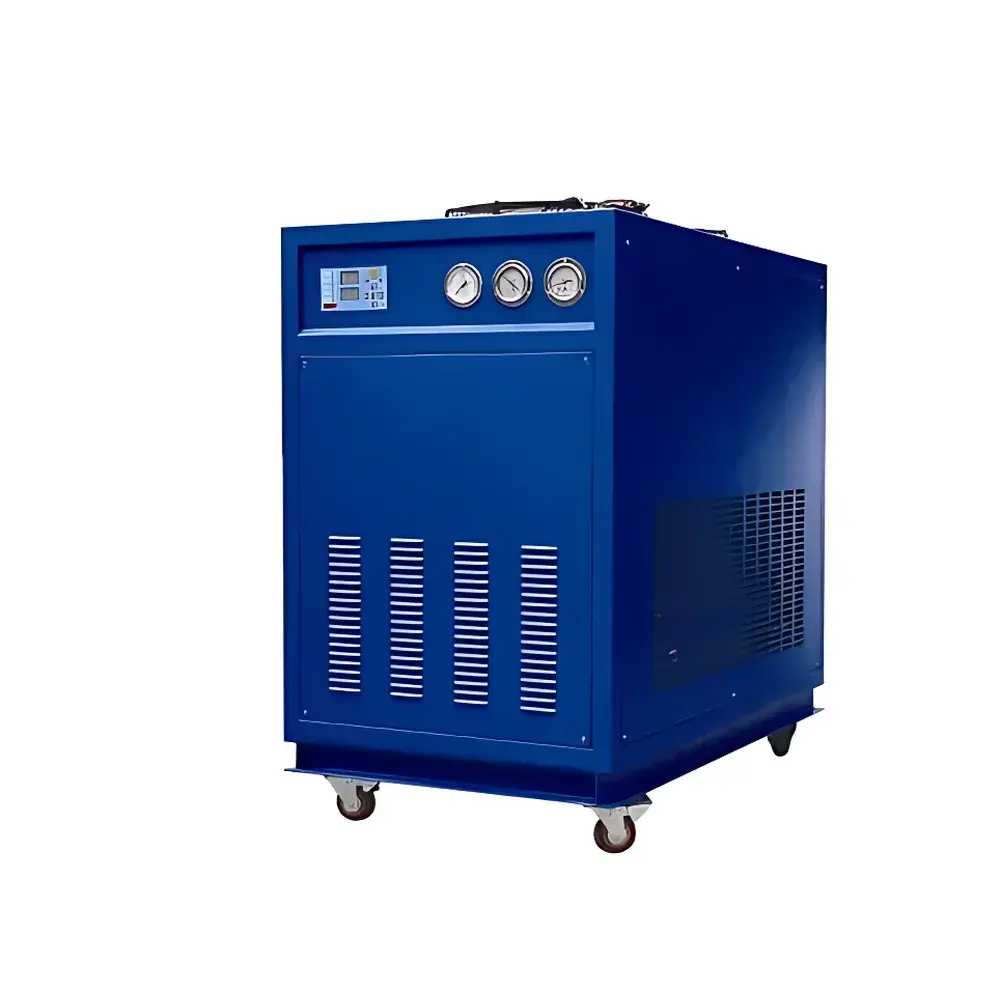
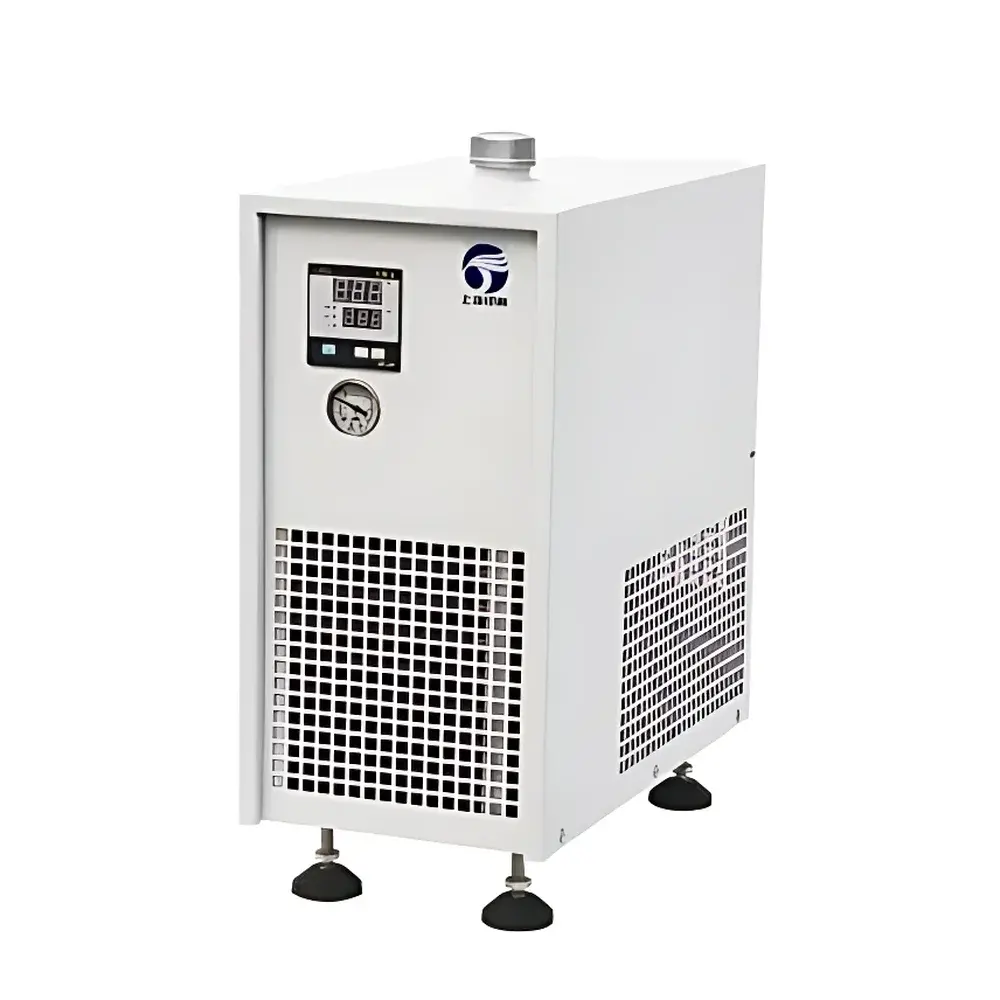
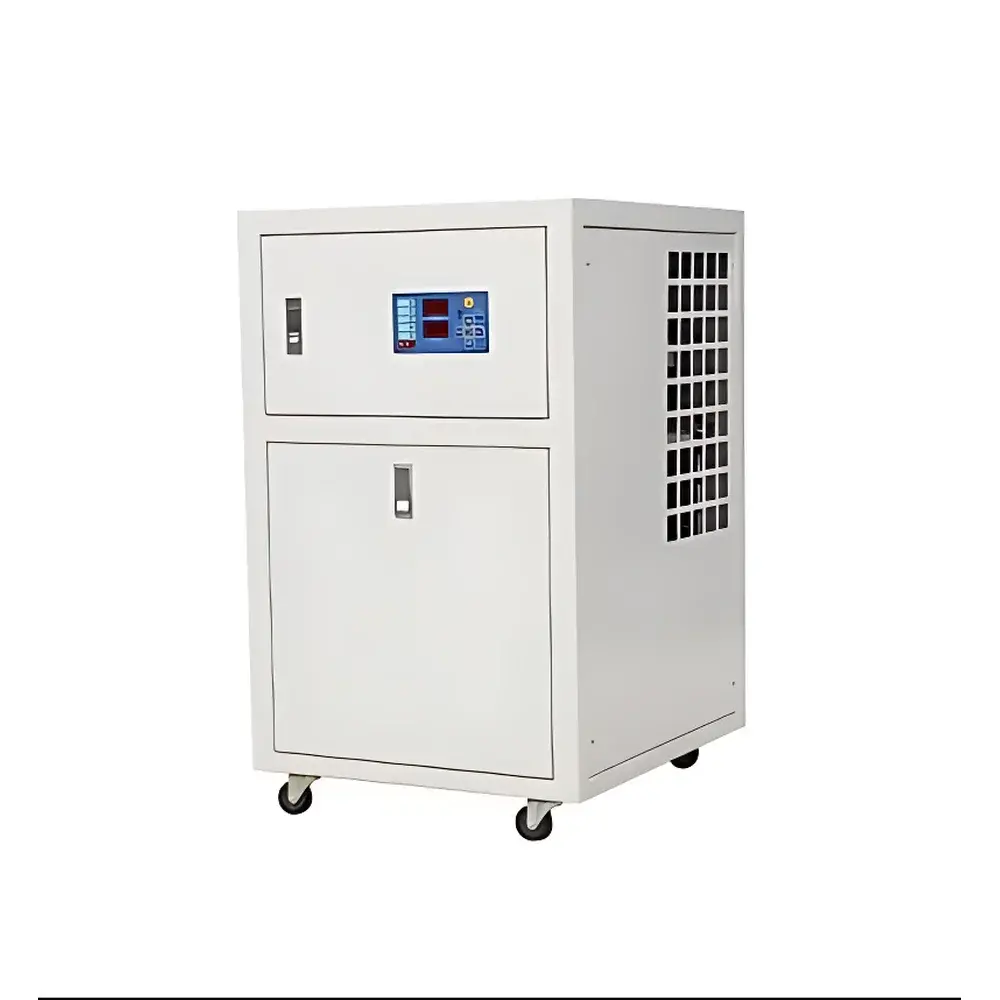
Tianfeng LS-30HP Air-Cooled Industrial Circulating Chiller
| Brand | Tianfeng |
|---|---|
| Origin | Shanghai, China |
| Manufacturer Type | Direct Manufacturer |
| Product Category | Domestic |
| Model | Tianfeng-LS-30HP |
| Instrument Type | Integrated Unit |
| Cooling Method | Air-Cooled |
| Temperature Control Range | 0–10 °C |
| Cooling Capacity | 97.5 kW |
| Temperature Stability | ±0.1 °C |
| Circulating Pump Pressure | 2.0 bar |
| Circulating Pump Flow Rate | 2 L/min |
| Reservoir Volume | 400 L |
| Operating Mode | Continuous Duty |
Overview
The Tianfeng LS-30HP Air-Cooled Industrial Circulating Chiller is a precision-engineered thermal management system designed for stable, continuous cooling of high-heat-load laboratory and industrial equipment. Unlike water-cooled chillers requiring external cooling towers or facility water loops, this unit employs an integrated air-cooled condensing system—featuring high-efficiency copper-tube/aluminum-fin heat exchangers and low-noise external-rotor fans—to deliver reliable heat rejection in environments where chilled water infrastructure is unavailable or impractical. Its core thermodynamic architecture utilizes a hermetically sealed scroll compressor with R22 refrigerant (subject to regional phase-out compliance), coupled with a plate-type evaporator for rapid, uniform heat transfer. Engineered for uninterrupted operation under demanding duty cycles, the chiller maintains setpoint temperatures within ±0.1 °C across its 0–10 °C control range—critical for applications sensitive to thermal drift, such as spectroscopic instrumentation, electron microscopy, and plasma-based analytical systems.
Key Features
- Hermetically sealed scroll compressor (22.05 kW) delivering high volumetric efficiency and low mechanical wear over extended service life
- Air-cooled condenser assembly with optimized fin density and 30,000 m³/h airflow capacity ensures consistent performance even at ambient temperatures up to 40 °C
- Stainless steel reservoir (400 L) with level sensor, corrosion-resistant internal coating, and integrated anti-cavitation design
- Dual-pump configuration: primary refrigerant-side pump (1.1 kW, 16 m³/h, 10 m head) and user-side circulation pump (4 kW, 8 m³/h, 92 m head) supporting high-backpressure applications
- Comprehensive safety suite including compressor discharge overtemperature protection, high/low refrigerant pressure cutoffs, phase sequence and phase loss detection, motor overcurrent monitoring, and tank overtemperature interlock
- Robust structural frame (2300 × 1350 × 2000 mm L×W×H) with vibration-dampened mounting and IP54-rated electrical enclosure
Sample Compatibility & Compliance
This chiller is compatible with a broad spectrum of heat-generating instruments requiring precise, low-temperature recirculated coolant—including graphite furnace atomic absorption spectrometers (GFAAS), inductively coupled plasma optical emission spectrometers (ICP-OES), ICP mass spectrometers (ICP-MS), X-ray fluorescence (XRF) analyzers, X-ray diffractometers (XRD), scanning electron microscopes (SEM), and transmission electron microscopes (TEM). Its temperature stability and flow consistency meet the thermal interface requirements specified in ASTM E1509 (for AAS instrumentation), ISO 17025 clause 6.4.3 (environmental condition control), and IEC 61000-6-2 (electromagnetic immunity for lab equipment). While R22 refrigerant remains functional per current operational specifications, users are advised to consult local regulatory frameworks (e.g., EU F-Gas Regulation, U.S. EPA SNAP program) for phased replacement planning toward approved alternatives such as R407C or R410A.
Software & Data Management
The chiller incorporates a PID-based digital controller with real-time display of setpoint, actual temperature, compressor status, pump RPM, and alarm history. It supports RS485 Modbus RTU communication for integration into centralized building management systems (BMS) or laboratory information management systems (LIMS). Audit-trail-capable data logging (optional firmware upgrade) records timestamped temperature readings, fault events, and operational parameters—enabling alignment with GLP and GMP documentation standards (e.g., FDA 21 CFR Part 11 Annex 11 traceability requirements when paired with validated software interfaces). No proprietary cloud platform is embedded; all control logic resides locally to ensure deterministic response and cybersecurity resilience.
Applications
- Cooling of high-power laser sources (CO₂, fiber, diode) in materials processing and analytical instrumentation
- Thermal stabilization of vacuum chamber components and RF generators in plasma etching and deposition systems
- Heat load management for X-ray tube anodes, detector cryostats, and monochromator optics in synchrotron and benchtop XRD/XRF platforms
- Continuous coolant supply to electrospray ionization (ESI) sources and collision cell assemblies in tandem mass spectrometry workflows
- Support of high-speed spindle cooling in precision metrology and semiconductor wafer inspection tools
- Backup or primary cooling for NMR probe preamplifiers and superconducting magnet shims where water-cooling infrastructure is constrained
FAQ
Is this chiller suitable for cleanroom environments?
Yes—the unit operates without external water connections and features sealed refrigerant circuits and low-particulate fan filtration. However, acoustic output (≤72 dB(A) at 1 m) should be evaluated against cleanroom noise budgets.
Can it maintain 5 °C ±0.05 °C stability?
The standard specification guarantees ±0.1 °C over the full 0–10 °C range. Enhanced stability requires optional high-resolution PT1000 sensors and adaptive PID tuning—available as a factory-configured option.
What maintenance intervals are recommended?
Compressor oil analysis every 4,000 operating hours; condenser coil cleaning every 6 months in dusty environments; refrigerant leak verification annually per ISO 5149-2.
Does it support remote monitoring via Ethernet or Wi-Fi?
Standard communication is RS485 Modbus RTU. Ethernet gateway modules (Modbus TCP) and secure TLS-enabled web interfaces are available as configurable add-ons—not included by default.
Is the R22 refrigerant compliant with current environmental regulations?
R22 is classified as an HCFC and is subject to production bans in most OECD countries. The unit may be operated under existing stock provisions, but retrofitting to R407C or R410A requires compressor and lubricant compatibility validation—contact Tianfeng Engineering Services for retrofit assessment.



