
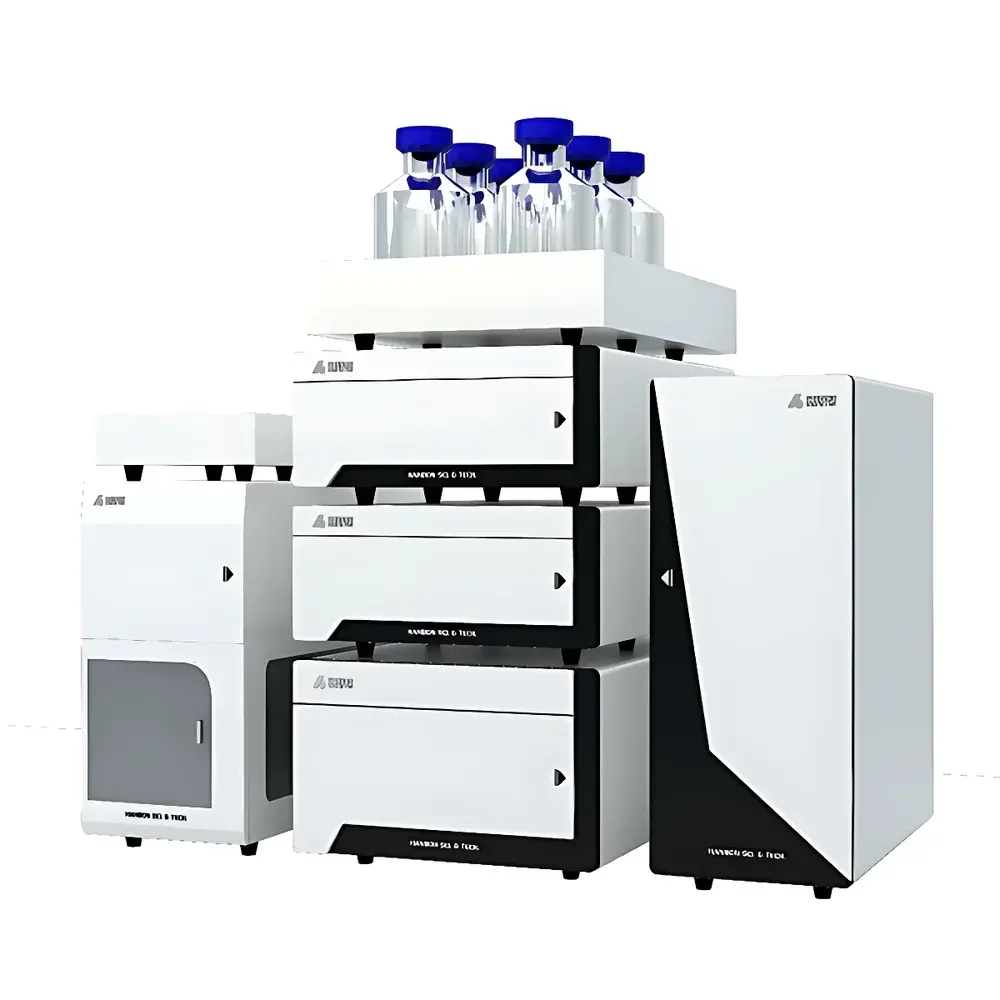
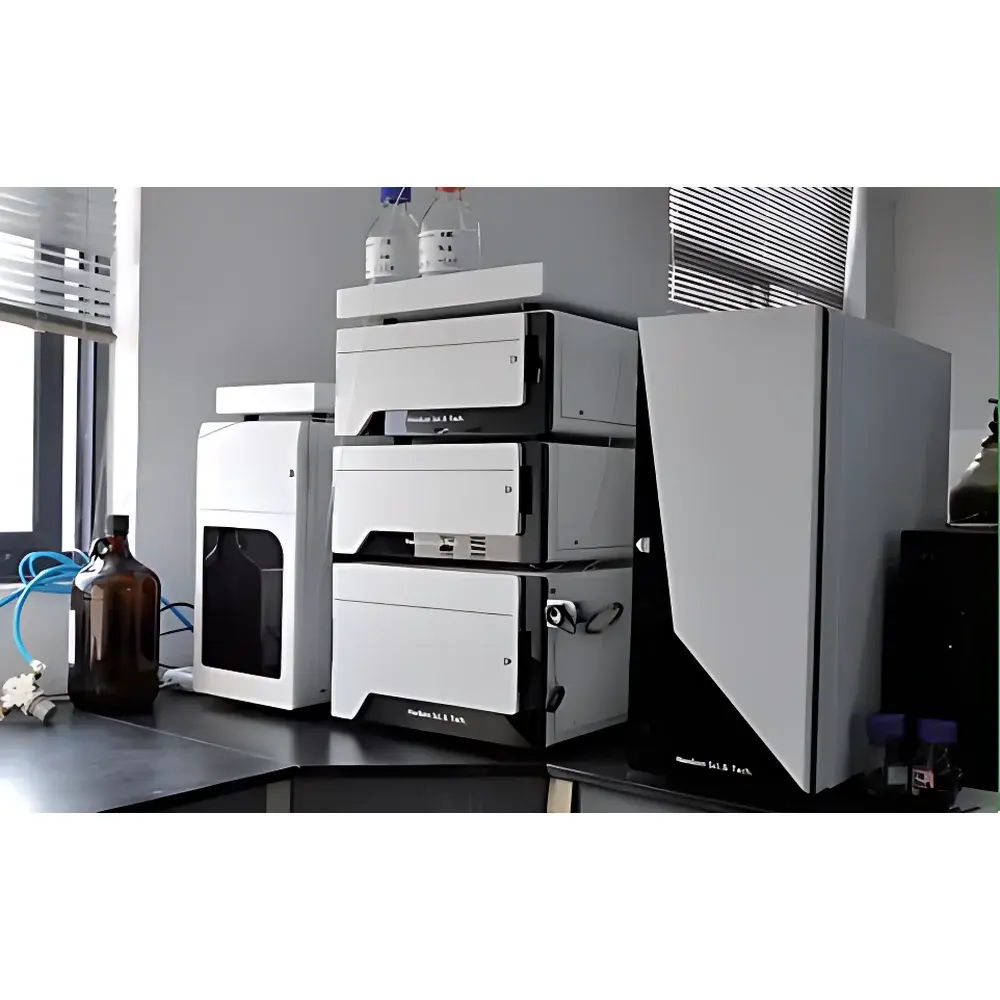
Hanbon NS8002/8005/8010 Semi-Preparative Supercritical Fluid Chromatograph
| Brand | Hanbon |
|---|---|
| Origin | Jiangsu, China |
| Manufacturer Type | Manufacturer |
| Product Category | Domestic |
| Models | NS8002 / NS8005 / NS80010 |
| Instrument Type | Semi-Preparative |
| Detector Type | UV (optional ELSD) |
| Maximum System Pressure | 25 MPa (42 MPa burst rating) |
| CO₂ Flow Rate Range | 0–100 mL/min |
| Modifier Flow Rate Range | 0–50 mL/min |
| Column ID Range | 10–30 mm |
| Price Range | USD 70,000–112,000 (FOB China) |
Overview
The Hanbon NS8002/8005/8010 Semi-Preparative Supercritical Fluid Chromatograph (SFC) is an engineered platform for scalable chiral and achiral compound purification in pharmaceutical R&D, natural product isolation, and fine chemical synthesis. It operates on the principle of supercritical fluid chromatography—utilizing carbon dioxide (CO₂), pressurized above its critical point (31.1 °C, 7.38 MPa), as the primary mobile phase. Supercritical CO₂ exhibits low viscosity and high diffusivity relative to liquid solvents, enabling faster mass transfer, higher resolution, and reduced backpressure across wide-bore preparative columns. The system bridges analytical method development and milligram-scale isolation: methods optimized on analytical SFC are directly transferred to this semi-preparative platform using 10–30 mm i.d. columns, preserving retention time predictability and selectivity while scaling throughput.
Key Features
- Dual NP7001 high-pressure binary pumps: independently controlled CO₂ delivery up to 100 mL/min and modifier (e.g., methanol, ethanol, isopropanol) delivery up to 50 mL/min, with active solvent preheating and degassing to ensure stable density and composition control.
- Dynamic back-pressure regulation (BPR): precision electro-pneumatic BPR maintains constant system pressure regardless of flow rate or modifier percentage, critical for reproducible retention and peak shape under variable-density mobile phases.
- Column management module: thermostatted oven accommodates up to six columns (10–30 mm i.d.) with automated valve switching; temperature uniformity ±0.5 °C across all positions ensures method robustness during column scouting or gradient optimization.
- Modular detection: standard UV-Vis detector (190–400 nm, variable pathlength) with optional evaporative light scattering detection (ELSD) for non-chromophoric analytes; both detectors support real-time fraction triggering.
- Integrated fraction collection: programmable timed or peak-triggered collection with solvent-resistant vial trays; compatible with post-run solvent removal via rotary evaporation or nitrogen blowdown.
- Full automation readiness: supports sequential injection, repeated injections for peak stacking, and unattended overnight operation when paired with optional autosampler.
Sample Compatibility & Compliance
The NS8002/8005/8010 is routinely deployed for enantiomeric separation of APIs, resolution of diastereomers in synthetic intermediates, and purification of thermally labile natural products (e.g., flavonoids, alkaloids, terpenes). Its compatibility with CO₂-based mobile phases meets green chemistry principles aligned with ICH Q5C and USP residual solvent guidelines. The system architecture supports audit-trail-enabled operation per FDA 21 CFR Part 11 requirements when used with Clarity CDS configured for electronic signatures and secure data archiving. All wetted parts are constructed from 316 stainless steel and Hastelloy C-276 to resist corrosion from CO₂–alcohol mixtures at elevated pressures. Pressure containment complies with PED 2014/68/EU and ASME B31.3 process piping standards.
Software & Data Management
Clarity Chromatography Data System (CDS) provides integrated instrument control, real-time monitoring of temperature, pressure, flow, UV absorbance, and collected fractions. Method templates include SFC-specific parameters such as CO₂ density calculation (via Peng–Robinson equation of state), modifier gradient profiles, and BPR ramping logic. Raw data files (.clr) are stored in a structured database with timestamped metadata, supporting GLP-compliant reporting. Export options include ASTM E1985-compliant .cdf files, CSV for third-party chemometrics tools, and PDF reports with embedded chromatograms and calibration curves. Software validation documentation (IQ/OQ/PQ protocols) is available upon request for regulated environments.
Applications
- Chiral purification of small-molecule drug candidates prior to preclinical toxicity studies.
- Rapid isolation of metabolites from biological matrices without derivatization.
- Recycling of racemic mixtures in asymmetric catalysis workflows.
- Removal of residual catalysts or ligands from metal-catalyzed cross-coupling reactions.
- Stability-indicating purification of degradants for structural elucidation by NMR or HRMS.
- Green alternative to reversed-phase HPLC for compounds with poor aqueous solubility or thermal sensitivity.
FAQ
What is the maximum operating pressure of the NS8002/8005/8010 system?
The system is rated for continuous operation at up to 25 MPa; the fluidic components have a certified burst pressure of 42 MPa per ASME Section VIII Div. 1.
Can analytical SFC methods be directly transferred to this semi-preparative system?
Yes—retention time scaling follows linear velocity normalization; column dimensions and flow rates are adjusted using the same k′ and α values derived from analytical runs.
Is CO₂ recycling supported?
Not natively integrated; however, external CO₂ recovery units (e.g., condenser–separator loops) can be connected via auxiliary ports for closed-loop operation.
What regulatory documentation is provided for GMP use?
Factory-issued IQ/OQ protocols, material traceability certificates for wetted parts, and software validation packages compliant with Annex 11 and ALCOA+ principles are available under NDA.
How does SFC compare to preparative HPLC in terms of solvent consumption and waste disposal?
Typical CO₂ consumption is 5–10× lower in mass than organic solvent equivalents; >95% of CO₂ is vented to atmosphere or captured, reducing hazardous waste generation by >80% versus acetonitrile/methanol-based systems.
Related Products





