
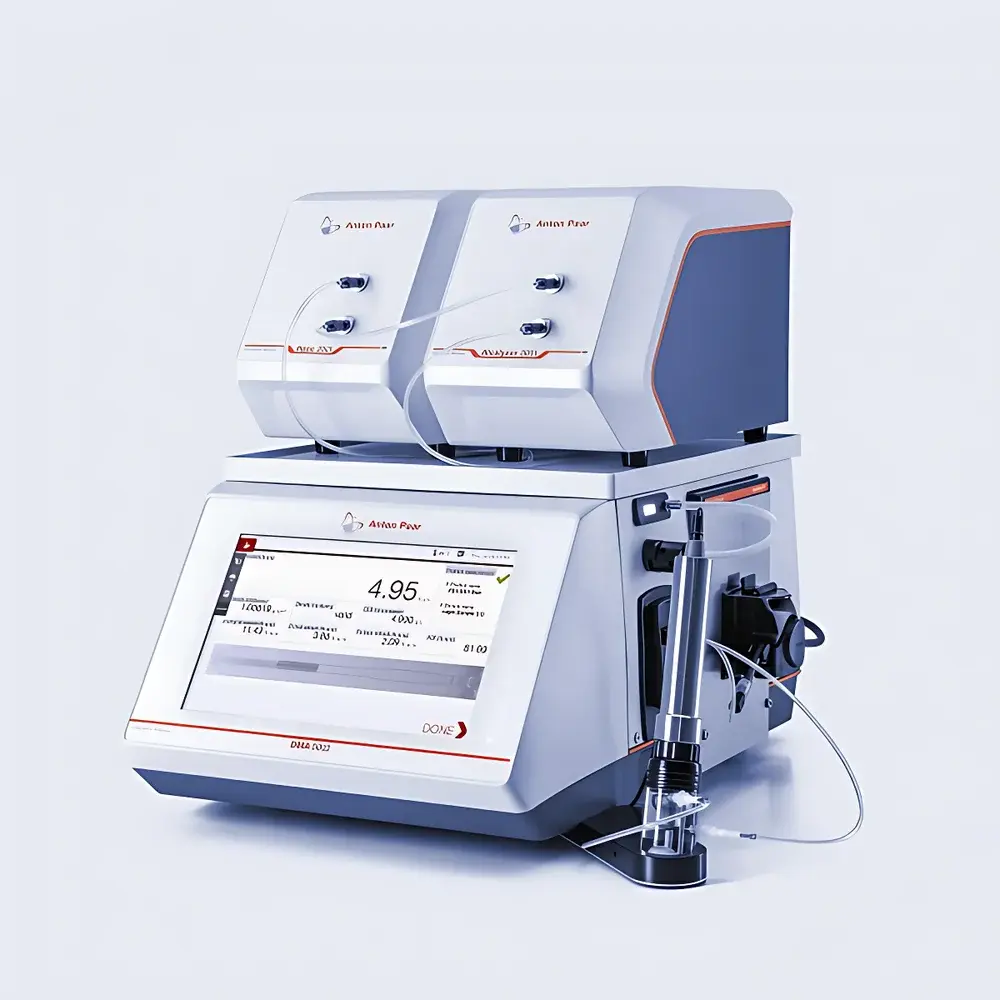
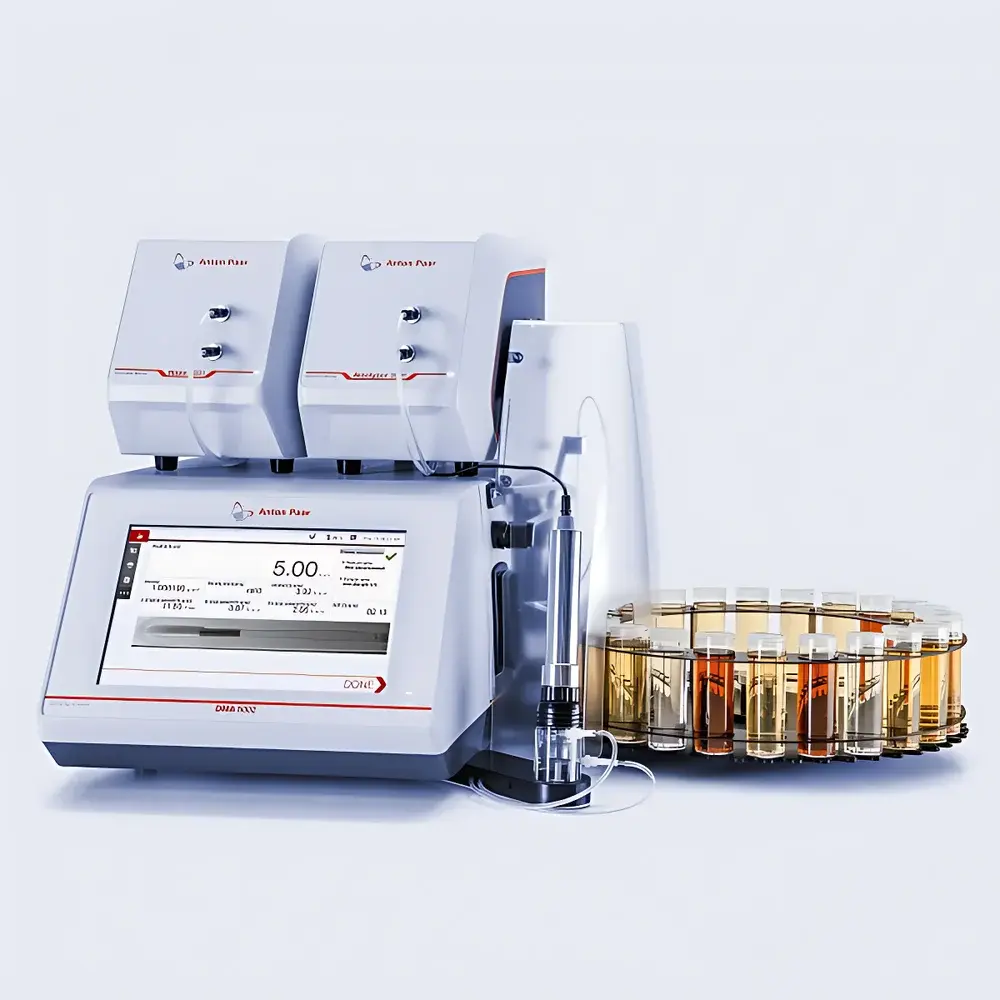
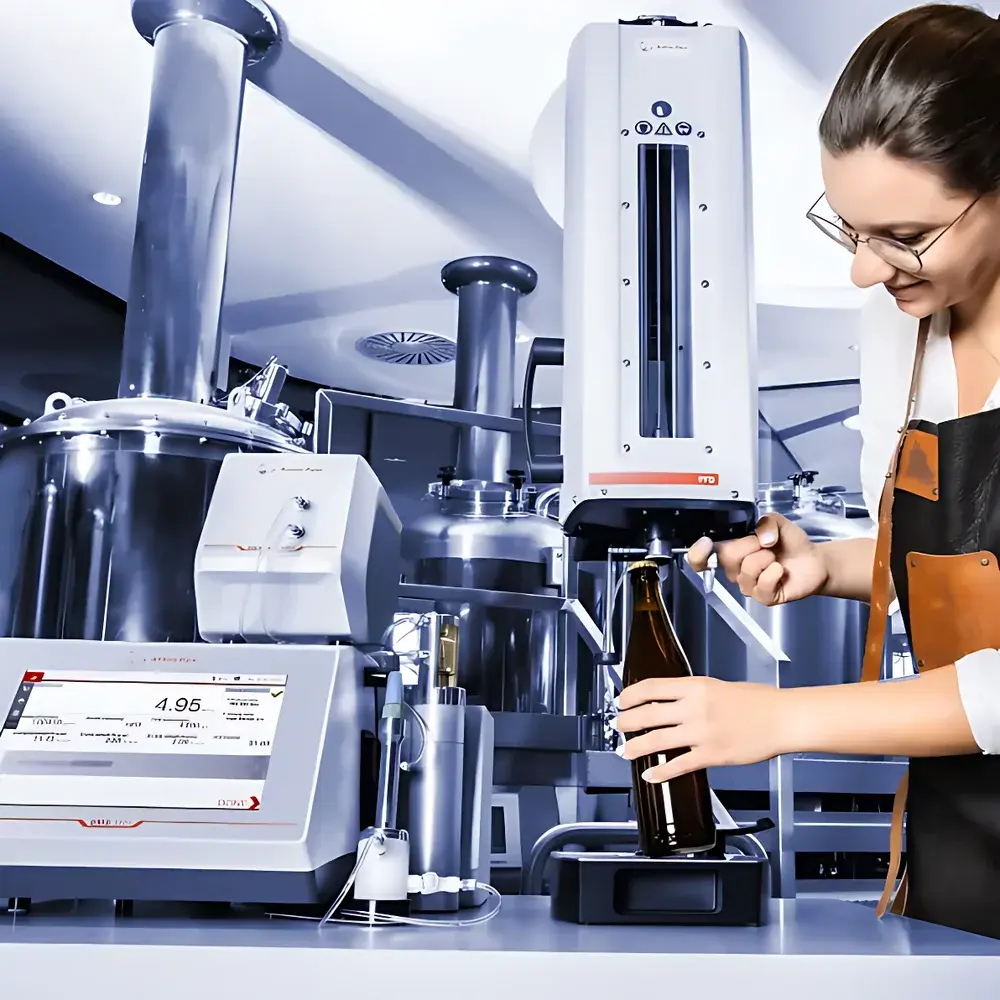
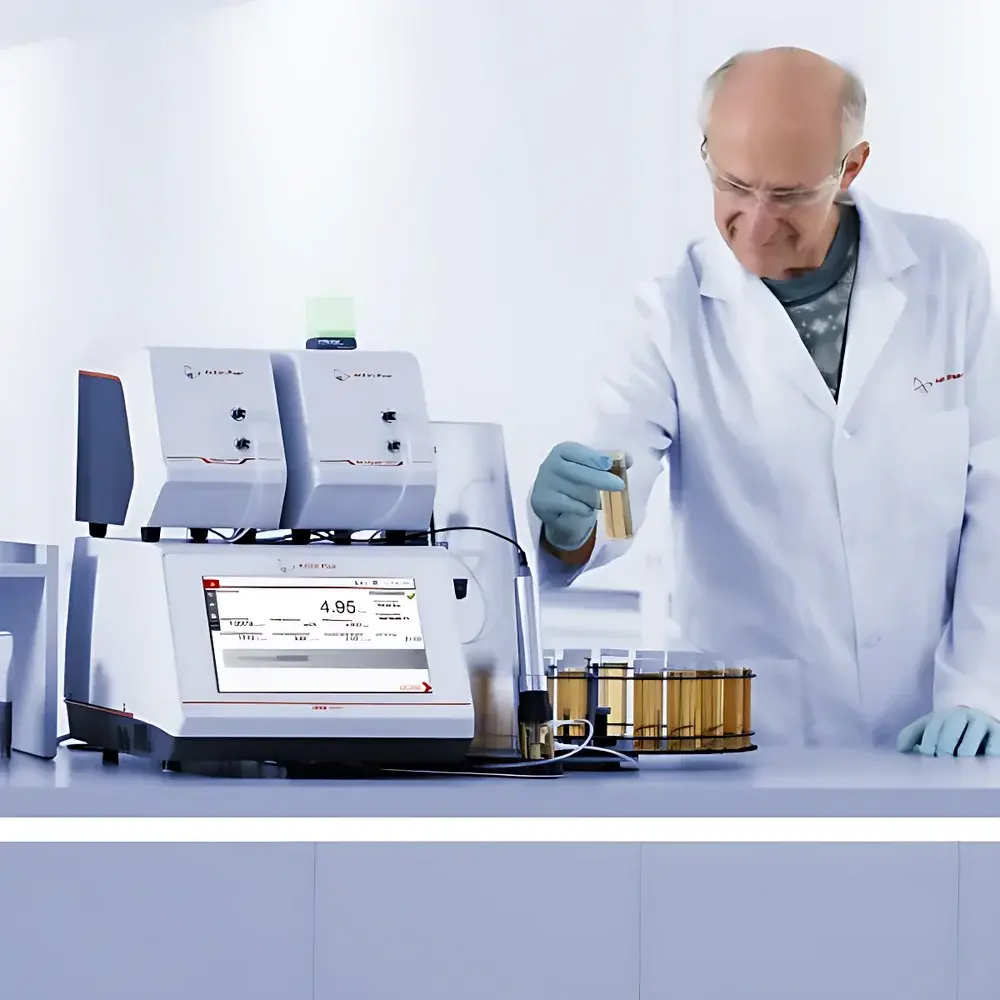
Anton Paar Alcolyzer Beer Analyzing System
| Brand | Anton Paar |
|---|---|
| Origin | Austria |
| Manufacturer Type | Manufacturer |
| Origin Category | Imported |
| Model | Alcolyzer Beer Analyzing System |
| Instrument Type | Beer-Specific Analyzer |
| Application Type | Laboratory |
| Measurement Time | 3 min |
| Alcohol Content | 0–12 % v/v |
| pH Range | 0–14 |
| Dimensions (L × W × H) | 495 × 330 × 230 mm |
| Weight | 30 kg |
| Technology | Infrared |
| Sample Volume per Test | 35 mL |
| Throughput | 15–20 samples/hour |
Overview
The Anton Paar Alcolyzer Beer Analyzing System is a fully integrated, modular laboratory platform engineered for high-precision, multi-parameter analysis of beer and fermented malt beverages. It operates on the principle of combined infrared (IR) spectroscopy and oscillating U-tube density measurement—compliant with internationally recognized reference methods including MEBAK, EBC, ASBC, AOAC, TTB, and GBT 4928–2008. The system delivers rapid, operator-independent quantification of critical quality attributes—including alcohol by volume (% v/v), original extract (°Plato), real extract, apparent extract, pH, turbidity (EBC/ASBC), color (EBC/ASBC), and density (g/cm³)—within a single 3-minute measurement cycle. Its architecture supports traceable, GLP-compliant workflows across R&D, QC, and production release laboratories, enabling breweries to meet regulatory labeling requirements (e.g., TTB-mandated alcohol verification) while maintaining batch-to-batch consistency and minimizing product loss.
Key Features
- Modular configuration with five dedicated analytical modules: DMA 4002X density meter, Sample 320 automated batch sampler, Alcolyzer Alcohol Module 1001, pH 1101 electrode module, and optional turbidity/color sensor integration.
- FillingCheck™ technology provides real-time acoustic and optical feedback during sample filling to detect air bubbles, incomplete tube filling, or viscosity-related flow anomalies—ensuring measurement integrity and repeatability.
- U-View™ visual monitoring interface enables live observation of sample injection, meniscus formation, and oscillation stability in the U-tube cell—enhancing troubleshooting and method validation.
- ThermoBalance™ temperature compensation algorithm corrects for thermal drift across the full operating range (15–32 °C), delivering stable density and alcohol results independent of ambient fluctuations.
- U-Dry™ drying protocol automates post-measurement cell cleaning and drying, reducing carryover risk and extending sensor lifetime without manual intervention.
- Fully compliant with FDA 21 CFR Part 11 requirements via AP Connect software, supporting electronic signatures, audit trails, and role-based access control for regulated environments.
Sample Compatibility & Compliance
The Alcolyzer Beer Analyzing System is validated for unfiltered, filtered, pasteurized, and craft-style beers—including lagers, ales, stouts, sour beers, and low-alcohol/non-alcoholic variants—as well as cider and other fermented malt-based beverages. It accommodates samples with turbidity up to 100 EBC and color values spanning 0–120 EBC (0–60.96 ASBC). All measurement protocols align with statutory standards: MEBAK Chapter 2.9.6.3 (alcohol), 2.12.2 (pH), and 2.14.1.2 (turbidity); EBC Chapters 8.2.2, 9.2.6, and 9.43.2; ASBC Beer-4G (original extract); AOAC Method 956.02 (turbidity at 430 nm); and TTB-approved density-based alcohol determination for tax reporting. Calibration is traceable to NIST-certified reference materials and certified ethanol/water standards.
Software & Data Management
AP Connect Laboratory Execution Software serves as the central data governance layer, providing secure, centralized storage of raw measurements, calibration logs, user actions, and instrument diagnostics. Each data point is timestamped, user-identified, and version-controlled—with immutable audit trails meeting GLP/GMP documentation requirements. The software supports customizable report templates aligned with internal SOPs or external regulatory submissions (e.g., TTB Form 5110.40). Batch trend analysis tools enable statistical process control (SPC) charting for alcohol, extract, and pH parameters over time. Data export is available in CSV, PDF, and XML formats, with optional LIMS integration via ASTM E1384-compliant interfaces.
Applications
- Pre-fermentation wort analysis for original gravity and sugar profile verification.
- Final product release testing for label claim compliance (alcohol content, bitterness units, turbidity).
- In-process monitoring during maturation and filtration to optimize stabilization timelines.
- Raw material qualification (malt, hops, adjuncts) via extract and solubility profiling.
- Research applications including yeast strain performance evaluation, fermentation kinetics modeling, and non-alcoholic beer development.
- Contract brewing QA/QC where third-party verification of specifications is contractually mandated.
FAQ
What regulatory standards does the Alcolyzer Beer Analyzing System support?
It complies with MEBAK, EBC, ASBC, AOAC, TTB, GBT 4928–2008, and BCOJ methodologies—covering alcohol, pH, turbidity, color, and density measurements.
Can the system analyze non-beer fermented beverages such as cider or kombucha?
Yes—its IR spectral library and density-based algorithms are validated for cider, perry, and other low-pH, low-viscosity fermented malt or fruit-based beverages.
Is manual recalibration required between different beer types?
No—U-Pulse adaptive measurement logic and product-independent calibration routines allow seamless switching between lager, stout, sour, and non-alcoholic variants without hardware reconfiguration.
How is data integrity ensured during long-term deployment?
AP Connect enforces 21 CFR Part 11 compliance through encrypted database storage, electronic signatures, automatic backup scheduling, and tamper-evident audit logs.
What maintenance intervals are recommended for routine operation?
Daily U-Dry cycles, weekly FillingCheck™ verification using air/water standards, and quarterly full-system performance qualification using certified reference materials per ISO/IEC 17025 guidelines.
Related Products





