
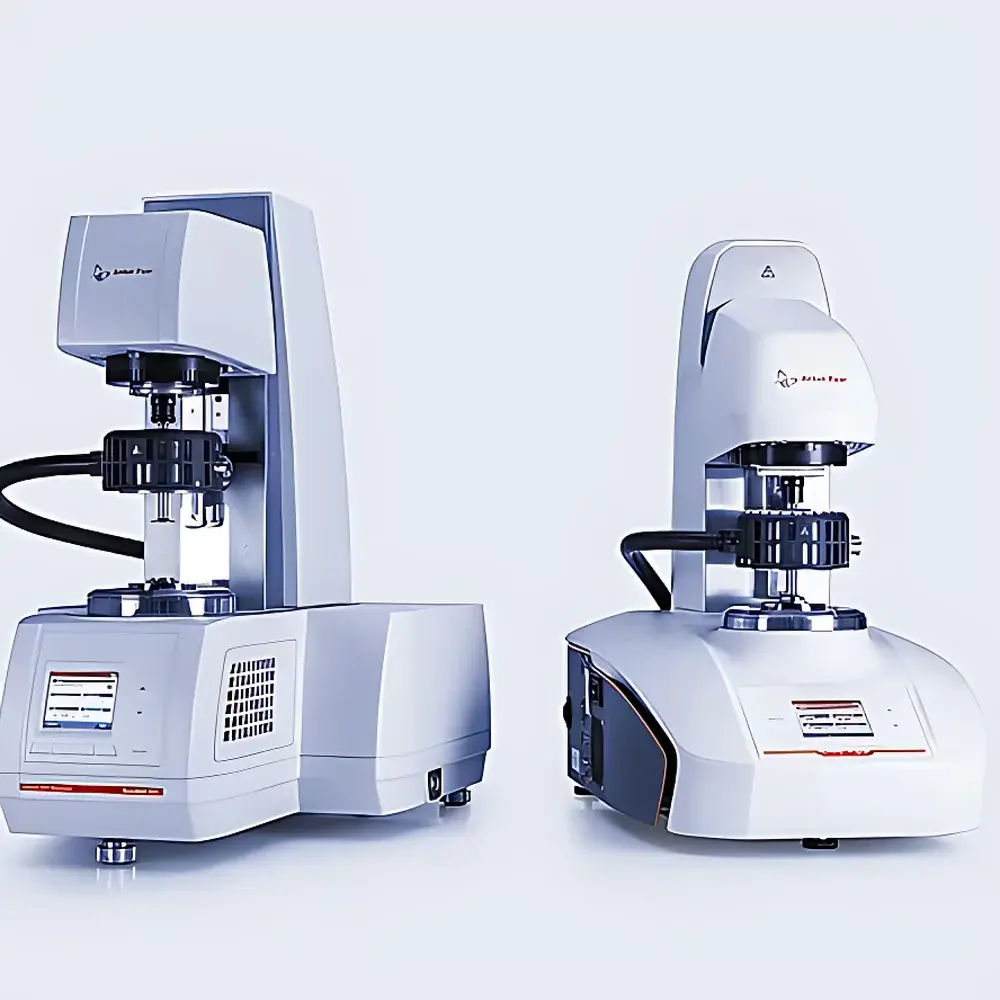
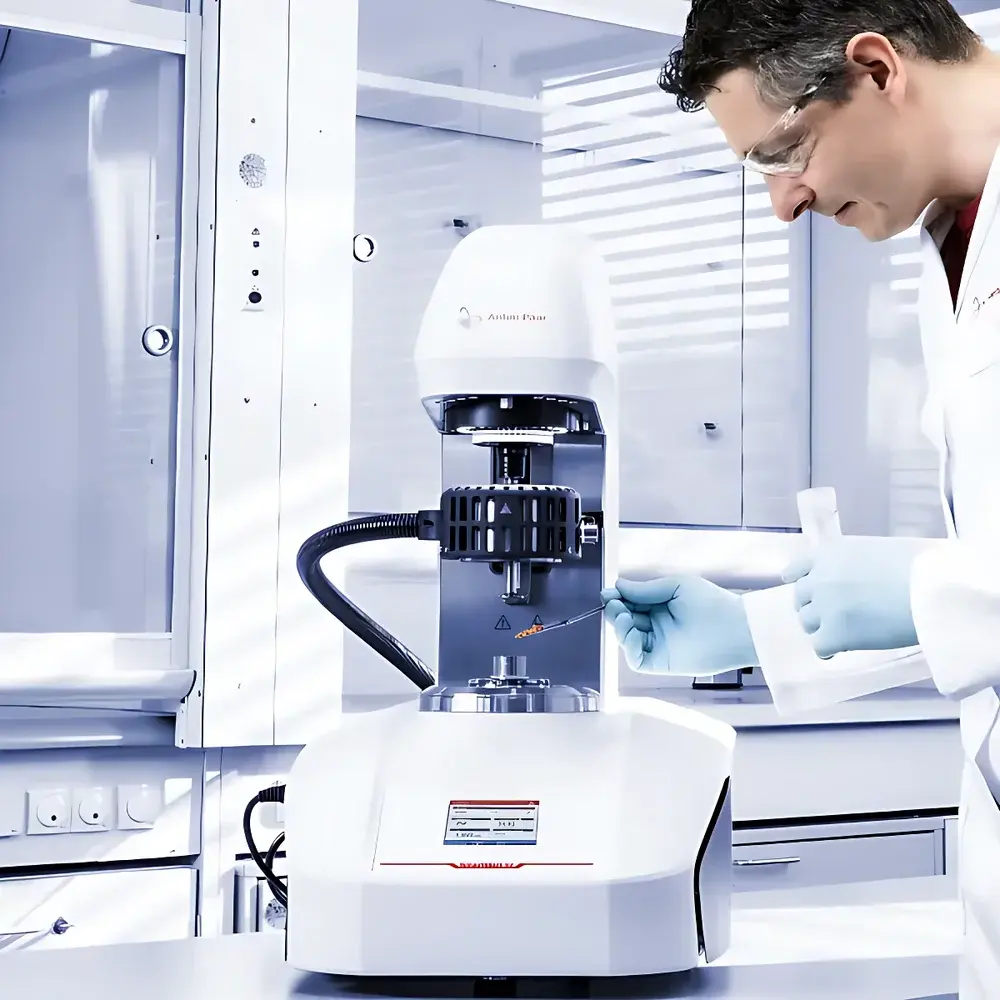
Anton Paar SmartMelt 92/303 Polymer Melt Rheometer
| Brand | Anton Paar |
|---|---|
| Origin | Austria |
| Manufacturer Type | Manufacturer |
| Origin Category | Imported |
| Model | SmartMelt 92/303 |
| Instrument Type | Rotational Rheometer |
| Sample Type | High-Viscosity |
| Sample State | Liquid |
| Motor Bearing | Precision Porous Carbon Air Bearing |
| Temperature Range | −150 °C to +400 °C |
| Frequency Range | 10⁻⁷ Hz to 628 rad/s (≈100 Hz) |
| Minimum Rotational Speed | 10⁻⁴ rpm |
| Maximum Torque | 215 mNm |
| Maximum Rotational Speed | 3000 rpm |
Overview
The Anton Paar SmartMelt 92/303 Polymer Melt Rheometer is a high-performance rotational rheometer engineered specifically for the quantitative characterization of polymer melts and thermoplastic materials under controlled thermal and mechanical conditions. It operates on the principle of controlled-strain and controlled-stress rotational rheometry, utilizing Couette flow geometry with parallel-plate, cone-plate, or custom fixtures to measure shear viscosity, normal stress differences, storage and loss moduli (G′, G″), complex viscosity (η*), and time-dependent responses including creep compliance and stress relaxation. Designed for research laboratories and industrial quality control environments, the system delivers metrologically traceable data compliant with international standards for polymer rheology—particularly ASTM D4440 (Standard Test Method for Rheological Properties of Thermoplastics Using Capillary or Slit Dies) and ISO 6721 (Plastics — Determination of Dynamic Mechanical Properties). Its dual-platform architecture (SmartMelt 92 and SmartMelt 303) supports scalable performance across R&D, formulation development, and process validation workflows.
Key Features
- Precision Porous Carbon Air Bearing System: Eliminates mechanical friction and torque ripple, enabling ultra-low torque detection down to 5 nNm (SmartMelt 303) and sub-microradian angular resolution (0.5 μrad setpoint deflection).
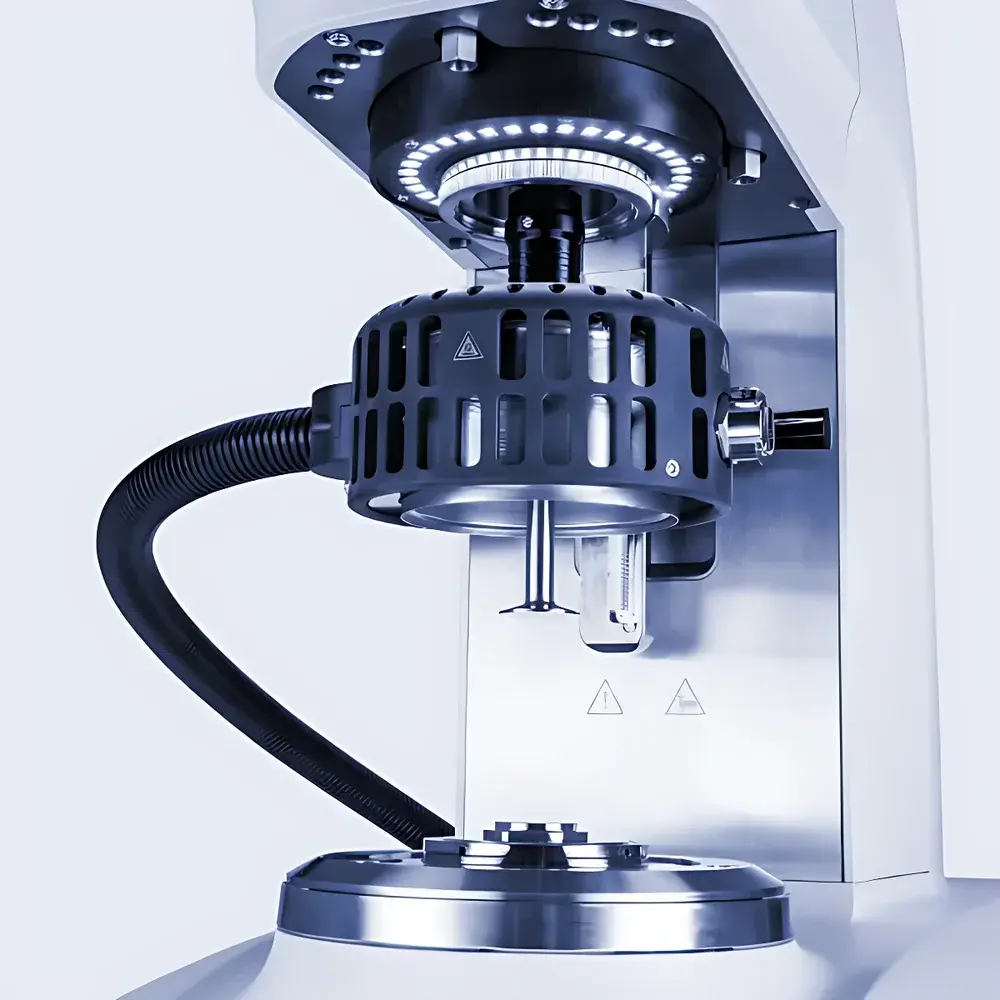
- Wide Thermal Operating Range: −150 °C to +400 °C electrothermal furnace with direct sample-point temperature measurement via embedded Pt100 sensors, minimizing axial and radial thermal gradients (<0.1 K/mm).
- High-Dynamic Motor & Encoder Architecture: EC-synchronous permanent magnet motor coupled with high-resolution optical encoder ensures stable torque delivery from 10⁻⁴ rpm to 3000 rpm and oscillatory frequency coverage from 2×10⁻⁸ Hz to 200 Hz (SmartMelt 303).
- Integrated Normal Force Measurement: Full 360° non-contact capacitive sensor embedded within the bearing assembly enables simultaneous normal force detection from −50 N to +50 N without mechanical linkage artifacts.
- Toolmaster™ Auto-Recognition: RFID-based identification of measuring geometries, temperature cells, and accessories ensures automatic parameter loading and eliminates manual configuration errors.
- QuickConnect™ Fixture Mounting: Single-handed, tool-free coupling of measuring systems in <3 seconds, reducing setup variability and cross-contamination risk.
- TruStrain™ Adaptive Control: Real-time strain adjustment during oscillatory tests maintains constant deformation amplitude even as material modulus evolves—critical for nonlinear viscoelastic characterization.
Sample Compatibility & Compliance
The SmartMelt 92/303 accommodates a broad spectrum of high-viscosity molten polymers—including polyolefins, engineering thermoplastics (e.g., PEEK, PC, PA), elastomers, biopolymers, and filled composites—under inert (N₂, Ar) or vacuum atmospheres to prevent oxidative degradation. Disposable parallel-plate geometries support rapid sample exchange and minimize cleaning downtime. All thermal and mechanical calibrations are traceable to NIST and PTB standards. The system supports full audit trails, electronic signatures, and secure user access levels aligned with FDA 21 CFR Part 11 requirements when operated with RheoCompass software in validated environments. Routine calibration procedures—including temperature uniformity mapping, torque verification, and gap calibration—are automated via integrated calibration kits and documented per ISO/IEC 17025 guidelines.
Software & Data Management
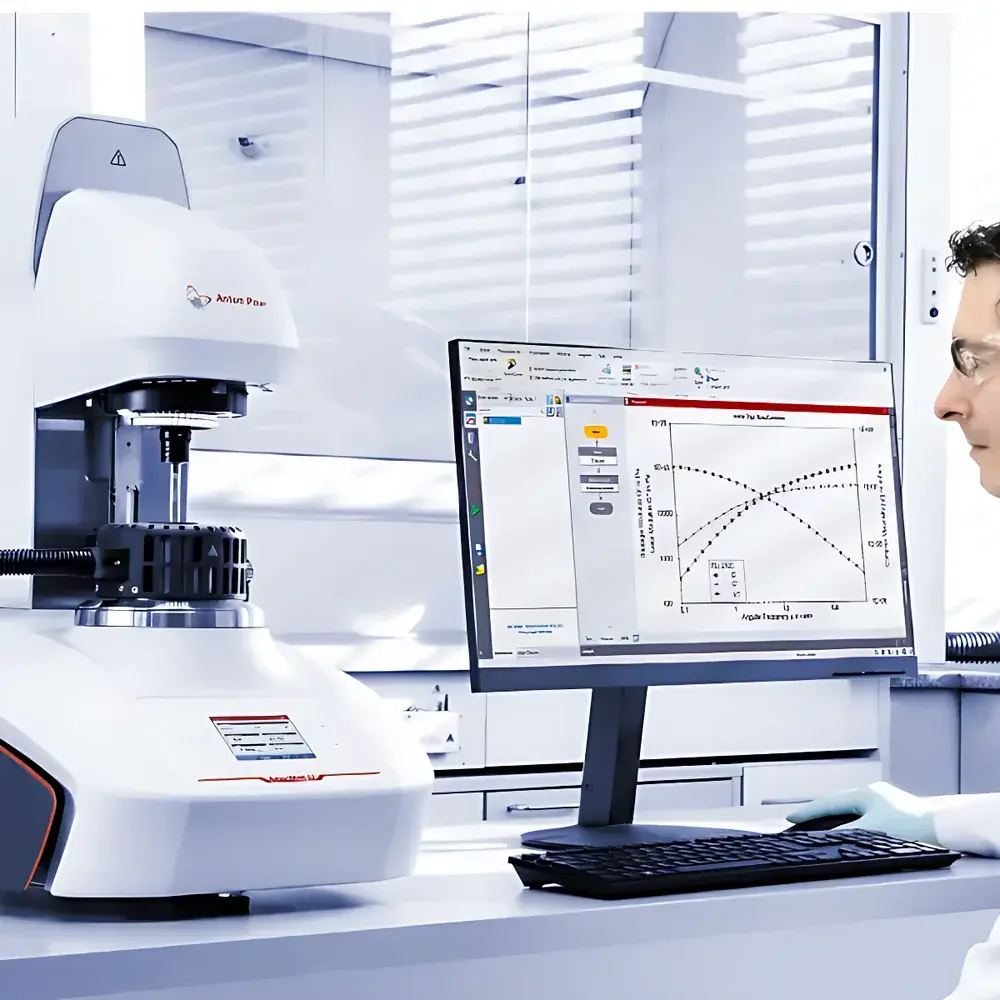
RheoCompass™ serves as the unified software platform for instrument control, method definition, real-time data acquisition, and advanced post-processing. Pre-configured templates cover standard test protocols (flow curves, frequency sweeps, time sweeps, LAOS, master curve construction via time–temperature superposition), while customizable scripting (Python API) enables integration into automated lab networks or LIMS. Data export formats include ASCII, CSV, and universal RheoML (XML-based rheological metadata schema). All raw and processed datasets retain full metadata—operator ID, environmental conditions, calibration history, and instrument configuration—ensuring full GLP/GMP traceability. Optional modules include Automatic Gap Control (AGC), Master Curve Analysis, and RheoOptics interface for in situ optical monitoring.
Applications
- Linear and nonlinear viscoelastic characterization of polymer melts for structure–property modeling
- Quality assurance of incoming resin batches against rheological specifications
- Processing window definition for extrusion, injection molding, and blow molding simulations
- Thermal stability assessment under shear and temperature ramping (e.g., melt fracture onset)
- Development of nanocomposite and reactive polymer systems requiring precise shear history control
- Validation of constitutive models (e.g., Giesekus, PTT, Wagner) used in computational fluid dynamics (CFD)
- Time–temperature superposition (TTS) analysis for long-term creep prediction per ISO 9987
FAQ
What distinguishes SmartMelt from capillary or rotational viscometers?
Unlike single-point viscosity instruments, SmartMelt provides full rheological spectra—including yield behavior, elasticity, and transient response—enabling predictive modeling of processing behavior.
Is the SmartMelt 92/303 suitable for low-molecular-weight or solvent-based systems?
It is optimized for high-viscosity melts (>10² Pa·s at 1 s⁻¹); low-viscosity liquids require alternative geometries or complementary instrumentation such as the Anton Paar MCR series.
How does the ETD furnace ensure temperature accuracy at extreme ranges?
By combining multi-zone heating/cooling elements, internal Pt100 feedback loops at the sample interface, and active thermal shielding, it achieves ±0.1 °C stability and <0.5 K gradient across the gap volume.
Can the system perform extensional rheology?
No—extensional measurements require dedicated devices such as the Anton Paar Extensional Rheology Chamber (ERC) or filament stretching rheometers; SmartMelt is strictly shear-mode focused.
What maintenance intervals are recommended for the air bearing system?
The porous carbon air bearing is sealed and maintenance-free for ≥10 years under typical laboratory use; no lubrication or periodic replacement is required.



