
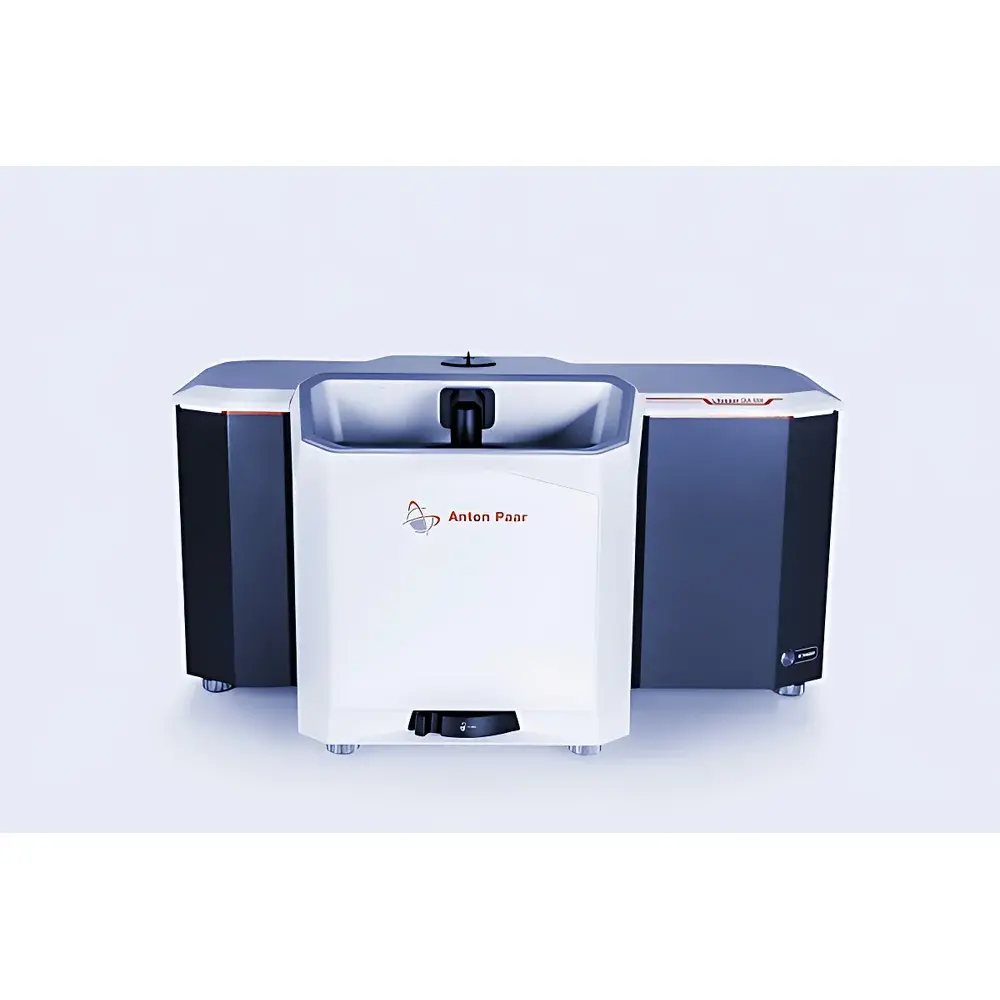
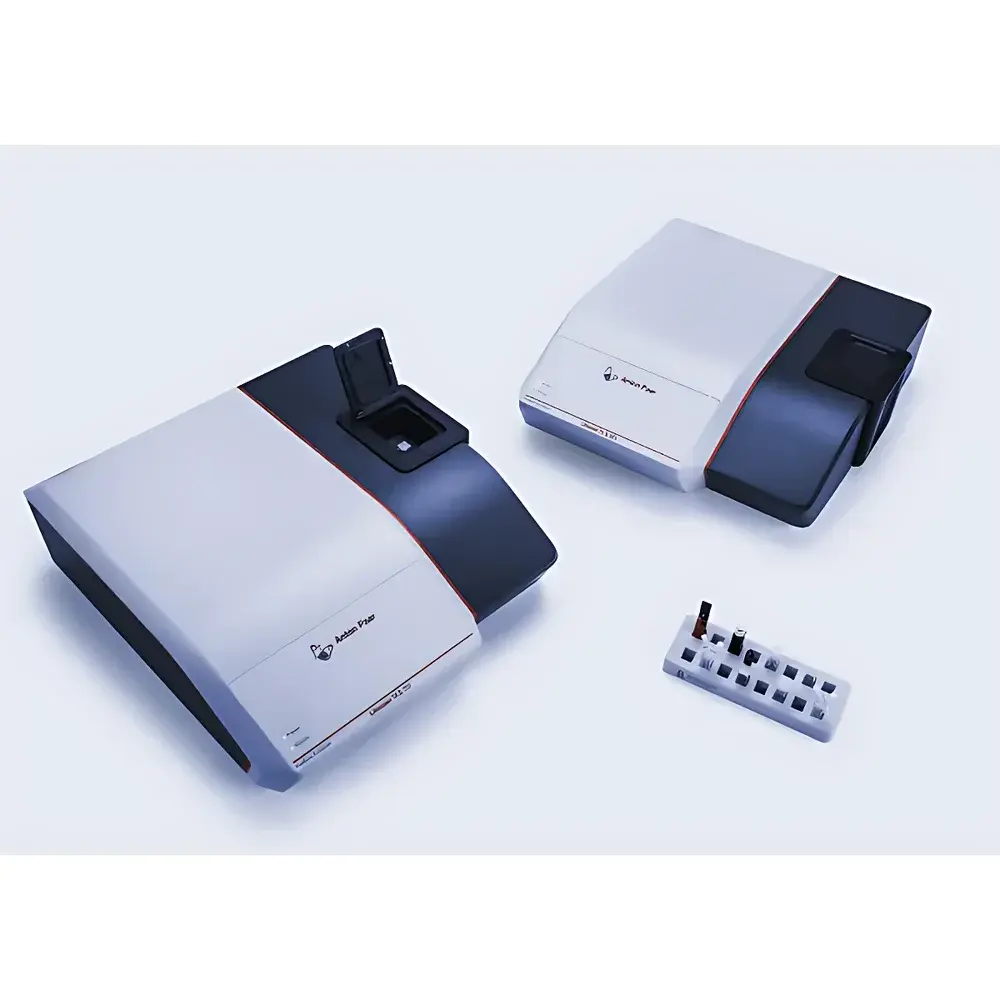
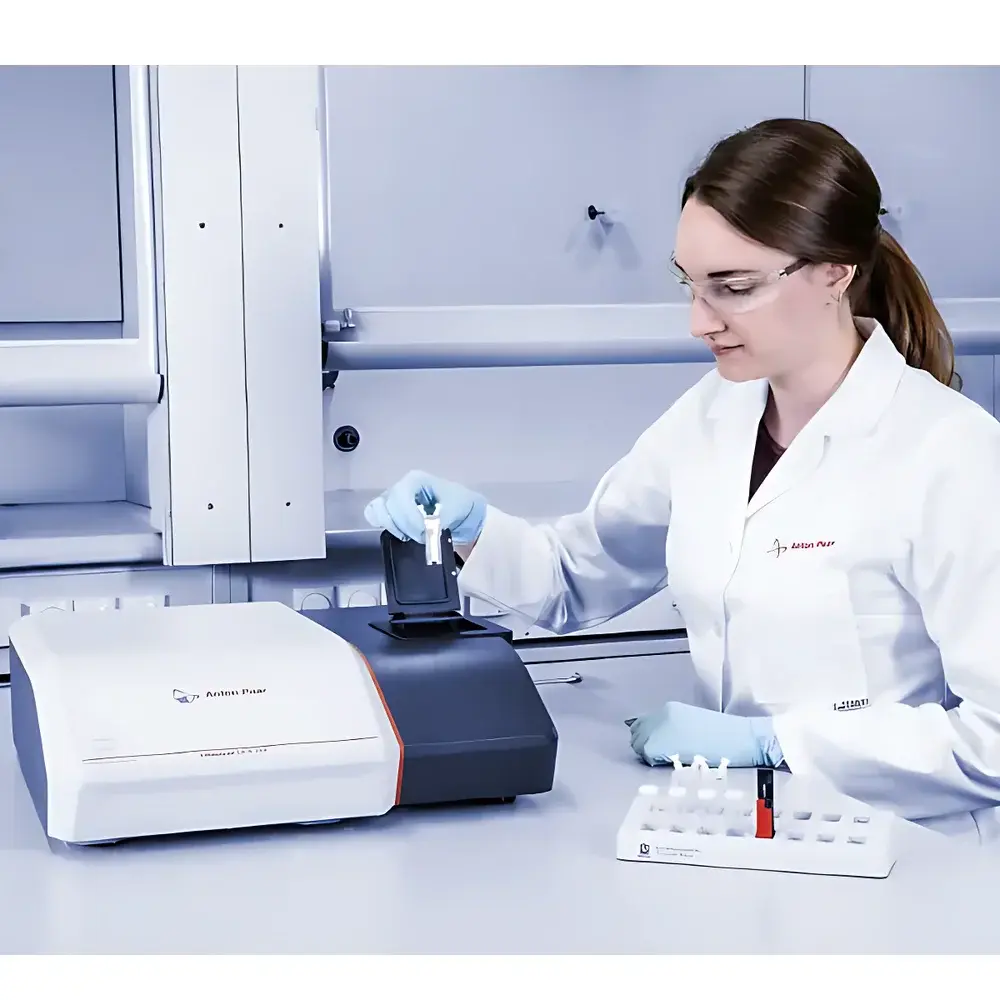
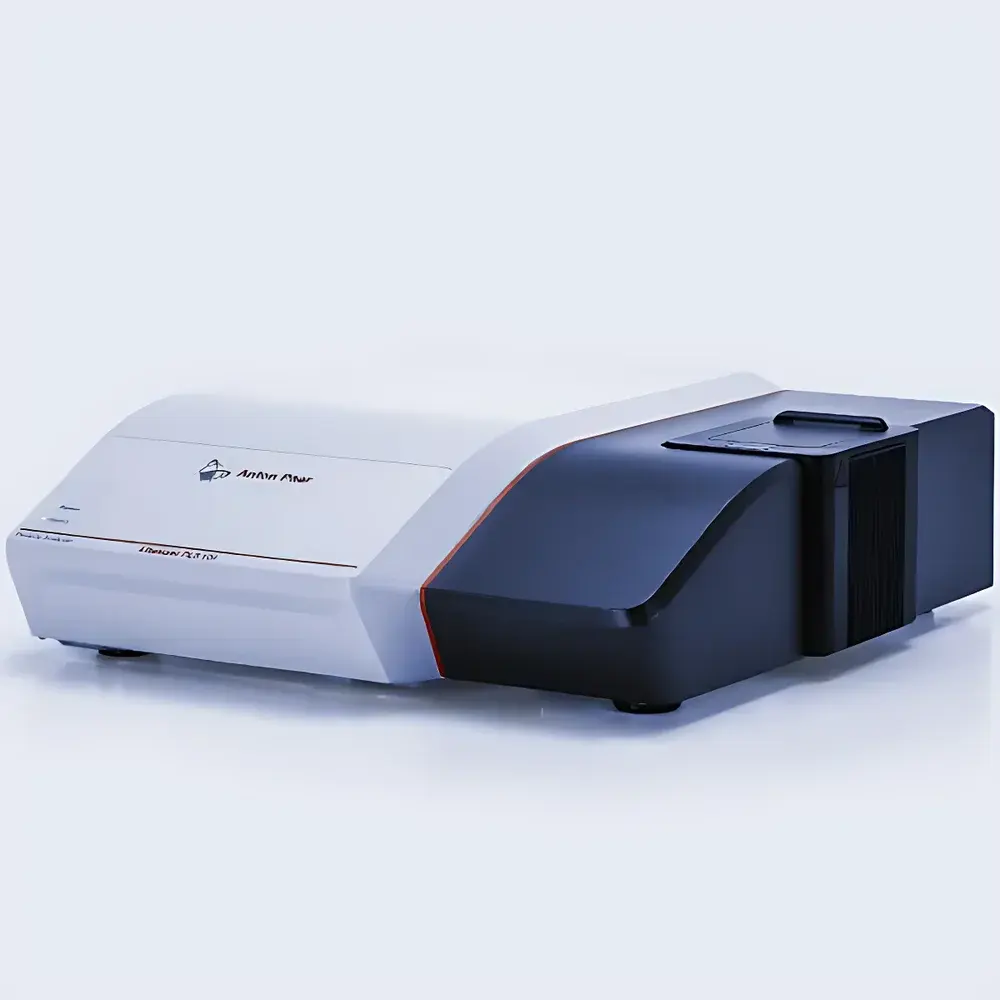
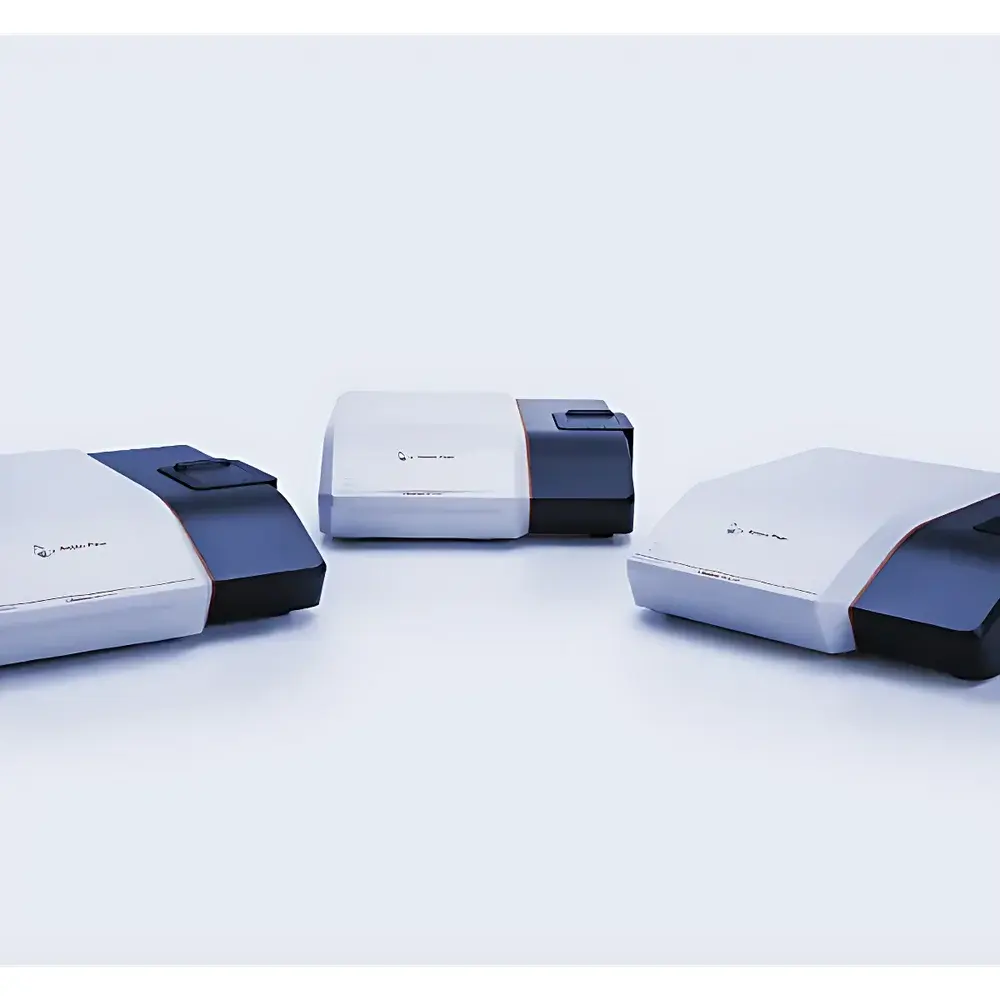
Anton Paar Litesizer DLS Series Nanoparticle Size and Zeta Potential Analyzer
| Brand | Anton Paar |
|---|---|
| Origin | Austria |
| Manufacturer Type | Original Equipment Manufacturer (OEM) |
| Product Origin | Imported |
| Model | Litesizer DLS Series |
| Particle Size Range | 0.3 nm – 15 µm (DLS, DLS 701) |
| Size Reproducibility | ±2% |
| Temperature Control Range | 0–120 °C |
| Temperature Stability | ±0.1 °C |
| Laser Frequency | 455 THz (658 nm diode laser) |
| Particle Sizing Method | Dynamic Light Scattering (DLS) and Static Light Scattering (SLS) |
| Sample Volume | 1.5 µL – 1 mL |
| Sample Concentration | up to 50% w/v |
| Zeta Potential Range | ±1000 mV |
| Measurement Time | < 60 s |
| Molecular Weight Range | 300 Da – 20 MDa |
| Zeta Potential Reproducibility | ±3% |
| Refractive Index Accuracy | ±0.5% (for DLS 701/501) |
| Transmission Monitoring | 0–100%, resolution <1% |
Overview
The Anton Paar Litesizer DLS Series is a high-precision, benchtop nanoparticle characterization platform engineered for simultaneous, traceable measurement of hydrodynamic diameter (via Dynamic Light Scattering, DLS), zeta potential (via electrophoretic light scattering with cmPALS), molecular weight (via Static Light Scattering, SLS), particle concentration (via Mie-based analysis), and solvent refractive index. Its core optical architecture employs a stabilized 658 nm semiconductor laser (40 mW output, 455 THz frequency) coupled with triple-angle detection (15°, 90°, and 175°) to enable robust multi-angle particle sizing (MAPS). This configuration mitigates angular dependence artifacts common in polydisperse or absorbing samples, delivering enhanced resolution for bimodal and multimodal distributions. Integrated real-time transmission monitoring provides continuous optical feedback during acquisition—detecting sedimentation, aggregation onset, or sample instability without interrupting measurement flow. The system operates across a broad thermal range (0–120 °C) with ±0.1 °C stability, ensuring thermodynamic control critical for temperature-dependent colloidal stability studies.
Key Features
- Triple-angle detection (15°, 90°, 175°) with automated angle selection optimized per sample opacity and size distribution—minimizing bias from multiple scattering or low signal-to-noise conditions.
- Multi-Angle Particle Sizing (MAPS) mode: Delivers superior peak resolution for complex dispersions by combining angular intensity data with constrained regularization algorithms, enabling reliable deconvolution of sub-10 nm and >1 µm populations in a single run.
- cmPALS (combined Phase Analysis Light Scattering) technology: Mitigates electrode polarization and aging effects through asymmetric voltage application and phase-resolved signal processing—achieving ±3% zeta potential reproducibility even at low conductivity (10 cP).
- Omega Cuvette design: A patented electrode geometry that homogenizes electric field distribution across the measurement volume, reducing field gradient-induced migration artifacts and improving accuracy for nanoscale particles (1.3 nm – 100 µm).
- Real-time transmission monitoring: Continuously tracks optical path integrity at 100 Hz resolution; alerts users to precipitation, flocculation, or air bubble formation during acquisition—enabling immediate intervention or automated rejection of compromised measurements.
- Integrated fluorescence and polarization filters: Enable selective excitation/emission detection for quantum dot concentration analysis, anisotropy studies, and background-suppressed sizing in autofluorescent matrices (e.g., biological buffers, cell lysates).
Sample Compatibility & Compliance
The Litesizer DLS Series accommodates a wide operational envelope: sample volumes as low as 1.5 µL (DLS 701), concentrations from 0.1 mg/mL (lysozyme standard) up to 50% w/v (e.g., polymer emulsions), and conductivities up to 200 mS/cm. It supports aqueous and organic media—including DMSO, ethanol, and chloroform—with optional cuvette configurations for high-salinity or corrosive systems. All models comply with ISO 22412:2017 (DLS), ISO 13099-2:2012 (zeta potential), and USP for subvisible particle assessment. Kalliope software meets FDA 21 CFR Part 11 requirements with full audit trail, electronic signatures, role-based access control, and immutable raw data archiving—validated for GLP and GMP environments. Refractive index calibration (patent EP3023770) ensures traceable correction of scattering intensity for accurate size and zeta calculations across diverse solvents.
Software & Data Management
Kalliope is a purpose-built, single-page interface designed for rapid method deployment and regulatory compliance. Measurement initiation requires only three clicks: select protocol, load parameters, start acquisition. Real-time visualization overlays raw correlation functions, intensity-weighted size distributions, and transmission trends on one screen. Standardized report templates align with ASTM E2490 and ICH Q5A guidelines, while customizable Excel exports support advanced statistical post-processing (e.g., DLS-derived polydispersity index trending, zeta potential pH titration modeling). Advanced modules include batch processing for stability screening (e.g., 24-hr thermal ramp + zeta tracking), automatic outlier detection based on transmission deviation thresholds, and Mie theory-based concentration quantification across three angles—eliminating need for external calibration standards.
Applications
The Litesizer DLS Series serves critical quality control and R&D workflows across pharmaceuticals (liposome PDI verification, mRNA-LNP sizing, protein aggregation kinetics), biotechnology (viral vector titer estimation, exosome characterization), materials science (quantum dot synthesis monitoring, ceramic nanoparticle dispersion stability), and cosmetics (emulsion droplet sizing, surfactant efficacy testing). Its ability to quantify molecular weight via SLS (300 Da–20 MDa) supports early-stage protein formulation development, while refractive index measurement (1.28–1.50, ±0.5%) enables precise solvent matching for high-accuracy DLS in non-aqueous systems. The <1 min measurement cycle supports high-throughput screening of formulation variants under accelerated stability conditions.
FAQ
What is the minimum detectable particle size using DLS on the Litesizer DLS 701?
The lower limit is 0.3 nm (hydrodynamic diameter) under optimal conditions—achieved using 175° backscatter detection with low-noise avalanche photodiode and extended autocorrelation time windows.
Can the system measure zeta potential in highly viscous samples?
Yes—cmPALS compensates for reduced electrophoretic mobility in viscosities up to 10 cP; Omega Cuvette design maintains field uniformity, preserving measurement fidelity where conventional cells fail.
Is refractive index measurement required before every DLS run?
No—it is optional but recommended for highest accuracy; built-in solvent RI measurement (1.28–1.50) eliminates reliance on literature values and corrects for temperature- and composition-dependent optical properties.
How does MAPS improve resolution over single-angle DLS?
By acquiring independent intensity decays at three scattering angles, MAPS decouples angular scattering anisotropy from diffusion coefficient distribution—enabling resolution of peaks separated by less than 20% in diameter, per ISO 22412 Annex C.
Does Kalliope support automated pass/fail criteria for stability studies?
Yes—users define dynamic thresholds (e.g., “size increase >5% within 4 h at 40 °C”) and trigger email alerts or instrument shutdown via integrated LabConnect API.



