
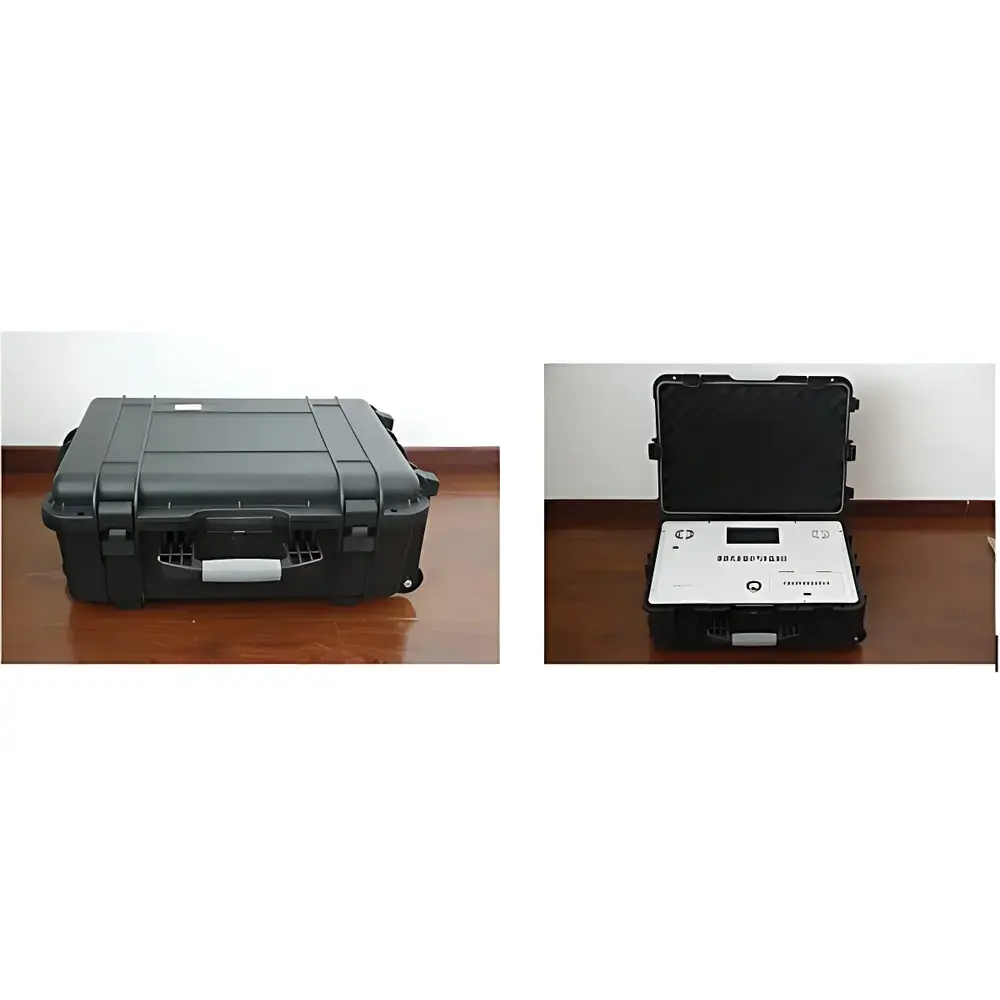
Ruzeh Environmental PG Series Portable Multicomponent Gas Analyzer
| Origin | Tianjin, China |
|---|---|
| Manufacturer Type | Authorized Distributor |
| Model | PG Series |
| Detection Principle | Electrochemical Sensors (H₂S, NH₃, CH₃SH, (CH₃)₂S, CH₃SSCH₃, CS₂, C₈H₈, (CH₃)₃N, NOₓ, O₃) + Optional PID for VOCs |
| Form Factor | Portable |
| Response Time | < 30 s (typical for electrochemical sensors) |
| Repeatability | ±2% FS (for calibrated target gases) |
| Communication Protocols | Modbus RTU/TCP, RS485, Bluetooth/Wi-Fi optional |
| Sensor Interface | Hot-swappable intelligent electrochemical & PID modules |
| Compliance | CE-marked |
Overview
The Ruzeh Environmental PG Series Portable Multicomponent Gas Analyzer is an engineered field-deployable instrument designed for real-time, on-site quantification of multiple toxic and odor-causing industrial gases. It operates primarily on selective electrochemical sensing technology—optimized for high specificity and stability in ambient air matrices—and integrates optional photoionization detection (PID) for broader volatile organic compound (VOC) coverage. Unlike laboratory-based GC-MS or FTIR systems, the PG Series delivers rapid, trace-level concentration data (ppb to ppm range) without requiring sample extraction, pre-concentration, or carrier gas infrastructure. Its core application domain spans environmental compliance verification, industrial hygiene assessment, landfill and wastewater treatment odor management, and emergency response screening. The system calculates standardized odor unit (OU) values in accordance with EN 13725:2022 methodology by applying weighted sum algorithms to measured concentrations of key malodorous compounds—including hydrogen sulfide, ammonia, methyl mercaptan, dimethyl sulfide, and trimethylamine—enabling direct regulatory comparability across jurisdictions.
Key Features
- Simultaneous detection of up to 10 target gases—configurable per deployment (e.g., 4-, 6-, or 8-gas setups)—with modular sensor slots supporting independent calibration, replacement, and firmware updates.
- Ruggedized enclosure rated IP65 for dust and water resistance; integrated mounting brackets enable tripod, wall, or vehicle installation; optional ATEX-certified variants available for Zone 1 hazardous areas.
- Dual-mode communication architecture: wired RS485/Modbus RTU for integration into SCADA networks and wireless Bluetooth/Wi-Fi for local telemetry and mobile app access (Android/iOS).
- Open API and standardized Modbus TCP interface allow seamless interoperability with third-party platforms—including LIMS, EMS, and cloud-based environmental dashboards—supporting automated data ingestion and audit-ready logging.
- Configurable operational parameters: user-defined sampling intervals (1–300 s), automatic zero/span calibration schedules, sensor cleaning cycles, and alarm thresholds aligned with EPA Method TO-15, ISO 16017-1, and national ambient air quality standards.
- Native compatibility with electronic nose systems and automated gas sampling controllers enables synchronized multi-sensor fusion analysis for complex odor profiling and source attribution studies.
Sample Compatibility & Compliance
The PG Series is validated for continuous operation in ambient outdoor environments (−20 °C to +50 °C, 15–95% RH non-condensing) and industrial boundary zones. It complies with electromagnetic compatibility requirements per IEC 61000-6-2 (immunity) and IEC 61000-6-3 (emissions), ensuring stable performance near variable-frequency drives, RF transmitters, and power distribution equipment. Sensor modules meet RoHS Directive 2011/65/EU and are traceably calibrated against NIST-traceable gas standards. Data integrity protocols align with GLP principles: all measurements include embedded timestamps, sensor health diagnostics, and operator ID tagging. For regulated reporting, the system supports 21 CFR Part 11-compliant audit trails when deployed with validated software platforms.
Software & Data Management
The PG Series ships with Ruzeh Connect—a Windows/Linux-compatible desktop application enabling configuration, live visualization, historical trend plotting, and report generation (PDF/CSV). Raw sensor outputs are timestamped at 1 Hz resolution and stored locally on microSD (up to 32 GB) with automatic rollover. Cloud synchronization via MQTT or HTTPS is supported for centralized fleet monitoring. All data exports include metadata fields: sensor serial numbers, calibration dates, temperature/pressure compensation flags, and uncertainty estimates per ISO/IEC 17025:2017 Annex A.3 guidelines. Remote firmware updates preserve backward compatibility and incorporate evolving regulatory thresholds (e.g., updated WHO air quality guidelines for ozone and NO₂).
Applications
- Regulatory odor monitoring at municipal landfills, composting facilities, and sewage pumping stations—tracking H₂S, NH₃, and OU values against local nuisance ordinances.
- Process emission verification in chemical manufacturing, pharmaceutical synthesis, and food processing plants—identifying fugitive releases during maintenance, loading, or venting events.
- Community air quality surveillance near industrial corridors—correlating real-time VOC and inorganic gas data with resident complaint logs for root-cause analysis.
- Emergency response triage—rapid deployment to assess exposure risks following chemical spills, tank overflows, or biogas leaks using pre-loaded hazard band alarms (TLV-STEL, IDLH).
- Research-grade field campaigns—supporting academic studies on atmospheric chemistry, odor dispersion modeling, and sensor network validation under dynamic meteorological conditions.
FAQ
What gases does the standard PG Series configuration detect?
The base model detects hydrogen sulfide (H₂S), ammonia (NH₃), methyl mercaptan (CH₃SH), dimethyl sulfide ((CH₃)₂S), carbon disulfide (CS₂), styrene (C₈H₈), trimethylamine ((CH₃)₃N), nitrogen oxides (NOₓ), ozone (O₃), and sulfur dioxide (SO₂). VOC detection requires optional PID module integration.
Can the instrument calculate odor units (OU) in real time?
Yes. The onboard processor applies EN 13725:2022 weighting factors to measured concentrations of 12 priority odorants and computes dynamic OU values every 60 seconds, with configurable averaging windows (1-min to 24-hr).
Is sensor calibration traceable to international standards?
All factory calibrations use NIST-traceable certified gas mixtures (±2% uncertainty). Field calibration kits include certified span gases and zero-air generators compliant with ISO 6141.
How is data security ensured during wireless transmission?
Bluetooth connections use AES-128 encryption; Wi-Fi mode supports WPA2-Enterprise authentication and TLS 1.2 encrypted MQTT payloads for cloud uploads.
Does the system support predictive maintenance alerts?
Yes. Firmware monitors sensor drift rate, electrolyte depletion indicators, and temperature-compensated signal noise—triggering configurable notifications when performance deviates beyond ISO 12099:2017 acceptance criteria.







