
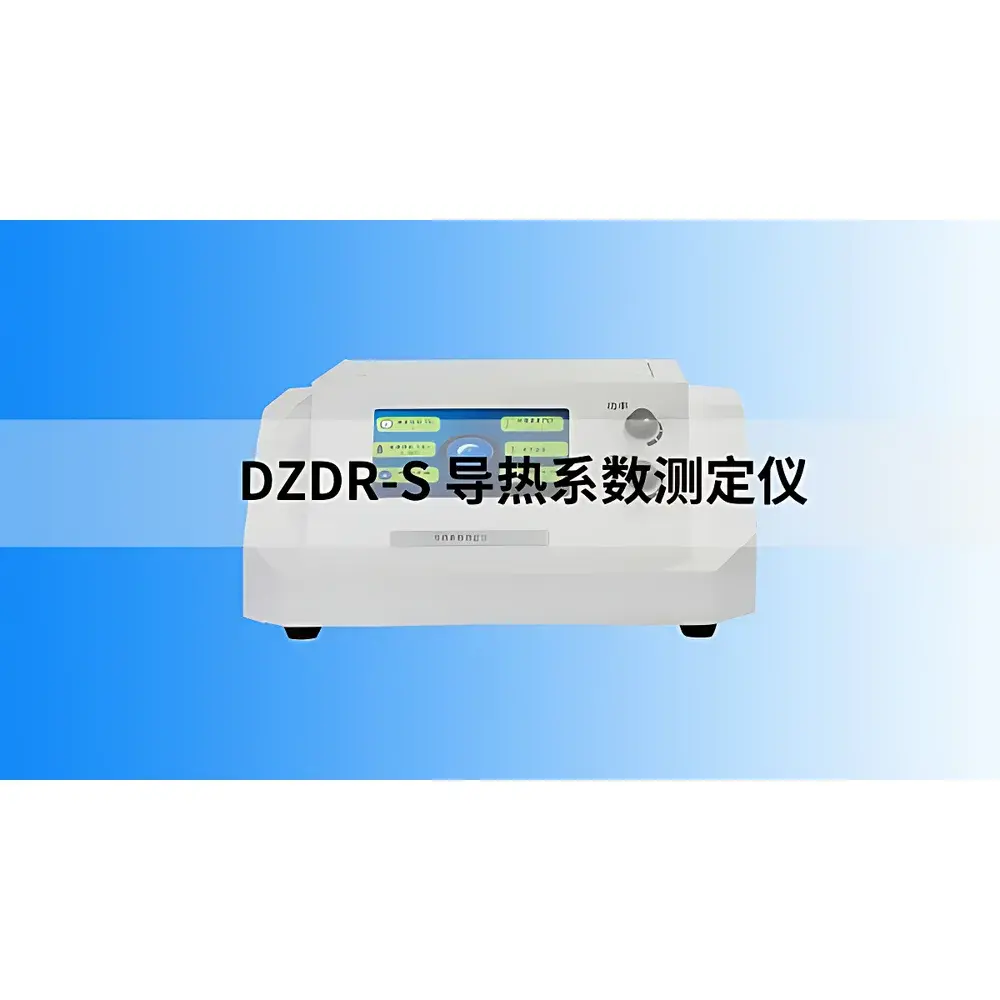

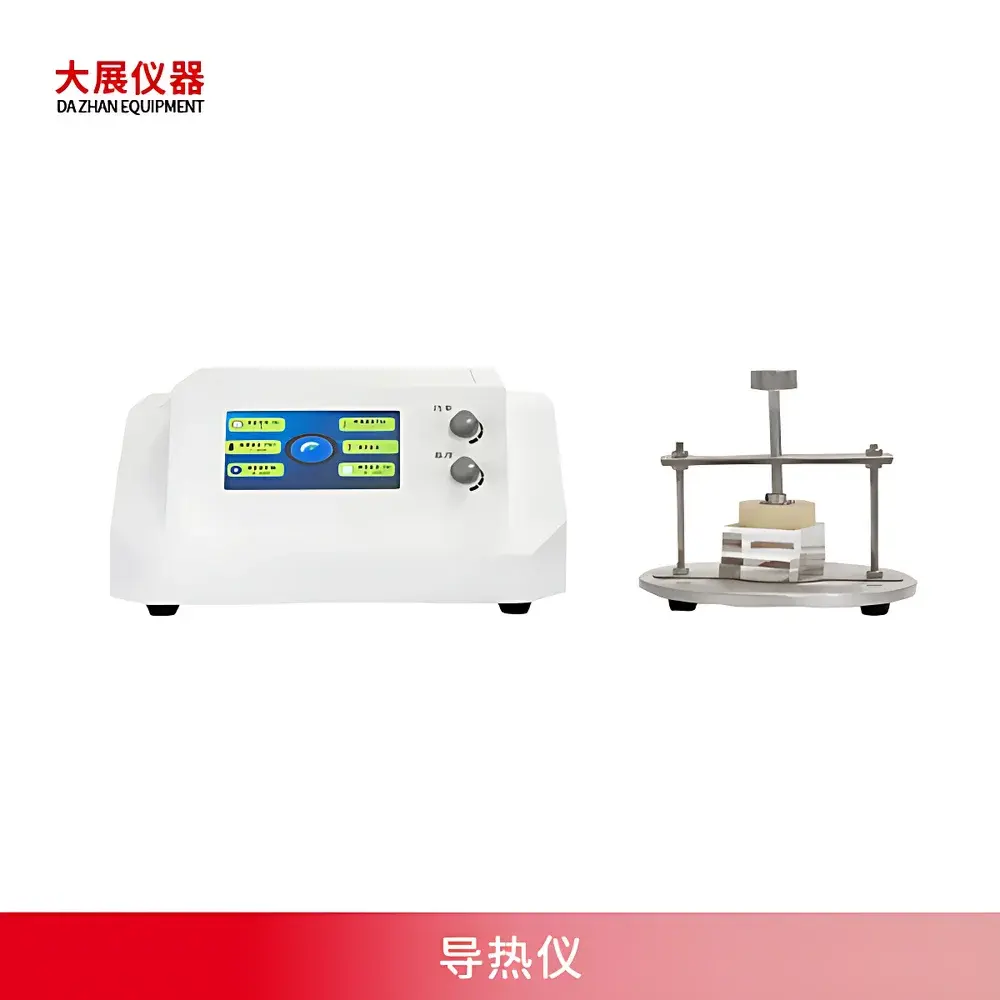
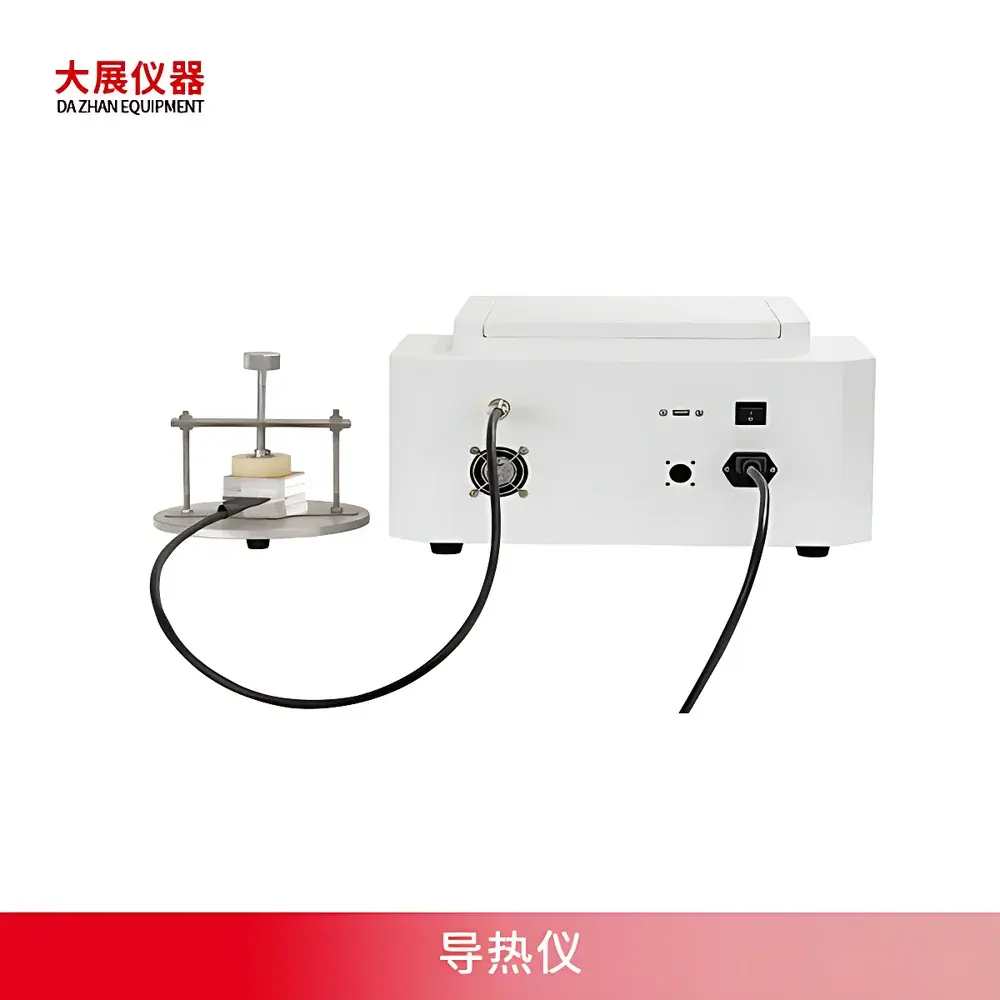
Nanjing Dazhan DZDR-S Transient Plane Source (TPS) Thermal Conductivity Analyzer
| Brand | Nanjing Dazhan |
|---|---|
| Origin | Jiangsu, China |
| Manufacturer Type | Manufacturer |
| Country of Origin | China |
| Model | DZDR-S |
| Instrument Type | Transient Plane Source (TPS) Method |
| Sample Throughput | Single sample per test |
| Test Environment | Ambient temperature |
| Thermal Conductivity Range | 0.0001–300 W/(m·K) |
| Accuracy | ±3% |
| Repeatability | ≤3% |
| Temperature Range | Room temperature to 130 °C |
| Sample Forms | Liquids, thin films, powders, metals, colloids, pastes, granules, coatings, and insulating materials |
Overview
The Nanjing Dazhan DZDR-S Transient Plane Source (TPS) Thermal Conductivity Analyzer is an engineered solution for rapid, contact-based measurement of thermal conductivity and thermal diffusivity across a broad spectrum of solid, semi-solid, and liquid materials. Based on the ISO 22007-2 standard-compliant transient plane source principle, the instrument applies a thin, symmetrically wound double-helix sensor—acting simultaneously as both heater and temperature sensor—to the surface or interstitial plane of a sample. A controlled current pulse induces a transient temperature rise, and the resulting voltage response is captured with high temporal resolution. Using inverse modeling grounded in Fourier heat conduction theory, the system computes thermal conductivity directly from the slope of the log(ΔT) vs. log(t) curve during the early-time linear regime—eliminating reliance on steady-state equilibrium or assumptions about boundary conditions. This physics-based approach ensures minimal influence from interfacial contact resistance, making it particularly suitable for low-conductivity insulators, anisotropic composites, and heterogeneous media where guarded hot plate or laser flash methods face limitations.
Key Features
- Integrated benchtop architecture with compact footprint (<450 × 350 × 300 mm) and lightweight design (<15 kg), optimized for lab space efficiency and mobility between testing stations.
- Dual-mode probe configuration: Standard interchangeable probes (7.5 mm, 15 mm, and optional 50 mm diameter) enable scalable testing—from micro-volume liquids and thin films to bulk insulation panels—without recalibration.
- ARM-based embedded control system with real-time data acquisition at ≥10 kHz sampling rate, ensuring high-fidelity capture of the critical 5–160 s transient response window.
- High-resolution analog front-end using industrial-grade ADC ICs (24-bit effective resolution), minimizing quantization error in low-signal regimes typical of ultra-low-k materials (e.g., aerogels, foams).
- Intuitive 7-inch capacitive touchscreen interface with multilingual GUI (English default), supporting parameter presetting, live curve visualization, and one-touch report generation in PDF/CSV format.
- Non-destructive testing protocol: Samples remain structurally intact post-measurement, enabling longitudinal studies, cross-laboratory validation, or reuse in downstream mechanical/chemical characterization.
- No specialized sample preparation required—flatness tolerance ≤0.1 mm over probe-contact area; thickness constraints scale linearly with probe size (e.g., ≥3.75 mm for 7.5 mm probe), accommodating irregular geometries common in R&D prototyping.
Sample Compatibility & Compliance
The DZDR-S accommodates diverse physical states without phase-specific hardware modification: viscous liquids (e.g., thermal greases, nanofluids), compliant solids (gels, elastomers), particulate systems (metal powders, ceramic granules), layered structures (coatings on substrates), and porous matrices (aerogels, mineral wool). Its operational temperature range (20–130 °C) supports elevated-temperature screening relevant to battery thermal management, polymer processing, and electronics encapsulation. The instrument adheres to the measurement principles defined in ISO 22007-2:2015 (“Plastics — Determination of thermal conductivity and thermal diffusivity — Part 2: Transient plane source (hot disc) method”) and provides traceable calibration via NIST-traceable reference materials (e.g., certified graphite, Pyroceram® 9606). Data integrity meets GLP-aligned requirements, including user-access logs, timestamped raw-data archiving, and audit-ready test records compliant with FDA 21 CFR Part 11 when deployed with validated networked software extensions.
Software & Data Management
Bundled DZDR-Control Suite v3.x delivers full instrument orchestration—including probe selection, pulse duration tuning, baseline drift correction, and multi-curve overlay analysis. Raw thermogram data (time-resolved voltage vs. time) is stored in HDF5 format for interoperability with MATLAB®, Python (NumPy/Pandas), or third-party statistical platforms. Built-in uncertainty propagation engine calculates combined standard uncertainty (k=2) per test, incorporating contributions from probe calibration, ambient temperature stability, and signal-to-noise ratio. Export modules generate ASTM E1225–style reports with metadata fields for sample ID, operator, environmental conditions, and compliance flags. Optional cloud-sync module enables centralized data governance across multi-site QA labs operating under ISO/IEC 17025 quality management frameworks.
Applications
- Thermal interface material (TIM) qualification for semiconductor packaging and EV battery modules.
- Rapid screening of phase-change materials (PCMs) and latent-heat storage composites.
- Quality control of polymer blends, filled elastomers, and carbon-fiber-reinforced thermoplastics.
- Characterization of aerospace-grade insulators (e.g., silica aerogel blankets, ceramic fiber boards).
- Academic research on nanostructured thin films, 2D materials (graphene oxide, MXenes), and metamaterials.
- Regulatory submission support for medical device thermal safety dossiers (ISO 10993-12, IEC 60601-1).
FAQ
What standards does the DZDR-S comply with for thermal conductivity measurement?
The instrument implements the transient plane source methodology described in ISO 22007-2:2015 and aligns with the theoretical foundation of ASTM D5470 for thermal transmission properties.
Can the DZDR-S measure anisotropic materials such as graphite or layered composites?
Yes—by orienting the probe normal to the expected direction of heat flow and applying directional pressure control, users can resolve through-plane versus in-plane conductivity in aligned structures.
Is calibration required before each test series?
No routine recalibration is needed; however, annual verification using certified reference materials (e.g., NIST SRM 1470) is recommended for ISO/IEC 17025 accreditation.
How does the DZDR-S handle air gaps or imperfect surface contact?
Unlike steady-state techniques, TPS inherently mitigates contact resistance effects by analyzing the early-time transient response, where heat diffusion dominates over interfacial losses.
Are powder samples tested in a dedicated container?
Yes—a stainless-steel cylindrical cell with adjustable height and compression platen is included to ensure consistent density and eliminate void artifacts during loose-powder measurements.
Related Products



