
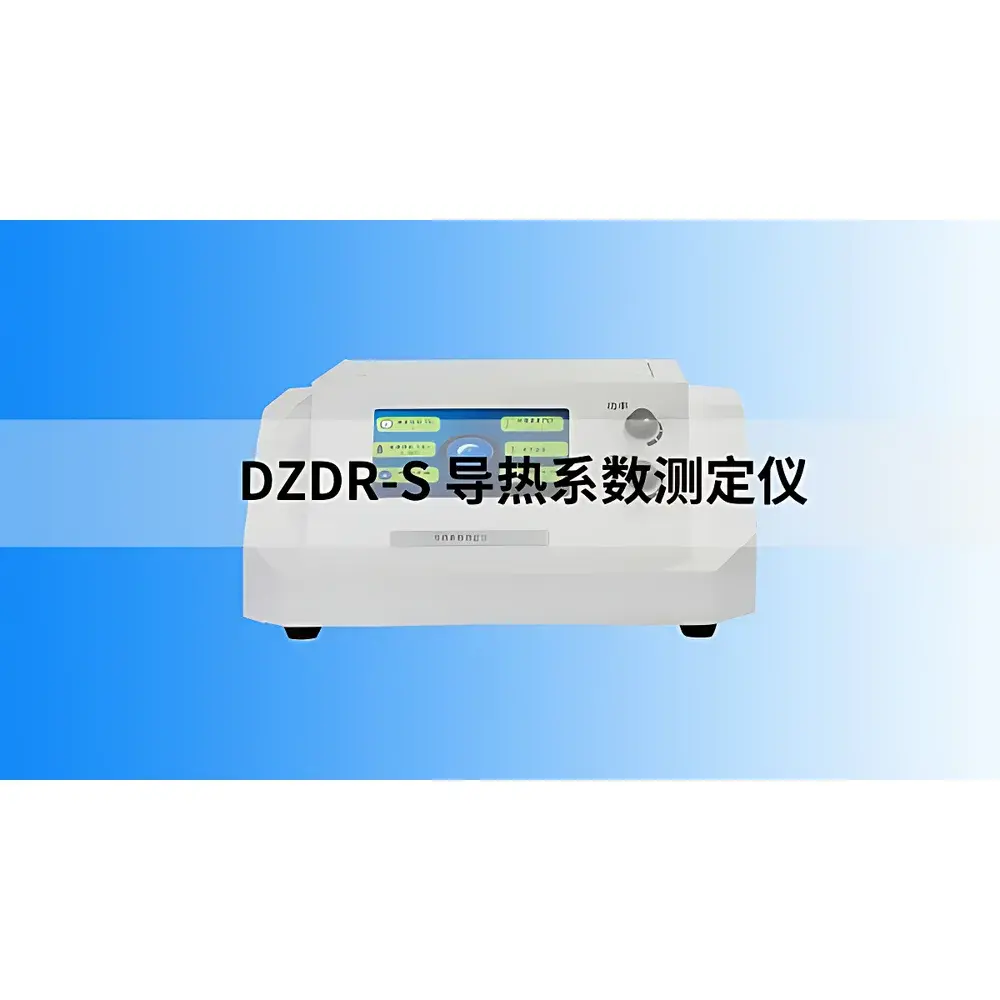
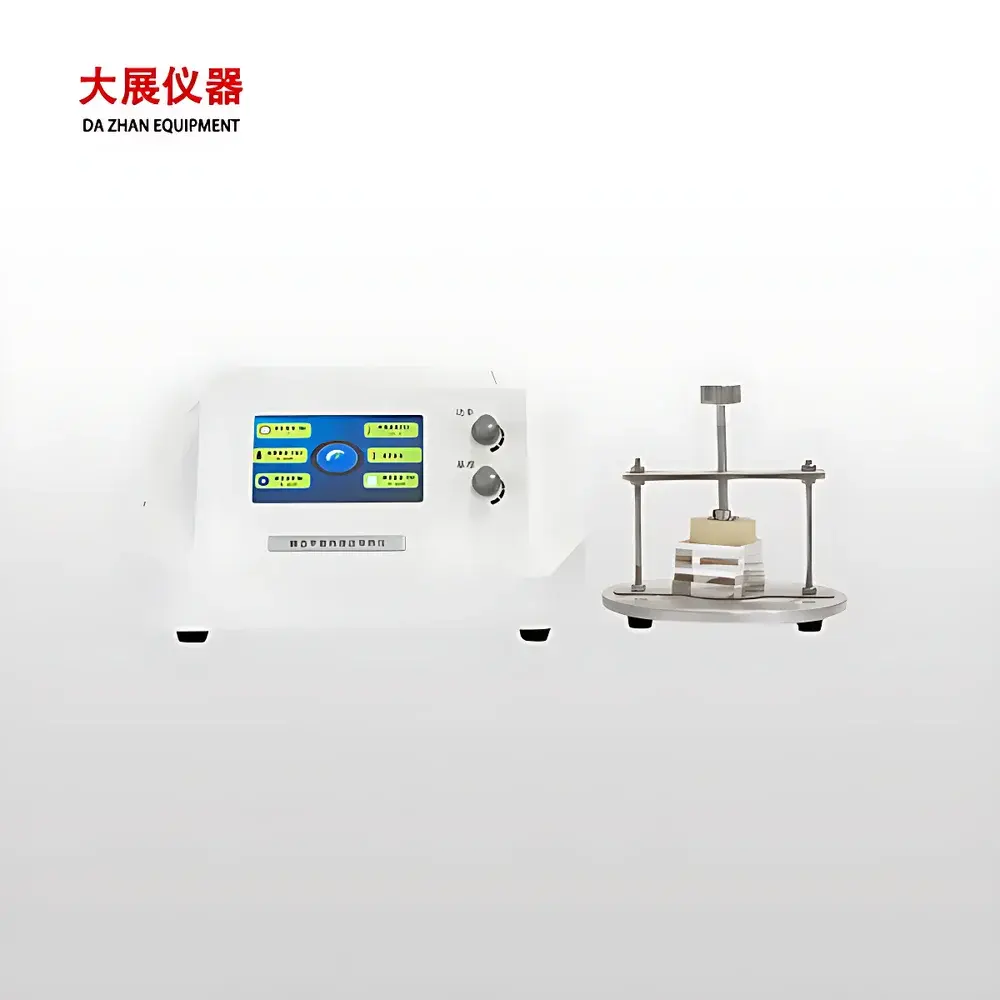
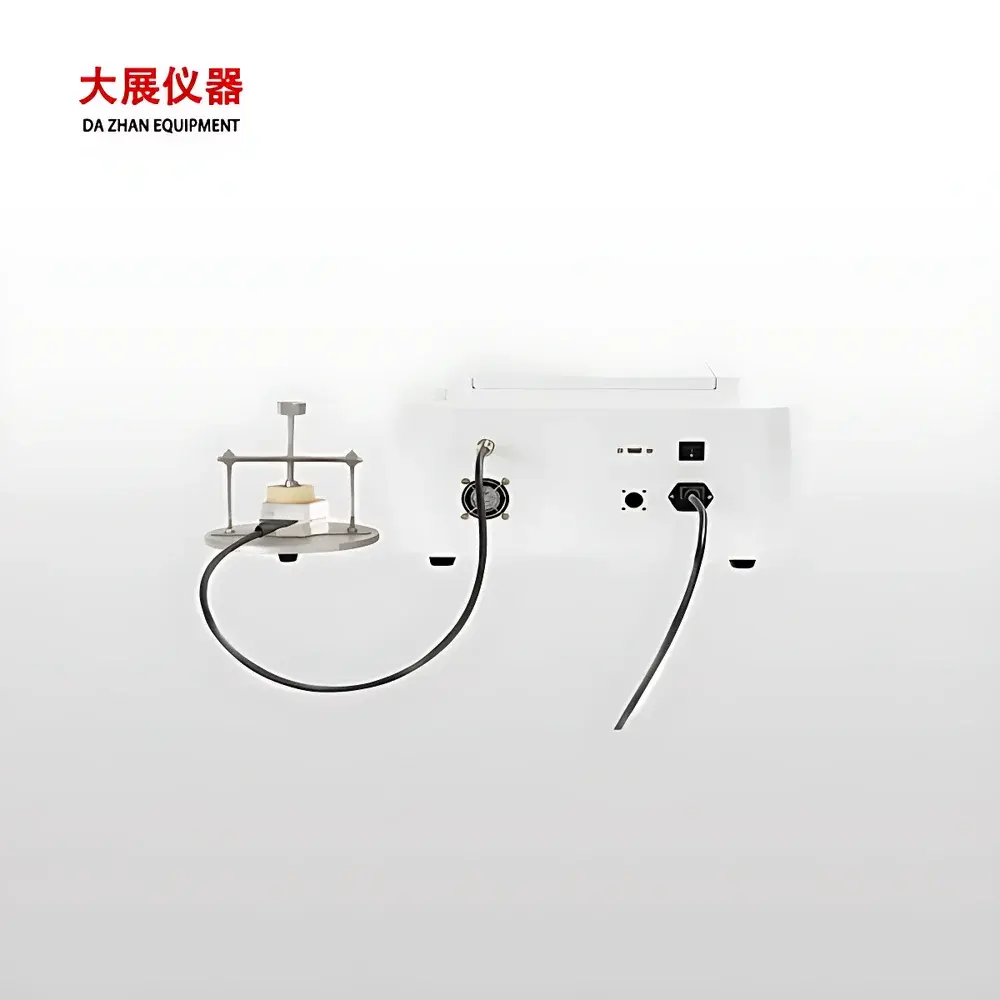
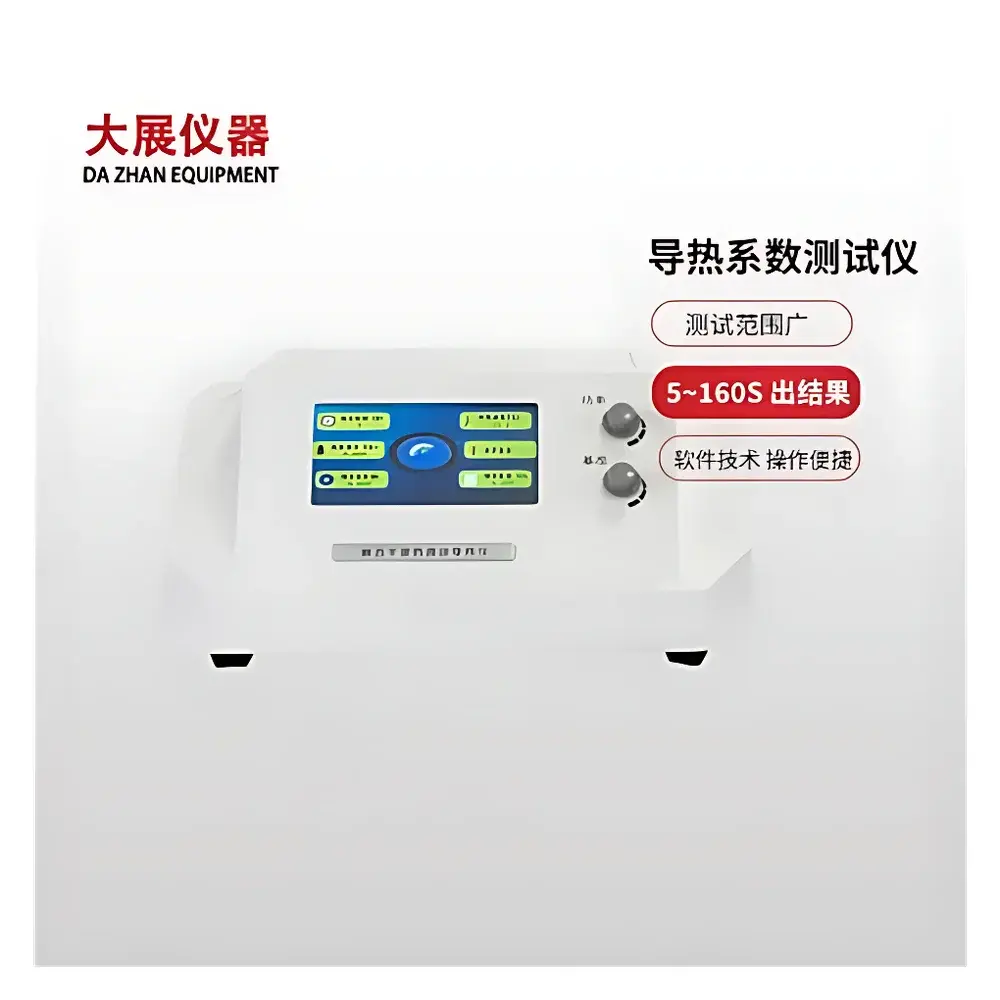
Nanjing Dazhan DZDR-S Transient Plane Source (TPS) Thermal Conductivity Analyzer
| Brand | Nanjing Dazhan |
|---|---|
| Origin | Jiangsu, China |
| Manufacturer Type | Manufacturer |
| Model | DZDR-S |
| Measurement Principle | Transient Plane Source (TPS) Method |
| Sample Throughput | Single sample per test |
| Test Environment | Ambient temperature |
| Thermal Conductivity Range | 0.0001–300 W/(m·K) |
| Accuracy | ±3% |
| Dimensions (L×W×H) | 440 × 390 × 220 mm |
| Temperature Range | Room temperature to 300 °C |
| Sample Forms | Solids, powders, and fluids |
| Power Supply | AC 220 V, <500 W |
Overview
The Nanjing Dazhan DZDR-S Transient Plane Source (TPS) Thermal Conductivity Analyzer is a precision instrument engineered for rapid, non-destructive determination of thermal conductivity across a broad spectrum of materials. Based on the transient plane source method—a well-established, ISO/ASTM-aligned non-steady-state technique—the DZDR-S applies a thin, symmetrically wound double-helix nickel sensor (acting as both heater and resistance thermometer) to the surface or interior of a sample. A controlled current pulse generates transient heat flow, and the resulting time-dependent temperature rise is recorded with high temporal resolution. Thermal conductivity is derived from the slope of the log(temperature) versus log(time) curve in the mid-rise region, eliminating dependence on absolute temperature calibration and minimizing contact resistance artifacts common in guarded-hot-plate or steady-state methods. Designed for laboratory R&D, QC/QA labs, and material development facilities, the DZDR-S delivers reliable data within 5–160 seconds per measurement—enabling high-throughput screening without compromising metrological integrity.
Key Features
- Triple-probe configuration (7.5 mm, 15 mm, and 50 mm diameter options) for optimized sensitivity across low- and high-conductivity regimes—from aerogels and polymers to metals and ceramics.
- ARM-based embedded control system ensures deterministic real-time data acquisition, low-latency signal processing, and stable thermal pulse generation.
- High-resolution analog-to-digital conversion circuitry (imported precision ADC ICs) enables sub-millikelvin temperature resolution over the full dynamic range.
- Touch-enabled color LCD interface with intuitive graphical workflow—supports standalone operation without PC dependency.
- Bi-directional communication protocol (USB 2.0 + optional RS-232) enables seamless integration into automated test benches and LIMS environments.
- Modular sample stage accommodates variable thicknesses; no specialized machining required—flatness tolerance only demands surface roughness < Ra 5 µm and lateral dimensions ≥2× probe diameter.
- Non-invasive measurement principle preserves sample integrity; specimens remain fully reusable after testing.
- Optional accessories include standardized powder test cells, liquid cuvettes with thermal isolation lids, and thin-film spacers for anisotropic layer characterization.
Sample Compatibility & Compliance
The DZDR-S accepts heterogeneous material forms—including isotropic solids (metals, ceramics, composites), granular media (ceramic powders, metal oxides, battery electrode blends), viscous fluids (thermal greases, nanofluids, polymer melts), and semi-solids (gels, pastes, adhesives). Its TPS methodology conforms to the physical basis outlined in ISO 22007-2 and ASTM D7984, supporting traceable thermal property reporting under GLP and GMP frameworks. While not certified for FDA 21 CFR Part 11 out-of-the-box, audit-ready data logs—including operator ID, timestamp, probe ID, ambient humidity/temperature metadata, and raw voltage vs. time arrays—are exportable in CSV and HDF5 formats for internal validation and regulatory submission.
Software & Data Management
The bundled Windows-based analysis suite provides full control over pulse duration, sampling rate (up to 10 kHz), baseline correction algorithms, and multi-curve statistical comparison. Each test session auto-generates a structured report containing calculated k-value, standard deviation across replicates, confidence interval (95%), and diagnostic flags for poor contact or thermal saturation. Raw datasets are stored with SHA-256 checksums to ensure data provenance. Optional API access supports Python and LabVIEW integration for custom automation sequences, DOE workflows, and real-time dashboard visualization via MQTT or OPC UA protocols.
Applications
- Quality assurance of thermal interface materials (TIMs) in electronics packaging and EV battery module assembly.
- Rapid screening of insulation performance in building materials (aerogels, vacuum panels, foams).
- Thermal property mapping during polymer formulation development and additive manufacturing feedstock qualification.
- Validation of sintering efficacy in powder metallurgy and ceramic green-body densification processes.
- Characterization of phase-change materials (PCMs) and nanocomposite heat transfer fluids for HVAC and solar thermal systems.
- Academic research in phonon transport mechanisms, interfacial thermal resistance (Kapitza resistance), and anisotropic conduction in layered 2D materials.
FAQ
What standards does the DZDR-S comply with?
It implements the physics and data reduction principles defined in ISO 22007-2 and ASTM D7984 for transient plane source measurements.
Can the instrument measure anisotropic materials?
Yes—by orienting the probe normal to specific crystallographic axes or laminate planes, directional conductivity components can be resolved when combined with appropriate sample mounting fixtures.
Is calibration traceable to NIST or other national metrology institutes?
The system uses factory-calibrated reference materials (certified glass, stainless steel, and polyethylene standards) with uncertainty budgets documented per ISO/IEC 17025 guidelines; end-user recalibration services are available.
Does it support temperature-controlled measurements?
Standard operation is at ambient temperature; optional heated/cooled sample stages (–40 °C to 300 °C) are available as modular add-ons with PID-controlled thermal enclosures.
How is contact resistance mitigated in TPS measurements?
Unlike steady-state techniques, TPS inherently suppresses contact resistance influence because the sensor’s thermal diffusivity dominates the early-time response—contact effects only manifest beyond ~10 s, outside the primary analysis window.



