
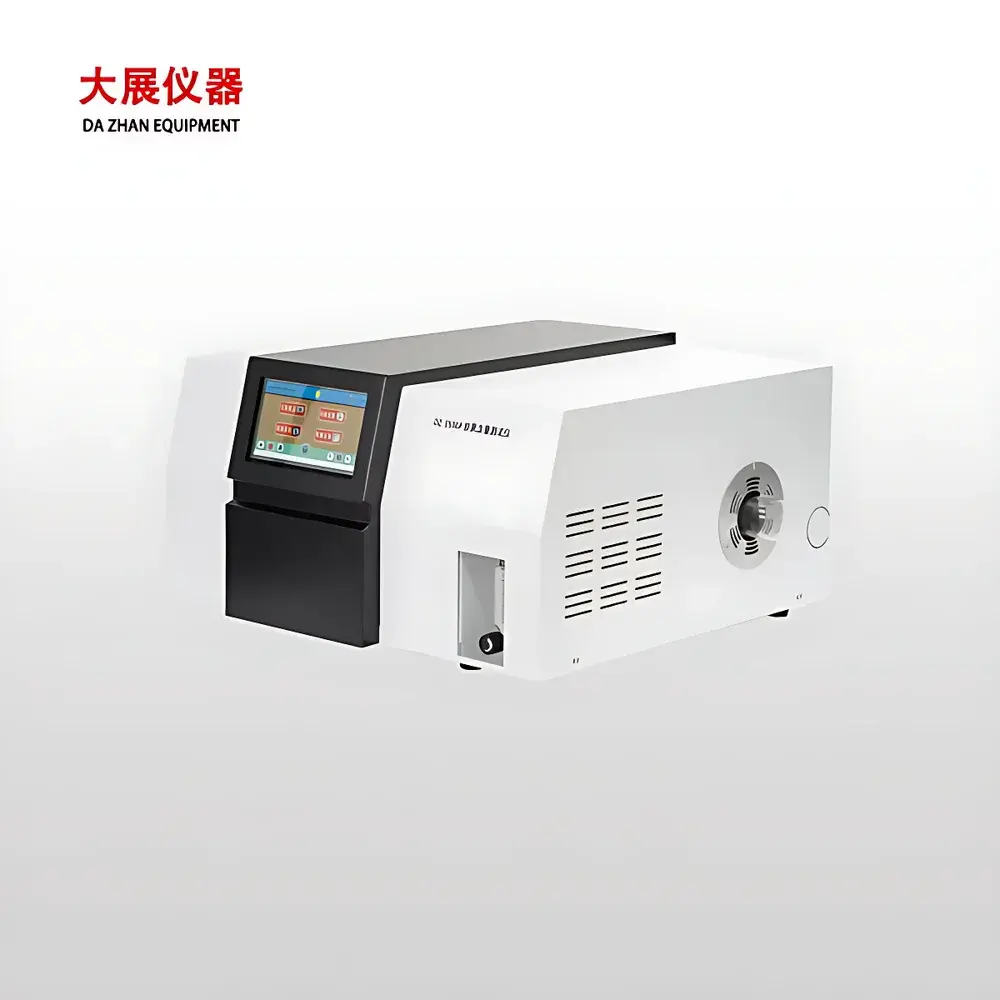
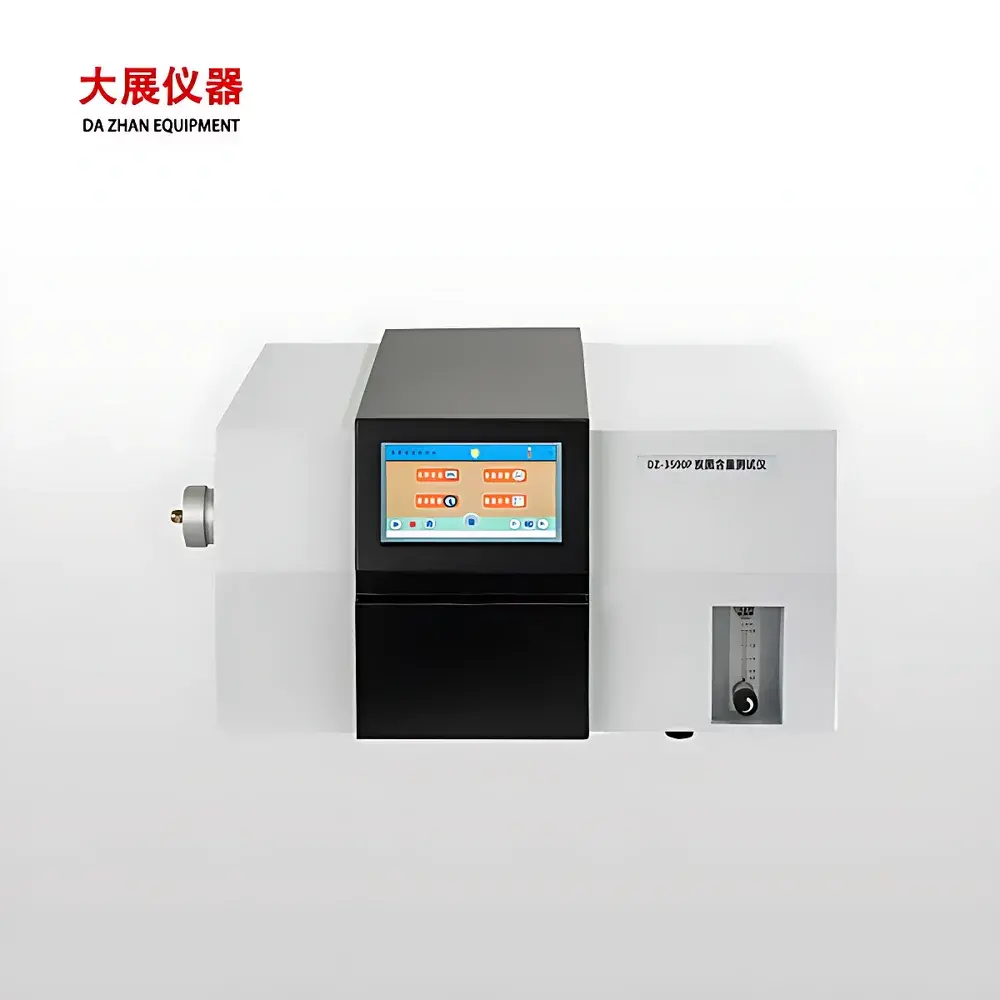
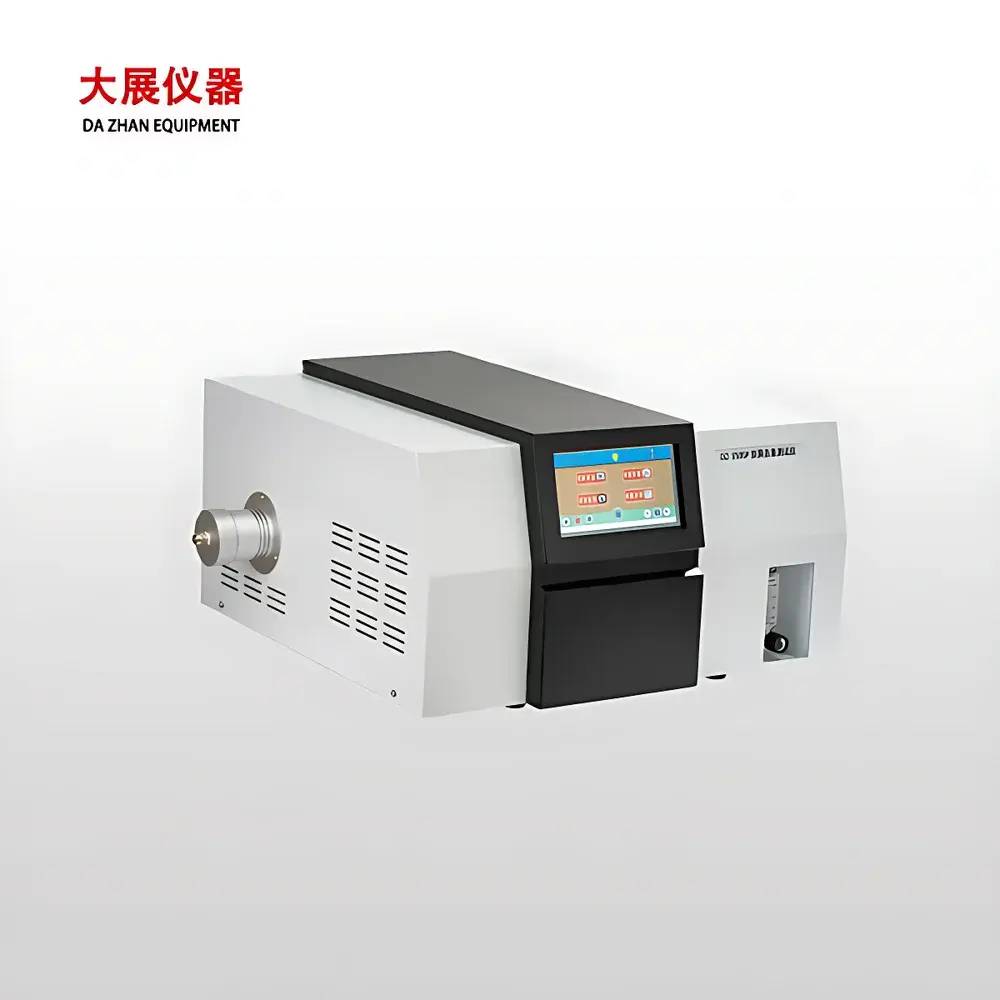
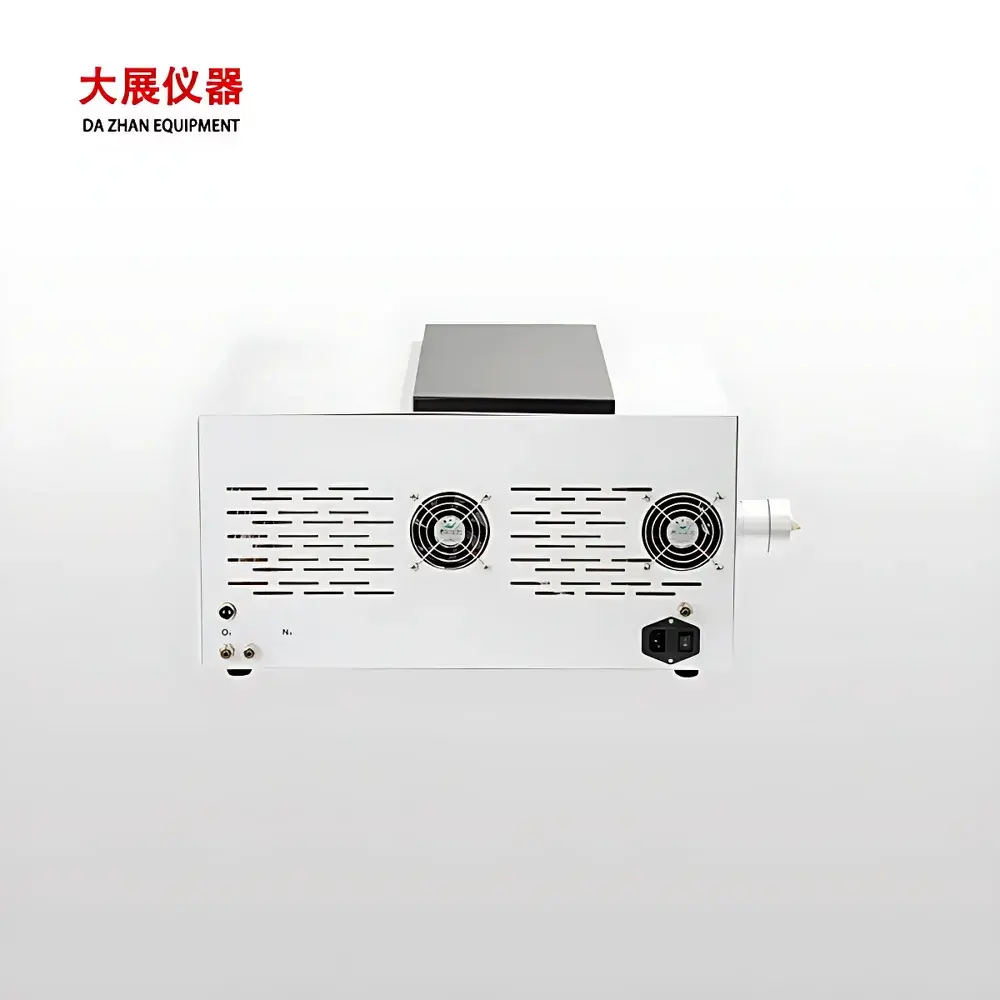
Nanjing Dazhan DZ3500P Carbon Black Content Analyzer
| Origin | Jiangsu, China |
|---|---|
| Manufacturer Type | Authorized Distributor |
| Origin Category | Domestic (PRC) |
| Model | DZ3500P |
| Price Range | USD 7,000–10,000 |
| Display | 7-inch capacitive touchscreen |
| Quartz Tube Dimensions | φ44 × 600 ± 5 mm |
| Furnace Chamber Dimensions | φ45 × 300 ± 5 mm |
| Heating Element | High-temperature alloy wire |
| Heating Zone Length | 300 mm |
| Isothermal Zone Length | 250 mm |
| Operating Temperature Range | Ambient to 1150 °C |
| Temperature Control | Intelligent programmable controller with multi-segment ramp/soak profiles |
| Power Supply | AC 220 V, 50/60 Hz |
| Temperature Sensor Sensitivity | 0.1 °C |
| Gas Flow Control | Dual-channel, software-automated switching (N₂ purge only) |
| Cooling Rate | ≤20 min (900 °C → ambient) |
| Sample Capacity | 4 specimens per run |
| Data Processing | Onboard calculation engine — automatic derivation of carbon black content (%) and ash residue (%) |
| Optional Accessories | Exhaust filtration unit, rail-mounted sample holder |
Overview
The Nanjing Dazhan DZ3500P Carbon Black Content Analyzer is a thermogravimetric instrument engineered for precise quantification of carbon black loading in thermoplastic polymer matrices—primarily polyethylene (PE), polypropylene (PP), and polybutylene (PB). It operates on the principle of controlled pyrolysis under inert nitrogen atmosphere: a pre-weighed polymer sample is heated to high temperature (up to 1150 °C) in a quartz tube furnace; organic polymer decomposes completely, while carbon black remains as a stable, non-volatile residue. The mass difference before and after pyrolysis—corrected for ash content via sequential oxidation—is used to calculate carbon black concentration by weight percent. This method aligns with established gravimetric standards for filler analysis in elastomers and cable compounds, where carbon black dispersion and loading directly influence mechanical reinforcement, UV resistance, electrical conductivity, and long-term aging behavior.
Key Features
- Programmable high-precision thermal profile control: Supports multi-step heating sequences (e.g., low-temperature moisture removal → N₂ purge → pyrolysis at 550–600 °C → optional ash oxidation at 800 °C), ensuring repeatability across batches.
- Dual-gas channel architecture: Independent N₂ supply lines enable seamless transition between inert pyrolysis and oxidative ash determination without manual valve intervention.
- Optimized furnace geometry: A 300 mm heating zone and 250 mm isothermal region guarantee uniform thermal distribution—critical for minimizing inter-sample variance in multi-position runs.
- Integrated 7-inch capacitive touchscreen HMI: Provides real-time temperature curve visualization, step-by-step operation guidance, and immediate post-run calculation of carbon black % and ash %.
- Rail-mounted sample handling system: Facilitates rapid, reproducible placement and retrieval of up to four crucibles—reducing operator exposure to thermal hazards and improving throughput.
- Active rapid cooling module: Achieves <20-minute cooldown from 900 °C to ambient, enabling ≥3 full analytical cycles per working day without thermal soak delays.
Sample Compatibility & Compliance
The DZ3500P is validated for use with PE, PP, and PB-based compounds—including cable insulation, pipe-grade resins, and automotive weatherstripping materials. Its operational methodology conforms strictly to ISO 6964:1998 (Rubber—Determination of carbon black content—Thermogravimetric method), GB/T 13021–1991 and GB/T 13021–2022 (Polyethylene pipes—Determination of carbon black content), IEC 60811-4-1:2012 (Electric cables—Test methods for non-metallic materials—Part 4-1: General tests—Measurement of carbon black content), and ASTM D1603–94 (Standard Test Method for Carbon Black Content of Olefin Plastics). Instrument design supports GLP-compliant workflows: all temperature setpoints, gas flow states, and weight readings are time-stamped and stored locally. Optional exhaust filtration meets laboratory safety requirements for particulate capture during venting.
Software & Data Management
The onboard firmware includes an embedded calculation engine compliant with standard formulae defined in ISO 6964 Annex B. Upon completion of thermal protocol, the system automatically computes carbon black content using:
CB (%) = [(W₁ − W₂) / W₁] × 100 − Ash (%)
where W₁ = initial sample mass, W₂ = residue mass post-pyrolysis. Ash content is determined separately by oxidizing the residue in air and re-weighing. All raw mass values, temperature logs, and final results are exportable via USB to CSV format. No external PC is required for routine operation; however, data files are structured for import into LIMS or QA documentation systems supporting 21 CFR Part 11 audit trails when paired with validated third-party software.
Applications
- Quality assurance of carbon black–loaded PE/PP compounds in pipe manufacturing (e.g., PE100 pressure pipe compliance verification).
- Batch release testing for telecom and power cable jacketing materials per IEC 60811-4-1 and GB/T 2951.41–2008.
- R&D screening of novel conductive composites where carbon black loading correlates with volume resistivity.
- Failure analysis of aged cable sheaths exhibiting cracking or embrittlement—correlating residual carbon black dispersion with oxidative degradation.
- Supplier qualification audits requiring traceable, standardized filler content verification against contractual specifications (e.g., CJ/T 125–2000 for municipal water pipe materials).
FAQ
What standards does the DZ3500P comply with?
ISO 6964, GB/T 13021 (1991 & 2022), IEC 60811-4-1, ASTM D1603, GB/T 2951.41, JTGE50 T1165, and CJ/T 125–2000.
Can the instrument determine both carbon black and ash content in one run?
No—carbon black content requires inert (N₂) pyrolysis; ash content requires subsequent air oxidation. Two sequential thermal protocols are needed, but both are fully programmable and auto-executed.
Is the quartz tube replaceable, and what is its typical service life?
Yes—the φ44 × 600 mm fused quartz tube is a field-replaceable consumable. Under proper thermal cycling and handling, average lifespan exceeds 500 cycles.
Does the system support network connectivity or remote monitoring?
The base configuration operates standalone. Ethernet or RS-485 interfaces are available as factory-installed options for integration into centralized lab automation networks.
What calibration procedures are recommended for maintaining accuracy?
Daily zero calibration of the integrated balance is required. Annual verification using NIST-traceable reference materials (e.g., certified carbon black–loaded PE standards) is advised per ISO/IEC 17025 quality systems.



