
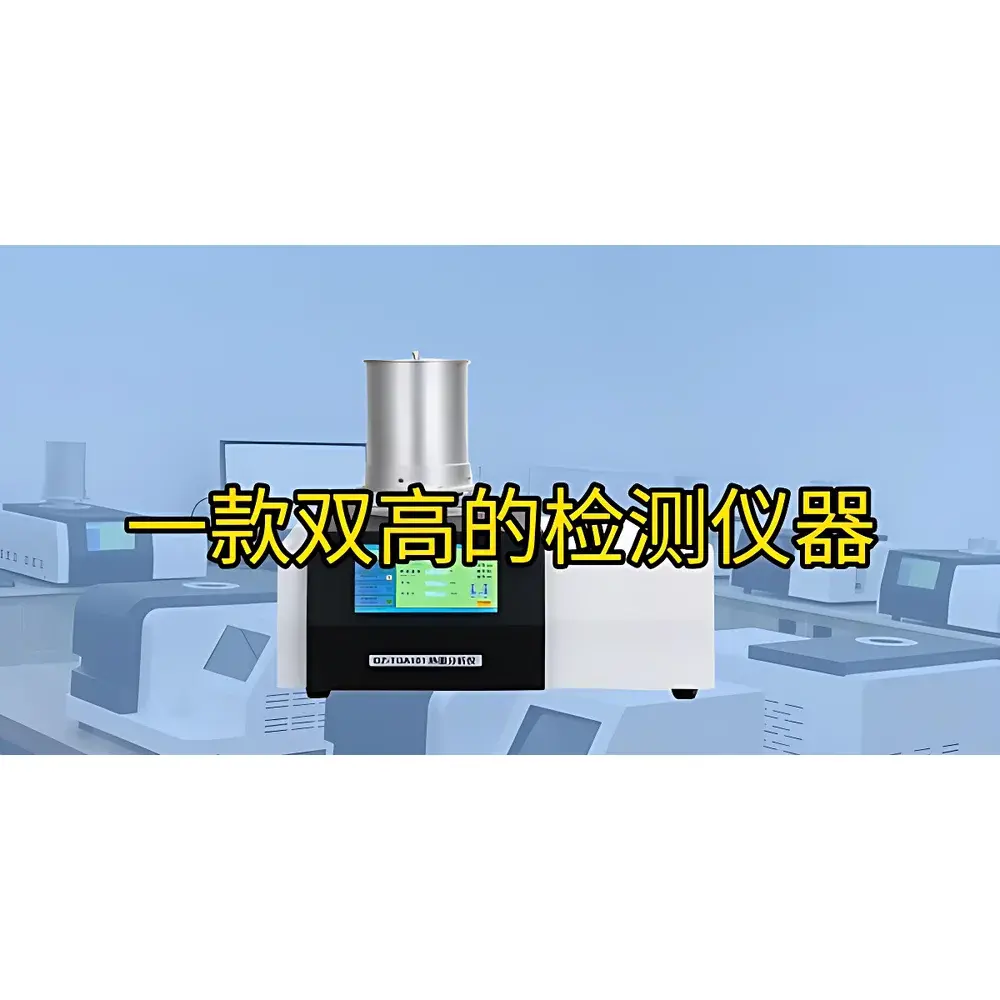
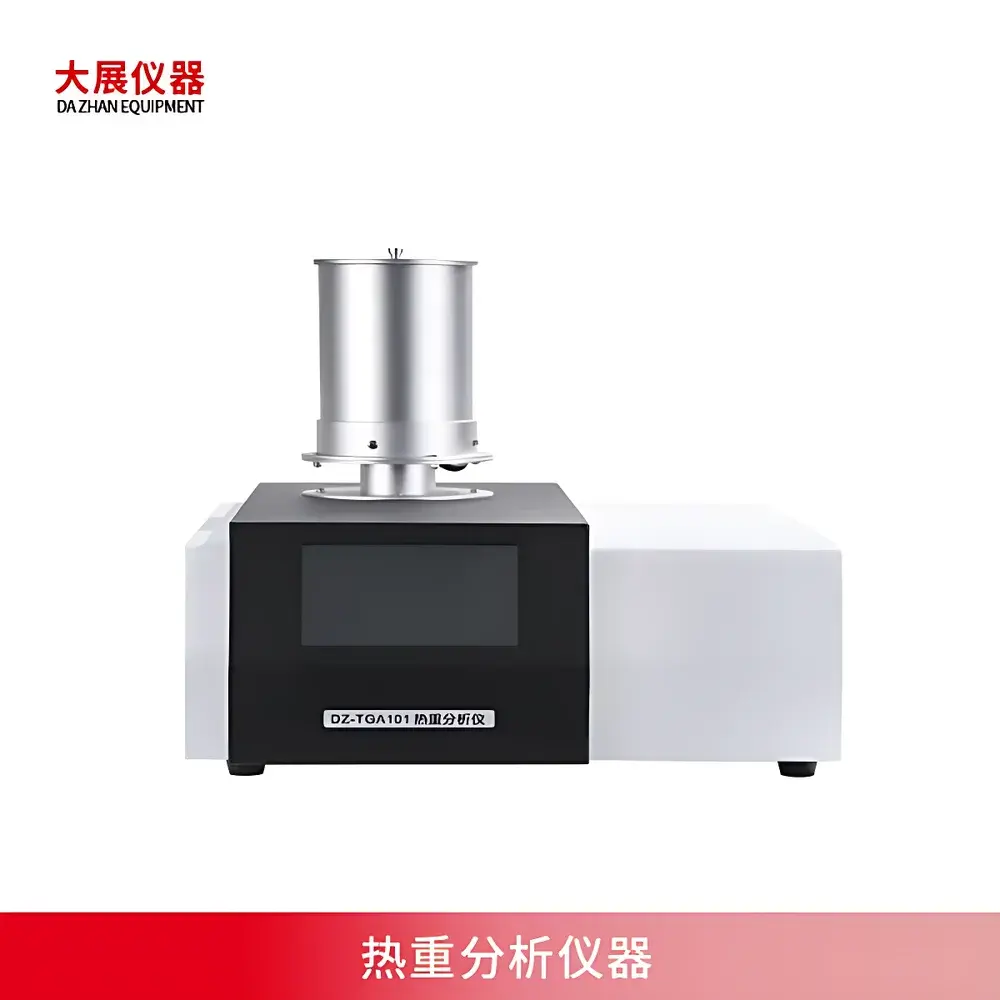
DZ-TGA101 Thermogravimetric Analyzer by DAZHAN
| Brand | DAZHAN |
|---|---|
| Origin | Jiangsu, China |
| Model | DZ-TGA101 |
| Temperature Range | Ambient to 1250 °C |
| Temperature Resolution | 0.01 °C |
| Temperature Stability | ±0.1 °C |
| Heating/Cooling Rate | 0.1–100 °C/min |
| Mass Range | 0.01 mg–30 g |
| Mass Sensitivity | 0.01 mg |
| Atmosphere Control | Dual-gas channel with mass flow control (inert, oxidizing, reducing, static, dynamic) |
| Display | 7-inch LCD touchscreen |
| Data Interface | USB |
| Software | Integrated TGA analysis suite with TG/DTG curve fitting, multi-point temperature calibration, Excel/PDF export, and GLP-compliant reporting |
Overview
The DZ-TGA101 Thermogravimetric Analyzer is a precision benchtop instrument engineered for quantitative measurement of mass change as a function of temperature or time under controlled atmospheric conditions. Based on the fundamental principle of thermogravimetry—monitoring real-time sample mass variation during programmed thermal treatment—the DZ-TGA101 delivers high-fidelity data for decomposition kinetics, thermal stability assessment, compositional analysis, and reaction stoichiometry determination. Its robust architecture integrates a dual-wound Ni–Cr heating element, water-jacketed thermal isolation between furnace and microbalance enclosure, and an upward-opening furnace design that minimizes mechanical stress on the sample rod and ensures reproducible sample loading. Designed for compliance with ISO 11358, ASTM E1131, and USP , the system supports rigorous thermal method development in regulated and academic laboratories.
Key Features
- High-temperature furnace with extended operational range from ambient to 1250 °C, featuring dual-row wound noble-alloy heating elements for uniform thermal distribution and long-term stability.
- Microbalance system with 0.01 mg sensitivity and 30 g maximum load capacity, thermally decoupled via active water-cooling jacket to suppress thermal drift and mechanical vibration interference.
- Upward-opening furnace configuration enabling rapid, non-contact sample insertion—eliminating risk of sample rod bending or sensor misalignment common in lift-type mechanisms.
- Dual independent gas channels with integrated mass flow controllers (MFCs), supporting precise switching and regulation of inert (N₂, Ar), oxidizing (air, O₂), reducing (H₂, CO), static, or dynamic atmospheres.
- Intelligent temperature control algorithm supporting multi-segment ramp-hold-cool programs (up to 5 segments), with programmable isothermal dwell times up to 72 hours and heating rates adjustable from 0.1 to 100 °C/min.
- 7-inch capacitive touchscreen interface with localized Chinese/English language support, displaying real-time TG, DTG, and temperature profiles alongside system status diagnostics.
Sample Compatibility & Compliance
The DZ-TGA101 accommodates standard ceramic crucibles (Al₂O₃, Pt, or graphite) with capacities up to 1 g typical sample mass. It is compatible with powders, granules, films, fibers, and small solid fragments across polymer science, metallurgy, pharmaceuticals, ceramics, and geochemical research. All thermal protocols adhere to internationally recognized standards including ISO 11358-1 (general principles), ISO 11358-2 (kinetic analysis), ASTM E1131 (mass loss measurement), and USP (balance performance verification). The system supports GLP/GMP workflows through audit-trail-enabled software logging, user access controls, electronic signatures, and 21 CFR Part 11–compliant data integrity features—including immutable raw data storage, version-controlled method files, and timestamped calibration records.
Software & Data Management
The proprietary TGA Analysis Suite provides full instrument control, real-time visualization, and post-run processing. Users can perform baseline correction, derivative (DTG) calculation, peak identification, onset/decomposition temperature annotation, and residue quantification. Curve-fitting modules support Coats–Redfern and Kissinger kinetic modeling. Data export options include CSV, Excel (.xlsx), vector-based PDF reports with embedded metadata, and printer-ready experimental summaries. Firmware and application updates are delivered free-of-charge via USB; all calibration parameters—including multi-point temperature and mass linearity corrections—are stored within the instrument’s non-volatile memory and persist across software versions.
Applications
- Thermal stability evaluation of polymers, composites, and battery electrode materials under air or nitrogen.
- Quantitative determination of filler content (e.g., CaCO₃, SiO₂) and volatile organic content in plastics and coatings.
- Decomposition pathway analysis of pharmaceutical actives and excipients per ICH Q1A(R2) guidelines.
- Oxidation behavior characterization of metals and alloys, including passive layer formation and scaling kinetics.
- Moisture, solvent, and crystallization water quantification in hydrates and solvates.
- Char yield prediction for carbonaceous materials used in catalysis or environmental remediation.
FAQ
What is the maximum recommended sample mass for optimal resolution?
For highest mass sensitivity (0.01 mg), samples should be loaded within 1–10 mg range. Larger masses up to 30 g are supported for coarse-grained or low-sensitivity applications, though resolution scales inversely with total mass.
Does the system support simultaneous TG-DTA or TG-DSC coupling?
No—the DZ-TGA101 is a dedicated thermogravimetric platform. For combined thermal analysis, users may integrate it with external DTA/DSC modules via synchronized external trigger signals and time-aligned data acquisition.
Is the software validated for use in FDA-regulated environments?
Yes—the software includes configurable audit trails, electronic signature capability, role-based permissions, and raw-data immutability features aligned with 21 CFR Part 11 requirements for electronic records and signatures.
How is temperature calibration performed?
The system supports multi-point calibration using certified reference materials (e.g., Ni, Cu, Al, KCl) across its full range; calibration points are stored per-user and applied automatically during subsequent runs.
Can the instrument operate under vacuum?
Vacuum operation is not supported natively; however, dynamic purge modes with ultra-low residual oxygen (<10 ppm) are achievable using high-purity inert gas and optimized flow path sealing.



