
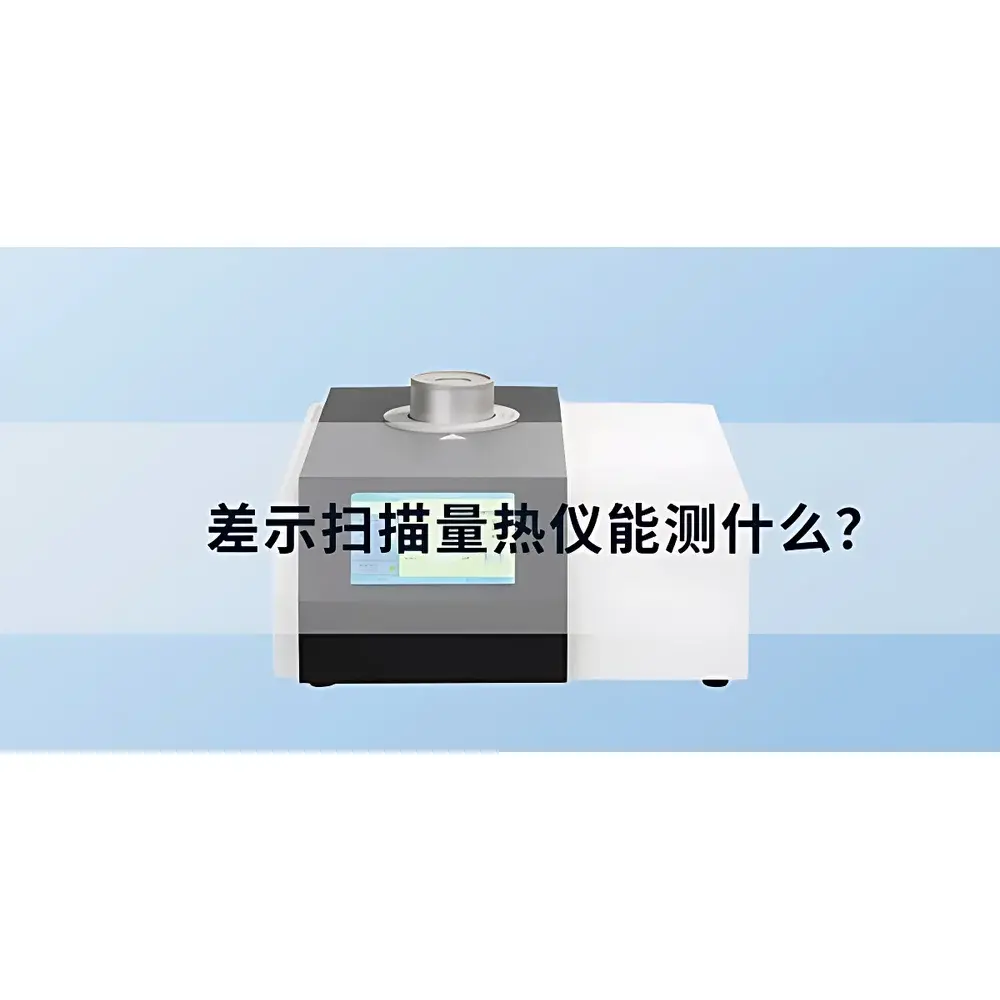
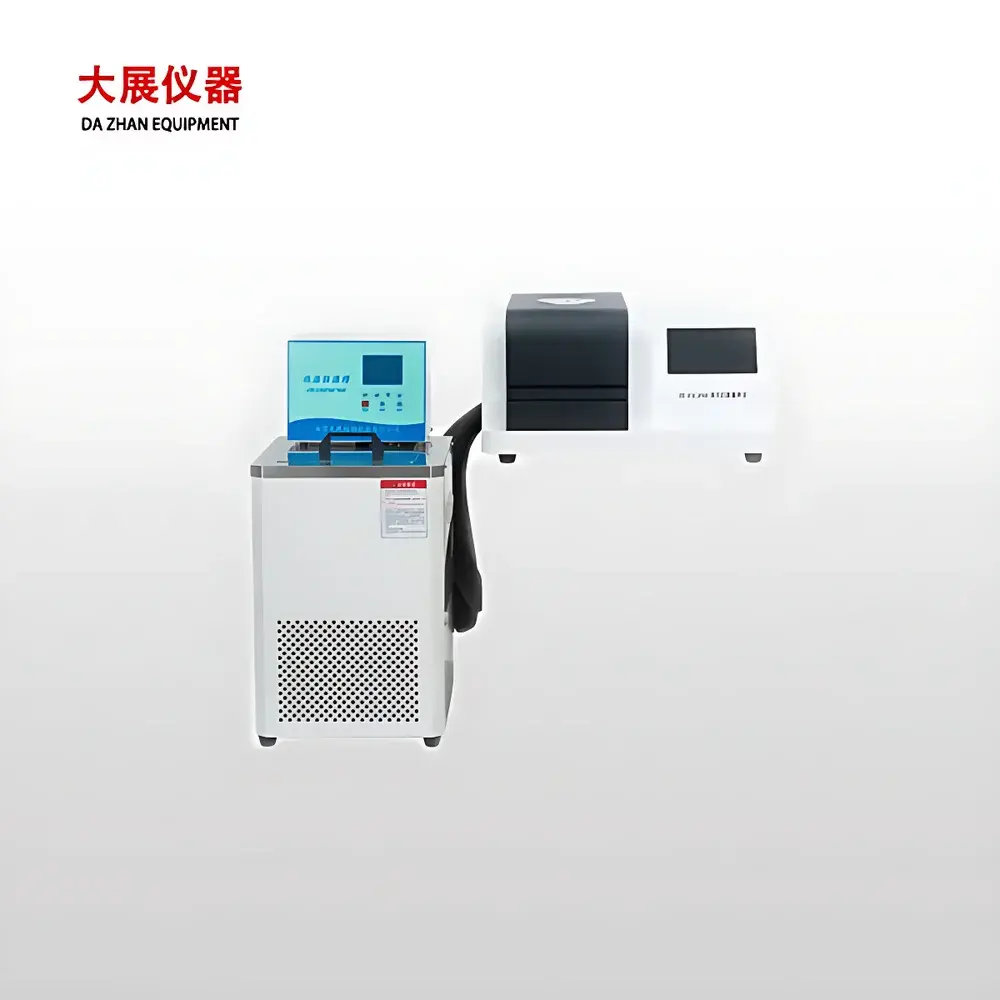
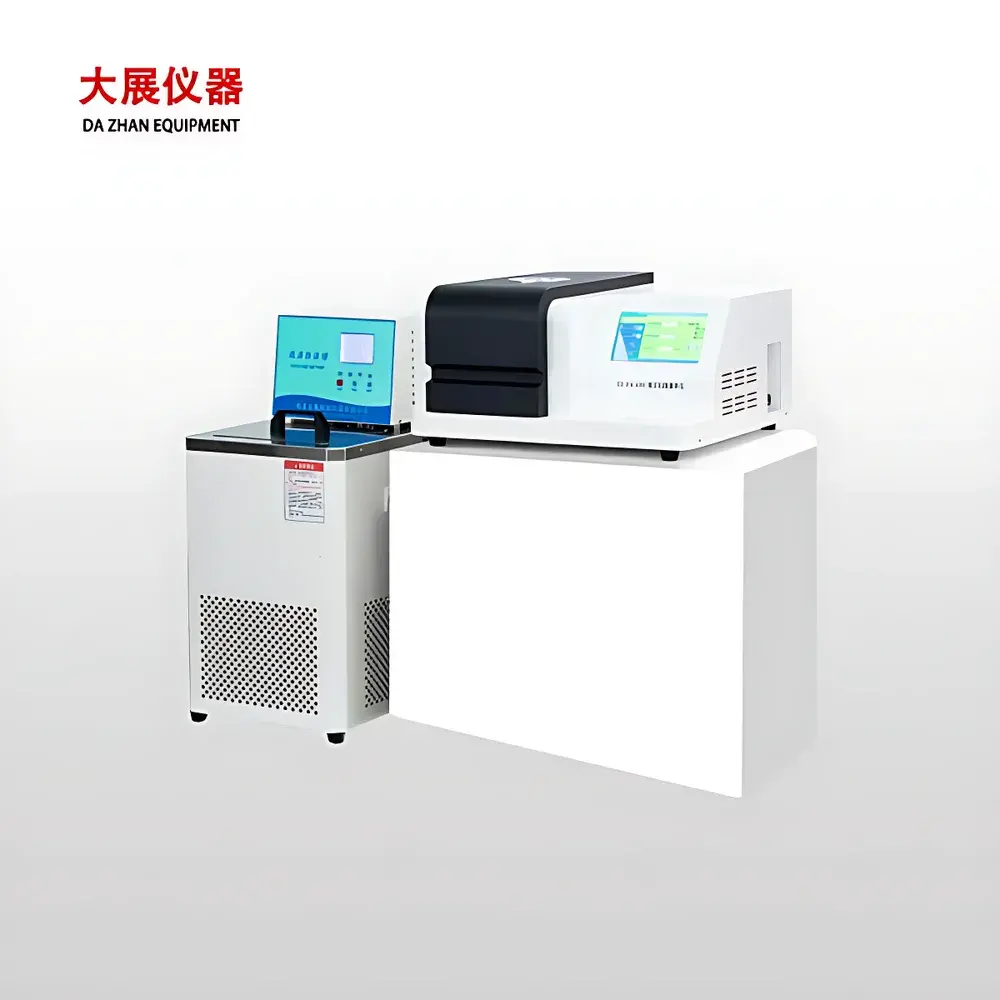
Nanjing Dazhan DZ-DSC300C Differential Scanning Calorimeter
| Brand | Nanjing Dazhan |
|---|---|
| Origin | Jiangsu, China |
| Manufacturer Type | Direct Manufacturer |
| Instrument Type | DSC |
| Sample Capacity | Single-sample |
| Temperature Range | −40 to 600 °C |
| Heating/Cooling Rate | 0.1–100 K/min (heating), 0.1–40 K/min (cooling) |
| Temperature Accuracy | ±0.01 °C |
| Temperature Stability | ±0.01 °C |
| DSC Signal Range | 0 to ±600 mW |
| DSC Sensitivity | 0.001 mW |
| DSC Resolution | 0.01 µW |
| Atmosphere Control | Dual-gas auto-switching (N₂, air, or custom), plus dedicated purge gas inlet |
| Gas Flow Range | 0–300 mL/min |
| Max Gas Pressure | ≤5 MPa |
| Temperature Hold Time | User-defined |
| Thermal Program | Up to 6-segment ramp/hold sequences |
| Calibration Standards Included | Indium, Tin, Lead |
| Interface | USB 2.0 (auto-reconnect enabled) |
| Display | 7-inch 24-bit color TFT touchscreen |
| Power Supply | AC 220 V / 50 Hz (custom voltage options available) |
Overview
The Nanjing Dazhan DZ-DSC300C Differential Scanning Calorimeter is a precision thermal analysis instrument engineered for high-reproducibility quantitative measurement of heat flow differences between a sample and inert reference as a function of temperature or time. Based on the heat-flux DSC principle, it employs a symmetrical dual-furnace metal cell architecture—optimized for minimal thermal lag, superior baseline stability, and enhanced signal-to-noise ratio. Designed for routine and research-grade applications in polymer science, pharmaceutical development, materials characterization, and quality control laboratories, the DZ-DSC300C delivers traceable thermal transitions—including glass transition (Tg), melting point (Tm), crystallization onset (Tc), enthalpy of fusion (ΔHf), oxidative induction time (OIT), and reaction kinetics—with full compliance to ASTM E794, ISO 11357, and USP <1163> guidelines.
Key Features
- Metallic furnace core with optimized thermal mass distribution ensures exceptional baseline flatness and long-term drift stability (<±0.01 °C over 24 h under isothermal conditions).
- 7-inch high-resolution 24-bit color TFT touchscreen interface with intuitive icon-driven navigation—enabling real-time curve monitoring, parameter adjustment, and immediate access to calibration logs without external PC dependency.
- Dual independent gas channel system with solenoid-valve–based automatic switching (response time <1.5 s) and integrated purge gas line—supporting sequential or simultaneous use of inert (N₂), oxidative (air/O₂), and protective atmospheres per ASTM D3895 and ISO 11357-4 protocols.
- USB 2.0 communication interface with hardware-level auto-reconnect functionality—ensuring uninterrupted data acquisition during transient power fluctuations or host system reboots.
- Programmable six-segment thermal profiles (ramp/hold/ramp) with user-defined heating/cooling rates (0.1–100 K/min), hold durations (1 s to 9999 min), and endpoint triggers—fully configurable via embedded firmware or optional PC software.
- Integrated calibration suite with certified reference materials (indium, tin, lead) traceable to NIST SRMs—facilitating on-site verification of temperature accuracy (±0.01 °C) and enthalpy response (±1.5%) per ISO/IEC 17025 requirements.
Sample Compatibility & Compliance
The DZ-DSC300C accommodates standard aluminum, gold-plated aluminum, or hermetic stainless-steel crucibles (40–60 µL capacity), supporting solid, semi-crystalline, powder, and thin-film specimens up to 30 mg. Its sealed furnace design meets IEC 61010-1 safety standards for laboratory equipment, while gas-handling components conform to ISO 8573-1 Class 4 purity specifications when used with regulated compressed gas sources. The instrument supports GLP-compliant operation through audit-trail–enabled calibration logging, electronic signature-capable method storage, and timestamped raw-data export—aligning with FDA 21 CFR Part 11 readiness when deployed with validated software environments.
Software & Data Management
Raw thermogram data (temperature, heat flow, time, gas status) are acquired at 10 Hz and stored in open-format ASCII (.txt) or universal .csv files via USB mass-storage emulation. Optional Windows-based analysis software provides baseline correction (tangent, linear, sigmoidal), peak integration (onset, peak, endset), multi-curve overlay, kinetic modeling (Ozawa-Flynn-Wall, Kissinger), and report generation compliant with ISO 14001 and ISO 9001 documentation frameworks. All metadata—including operator ID, instrument serial number, calibration date, and environmental conditions—is embedded in file headers to support traceability in regulated environments.
Applications
- Polymers: Quantification of Tg, degree of crystallinity, cold crystallization behavior, and thermal degradation onset in polyolefins, polyesters, and bioplastics.
- Pharmaceuticals: Solid-state form screening (polymorph identification), excipient compatibility assessment, and stability-indicating assay validation per ICH Q5C.
- Metals & Alloys: Eutectic temperature mapping, phase transformation enthalpies, and aging behavior in aluminum and magnesium alloys.
- Batteries: Electrolyte decomposition onset, SEI layer formation energy, and cathode/anode thermal runaway thresholds.
- Food Science: Fat crystallization kinetics, starch gelatinization enthalpy, and moisture-induced glass transitions in amorphous matrices.
FAQ
Is the DZ-DSC300C compliant with ISO/IEC 17025 for accredited testing laboratories?
Yes—the instrument’s documented calibration procedures, traceable reference materials, and firmware-supported uncertainty estimation tools meet the technical requirements for method validation under ISO/IEC 17025:2017 Clause 7.7.
Can the cooling rate be extended beyond 40 K/min?
The standard configuration supports up to 40 K/min cooling using forced-air cooling. Liquid nitrogen cooling modules are available as factory-installed options enabling cooling rates up to 100 K/min upon request.
Does the system support purge gas flow regulation during dynamic temperature programs?
Yes—gas flow rate (0–300 mL/min) and switching events are fully synchronized with thermal program segments, allowing atmosphere changes at defined temperatures or times without manual intervention.
What is the minimum detectable heat flow change?
With a sensitivity of 0.001 mW and resolution of 0.01 µW, the system reliably resolves exothermic/endothermic events corresponding to <0.1 J/g in typical 5–10 mg samples under optimal signal-to-noise conditions.
Are software updates and firmware patches provided post-purchase?
Yes—Nanjing Dazhan offers free firmware upgrades for performance enhancements and regulatory alignment (e.g., new ASTM/ISO method templates), delivered via secure download portal with version-controlled release notes.



