
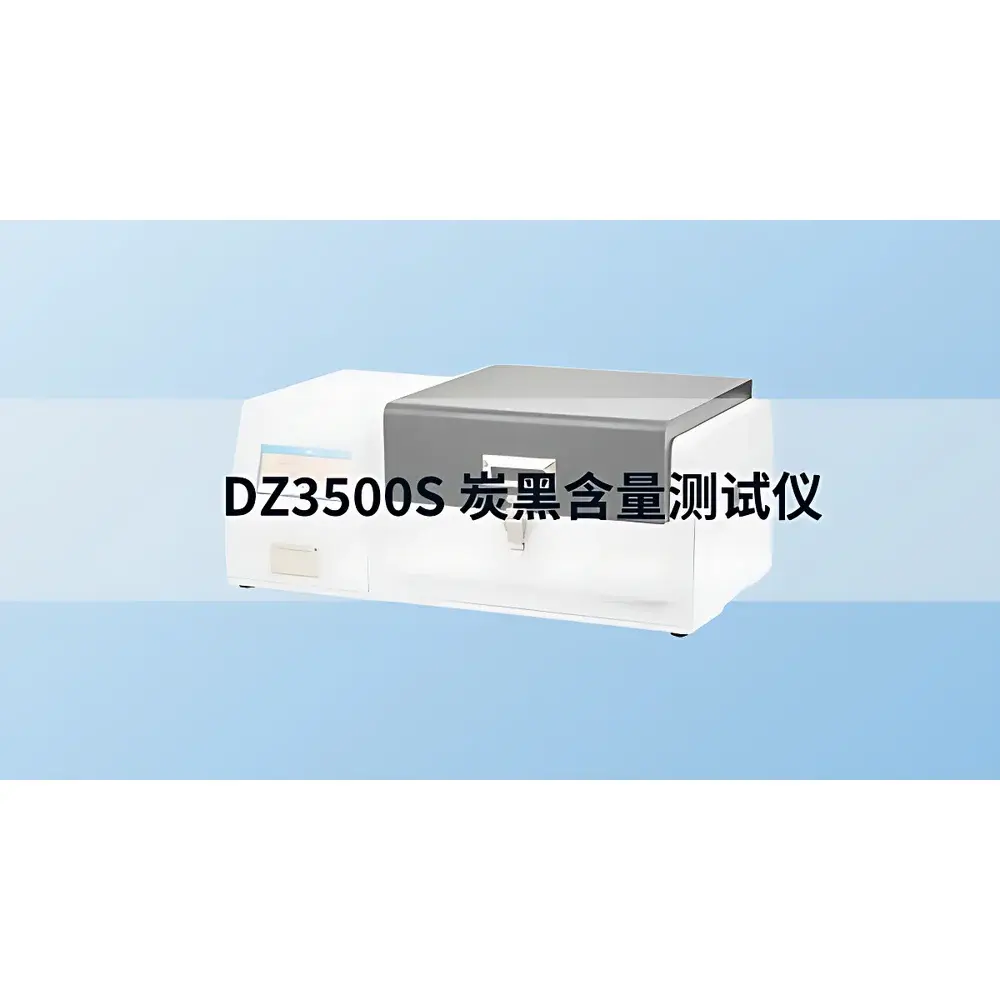
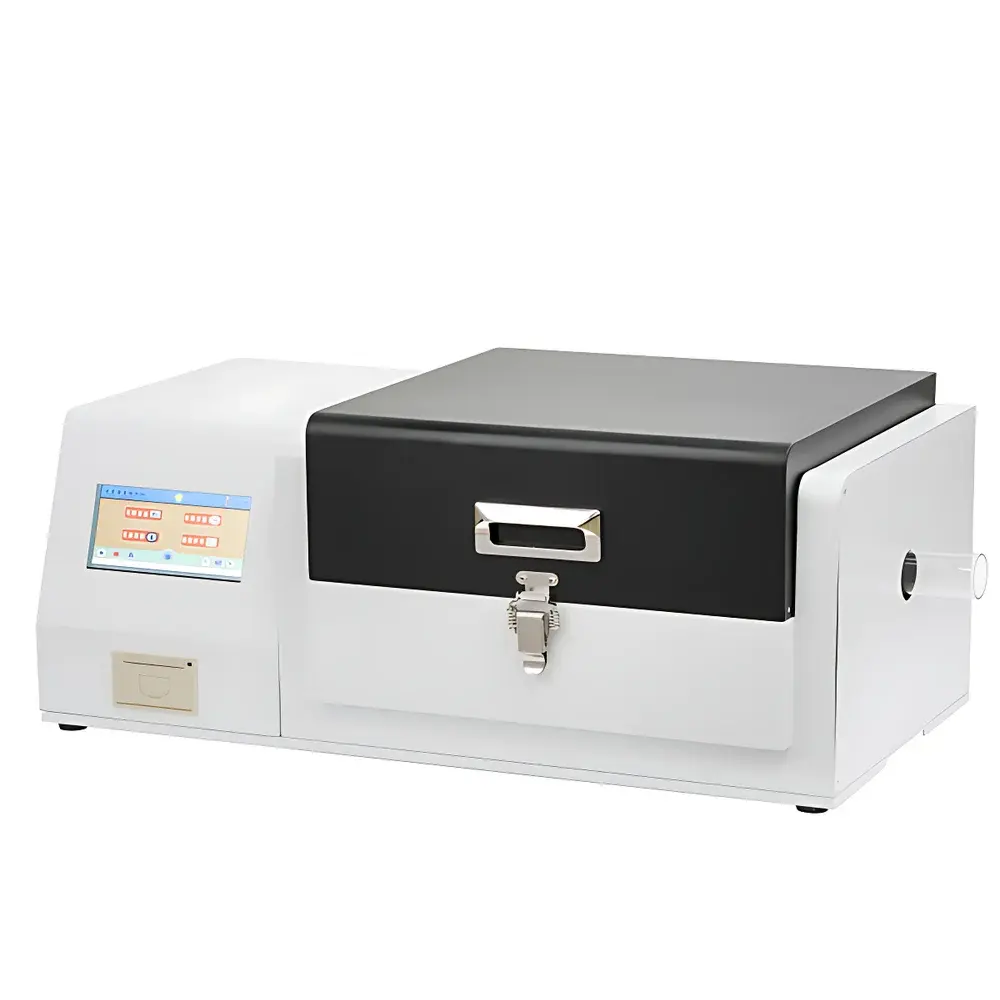
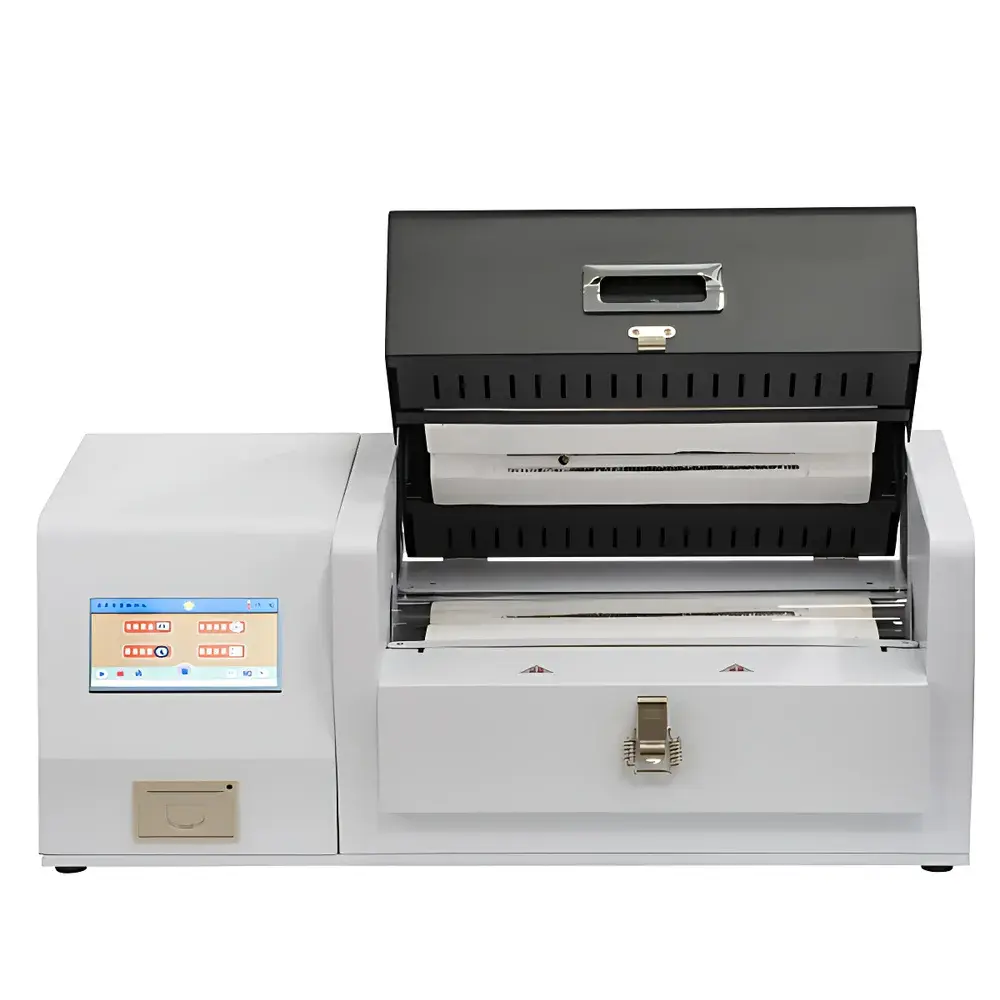
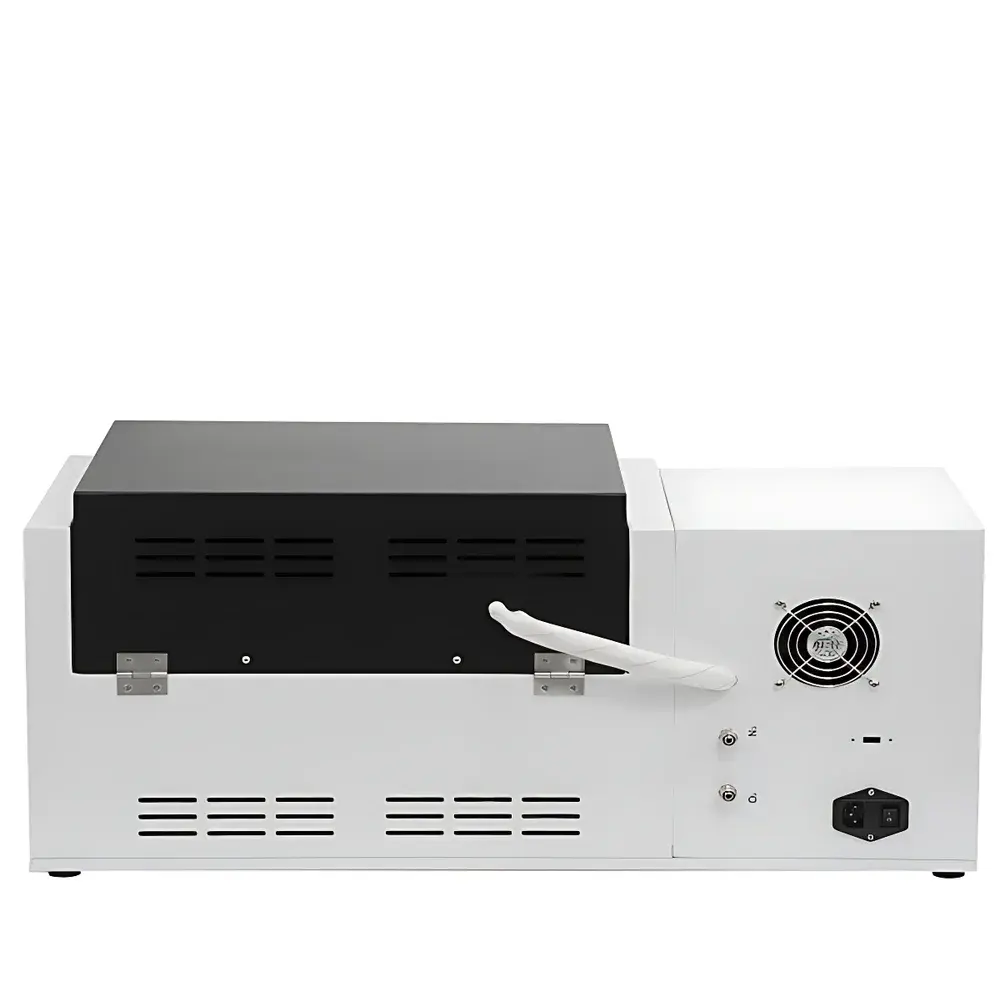
Nanjing Dazhan DZ3500S Carbon Black Content Analyzer
| Brand | Nanjing Dazhan |
|---|---|
| Origin | Jiangsu, China |
| Manufacturer Type | Manufacturer |
| Country of Origin | Domestic (China) |
| Model | DZ3500S |
| Price Range | USD 4,200 – 7,000 |
| Display | 7-inch capacitive touchscreen |
| Quartz Tube Dimensions | φ44 × 600 ± 5 mm |
| Furnace Chamber Dimensions | φ45 × 360 ± 5 mm |
| Heating Element | High-temperature alloy wire |
| Heating Zone Length | 300 mm |
| Operating Temperature Range | Ambient to 1200 °C |
| Temperature Control | Intelligent programmable multi-segment control |
| Power Supply | AC 220 V / 50 Hz or 60 Hz |
| Temperature Sensor Sensitivity | 0.1 °C |
| Gas Flow Control | Dual-channel, program-automated switching |
| Cooling Time | ≤20 min (from 900 °C to ambient) |
| Sample Capacity | 4 positions per run |
| Sample Holder | Rail-mounted, quick-load quartz boat assembly |
| Exhaust Treatment | Optional particulate/acid gas filtration unit |
| Output | Integrated thermal printer (standard) |
Overview
The Nanjing Dazhan DZ3500S Carbon Black Content Analyzer is a thermogravimetric instrument engineered for precise quantification of carbon black loading in polymer matrices—specifically polyethylene (PE), polypropylene (PP), polybutene (PB), rubber compounds, and cable insulation & jacketing materials. It operates on the principle of controlled pyrolysis under inert (N₂) or oxidative (air/O₂) atmospheres, followed by gravimetric mass loss analysis. The instrument conforms to standardized test methods including ASTM D1606 (Standard Test Method for Carbon Black in Rubber Compounds), ISO 6964 (Rubber—Determination of carbon black content—Thermogravimetric method), and GB/T 3512 (Chinese national standard for rubber—Determination of carbon black content). Its dual-gas path architecture enables method flexibility: nitrogen purging for selective carbon black volatilization (leaving ash residue), or air flow for complete combustion and total ash determination—supporting concurrent calculation of both carbon black and inorganic filler (ash) content.
Key Features
- Four-position simultaneous sample processing with rail-guided quartz boat holder—enabling true parallel analysis and 4× throughput improvement over single-sample systems.
- Programmable multi-segment thermal profile control: users define independent ramp rates (°C/min), target temperatures, hold durations, and gas switching points—critical for method development and cross-laboratory reproducibility.
- 7-inch capacitive touchscreen interface with intuitive icon-driven workflow; one-touch start, real-time temperature/gas status visualization, and error diagnostics.
- High-efficiency cooling system achieving ≤20-minute cooldown from 900 °C to ambient—minimizing turnaround time between runs without compromising furnace longevity.
- Integrated thermal printer and embedded calculation engine: automatic derivation of carbon black % (wt/wt) and ash % (wt/wt) using pre-loaded formulas compliant with ASTM D1606 Annex A1.
- Optional exhaust filtration module (activated carbon + alkaline scrubber) meets local occupational health and safety requirements for handling halogenated decomposition byproducts (e.g., from PVC-containing cable sheaths).
Sample Compatibility & Compliance
The DZ3500S accepts solid granules, pellets, thin films (≤2 mm thickness), and cured elastomer strips—no solvent dissolution or pellet pressing required. Sample mass range: 50–500 mg, optimized for statistical representativeness in heterogeneous composites. All thermal protocols are fully traceable and support GLP/GMP documentation needs: timestamped run logs, operator ID tagging, and parameter version control. The instrument’s firmware architecture supports audit trail generation per FDA 21 CFR Part 11 requirements when paired with validated networked data export (CSV/Excel). Calibration verification is performed using certified reference materials (CRM) traceable to NIST SRM 1978 (carbon black in EPDM) or equivalent national metrology institutes.
Software & Data Management
No external PC is required—the DZ3500S runs an embedded Linux-based OS with deterministic real-time thermal control loop (PID + adaptive learning). Data is stored locally on industrial-grade eMMC flash memory (16 GB) with automatic cyclic overwrite protection. Export options include USB flash drive dump (CSV format), direct thermal printout (with header: lab ID, date/time, operator, sample ID, method name), and optional RS-232/Modbus RTU interface for integration into LIMS or MES platforms. All calculations adhere strictly to ISO/IEC 17025 clause 7.7 (uncertainty estimation): combined uncertainty budgets account for balance repeatability (±0.1 mg), temperature uniformity (±3 °C across zone), and gas flow stability (±2% full scale).
Applications
- Quality control of incoming PE/PP resins used in pipe extrusion—verifying supplier-specified carbon black loading (typically 2.0–2.5 wt%) for UV stabilization.
- Rubber compound validation in tire tread formulations where carbon black dispersion and loading directly affect abrasion resistance and hysteresis.
- Cable manufacturing: rapid screening of jacketing compounds (e.g., HDPE, LSZH) to ensure compliance with IEC 60502-1 flame retardancy specifications linked to filler content.
- R&D labs developing conductive polymer composites—quantifying actual carbon black retention after melt compounding vs. theoretical loadings.
- Third-party testing laboratories accredited to ISO/IEC 17025:2017—performing contract testing for automotive OEMs requiring PP bumper material certification per VW 50185.
FAQ
What standards does the DZ3500S comply with for carbon black analysis?
ASTM D1606, ISO 6964, GB/T 3512, and JIS K 6221—all implemented via configurable gas switching and thermal ramp profiles.
Can the instrument distinguish between carbon black and other organic additives?
Yes—by optimizing pyrolysis atmosphere (N₂ for selective carbon black removal) and oxidation conditions (air for total organics), differential mass loss enables deconvolution of carbon black vs. plasticizer/oil content.
Is method validation support available?
Nanjing Dazhan provides IQ/OQ documentation templates, CRM usage guidance, and on-site operational qualification services upon request.
What maintenance is required for long-term accuracy?
Quarterly quartz tube inspection, annual thermocouple calibration verification, and biannual gas flow meter recalibration using certified mass flow standards.
Does the system support unattended overnight operation?
Yes—programmable start delay, auto-shutdown after final cool-down, and watchdog timer ensure safe extended runs with no operator presence.





