
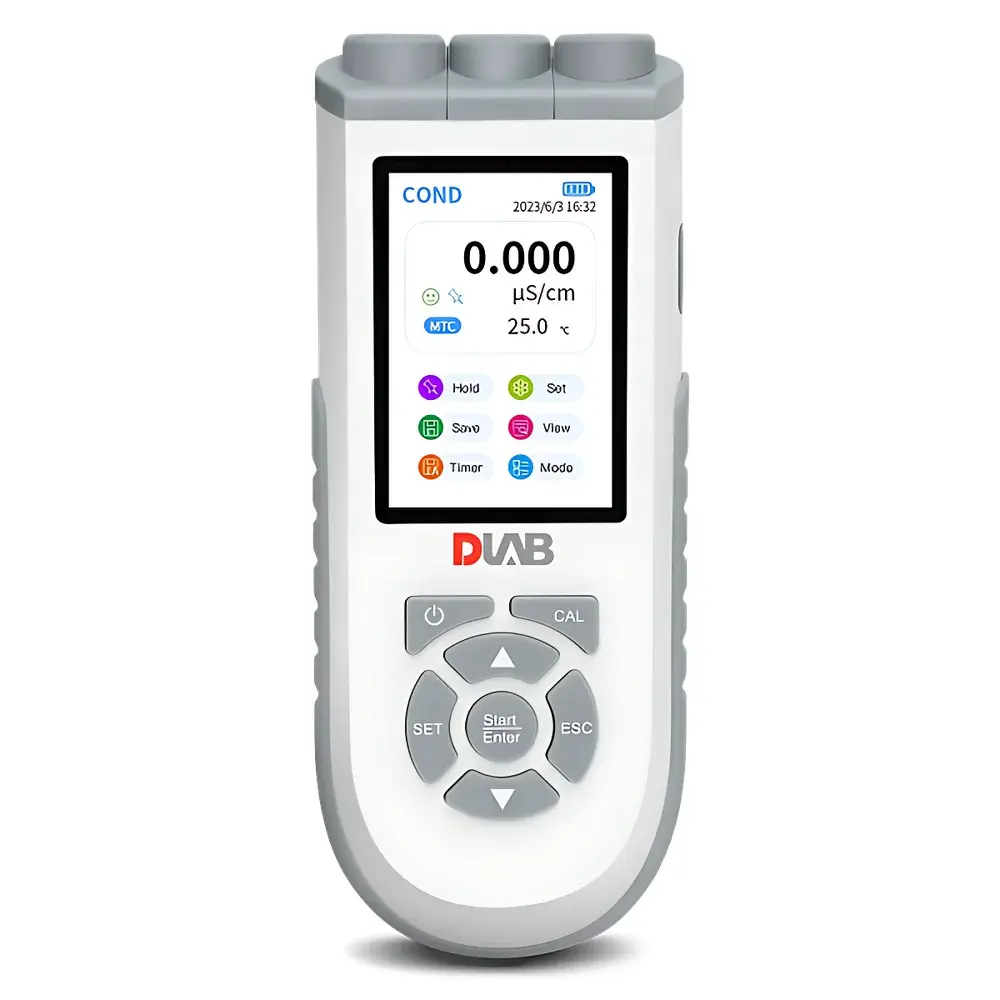
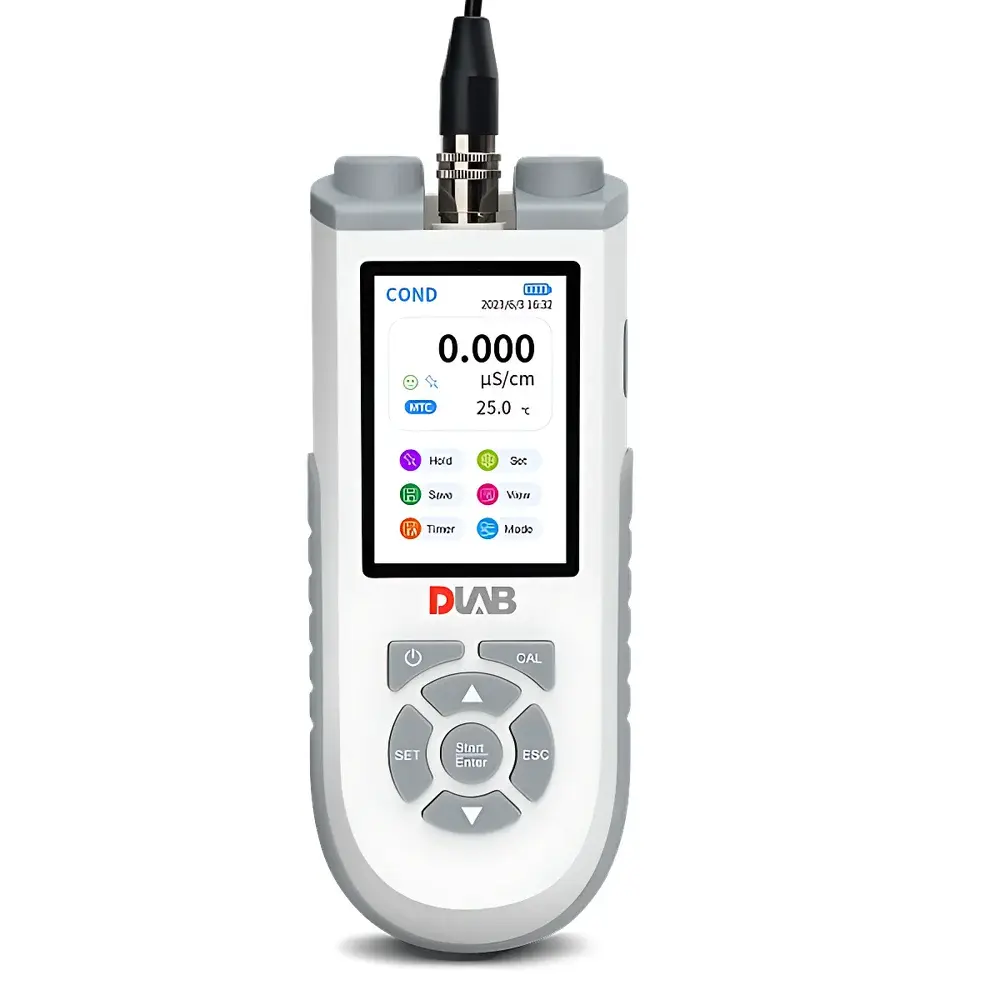
DLAB Portable Multi-Parameter Electrochemical Analyzer
| Brand | DLAB |
|---|---|
| Origin | Beijing, China |
| Manufacturer Type | Manufacturer |
| Product Category | Domestic |
| Model | Portable Multi-Parameter Analyzer |
| Pricing | Upon Request |
| Display | 3.5-inch TFT color LCD |
| Data Storage Capacity | Up to 3,000 measurement records |
| Power Supply | Rechargeable Li-ion battery with low-power management and power-loss protection |
| Charging Interface | USB Type-C (compliant with latest EU standards) |
| Ingress Protection Rating | IP57 |
| Conductivity Module | Supports electrode calibration and standard solution calibration |
| Software Features | Sample ID tagging, user role-based access control, instrument usage logging, audit-trail-enabled operation recording, data export & printing |
Overview
The DLAB Portable Multi-Parameter Electrochemical Analyzer is an engineered field-deployable instrument designed for simultaneous, on-site measurement of critical aqueous electrochemical parameters—including pH, electrical conductivity (EC), and dissolved oxygen (DO)—with laboratory-grade reliability. Built upon a microprocessor-controlled potentiometric and amperometric sensing architecture, the analyzer employs standardized electrochemical transduction principles: pH is determined via Nernstian response of a glass or solid-state ion-selective electrode; conductivity is calculated from four-electrode or two-electrode AC impedance measurements in accordance with ISO 7888 and ASTM D1125; and dissolved oxygen is quantified using Clark-type polarographic or optical luminescence detection, traceable to ISO 5814 and EN 25814 methodologies. Its compact, ruggedized form factor and sealed enclosure enable continuous operation in demanding environmental monitoring, wastewater treatment, aquaculture, and field-based QA/QC workflows where benchtop instrumentation is impractical.
Key Features
- Integrated multi-parameter sensing platform supporting concurrent pH, EC, DO, temperature, and optional redox potential (ORP) measurement—each channel independently calibrated and validated.
- 3.5-inch high-resolution TFT color display with intuitive icon-driven UI, optimized for gloved-hand operation and sunlight-readable contrast under variable ambient lighting.
- Robust mechanical design certified to IP57 ingress protection: dust-resistant and capable of withstanding immersion in 1 m of water for up to 30 minutes—validated per IEC 60529.
- Intelligent power architecture featuring rechargeable lithium-ion battery with adaptive low-power mode, automatic sleep/wake cycling, and non-volatile memory retention during unexpected power loss.
- USB Type-C charging and data transfer interface compliant with EU CE/RED directives and USB-IF certification requirements—enabling universal compatibility with modern host systems and mobile power banks.
- On-device data management supporting up to 3,000 timestamped, parameter-tagged records with internal clock synchronization and configurable auto-save intervals.
Sample Compatibility & Compliance
The analyzer accommodates standard 12-mm and 25-mm diameter electrochemical sensors—including combination pH/ATC probes, graphite or platinum conductivity cells, and membrane-covered DO electrodes—ensuring interchangeability with widely adopted sensor platforms. All calibration routines adhere to internationally recognized protocols: single- or multi-point pH calibration per ISO 3696 and USP ; conductivity cell constant verification using certified KCl standard solutions (e.g., 1413 µS/cm, 12.88 mS/cm); and DO zero-point and saturation-point validation per WTW DIN EN 25814 procedures. The device meets electromagnetic compatibility (EMC) requirements under EN 61326-1 and safety standards per EN 61010-1, supporting GLP-compliant field deployment in regulated environments.
Software & Data Management
The companion PC software provides secure, audit-ready data handling in alignment with FDA 21 CFR Part 11 and EU Annex 11 expectations. It implements role-based user authentication (administrator, technician, operator), granular permission assignment, and immutable electronic logs tracking all calibration events, configuration changes, and data exports. Each measurement record includes embedded metadata: sample ID, operator ID, location coordinates (if GPS-enabled probe used), ambient temperature, and sensor serial numbers. Export formats include CSV, PDF reports with embedded calibration certificates, and structured XML for LIMS integration. All software operations generate time-stamped, digitally signed audit trails with tamper-evident hashing.
Applications
- Environmental field surveys: river, lake, and groundwater quality assessment across EPA Region 10 and EU Water Framework Directive monitoring programs.
- Municipal and industrial wastewater treatment plants: real-time process control of aeration basins, clarifiers, and effluent discharge compliance verification.
- Aquaculture and hydroponics: daily monitoring of pond water chemistry to maintain optimal species-specific pH, DO, and salinity thresholds.
- Educational laboratories: undergraduate electrochemistry experiments requiring portable, safe, and repeatable multi-analyte measurement capability.
- Pharmaceutical water system validation: periodic checks of purified water (PW) and water for injection (WFI) conductivity per USP and EP 2.2.38.
FAQ
What electrochemical parameters can be measured simultaneously?
pH, conductivity, dissolved oxygen, temperature, and optional ORP—all acquired and displayed in real time with synchronized timestamps.
Is calibration traceable to national standards?
Yes—calibration procedures follow ISO, ASTM, and pharmacopeial guidelines; certified reference materials (CRMs) are recommended for traceability.
Can data be exported directly to LIMS or ERP systems?
Yes—the PC software supports configurable CSV/XML export templates and ODBC connectivity for automated ingestion into enterprise data infrastructure.
Does the device support GLP/GMP documentation requirements?
Yes—full audit trail, electronic signatures, user access control, and calibration history reporting meet GLP and GMP Annex 11 expectations.
What is the expected battery life under continuous use?
Up to 100 hours of active measurement time at 15-minute sampling intervals, verified under IEC 61960 test conditions.





