
QATM Qpress 50 Modular Hot Mounting Press
| Brand | QATM (Odemag) |
|---|---|
| Origin | Germany |
| Model | Qpress 50 |
| Instrument Type | Hot Mounting Press |
| Mounting Modules | 2 (Qpress 50-2) or 4 (Qpress 50-4) |
| Mold Diameter Options | 25.2, 30, 32, 38, 40, 50 mm |
| Heating Range | 20–200 °C |
| Heating Power | 1200 W |
| Basic Unit Power Input | 1.6 kVA |
| Additional Module Power Input | 1.5 kVA |
| Operating Pressure Range | 250–350 bar (dependent on mold size) |
| Dimensions (Basic Unit) | 402 × 382 × 563 mm (W × H × D) |
| Dimensions (Additional Module) | 187 × 382 × 449 mm (W × H × D) |
| Weight | ~50 kg |
Overview
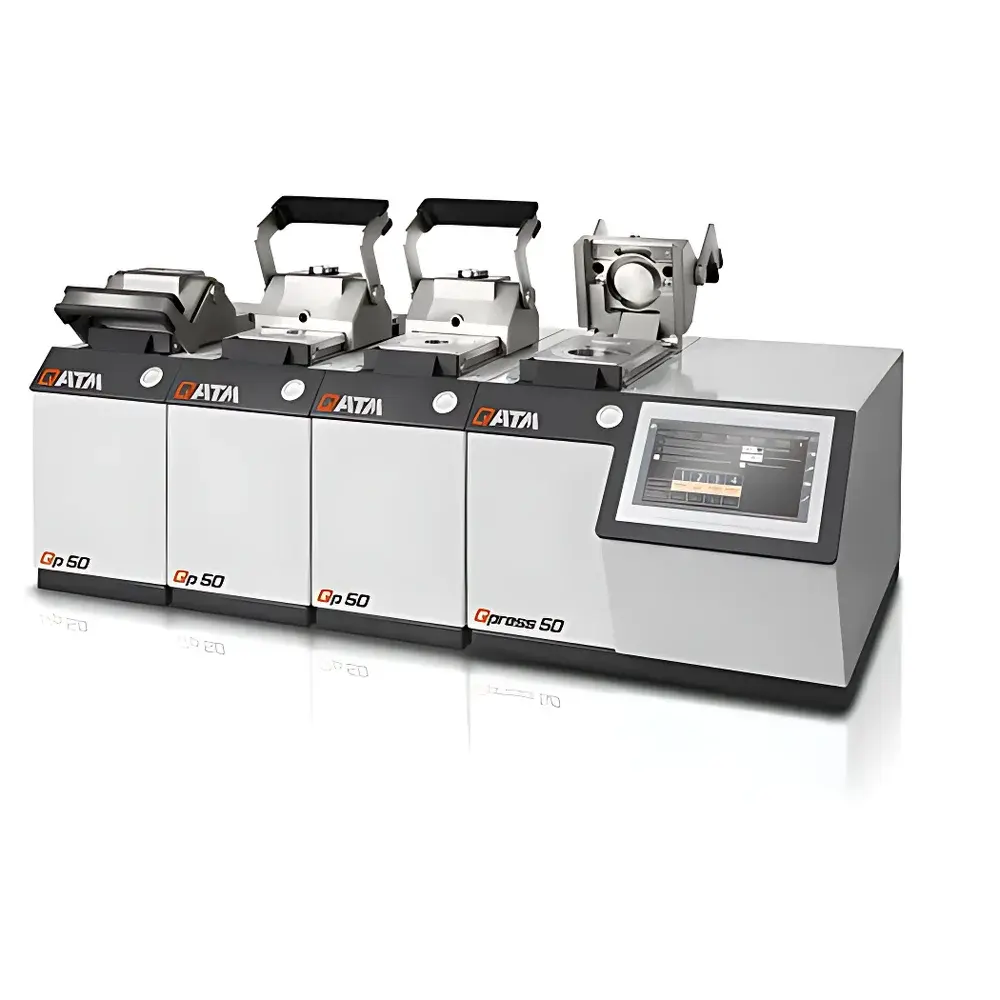
The QATM Qpress 50 Modular Hot Mounting Press is an engineered solution for precision metallographic sample preparation in research laboratories, quality control facilities, and accredited testing environments. Designed around the thermosetting resin compression molding principle, it applies controlled heat and pressure to embed metallic, ceramic, or composite specimens within phenolic, epoxy, or acrylic resins—ensuring dimensional stability, edge retention, and minimal porosity. Unlike conventional single-station presses, the Qpress 50 employs a modular architecture that decouples the control unit from physically independent mounting modules, enabling concurrent processing of heterogeneous samples under distinct thermal and mechanical parameters. This architecture supports both high-throughput routine workflows and method-development scenarios where comparative embedding conditions (e.g., varying cure temperatures or dwell times across material classes) are required without cross-contamination or procedural delay.
Key Features
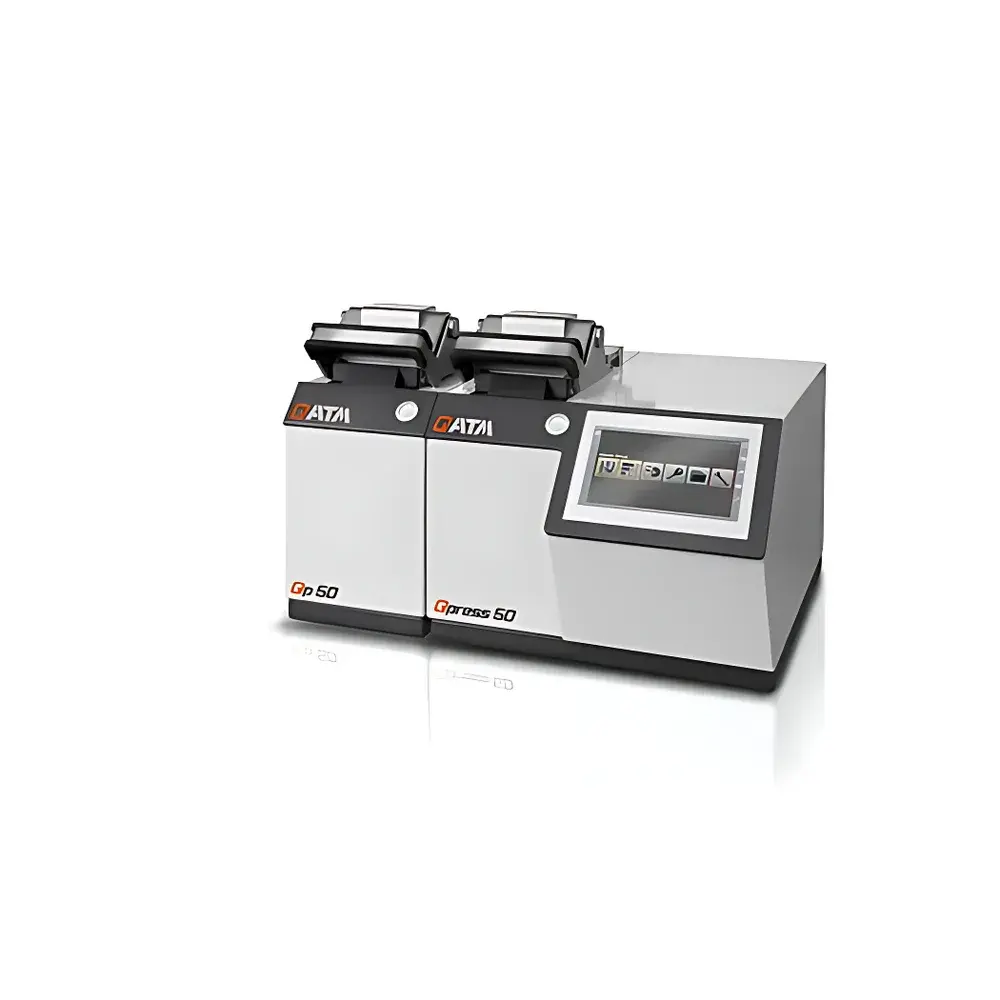
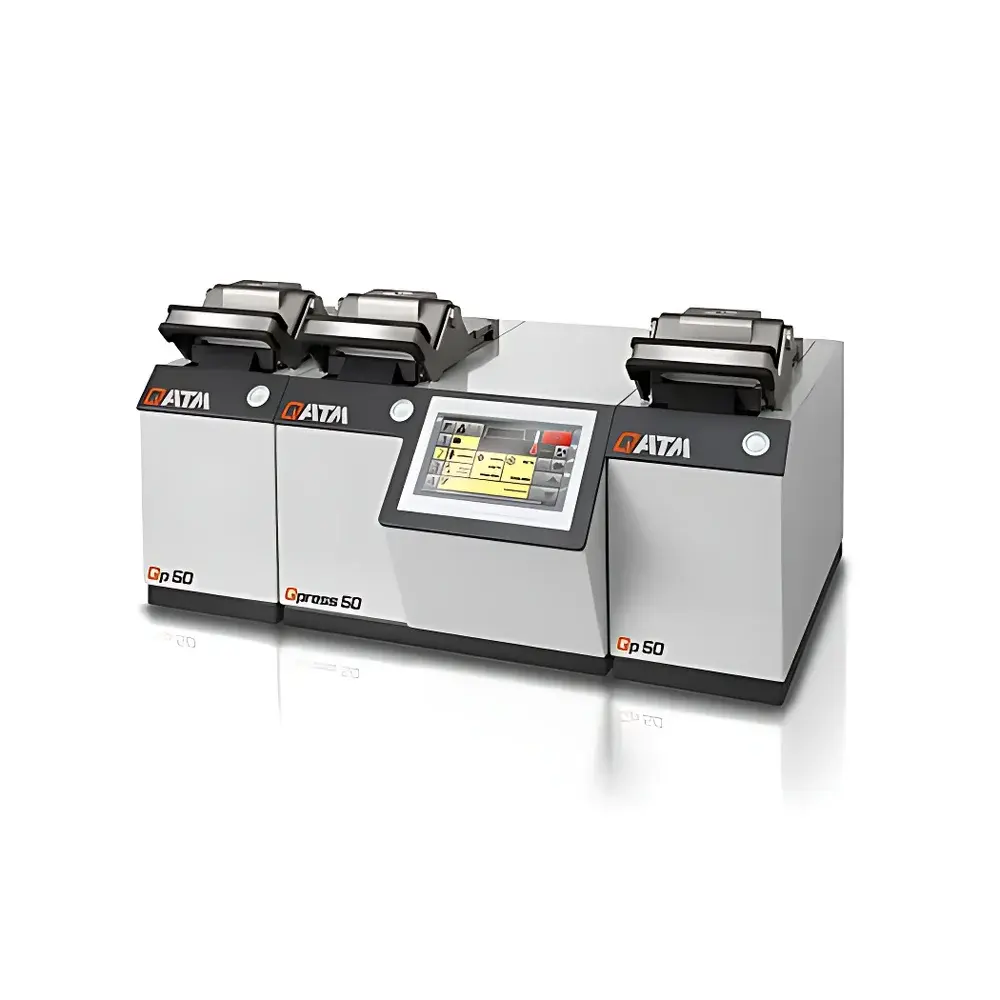
- Modular scalability: Base unit supports either one (Qpress 50-2) or three (Qpress 50-4) additional mounting modules—enabling simultaneous operation of up to two or four independent molds.
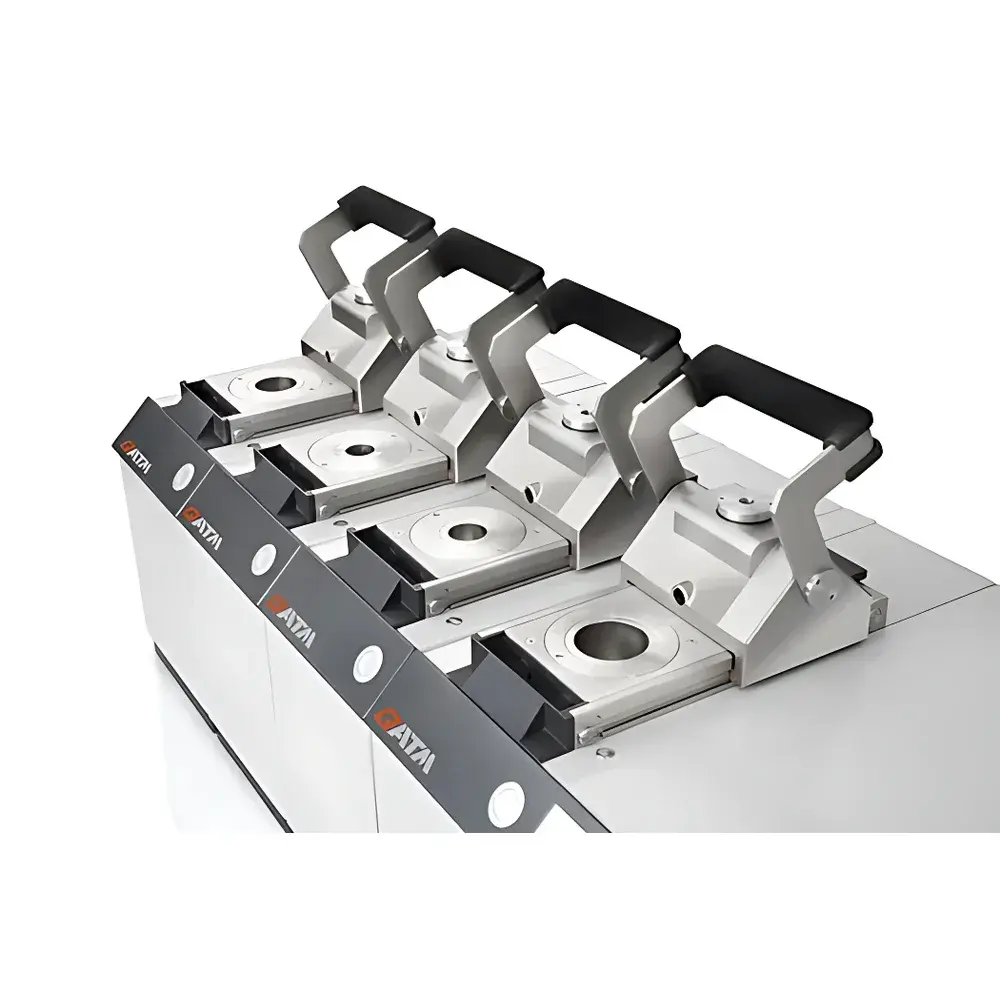
- Multi-diameter mold compatibility: Six standardized mold diameters (25.2, 30, 32, 38, 40, and 50 mm), including options with and without chamfered edges, accommodate diverse specimen geometries—from small wire sections to large castings.
- Integrated dust extraction system: Vacuum-assisted particulate capture during resin loading minimizes operator exposure to fine polymer dust; fully controllable via the main touchscreen interface.
- Single-hand sliding lid mechanism: Optimized ergonomic closure collects excess resin into a dedicated waste tray, eliminating manual cleanup and reducing process variability.
- Intelligent safety interlock: Integrated position sensors prevent cycle initiation unless the mold chamber is fully sealed—ensuring consistent pressure transmission and personnel protection.
- Energy-efficient thermal management: Programmable pre-heating and cooling phases reduce total cycle time while maintaining ±1.5 °C temperature stability across the full 20–200 °C operating range.
- Robust industrial construction: Powder-coated steel chassis, corrosion-resistant internal components, and tool-free access to upper assembly facilitate long-term reliability and simplified maintenance.
Sample Compatibility & Compliance
The Qpress 50 accommodates a broad spectrum of conductive and non-conductive materials—including ferrous and non-ferrous metals, sintered powders, geological specimens, and polymeric composites—without requiring pre-drying or surface treatment. Its pressure delivery system (250–350 bar, calibrated per mold diameter) ensures uniform resin flow and void-free encapsulation even for high-aspect-ratio or porous samples. From a regulatory standpoint, the system supports GLP-compliant documentation practices through user-level access control, audit-trail-capable parameter logging, and timestamped method storage. While not intrinsically certified to ISO/IEC 17025 or ASTM E3–22, its repeatable output meets the procedural rigor required for accreditation under these standards when integrated into validated laboratory workflows.
Software & Data Management
Control is executed via a 7-inch capacitive touchscreen running QATM’s proprietary firmware, featuring a role-based user management system with three configurable access tiers: Operator, Technician, and Administrator. Up to 200 custom mounting protocols—including ramp rates, hold durations, pressure profiles, and cooling sequences—can be saved, recalled, and version-controlled. Preloaded reference methods cover common material categories (e.g., aluminum alloys per ASTM E3, stainless steels per ISO 14577), and all parameter changes are logged with user ID, timestamp, and reason code—supporting FDA 21 CFR Part 11–aligned electronic record integrity where local IT infrastructure permits. Firmware updates are delivered via USB; no cloud connectivity or external telemetry is implemented.
Applications
The Qpress 50 serves critical roles in failure analysis labs performing fractography, in foundry QC departments verifying microstructural homogeneity, and in academic metallurgy programs standardizing specimen preparation for SEM-EDS or microhardness mapping. Its multi-module capability allows parallel embedding of control vs. test specimens under identical conditions—essential for inter-laboratory round-robin studies. In R&D settings, it enables systematic evaluation of resin–substrate adhesion strength by varying cure temperature across modules while holding pressure constant. The system is routinely deployed prior to sectioning, grinding, polishing, and etching steps defined in ISO 15510, ASTM E3, and EN 10365.
FAQ
Can the Qpress 50 operate with only one mounting module installed?
Yes—the base unit functions independently and supports single-module operation; additional modules are field-installable without service intervention.
Is vacuum impregnation supported natively?
No; the integrated vacuum system is dedicated to dust extraction during resin charging. Optional external vacuum chambers may be interfaced for impregnation but require separate control.
What maintenance intervals are recommended?
Daily wipe-down of mold surfaces and waste tray; quarterly inspection of sealing gaskets and pressure transducer calibration; annual verification of thermal sensor accuracy against NIST-traceable references.
Does the system support automated data export to LIMS?
Raw cycle logs can be exported as CSV via USB; direct LIMS integration requires middleware configuration by the end-user’s IT team.
Are replacement molds and consumables supplied with traceable certification?
All QATM-certified molds include individual serial numbers and dimensional verification reports; resin compatibility data sheets are provided per batch.



