
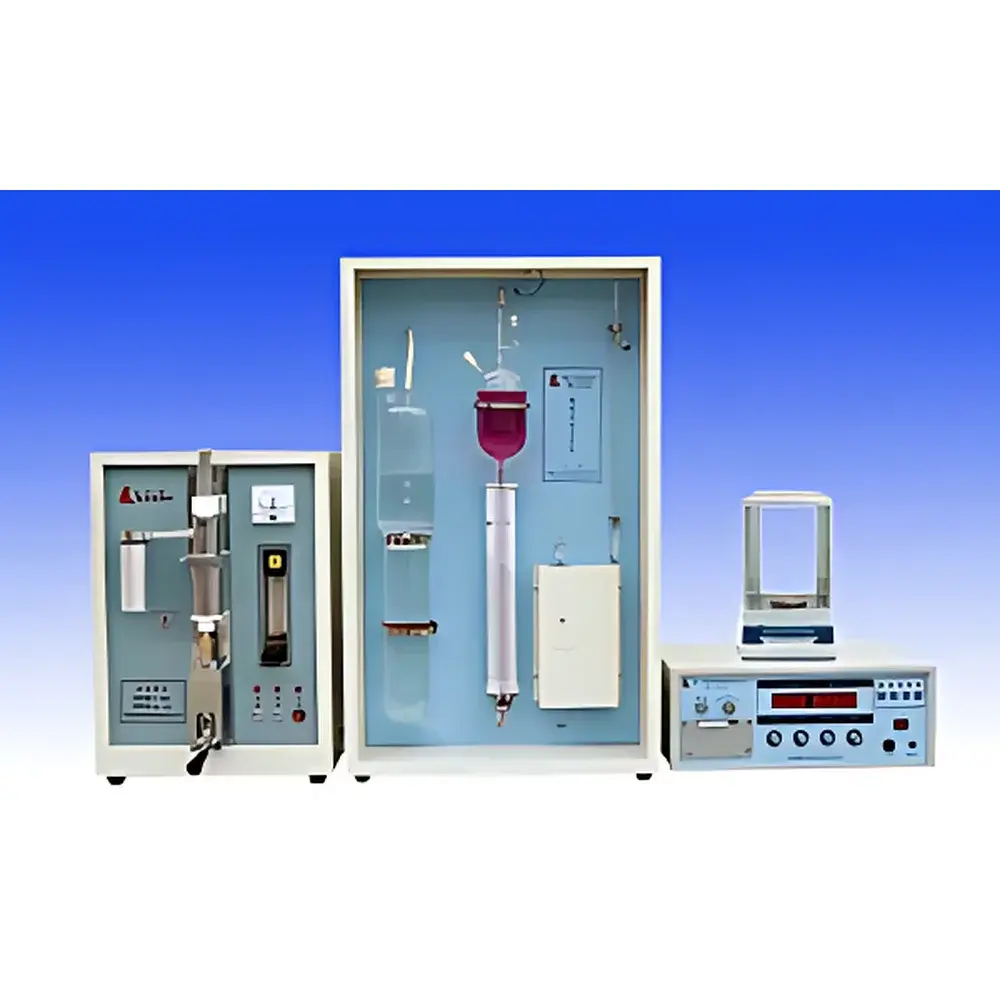
Qilin QL-CS30D Automated Carbon-Sulfur Analyzer
| Brand | Qilin |
|---|---|
| Model | QL-CS30D |
| Analysis Method | Carbon – Gas Volumetric Method |
| Measurement Range | C: 0.02–6.00 wt% |
| S | 0.005–0.300 wt% |
| Sample Mass Options | 0.25 g / 0.5 g / 1.0 g (auto-range compensation) |
| Analysis Time | 65 s (with DL1A arc furnace), 85 s for dual-absorption mode |
| Detection Principle | Differential pressure transducer (C) |
| Readout | Direct digital display of mass fraction (%) with thermal printer output |
| Accuracy Compliance | Carbon per GB/T 223.69–1997 |
| Balance Interface | RS232, supports 0–100 g × 0.001 g analytical balance (optional 0.0001 g) |
| Operating Environment | 0–40 °C, 90.658–106.658 kPa |
| Power Supply | AC 220 V ± 10%, 50 Hz |
Overview
The Qilin QL-CS30D Automated Carbon-Sulfur Analyzer is a dedicated high-precision elemental combustion analyzer engineered for routine quantitative determination of total carbon and sulfur in ferrous and non-ferrous metallurgical materials. It operates on classical wet-combustion principles: carbon is quantified via gas volumetric analysis using differential pressure transduction, while sulfur is determined by iodometric titration with potentiometric endpoint detection. Unlike optical or infrared-based CS analyzers, the QL-CS30D employs robust, maintenance-optimized electrochemical and pneumatic measurement architectures—making it especially suitable for QC laboratories in steel mills, foundries, raw material suppliers, and third-party testing facilities where method traceability, regulatory alignment with national standards (GB/T), and long-term operational stability are prioritized over ultra-high throughput.
Key Features
- Gas volumetric carbon determination with high-sensitivity differential pressure sensor and real-time microprocessor-based data compensation—eliminating manual calibration drift and enabling stable repeatability across 0.02–6.00% C range.
- Iodometric sulfur analysis with electrode-free liquid dispensing system and automatic titration control—reducing electrode fouling, minimizing reagent consumption, and improving inter-operator consistency.
- Multi-mass sample mode (0.25 g / 0.5 g / 1.0 g) with auto-ranging concentration mapping—no manual conversion required; results displayed directly in wt% regardless of sample weight.
- RS232 interface for seamless integration with standard 0.001 g precision balances (e.g., METTLER TOLEDO AB204, SARTORIUS CP225D); optional support for 0.0001 g balances enables enhanced low-level sulfur quantification (down to 0.005%).
- Isolated capacitive touch-key panel design—immune to electromagnetic interference from arc furnaces or nearby induction equipment, ensuring reliable operation in industrial lab environments.
- Dual-absorption configuration selectable via front-panel menu—improves recovery accuracy for high-sulfur matrices (e.g., cast irons, sulfide-bearing ores) and low-carbon stainless steels.
Sample Compatibility & Compliance
The QL-CS30D is validated for solid metallic and inorganic samples including carbon steels, alloy steels, cast iron, ferroalloys, copper and aluminum alloys, cement clinker, limestone, refractory ceramics, catalyst carriers, and mineral concentrates. Sample introduction is performed using the integrated DL1A high-energy arc furnace (standard) or optionally paired with a tubular resistance furnace for controlled-temperature combustion of temperature-sensitive or volatile matrices. All analytical procedures conform to Chinese national standards GB/T 223.69–1997 (carbon) and GB/T 223.68–1997 (sulfur), which align methodologically with ISO 4935:1989 (steel—determination of carbon) and ISO 4936:1989 (steel—determination of sulfur). While not inherently 21 CFR Part 11 compliant, audit-ready documentation—including raw pressure/titration curves, balance logs, and operator timestamps—can be exported for GLP/GMP internal validation protocols.
Software & Data Management
The instrument embeds a dedicated 8-bit microcontroller firmware platform with non-volatile memory for method storage, calibration history, and up to 500 result records. Data output is provided via built-in thermal printer (ASCII format, %C/%S + timestamp + sample ID), with optional RS232-to-PC connectivity for CSV export into LIMS or Excel. No proprietary software installation is required—raw values are transmitted as ASCII strings with fixed-field delimiters. Calibration verification is supported through certified reference materials (CRMs) such as GBW01301a (low-C steel), GBW01317 (high-S cast iron), and NIST SRM 661 (sulfur in copper). Firmware updates are performed via UART interface under technical supervision.
Applications
- Quality control of incoming scrap and outgoing billets in integrated steel plants.
- Process monitoring of desulfurization efficiency in BOF/LF refining units.
- Verification of specification compliance for ASTM A29, ASTM A36, EN 10027, and JIS G 3101 grade certifications.
- Research-grade sulfur partitioning studies in Fe–S–O ternary systems.
- Raw material assay for limestone flux, dolomite, and pyrite-bearing additives.
- Environmental compliance testing of slag and dust for residual sulfur content prior to landfill disposal.
FAQ
What combustion source is required for routine operation?
The QL-CS30D is designed for use with the DL1A high-frequency arc furnace (included). A programmable tubular furnace (optional) may be substituted for low-temperature or inert-atmosphere applications.
Can the instrument be validated for ISO/IEC 17025 accreditation?
Yes—method validation per ISO/IEC 17025:2017 is achievable using documented CRM-based linearity, precision (RSD ≤ 1.5% for mid-range C/S), and intermediate precision studies across operators and days.
Is there an automated calibration function?
No fully automated calibration exists; however, single-point span adjustment for both C and S channels is accessible via service menu using certified CRMs, with full traceability logs retained in device memory.
What maintenance intervals are recommended?
Daily: desiccant replacement in CO₂ absorber; weekly: cleaning of sulfur titration cell and gas tubing; quarterly: pressure sensor zero-check and balance interface verification.
Does the system support networked data transfer or remote diagnostics?
No Ethernet or Wi-Fi capability is integrated; all data exchange occurs via RS232 serial link or thermal printout. Remote firmware diagnostics require local physical access and UART adapter.
Related Products





