
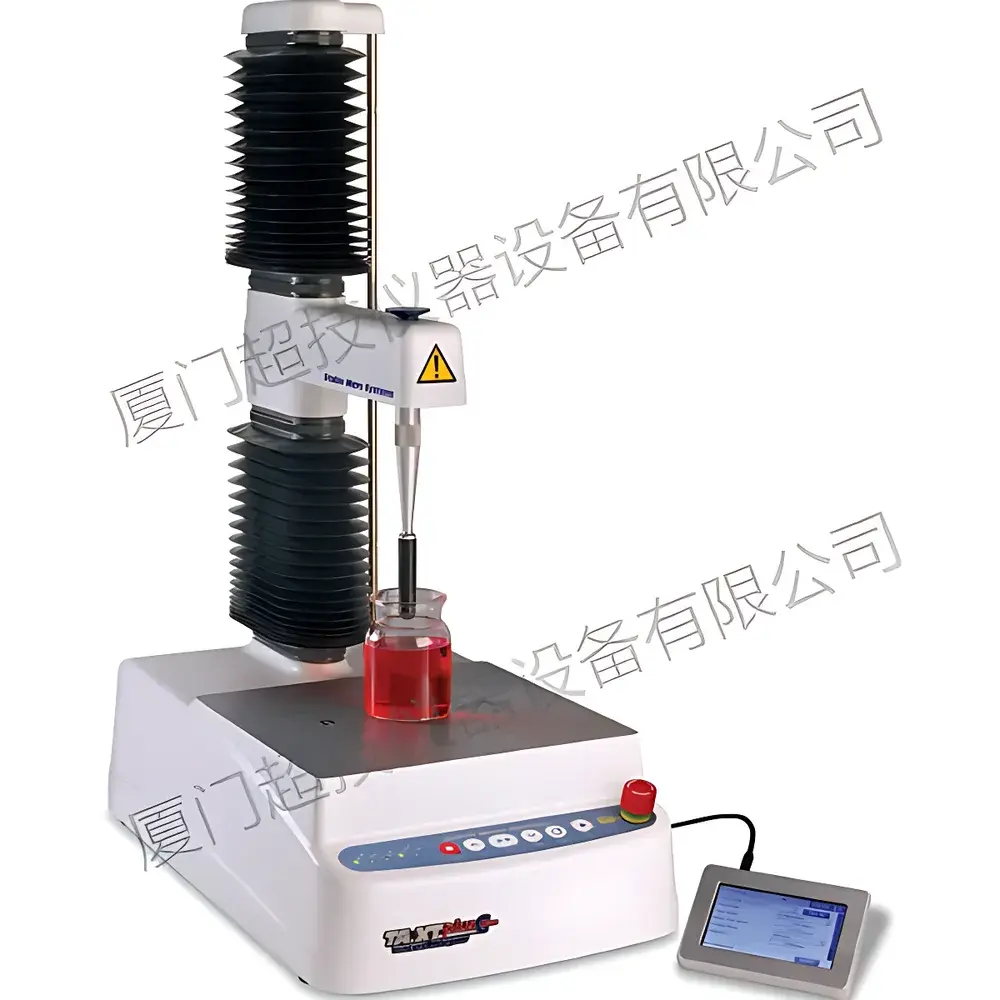
Stable Micro Systems TA.XTplus Texture Analyzer for Noodle and Bakery Products
| Brand | Stable Micro Systems |
|---|---|
| Origin | United Kingdom |
| Model | TA.XTplus |
| Force Range | 0.5–50 kgf |
| Force Resolution | 0.1 g |
| Test Speed | 0.01–40 mm/s |
| Travel Distance | 0.001–370 mm |
| Position Resolution | 0.001 mm |
| Data Acquisition Rate | >2000 samples/sec (4-channel simultaneous sampling) |
Overview
The Stable Micro Systems TA.XTplus Texture Analyzer is a high-precision, motorized single-column universal testing system engineered for objective mechanical property characterization of food materials—specifically optimized for noodle, pasta, dumpling skin, flatbread, and other sheeted or extruded wheat-based products. Based on the fundamental principles of uniaxial compression, tension, shear, and adhesion mechanics, the instrument quantifies textural attributes defined in ISO 11036:2021 (Sensory analysis — Methodology — Texture profile analysis) and aligned with ASTM STP 1438 (Standard Guide for Instrumental Texture Measurement). Its modular probe architecture enables reproducible measurement of firmness, elasticity, cohesiveness, adhesiveness, tensile strength, extensibility, resilience, chewiness, and rupture energy—parameters directly correlated to consumer perception, processing stability, and shelf-life performance.
Key Features
- High-fidelity force transducer with 0.1 g resolution and calibrated range from 0.5 to 50 kgf, ensuring traceable accuracy across low-force deformation (e.g., soft dough) and high-force fracture events (e.g., dried ramen).
- Precision motion control system delivering test speeds from 0.01 to 40 mm/s with programmable acceleration/deceleration profiles—critical for simulating mastication kinetics or industrial handling stresses.
- Sub-micron positional resolution (0.001 mm) over 370 mm vertical travel, supporting both macro-scale elongation tests and micro-indentation protocols.
- Real-time 4-channel synchronized data acquisition at >2000 Hz, capturing multi-sensor inputs (e.g., load cell, displacement encoder, environmental temperature, optional video trigger) without aliasing or latency.
- Barcode-driven test initiation via integrated USB scanner interface—eliminates manual protocol selection and reduces operator-induced variability in routine QC environments.
- Cloud-enabled remote operation via iOS/Android mobile devices and tablets using the Texture Exponent software suite, enabling real-time monitoring, parameter adjustment, and automated email reporting upon test completion.
Sample Compatibility & Compliance
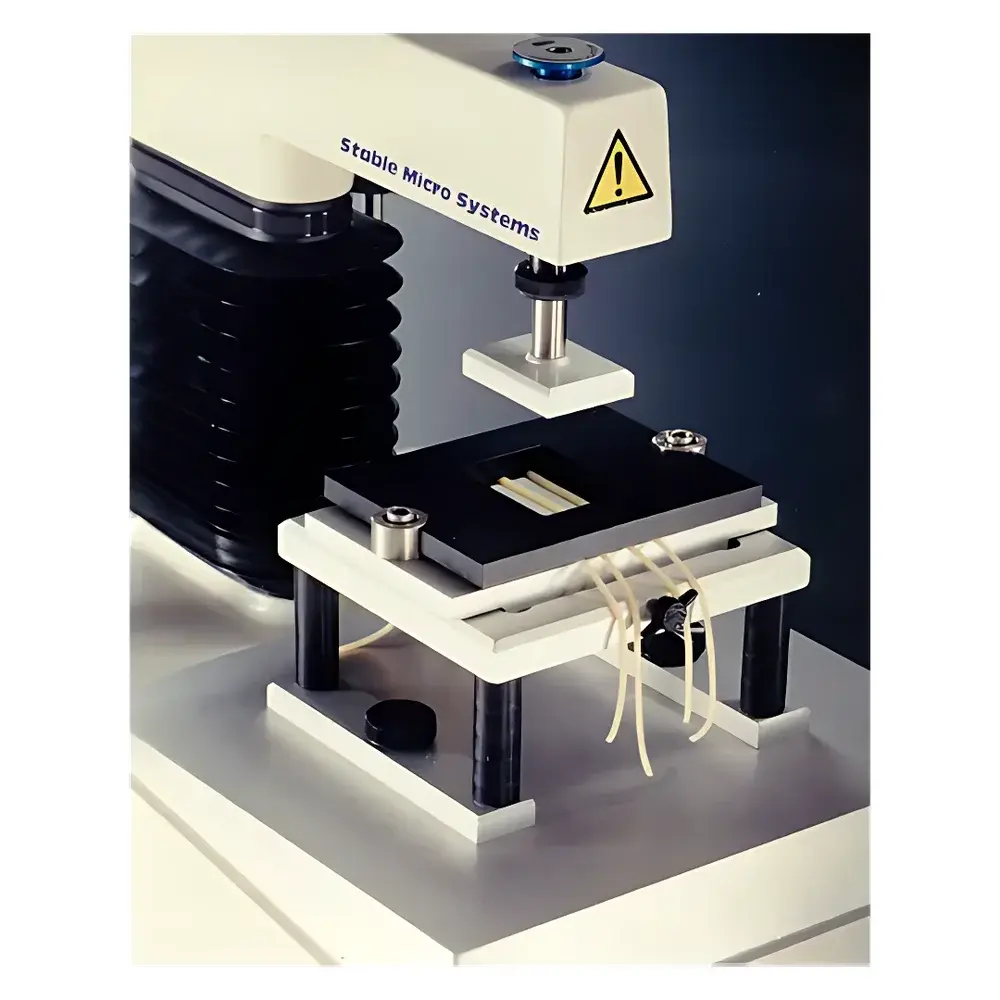
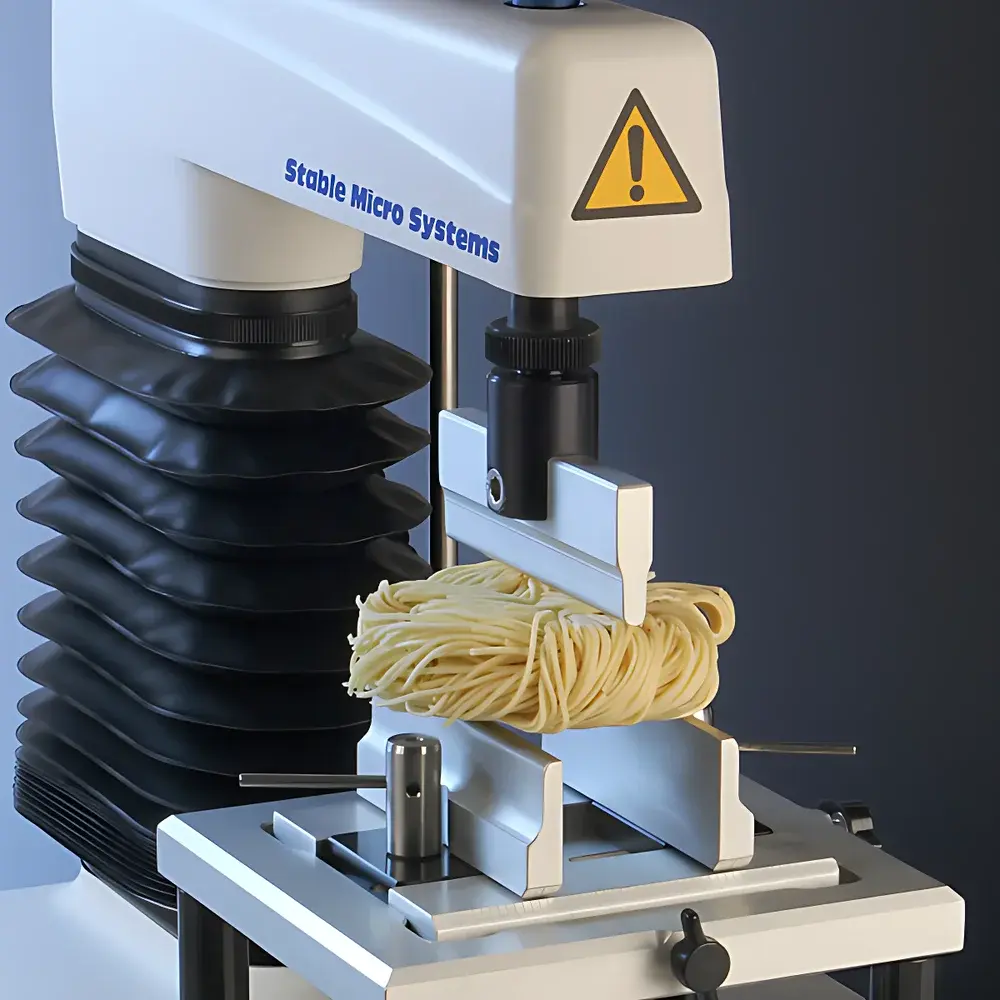
The TA.XTplus supports standardized sample geometries per ISO 3977-2 (Cereal and cereal products — Determination of texture properties) and AACC Method 74-09 (Noodle Tensile Strength). Optional fixtures include: HDP/PFS Adhesion Rig with square flat probe for cohesiveness/adhesiveness of cooked noodles or wet sheets; A/SPR Roller Extension Rig paired with circular ring cutter (A/CRS) for biaxially constrained tensile testing of laminated doughs and steamed buns. All hardware complies with CE, UKCA, and IEC 61000-6-2/6-4 electromagnetic compatibility standards. Software meets FDA 21 CFR Part 11 requirements for electronic records and signatures when configured with audit trail, user access controls, and electronic signature modules—supporting GLP/GMP-regulated food safety laboratories.
Software & Data Management
Texture Exponent v3.x provides ISO-compliant test method templates—including Texture Profile Analysis (TPA), creep-recovery, stress-relaxation, and cyclic loading sequences—with full scripting capability via Python API integration. Raw force-displacement curves are exported in ASTM E1823-compliant .txt or .csv formats; processed metrics (hardness, springiness, gumminess, etc.) auto-populate Excel-compatible reports with statistical summaries (mean ± SD, CV%, ANOVA-ready grouping). The embedded knowledge base includes >400 peer-reviewed application notes and instructional videos indexed by matrix (noodle, bakery, snack), parameter, and regulatory framework (USDA, EFSA, MHLW Japan). All software updates and calibration verification tools are delivered through secure HTTPS channels with version-controlled release notes.
Applications
- Quantification of firmness loss during storage of fresh-cut noodles under modified atmosphere packaging.
- Correlation of gluten network integrity (measured as tensile modulus) with flour protein content and mixing time in artisanal bread development.
- Validation of enzyme treatment efficacy (e.g., transglutaminase) on dough elasticity recovery post-deformation.
- Batch-to-batch consistency monitoring of instant ramen block rehydration kinetics using controlled compression ramp-hold-ramp cycles.
- Regulatory submission support for texture claims (e.g., “chewy”, “al dente”, “springy”) under EU Regulation (EC) No 1924/2006 on nutrition and health claims.
FAQ
Is the TA.XTplus compliant with ISO 11036 for texture profile analysis?
Yes—the instrument’s mechanical design, sampling rate, and software algorithms conform to the dynamic force-time response specifications outlined in Clause 6.2 of ISO 11036:2021.
Can the system be validated for GMP environments?
Yes—when deployed with optional 21 CFR Part 11 compliance package (including role-based access, electronic signatures, and immutable audit trails), it satisfies Annex 11 and ICH Q5E requirements for analytical instrument qualification.
What sample preparation standards apply to sheeted noodle testing?
A/CRS ring cutter ensures consistent 25 mm diameter specimens; thickness is measured with digital micrometer prior to A/SPR tensile testing per AACC Method 74-09 revision 2023.
Does the software support custom statistical analysis beyond built-in metrics?
Yes—raw time-series data export enables integration with R, MATLAB, or JMP for multivariate modeling (e.g., PLS regression linking texture parameters to sensory panel scores).
How frequently does Stable Micro Systems release firmware updates?
Biannual major releases (Q1 and Q3), with critical bug fixes and calibration patches issued monthly via authenticated download portal.





