
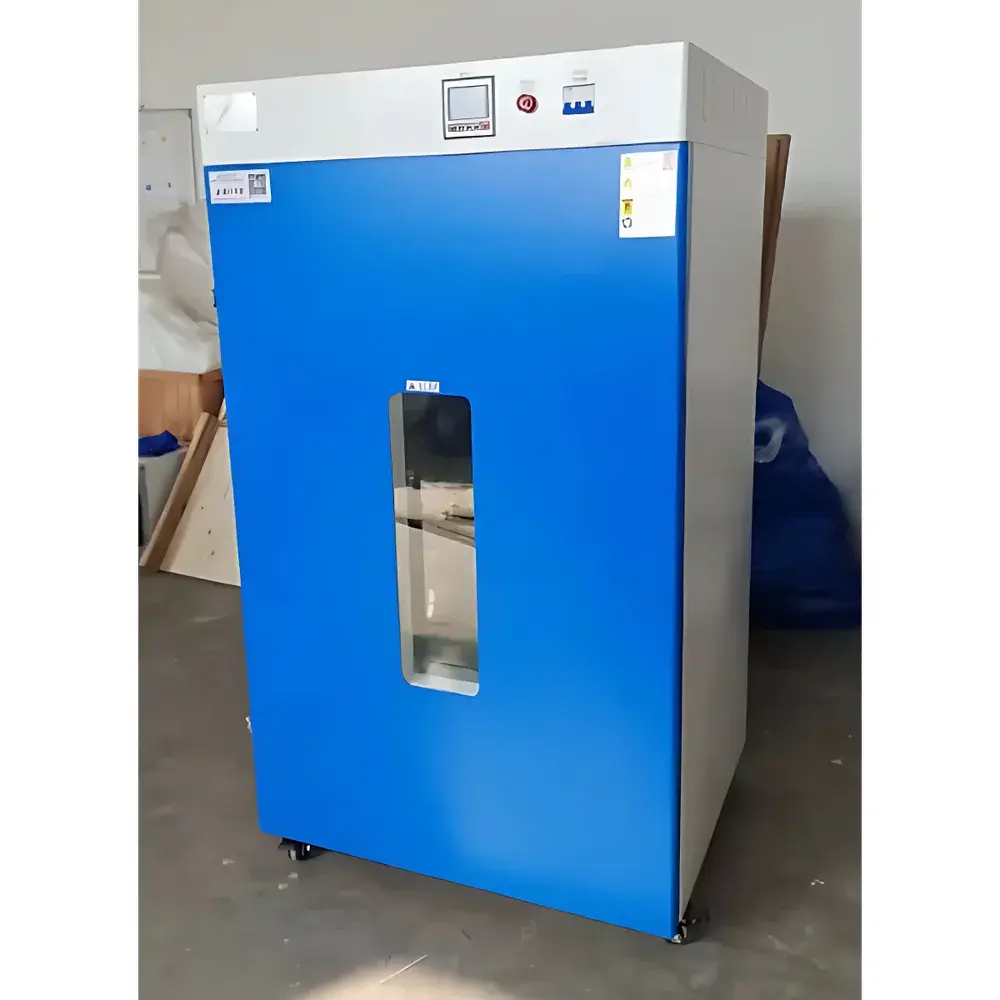
Jianhu DV-TC Series Thermal Shock Test Chamber
| Brand | Jianhu |
|---|---|
| Origin | Shanghai, China |
| Manufacturer Type | Authorized Distributor |
| Product Category | Domestic |
| Model | DV-TC Series |
| Price Range | USD 680 – 68,000 |
| Temperature Range | −70 °C to +150 °C |
| Refrigeration Method | Compressor-based Cooling |
| Explosion-Proof Configuration | Available |
| Temperature Fluctuation | ±0.5 °C |
| Temperature Uniformity | ±2.0 °C |
| Temperature Deviation | ±2.0 °C |
| Heating Rate | ≤60 min (−70 °C → +150 °C) |
| Cooling Rate | ≤45 min / ≤60 min / ≤80 min (varies by chamber volume and configuration) |
| Internal Chamber Dimensions | Customizable across multiple standard and engineered variants |
Overview
The Jianhu DV-TC Series Thermal Shock Test Chamber is an industrial-grade environmental test system engineered for precise, repeatable thermal cycling under controlled high-low temperature extremes. Based on the two-zone or three-zone mechanical thermal shock principle—employing independent hot and cold chambers with rapid pneumatic or elevator-driven specimen transfer—the DV-TC series delivers deterministic temperature transitions compliant with IEC 60068-2-14, MIL-STD-810H Method 503.5, and GB/T 2423.22. Its architecture integrates dual-refrigeration circuits, PID-controlled resistive heating, and high-efficiency air circulation to achieve stable setpoint maintenance and minimized thermal inertia. Designed for reliability validation in electronics, automotive components, aerospace subsystems, and advanced materials R&D, the system supports both single-cycle shock profiles and programmable multi-step temperature-hold sequences with sub-minute transition fidelity.
Key Features
- Wide operational temperature range: −70 °C to +150 °C, with calibrated stability maintained per ISO/IEC 17025 traceable procedures
- Configurable thermal transition performance: cooling rates down to ≤45 minutes (typical 15 L chamber), heating rates ≤60 minutes; rate consistency validated across full temperature span
- Temperature uniformity of ±2.0 °C and fluctuation control within ±0.5 °C at steady state—verified via 9-point sensor mapping per ASTM E741
- Explosion-proof variants available with Class I, Division 2 (CID2) certification and ATEX/IECEx-compliant electrical enclosures for hazardous area deployment
- Modular chamber construction using SUS304 stainless steel interior, high-density polyurethane insulation (≥120 mm), and double-glazed observation windows with anti-fog heating
- Integrated safety architecture including over-temperature cut-off, compressor high-pressure shutdown, phase failure protection, and door interlock monitoring
Sample Compatibility & Compliance
The DV-TC series accommodates specimens ranging from PCB assemblies and semiconductor packages to automotive ECUs and structural composite coupons. Standard internal volumes span 50 L to 1000 L, with custom geometries—including extended height, pass-through ports, and load-bearing shelves rated up to 100 kg—available upon engineering review. All models comply with electromagnetic compatibility (EMC) per EN 61326-1 and safety requirements under EN 61010-1. The system meets essential criteria for GLP and GMP-aligned laboratories, supporting audit-ready operation through configurable alarm logging, event timestamps, and hardware-enforced access control. Optional humidity integration (not standard) enables combined temperature-humidity shock testing per IEC 60068-2-30, subject to separate validation protocol.
Software & Data Management
Equipped with a 10.1″ capacitive touchscreen HMI running embedded Linux, the DV-TC controller supports up to 99 programmable test profiles, each with 99 segments (ramp/soak/loop). Real-time data acquisition records temperature at ≥1 Hz from up to six user-defined thermocouple inputs (Type K or T). Export formats include CSV and PDF reports with digital signatures, compatible with LIMS integration via Modbus TCP or optional Ethernet/IP interface. Audit trail functionality satisfies FDA 21 CFR Part 11 requirements when paired with network-authenticated user roles, electronic signature capture, and immutable log archiving. Firmware updates are performed via secure HTTPS upload with SHA-256 integrity verification.
Applications
- Electronics reliability assessment: solder joint fatigue analysis, package delamination screening, and die attach integrity verification under repeated thermal stress
- Automotive component qualification: engine control modules, ADAS sensors, and battery management systems subjected to climatic boundary testing per ISO 16750-4
- Aerospace material evaluation: thermal cycling of carbon fiber composites, thermal barrier coatings, and avionics housings per SAE AS4795 and RTCA DO-160 Section 4
- Medical device validation: sterilization cycle compatibility, polymer housing integrity, and sensor drift characterization across storage-to-operational temperature transitions
- Research-grade thermal aging studies: accelerated life modeling of encapsulants, conformal coatings, and MEMS devices using Arrhenius-based extrapolation
FAQ
What standards does the DV-TC Series support out-of-the-box?
The base configuration complies with IEC 60068-2-14 (Method Na), GB/T 2423.22, and MIL-STD-810H Method 503.5. Full compliance documentation—including calibration certificates, uncertainty budgets, and chamber mapping reports—is provided with each unit.
Can the system operate unattended for extended cycles?
Yes. With scheduled start/stop, email/SMS alerting (via optional GSM module), and continuous power-fail recovery, the DV-TC supports 72+ hour autonomous operation under monitored lab conditions.
Is remote monitoring supported?
Standard Ethernet connectivity enables browser-based status viewing and limited profile initiation. Full remote control—including real-time parameter adjustment and data streaming—requires optional Secure Remote Access License and TLS 1.2–enabled gateway configuration.
How is temperature uniformity verified during commissioning?
Jianhu performs 9-point spatial mapping per ASTM E741 using NIST-traceable Class A PT100 probes. A certified report—including deviation matrix, uncertainty values, and corrective action summary—is delivered prior to handover.
What maintenance intervals are recommended?
Compressor oil and filter replacement every 24 months; refrigerant circuit leak check annually; air filter cleaning biweekly; full system calibration every 12 months or after 500 operational hours—whichever occurs first.



