
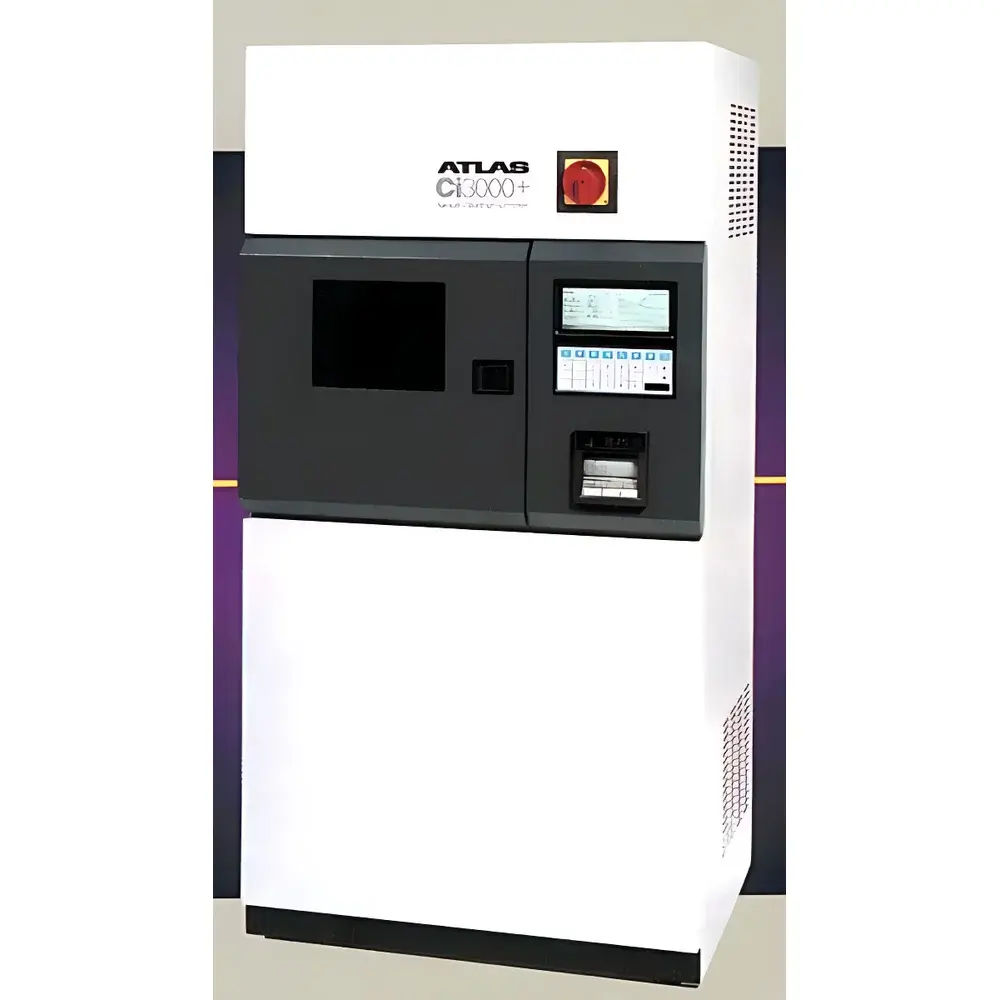
Jinhoo JH-UV Series UV Aging Test Chamber (UVA/UVB Fluorescent Lamp Type)
| Brand | Jinhoo |
|---|---|
| Origin | Shanghai, China |
| Model | JH-UV (UVA-340 / UVB-313 Lamp Configuration) |
| Compliance | GB/T 14522–1993, ISO 4892-3, ASTM G154, DIN 50017, JIS D 0205 |
| UV Lamps | U.S.-sourced UVA-340 & UVB-313 fluorescent tubes |
| Irradiance Control | Adjustable continuous UV output |
| Humidity Simulation | Condensation cycle via heated water reservoir |
| Water Spray System | Integrated high-pressure spray pump |
| Control Mode | Programmable cycling of UV irradiation / condensation / water spray |
| Sample Exposure Temperature Range | 40–70 °C (black panel) |
Overview
The Jinhoo JH-UV Series UV Aging Test Chamber is an engineered environmental test system designed to accelerate photodegradation and weathering effects on polymeric, coated, and organic materials under controlled ultraviolet radiation, thermal stress, and moisture exposure. Based on the principle of fluorescent UV lamp irradiation—primarily utilizing U.S.-sourced UVA-340 (simulating solar UV down to 295 nm) and UVB-313 (extending spectral output to 280 nm for aggressive degradation testing)—the chamber replicates key outdoor aging factors: solar UV spectrum, dew formation via condensation, and periodic water spray. Unlike broad-spectrum xenon arc or carbon arc systems, this chamber delivers reproducible, spectrally defined UV exposure with high inter-laboratory correlation for comparative durability assessment. It operates in accordance with internationally harmonized accelerated aging protocols, enabling rapid evaluation of material resistance to yellowing, gloss loss, chalking, cracking, embrittlement, and surface oxidation—phenomena commonly observed after months or years of natural outdoor exposure.
Key Features
- U.S.-origin UVA-340 and UVB-313 fluorescent lamps installed in standardized lamp arrays, ensuring spectral fidelity and long-term irradiance stability.
- Programmable multi-stage exposure cycles integrating UV irradiation, condensation (via heated water reservoir and cold specimen surface), and water spray (with integrated high-pressure pump for uniform droplet distribution).
- Black-panel temperature control (40–70 °C range) with PID-regulated heating and real-time monitoring to maintain thermal consistency across test specimens.
- Optional calibrated UV irradiance meter (U.S.-imported) compatible with NIST-traceable calibration standards for quantitative irradiance validation per ASTM G154 Annex A2.
- Stainless steel 316L test chamber interior with quartz glass UV-transmissive viewing window and corrosion-resistant hardware for long service life under humid, acidic, or saline conditions.
- Compliance-ready architecture supporting audit trails, user access levels, and parameter lockout—facilitating alignment with GLP and internal quality system requirements.
Sample Compatibility & Compliance
The JH-UV chamber accommodates flat-panel specimens up to 150 mm × 75 mm (standard rack configuration), with optional custom fixtures available for irregular geometries. It supports standardized sample mounting per ISO 4892-3 and ASTM G154, including backside ventilation and non-reflective substrate support. The system conforms to GB/T 14522–1993 (Chinese national standard for UV exposure testing), and its operational parameters are technically equivalent to ISO 4892-3 (Plastics — Methods of exposure to laboratory light sources — Part 3: Fluorescent UV lamps), ASTM G154 (Standard Practice for Operating Fluorescent Ultraviolet (UV) Lamp Apparatus for Exposure of Nonmetallic Materials), DIN 50017 (Condensation water climate), and JIS D 0205 (Automotive paint durability). While not certified to IEC 61000 or UL safety standards out-of-box, all electrical components meet CE-marked industrial safety thresholds for Class II equipment operating in non-hazardous environments.
Software & Data Management
The embedded microprocessor controller provides intuitive menu navigation, cycle programming (up to 99 segments per program), and real-time display of irradiance (if equipped), black-panel temperature, and relative humidity during condensation phases. Data logging is performed at user-defined intervals (1–60 min), with internal memory storing ≥30 days of timestamped operational records. Export is supported via USB port to CSV format for post-processing in Excel or statistical analysis platforms. For regulated environments, optional firmware upgrade enables 21 CFR Part 11-compliant electronic signatures, audit trail generation, and role-based access control—meeting minimum requirements for GMP/GLP documentation integrity without requiring external PC dependency.
Applications
This UV aging chamber serves as a primary qualification tool across R&D, QC, and supplier auditing workflows in industries where UV-induced degradation directly impacts product lifecycle performance. Key application domains include: automotive exterior trim and coatings (per OEM PV3929 or GMW14124); architectural sealants and silicone elastomers; textile dye fastness (AATCC TM16, ISO 105-B02); inkjet and flexographic inks; PVC and TPO roofing membranes; medical device polymer housings (ISO 10993-12 extractables screening); and aerospace interior composites subject to cabin UV exposure. Its ability to isolate UV + moisture synergism makes it especially valuable for failure root-cause analysis of premature yellowing in polycarbonates or hydrolytic degradation in polyurethanes.
FAQ
What UV spectra does the JH-UV chamber replicate?
It employs UVA-340 lamps (peak at 340 nm, cutoff at 295 nm) for realistic sunlight simulation, and UVB-313 lamps (peak at 313 nm, cutoff at 280 nm) for accelerated stress testing—both conforming to ASTM G154 spectral requirements.
Is irradiance calibration traceable to NIST standards?
Yes—when paired with the optional U.S.-imported radiometer, calibration certificates include NIST-traceable uncertainty statements per ISO/IEC 17025 accredited laboratories.
Can the chamber operate unattended for extended cycles?
Yes—the controller supports fully autonomous multi-day programs with automatic fault detection, alarm relay outputs, and thermal cut-off protection per IEC 60529 IP20 enclosure rating.
Does it meet FDA or pharmaceutical regulatory requirements?
While not validated for sterile manufacturing environments, its data integrity features (audit trail, user permissions) align with FDA expectations for non-clinical material stability studies under ICH Q1A(R2) guidance.
What maintenance intervals are recommended?
Lamp replacement every 1,600–2,000 hours of operation; quarterly verification of condensate reservoir pH and spray nozzle integrity; annual calibration of temperature sensors against PT100 reference standards.



