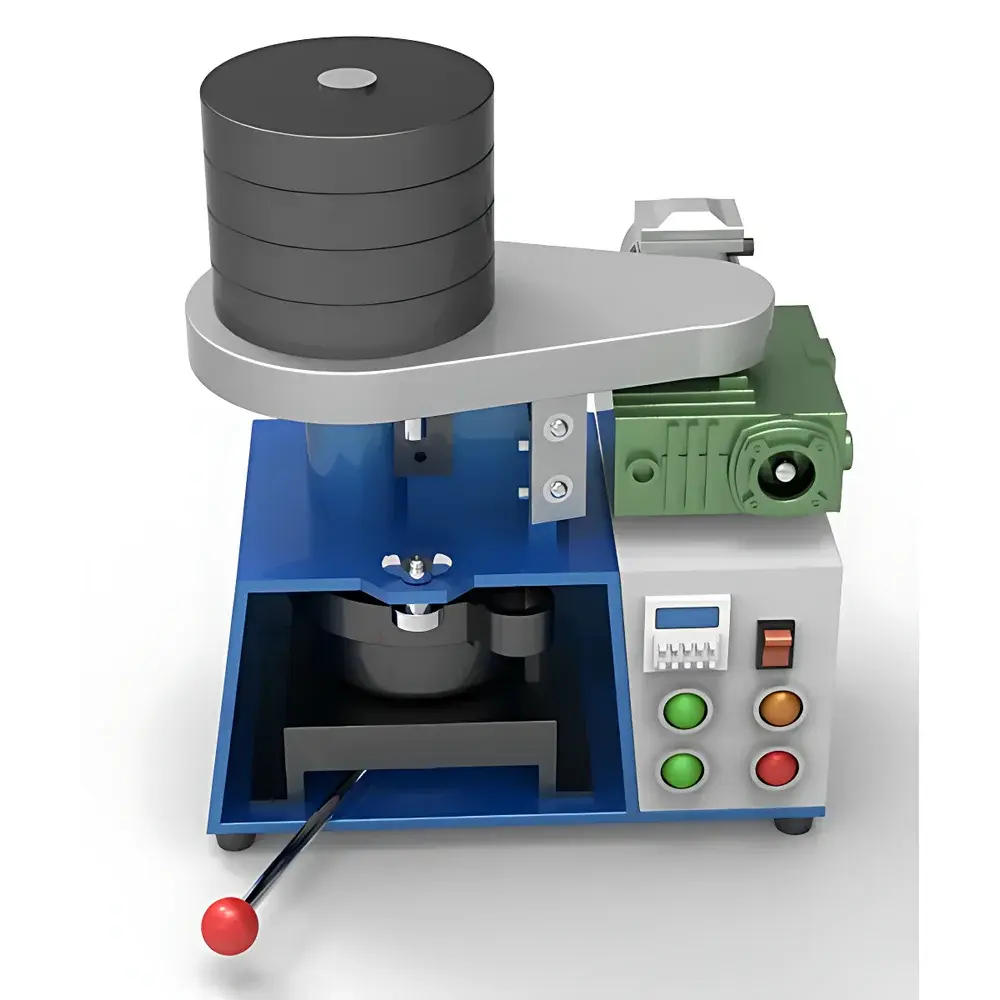
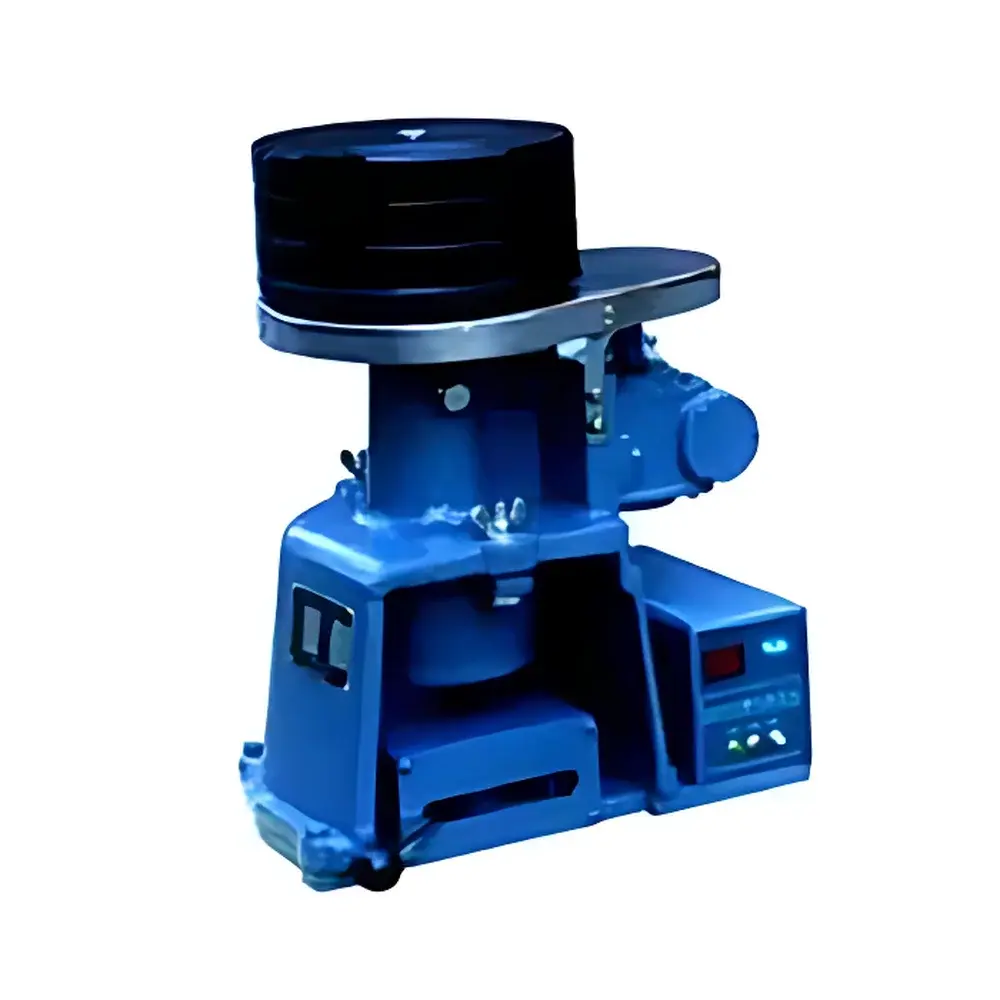
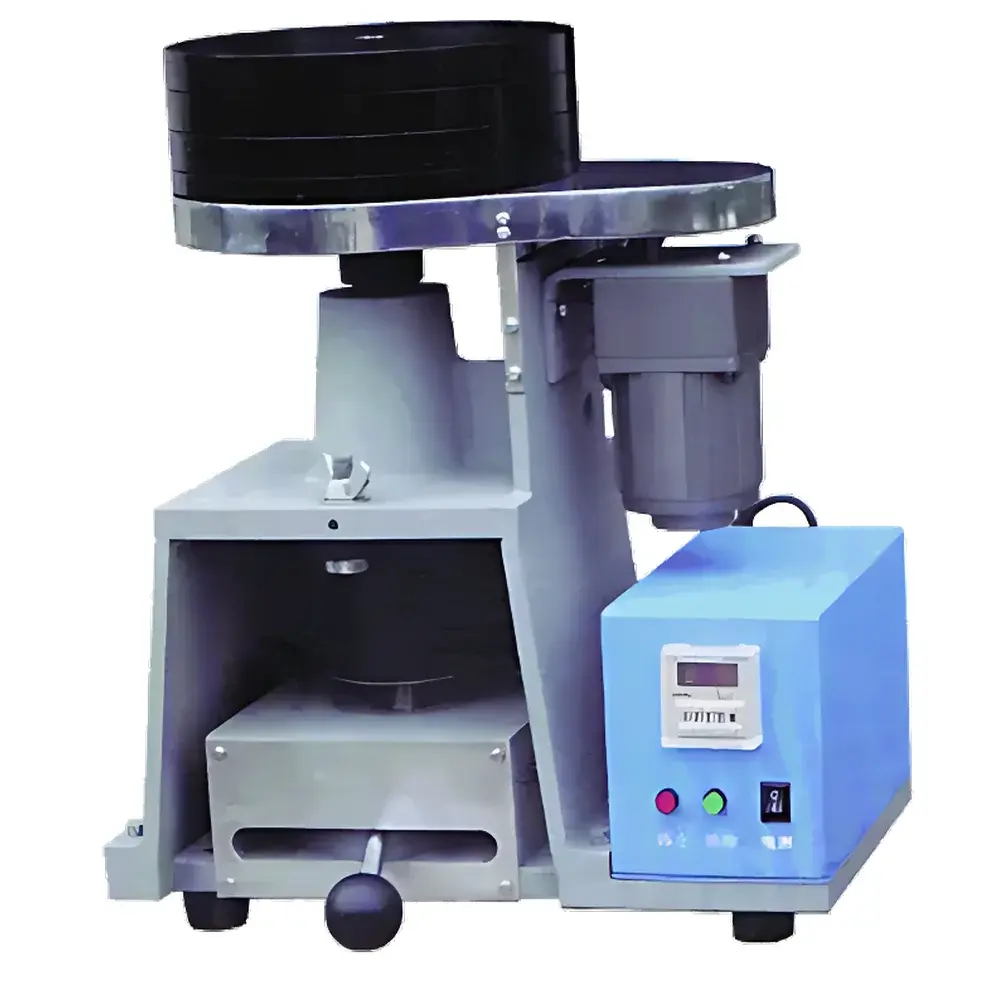
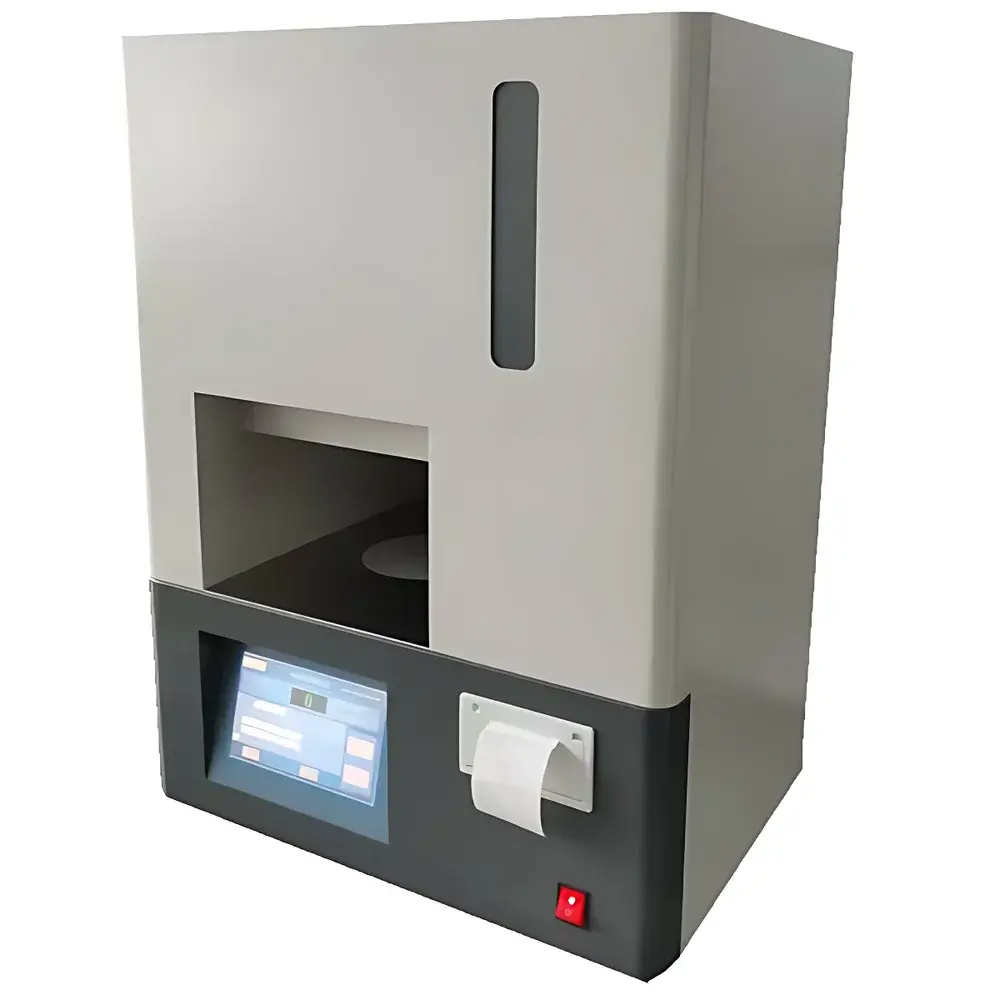
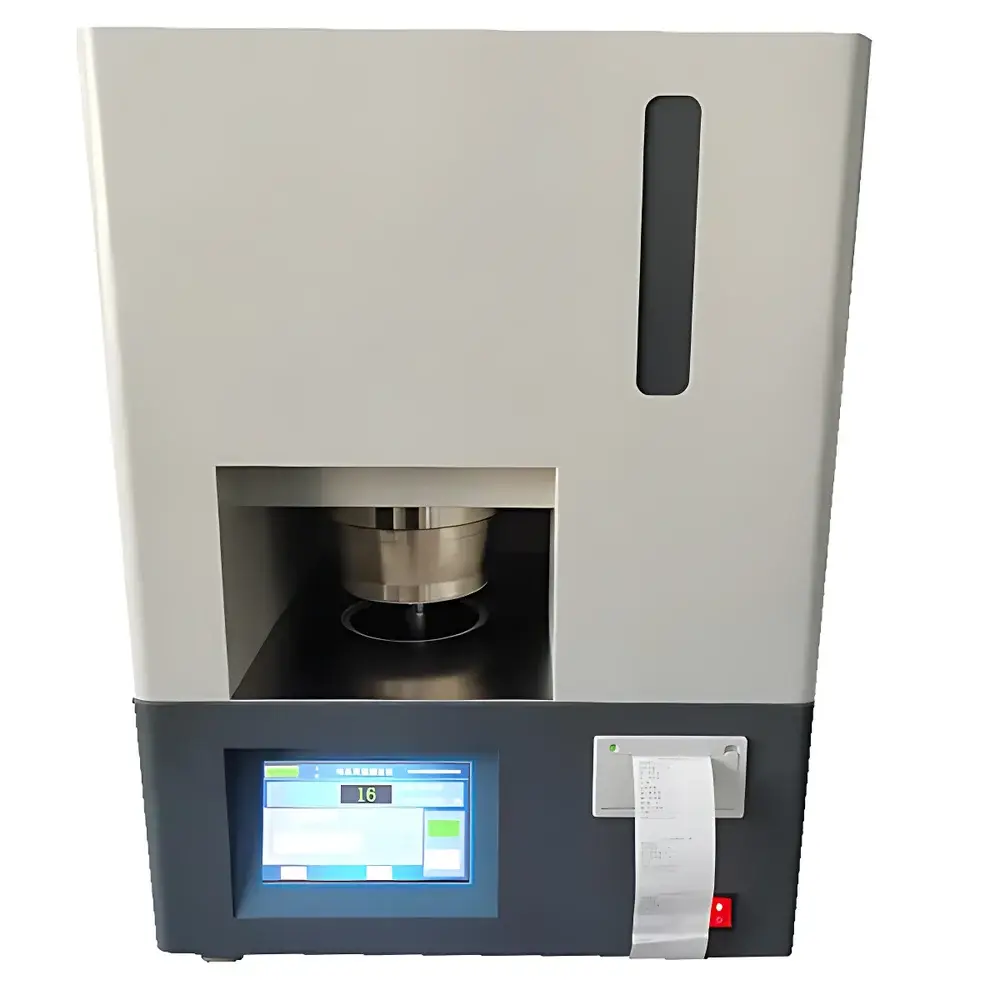
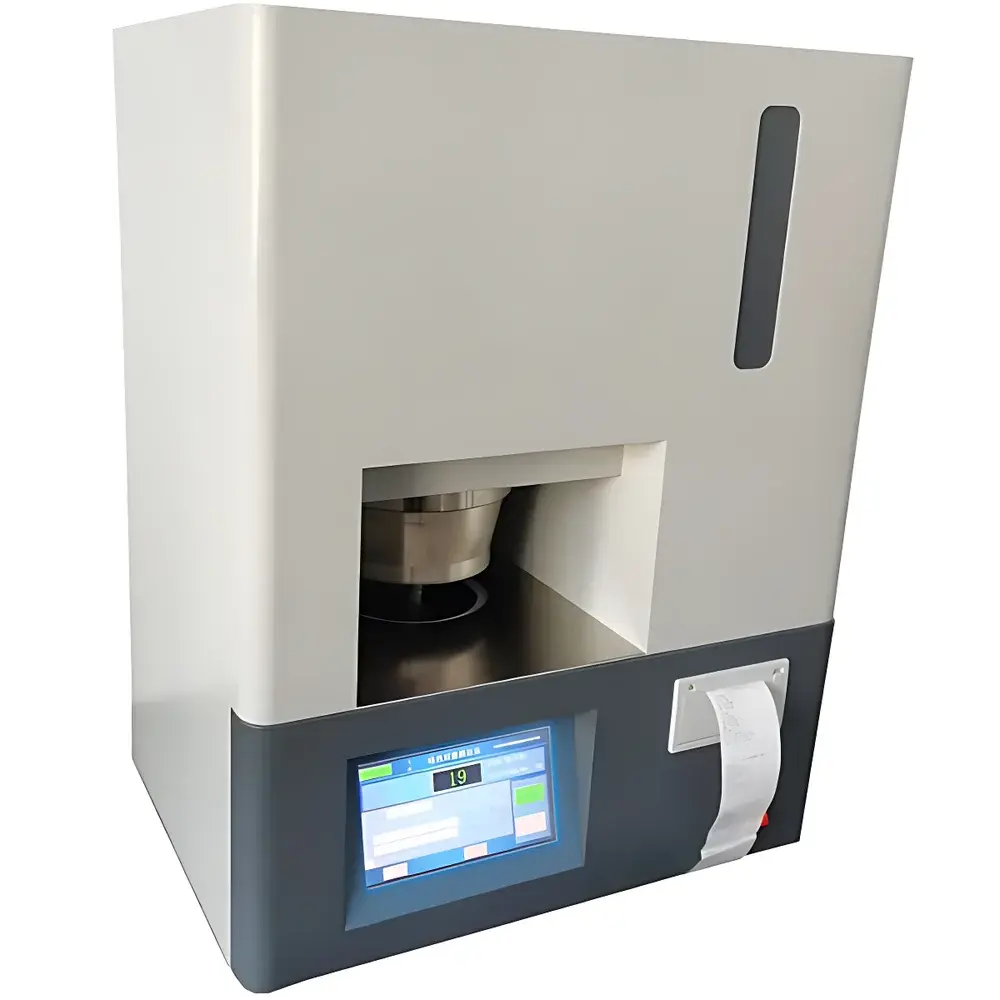
MingShen Science HM-60 Hardgrove Grindability Index Tester
| Brand | MingShen Science |
|---|---|
| Origin | Henan, China |
| Model | HM-60 |
| Motor Power | 90 W |
| Main Shaft Speed | 20 ± 1 rpm |
| Total Rotations | 60 ± 0.25 rev |
| Applied Load | 284 ± 2 N |
| Voltage Options | 220 V or 380 V (default 380 V) |
| Net Weight | 90 kg |
| Dimensions (L×W×H) | 440 × 380 × 500 mm |
| Compliance | GB/T 2565–2014 (revised version of GB 2565–87) |
Overview
The MingShen Science HM-60 Hardgrove Grindability Index Tester is a precision laboratory instrument engineered for the standardized determination of the Hardgrove Grindability Index (HGI) of bituminous and anthracite coals. It operates in strict accordance with GB/T 2565–2014, the Chinese national standard equivalent to ASTM D409 and ISO 5074, which specifies the Hardgrove method—a widely accepted empirical procedure for quantifying coal’s resistance to pulverization under controlled mechanical conditions. The instrument implements the fundamental grinding law: energy consumption during comminution is proportional to the newly generated surface area. In practice, a 50 g sample of coal sized between 0.63 mm and 1.25 mm is subjected to precisely 60 revolutions of a rotating grinding ring and eight 25.4 mm steel balls within a hardened steel grinding bowl. The resulting fines—those passing through a 74 µm (200-mesh) sieve—are weighed, and the HGI value is derived via interpolation from a certified calibration chart or linear regression curve. This index serves as a critical input parameter for coal-fired power plant operations, pulverizer selection, mill capacity planning, and predictive modeling of grinding energy requirements.
Key Features
- Electronically controlled digital revolution counter with LCD display, ensuring accurate tracking of the required 60 ± 0.25 rotations and automatic shutdown upon completion.
- Top-loading mechanism with push-up bowl assembly, eliminating manual lifting of the 90 kg instrument body and significantly reducing operator fatigue and mechanical misalignment risk.
- Robust mechanical architecture featuring a cast-iron base, precision-machined gear train, and a calibrated 284 ± 2 N axial load applied uniformly across eight hardened steel balls via a gravity-loaded grinding ring.
- Dual-voltage compatibility (220 V / 380 V AC, 50 Hz), allowing flexible integration into diverse laboratory power infrastructures; default configuration ships at 380 V.
- Integrated magnetic sensor and microcontroller-based control system supporting real-time rotation monitoring, emergency stop functionality, and cumulative restart capability after interruption.
- Optimized bowl alignment verification system using bilateral eccentric bolts and gap-checking against the machine’s reference flange plane—ensuring consistent load transmission and measurement repeatability.
Sample Compatibility & Compliance
The HM-60 is validated exclusively for solid fossil fuel samples meeting the dimensional and moisture specifications outlined in GB/T 2565–2014: air-dried coal particles retained on a 1.25 mm sieve and passing a 0.63 mm sieve. It is not suitable for biomass, coke, lignite below specified rank thresholds, or heterogeneous mineral aggregates. All mechanical and metrological performance parameters—including rotational speed stability, load accuracy, and timing tolerance—are traceable to national standards maintained by the China National Institute of Metrology. The instrument supports GLP-compliant operation when paired with documented calibration records, routine verification checks (e.g., empty-bowl rotation test, load verification using certified deadweights), and operator training logs. While not inherently 21 CFR Part 11 compliant, data export and audit trail functions can be implemented externally via connected lab information management systems (LIMS).
Software & Data Management
The base HM-60 model features embedded firmware for rotation counting, auto-stop logic, and real-time display but does not include onboard data storage or USB/RS-232 interfaces. For enhanced traceability, the optional HM-60Z variant integrates a capacitive touchscreen HMI with programmable logic control, built-in linear regression calibration curve processing, and thermal mini-printer output. All HM-60 variants support manual transcription of sieve residue mass values into standardized HGI calculation worksheets aligned with ISO 5074 Annex B. Users are advised to maintain raw data notebooks containing date/time stamps, sample IDs, sieve weights (tare and gross), environmental temperature/humidity readings, and verification test results—practices aligned with ISO/IEC 17025 documentation requirements for accredited testing laboratories.
Applications
- Coal quality assessment for utility-scale power generation, where HGI directly informs pulverizer type selection (e.g., ball tube vs. roller mills) and predicts specific energy consumption (kWh/ton).
- Blending optimization in coal preparation plants, enabling quantitative prediction of composite HGI values using weighted arithmetic mean models.
- Quality control in coal trading and procurement, where contractual HGI tolerances (e.g., ±3 index points) are enforced per ASTM D3174 or GB/T 18666.
- Research into coal petrography–grindability correlations, particularly when combined with maceral analysis and vitrinite reflectance measurements.
- Validation of alternative grindability proxies (e.g., Bond Work Index) through cross-correlation studies under controlled inter-laboratory round-robin protocols.
FAQ
What standards does the HM-60 comply with?
It conforms to GB/T 2565–2014, which is technically equivalent to ASTM D409 and ISO 5074 for Hardgrove Grindability Index determination.
Is calibration certification included with shipment?
The instrument is factory-verified for rotational accuracy and load application; however, users must perform initial verification using certified reference materials (CRM) and document calibration against national metrological standards.
Can the HM-60 be used for non-coal materials?
No—it is specifically designed and validated only for bituminous and anthracite coals meeting the particle size and moisture criteria defined in GB/T 2565–2014.
What maintenance is required for long-term repeatability?
Monthly inspection of gear lubrication, annual verification of magnetic sensor alignment, biannual recalibration of the digital counter against a master timer, and routine cleaning of grinding components with non-abrasive solvents to prevent cross-contamination.
How is measurement uncertainty estimated for HGI results?
Per ISO/IEC 17025, combined uncertainty typically includes contributions from sample mass weighing (±0.01 g), sieve aperture tolerance (±1 µm), rotation count error (±0.1 rev), and calibration curve interpolation—yielding an expanded uncertainty (k=2) of approximately ±1.8 HGI units under optimal conditions.