
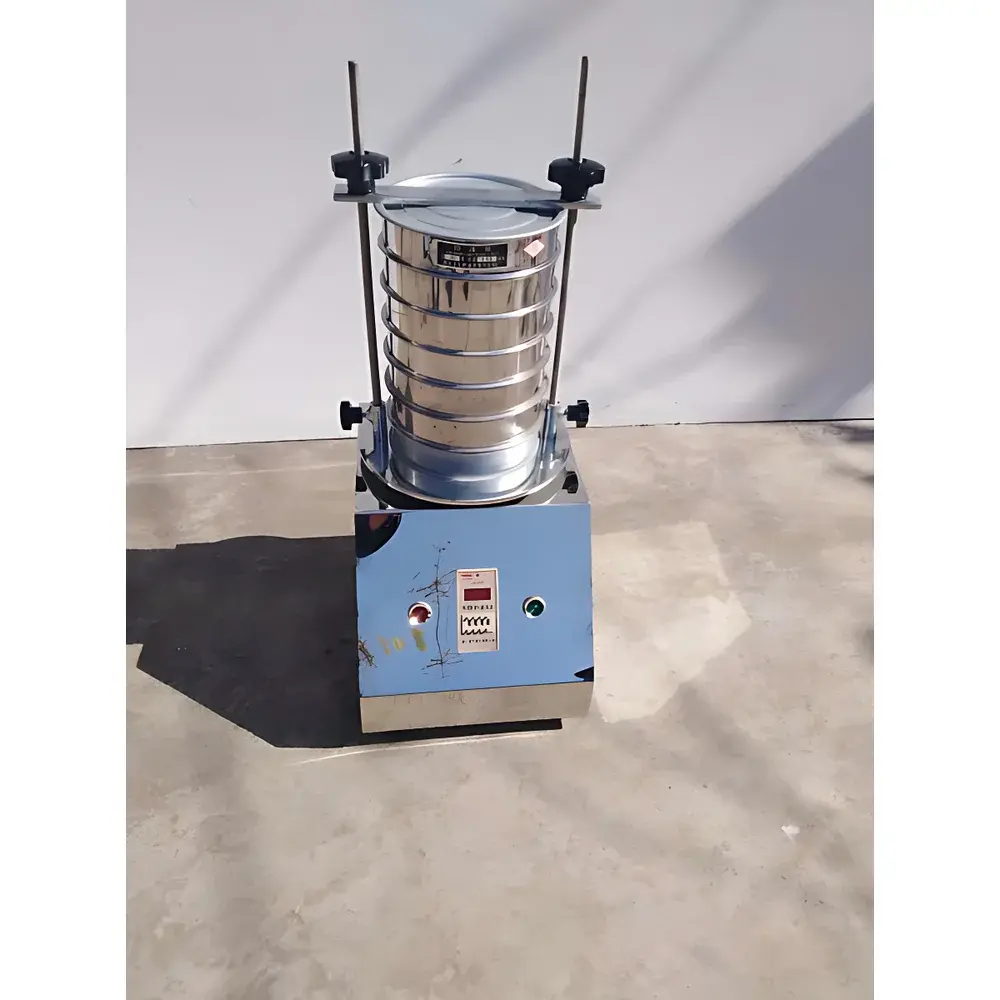
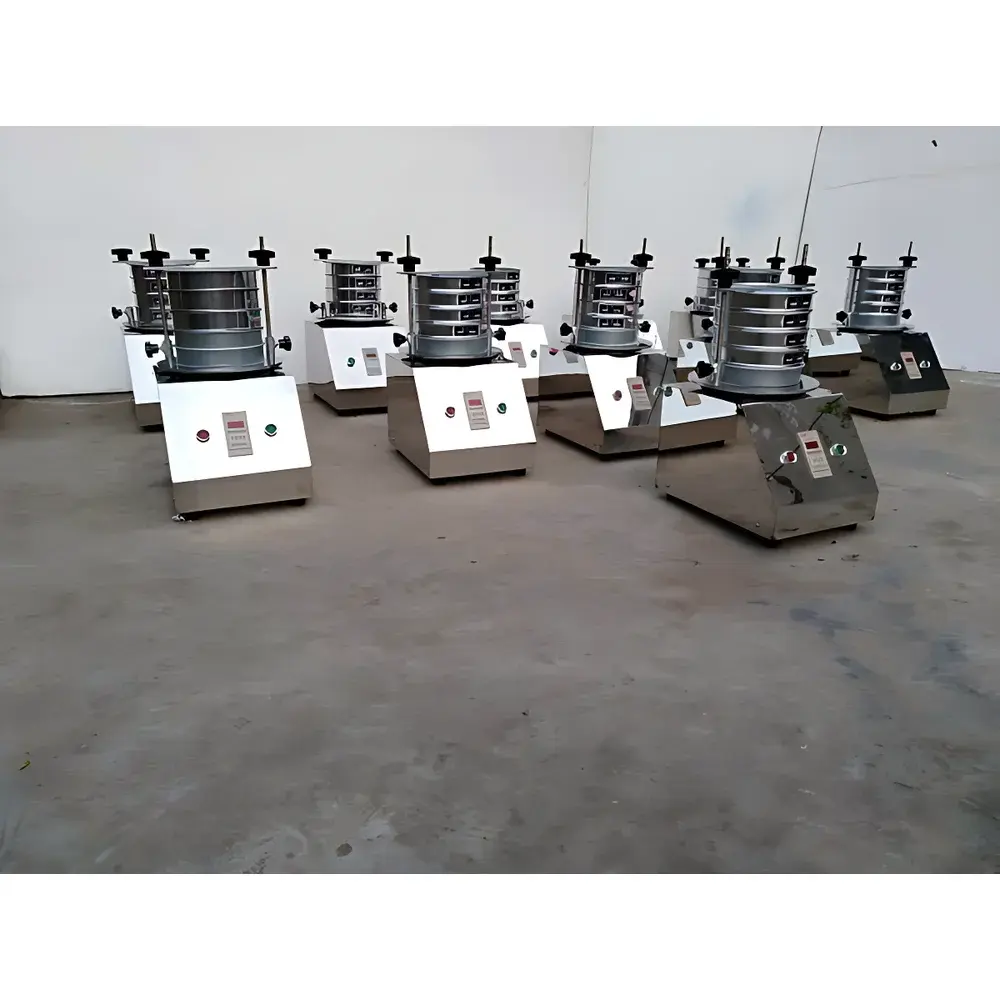
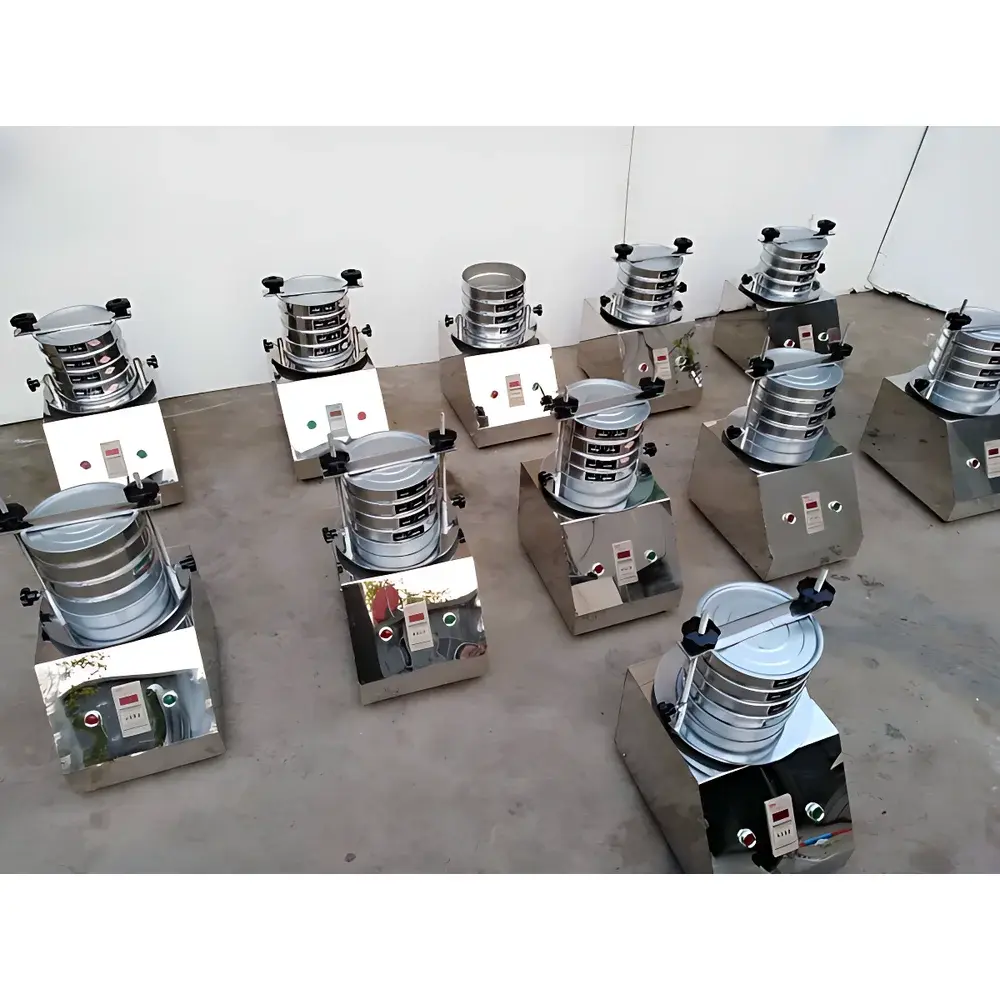
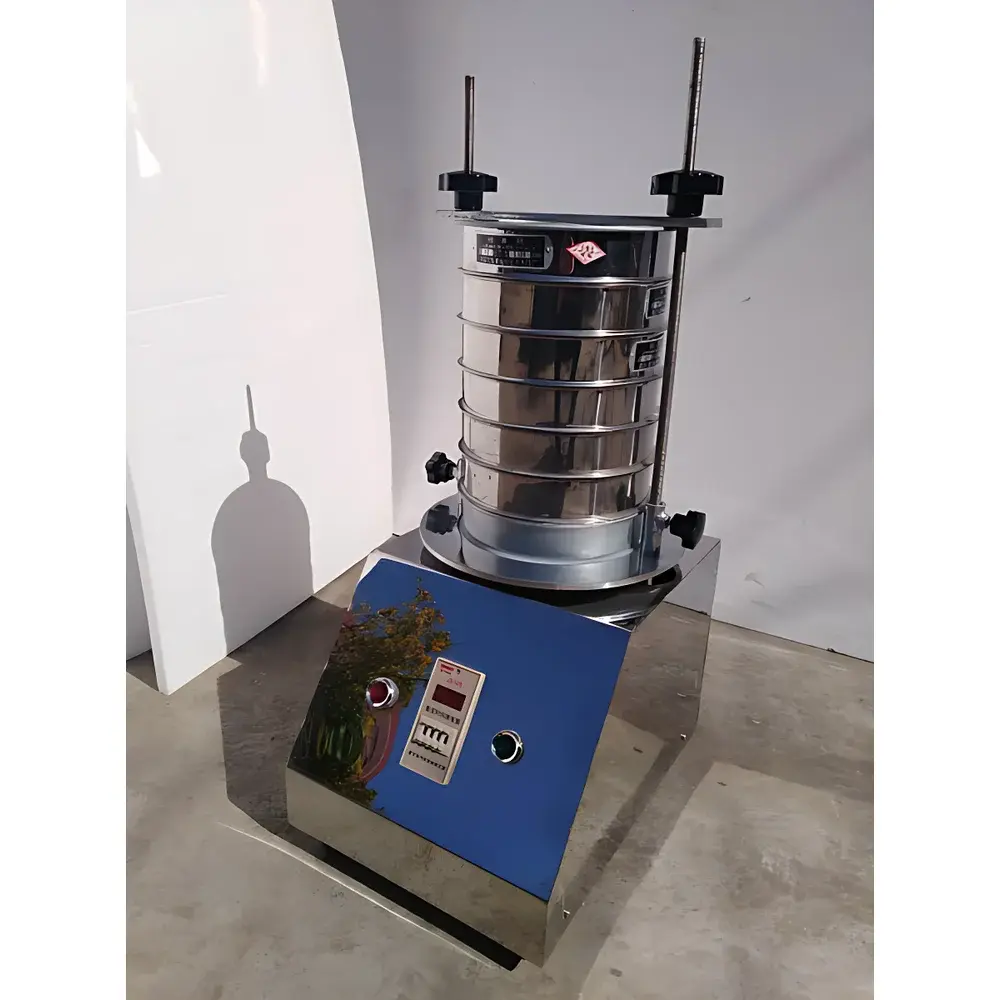
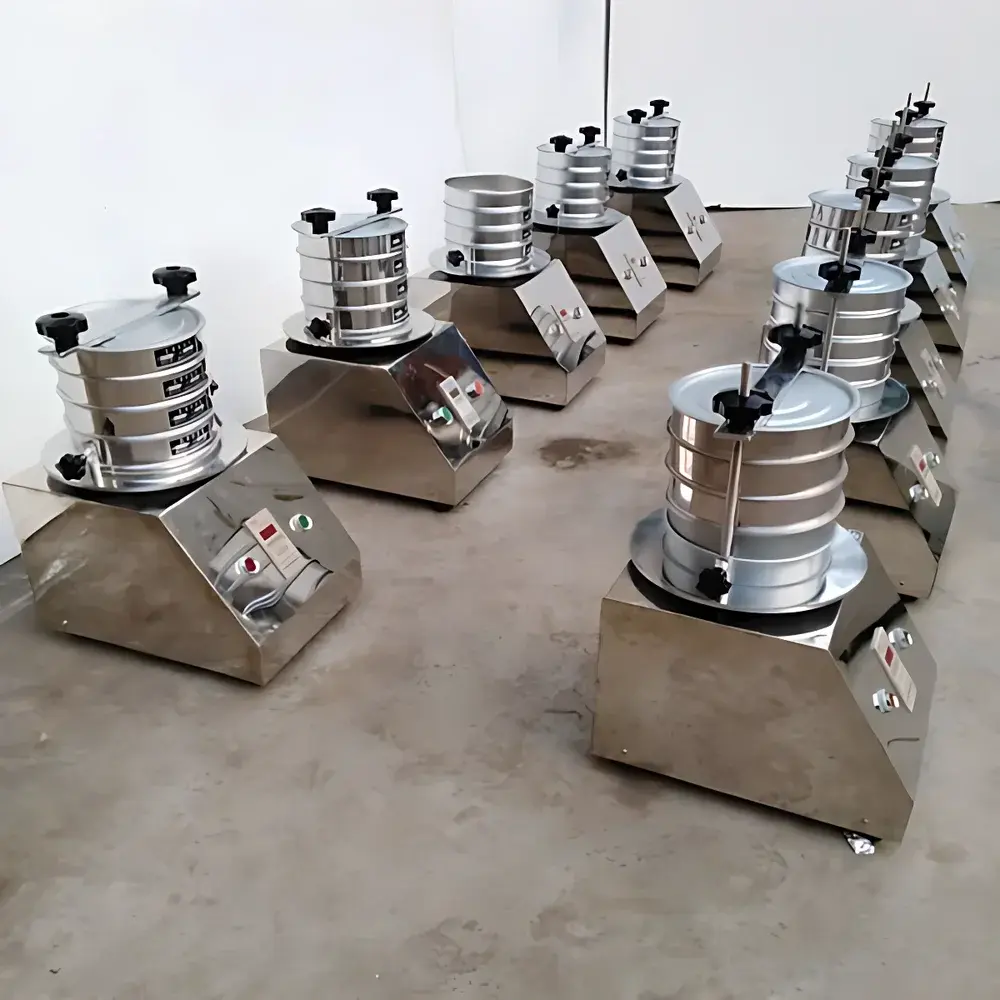
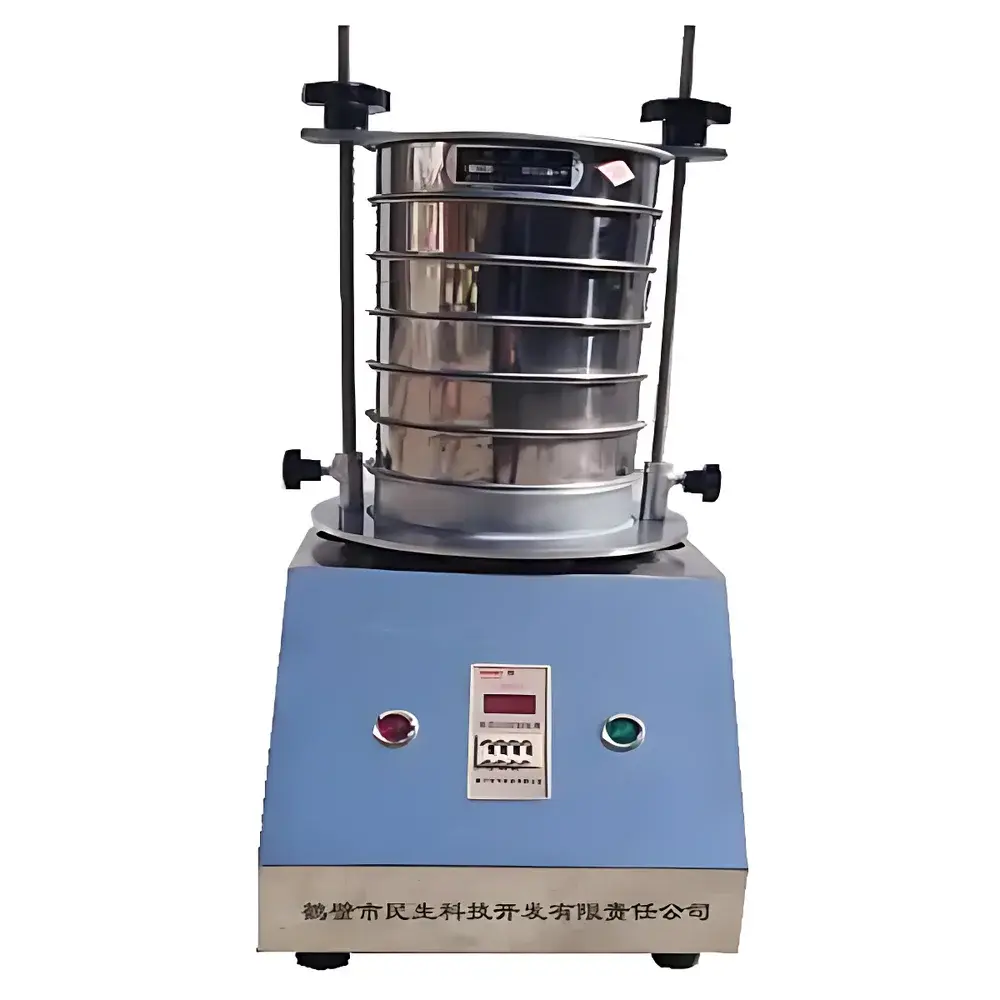
MingShen Science JYS-200 Vibratory Sieve Analyzer
| Brand | MingShen Science |
|---|---|
| Origin | Henan, China |
| Manufacturer Type | Authorized Distributor |
| Origin Category | Domestic (China) |
| Model | JYS-200 |
| Principle | Electromechanical Vibratory Sieving |
| Sieve Diameter | Φ200 mm |
| Max Load Capacity | 8 kg |
| Stackable Sieve Layers | 8 |
| Standard Sieve Diameters | Φ200 / Φ100 / Φ75 mm |
| Particle Size Range | 38 µm – 3 mm |
| Noise Level | ≤50 dB(A) |
| Max Single Batch Feed | 200 g |
| Vibration Amplitude | ≤5 mm |
| Motor Speed | 1420 rpm |
| Power Supply | AC 220 V, 50 Hz |
| Motor Power | 0.125 kW |
| Net Weight | 40 kg |
| Dimensions (L×W×H) | 400 × 300 × 736 mm |
Overview
The MingShen Science JYS-200 Vibratory Sieve Analyzer is a precision-engineered laboratory instrument designed for standardized dry-sieving particle size distribution analysis in accordance with ASTM E11, ISO 3310-1, and GB/T 6003.1. It operates on the principle of controlled vertical and horizontal orbital vibration generated by an eccentric motor assembly, inducing efficient stratification and separation of particulate materials across stacked sieve decks. Unlike rotary or tapping sieves, the JYS-200 delivers consistent energy input across all sieve layers—minimizing segregation bias and enabling reproducible quantification of cumulative mass retention per aperture. Its modular Φ200 mm sieve platform supports up to eight nested standard test sieves (per ISO/ASTM dimensional tolerances), making it suitable for routine QC testing, raw material qualification, and method validation in regulated environments.
Key Features
- Multi-layer vibratory stack design accommodating up to eight ISO/ASTM-compliant test sieves (Φ200 mm, with optional Φ100 mm and Φ75 mm adapters)
- Adjustable digital timer (0–99 min) with electronic delay control for precise endpoint synchronization across variable sample types
- Low-noise (<50 dB[A]) electromagnetic drive system with stable 1420 rpm rotational frequency and ≤5 mm amplitude envelope
- Robust cast-aluminum base frame and stainless-steel sieve holder assembly ensuring mechanical stability during extended operation
- Universal clamp mechanism with dual-threaded tension rods and locking screws for uniform compression force distribution across all sieve layers
- Compliance-ready mechanical architecture—no embedded software or data storage, facilitating straightforward GLP documentation and audit trail generation
Sample Compatibility & Compliance
The JYS-200 accepts free-flowing dry powders, granules, agglomerates, and milled solids with bulk densities between 0.2–2.5 g/cm³. It is routinely deployed for sieve analysis of pharmaceutical excipients (e.g., lactose, microcrystalline cellulose), ceramic precursors (alumina, zirconia slurries after drying), polymer resins (PVC, polyethylene), food-grade starches and salts, metallurgical additives (carbon black, flux agents), and abrasive media (silicon carbide, aluminum oxide). All operational parameters—including maximum feed mass (200 g/batch), vibration profile, and sieve alignment—adhere to the mechanical requirements specified in USP , EP 2.9.33, and ISO 13320 Annex B for dry-sieving methodology. The unit does not require calibration certification but mandates periodic verification using certified reference sieves traceable to NIST or PTB standards.
Software & Data Management
The JYS-200 is a hardware-only analytical platform with no integrated firmware, touchscreen interface, or onboard memory. Sieve analysis data—including retained mass per fraction, calculated D10/D50/D90 values, and cumulative passing curves—are recorded manually or via external LIMS integration. Users maintain full control over data ownership and metadata annotation (operator ID, timestamp, sieve lot number, environmental conditions). This architecture ensures compatibility with FDA 21 CFR Part 11-compliant workflows when paired with validated electronic lab notebooks (ELNs) or chromatography data systems (CDS) that support manual entry and signature capture. No cybersecurity patches, firmware updates, or vendor-dependent licensing are required.
Applications
- Pharmaceutical: Granule size distribution assessment prior to tablet compression; excipient qualification per ICH Q5A and Q6A guidelines
- Chemicals & Polymers: Resin particle uniformity screening for extrusion consistency; pigment dispersion quality control
- Ceramics & Refractories: Green-body powder grading for green strength optimization and sintering predictability
- Food & Nutrition: Flowability and dissolution rate correlation studies for powdered dairy, seasonings, and functional ingredients
- Metallurgy & Mining: Classification of alloy powders for additive manufacturing feedstock acceptance testing (per ASTM F3049)
- Academic Research: Teaching core principles of particle mechanics, segregation behavior, and sieve efficiency modeling
FAQ
What sieve standards are compatible with the JYS-200?
The instrument accepts all ISO 3310-1 and ASTM E11 compliant test sieves with nominal diameters of Φ200 mm, Φ100 mm, and Φ75 mm. Custom adapter rings are available for non-standard frames.
Is the JYS-200 suitable for wet sieving?
No—it is strictly a dry-sieving instrument. For liquid suspensions, users must employ air-drying or vacuum filtration prior to analysis.
Can the vibration frequency be adjusted?
No—the motor operates at a fixed 1420 rpm to ensure compliance with standardized sieving energy profiles defined in ISO 2591-1.
Does the unit include certified reference sieves?
No—reference sieves must be procured separately from accredited suppliers (e.g., Endecotts, Gilson, or Retsch) and verified annually per ISO/IEC 17025.
What maintenance is required?
Monthly inspection of tension rod threads, clamp screw torque (recommended 12 N·m), and motor mounting bolts; annual lubrication of bearing housings using ISO VG 32 mineral oil.



