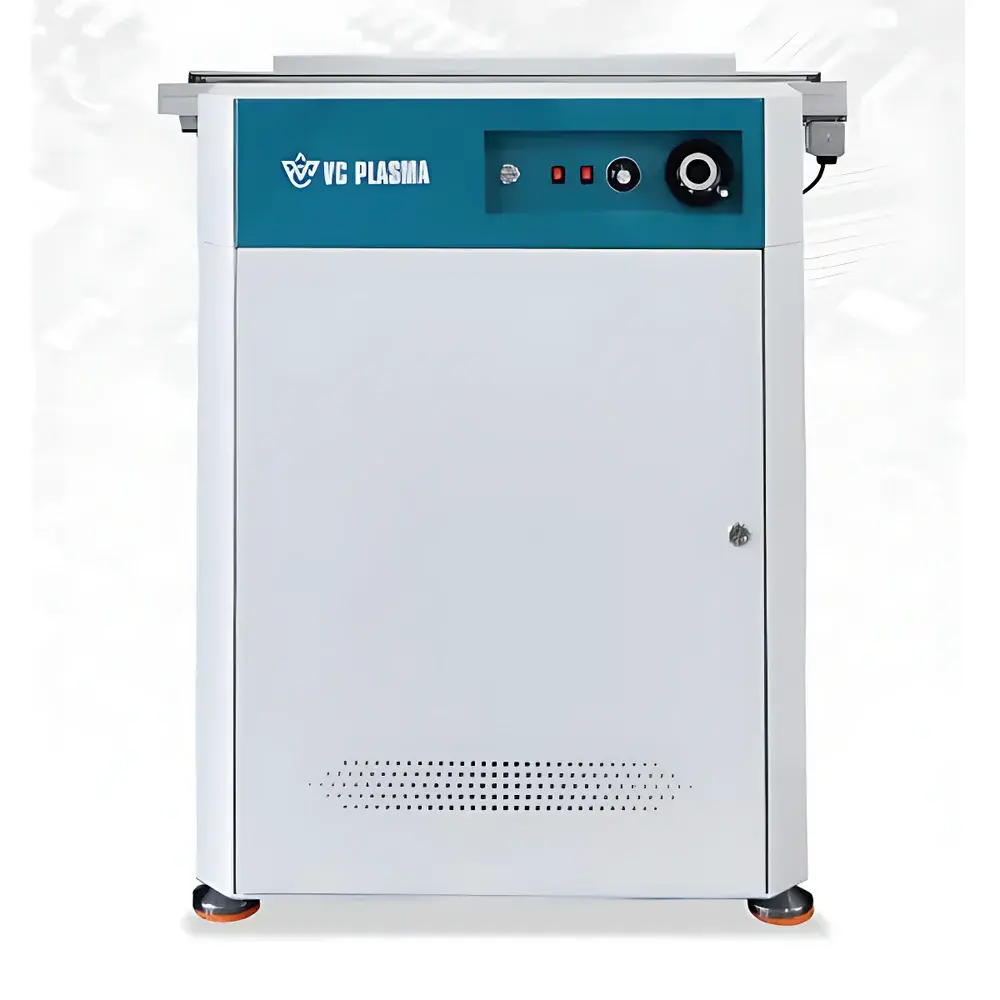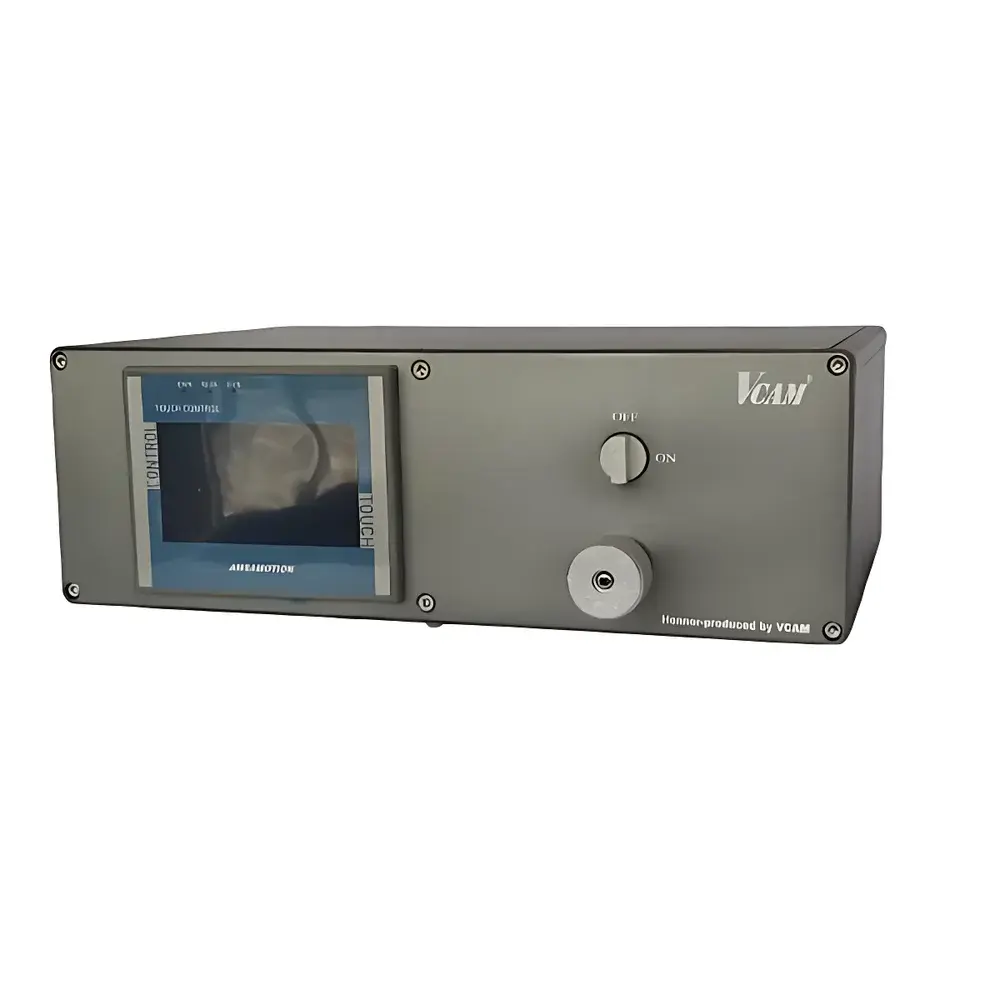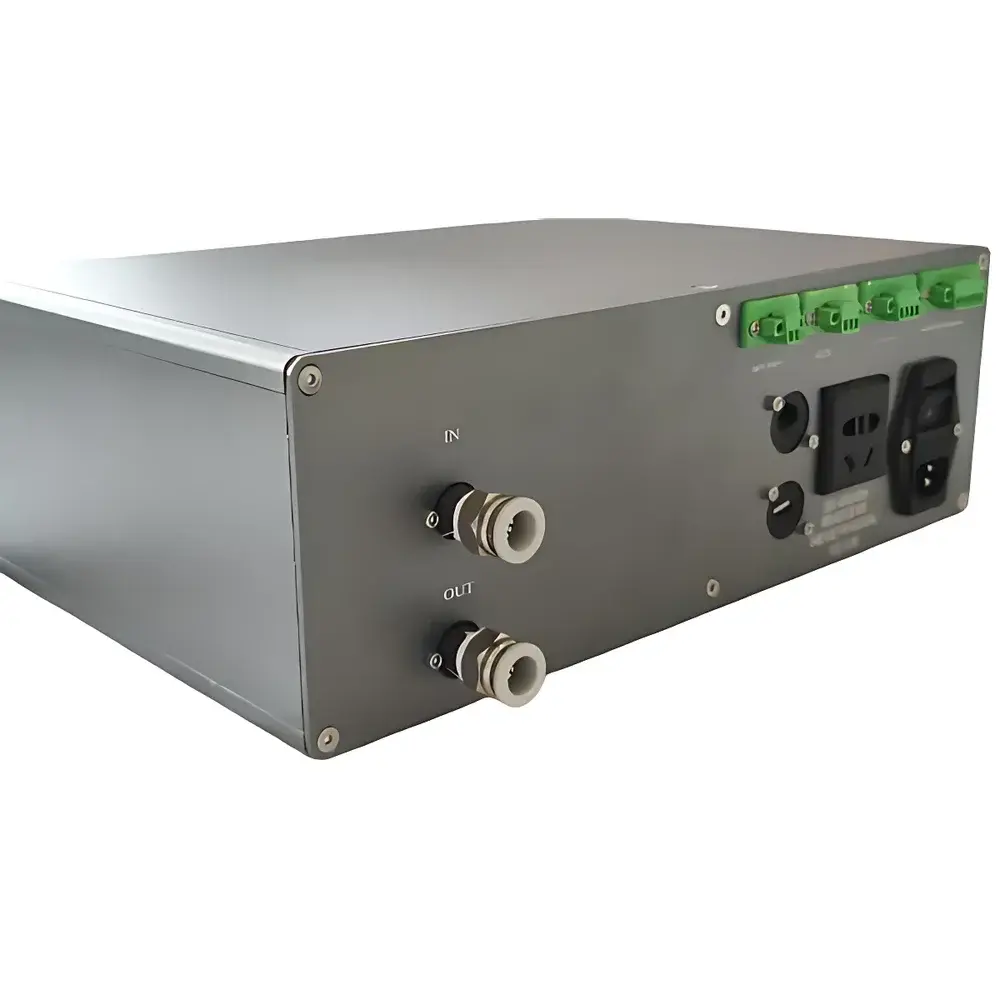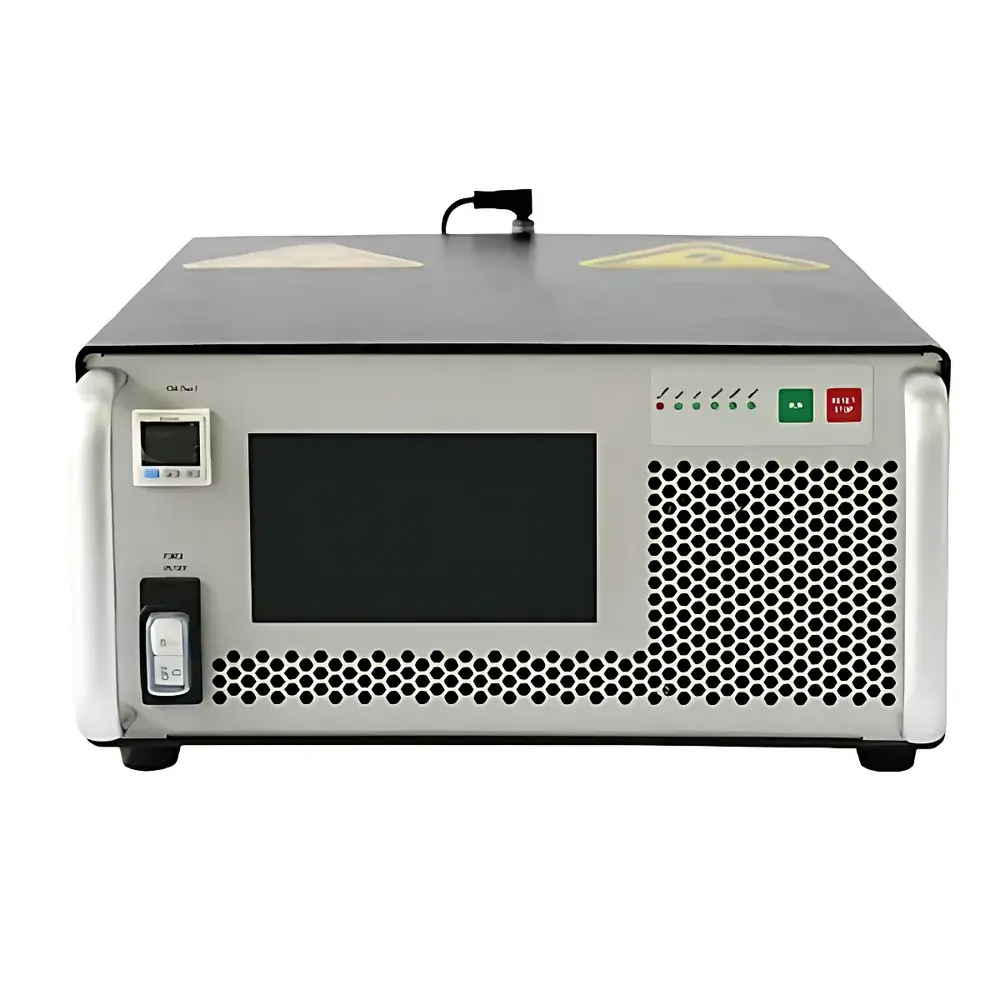
VC Plasma Micro-Wellning Digital Plasma Power Supply
| Brand | VC Plasma |
|---|---|
| Origin | Guangdong, China |
| Manufacturer Type | Authorized Distributor |
| Country of Origin | China |
| Power Architecture | DPM-Based Digital Platform |
| Input Power Factor Correction (PFC) | Integrated |
| Output Topology | High-Efficiency Full-Bridge Inverter |
| Output Waveform | Quasi-Sinusoidal |
| Control Method | Vector-Controlled Constant-Power Delivery |
| Frequency Management | Digital Variable-Frequency & Dynamic Frequency-Hopping |
| Human-Machine Interface | Touchscreen with Real-Time Parameter Visualization |
| Operating Temperature Range | 50–70 °C (customizable) |
| Output Potential | <23 V (customizable) |
| Energy Intensity Monitoring | Integrated Spectroscopic Detection |
| Emitter Compatibility | Direct-Injection & Rotary Plasma Emitters |
| Fault Diagnostics | 21-Channel Real-Time Fault Logging & Alarm System |
| Monitoring Capabilities | Dual-Loop Real-Time Supervision of Power Supply (voltage, current, power, air pressure, operating frequency, spray gun RPM, module temperature, fan status, communication integrity) and Motor Subsystem (voltage, current, power, torque, operational mode, health index, communication return rate, speed profile) |
Overview
The VC Plasma Micro-Wellning Digital Plasma Power Supply is a purpose-engineered industrial-grade plasma excitation source designed for precision-controlled atmospheric-pressure plasma processing in continuous manufacturing environments. It operates on the principle of high-frequency, low-voltage plasma generation via digitally regulated RF energy delivery—optimized for surface activation, cleaning, functionalization, and thin-film pretreatment of polymers, metals, and composites. Unlike conventional analog plasma generators, this unit employs a DPM (Digital Power Management) architecture to decouple control logic from power conversion, enabling deterministic response to dynamic load variations while maintaining spectral stability and thermal consistency. Its core design targets applications requiring strict process repeatability under ISO 9001-compliant production workflows—particularly where low-temperature operation (<70 °C surface exposure) and sub-23 V electrode potential are mandated for heat-sensitive substrates or intrinsically safe zones.
Key Features
- Digital full-bridge inverter topology delivering quasi-sinusoidal output waveforms with <±0.5% RMS harmonic distortion at rated load—minimizing electromagnetic interference and improving plasma column stability.
- Vector-based closed-loop power regulation ensuring constant energy delivery across variable impedance conditions (e.g., changing gas composition, nozzle wear, or substrate distance).
- Integrated spectroscopic energy intensity detection module enabling real-time correlation between optical emission signatures and plasma power density—supporting empirical calibration against ASTM D726-20 (Standard Test Methods for Surface Wettability of Plastics).
- Modular emitter interface supporting both direct-injection plasma nozzles and high-speed rotary emitters (0–10,000 RPM, programmable via touchscreen HMI), facilitating uniform treatment of complex 3D geometries.
- Comprehensive dual-domain monitoring system: independent real-time telemetry streams for power electronics (voltage, current, active/reactive power, air pressure, operating frequency, module temperature, fan RPM, CAN/RS485 communication health) and motor drive subsystem (voltage, current, torque, thermal margin, encoder feedback fidelity, fault return ratio).
- 21-channel fault classification engine with timestamped event logging, compliant with IEC 61508 SIL-2 requirements for functional safety in industrial automation contexts.
Sample Compatibility & Compliance
The Micro-Wellning Digital Plasma Power Supply is compatible with argon, nitrogen, oxygen, helium, and custom gas blends used in non-thermal plasma surface engineering. It supports integration into Class 1 Div 2 hazardous locations when paired with certified enclosures and purge systems. The unit complies with CE marking requirements under the EMC Directive 2014/30/EU and Low Voltage Directive 2014/35/EU. Firmware architecture includes audit-trail-capable parameter change logging aligned with FDA 21 CFR Part 11 Annex 11 expectations for electronic records in regulated manufacturing. All operational parameters—including power setpoint, rotational speed, frequency sweep profiles, and alarm thresholds—are password-protected and version-controlled to support GLP/GMP traceability.
Software & Data Management
The embedded HMI runs a deterministic real-time OS with dual-screen visualization: primary interface displays live oscilloscope-style waveforms (power/voltage/frequency), while secondary panel presents tabular telemetry with configurable alarm thresholds and trend buffers (72-hour rolling history). Data export is supported via USB 2.0 and Ethernet (Modbus TCP/IP and OPC UA 1.04), enabling seamless ingestion into MES platforms such as Siemens Opcenter or Rockwell FactoryTalk. Optional cloud gateway firmware enables encrypted TLS 1.2 telemetry upload to AWS IoT Core or Azure IoT Hub for remote diagnostics and predictive maintenance modeling using historical fault pattern analysis.
Applications
- Pretreatment of automotive interior trim prior to adhesive bonding—ensuring consistent dyne level >42 mN/m per ASTM D2578.
- Plasma activation of medical device polymer housings (e.g., polypropylene, PEEK) before biocompatible coating deposition.
- In-line surface cleaning of lithium-ion battery electrode foils to reduce organic residue and improve interfacial adhesion in dry room environments.
- Functionalization of textile fibers for enhanced dye uptake without aqueous chemistry—reducing wastewater volume by >90% versus traditional scouring.
- Low-temperature plasma sterilization validation support for ISO 14937-compliant aseptic barrier systems.
FAQ
What plasma gases are supported?
Argon, nitrogen, oxygen, helium, and binary mixtures (e.g., Ar/O₂, N₂/H₂) are fully supported; gas flow control must be managed externally via calibrated mass flow controllers.
Is the unit suitable for cleanroom integration?
Yes—when installed with ISO Class 5-compatible filtered air cooling and sealed cable entries, it meets ISO 14644-1 requirements for particle emission and outgassing.
Can output frequency be synchronized with external PLC triggers?
Yes—via opto-isolated digital input (24 VDC, 5 kHz max), supporting pulse-width modulation or edge-triggered start/stop commands.
Does the system support remote firmware updates?
Firmware upgrades require local USB authentication and SHA-256 signature verification; over-the-air updates are disabled by default per IEC 62443-3-3 security policy.
How is calibration traceability maintained?
Each unit ships with NIST-traceable calibration certificate for voltage/current/power sensors; annual recalibration is recommended per ISO/IEC 17025 guidelines.