
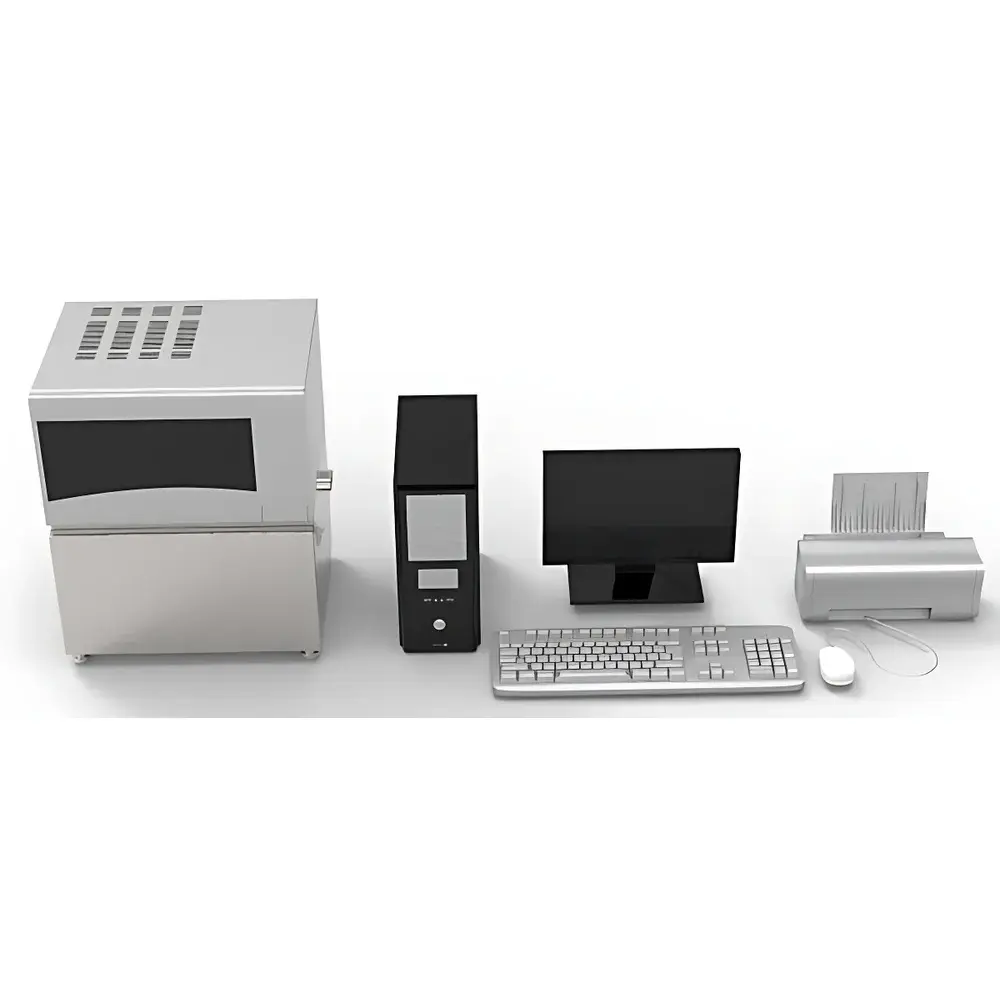
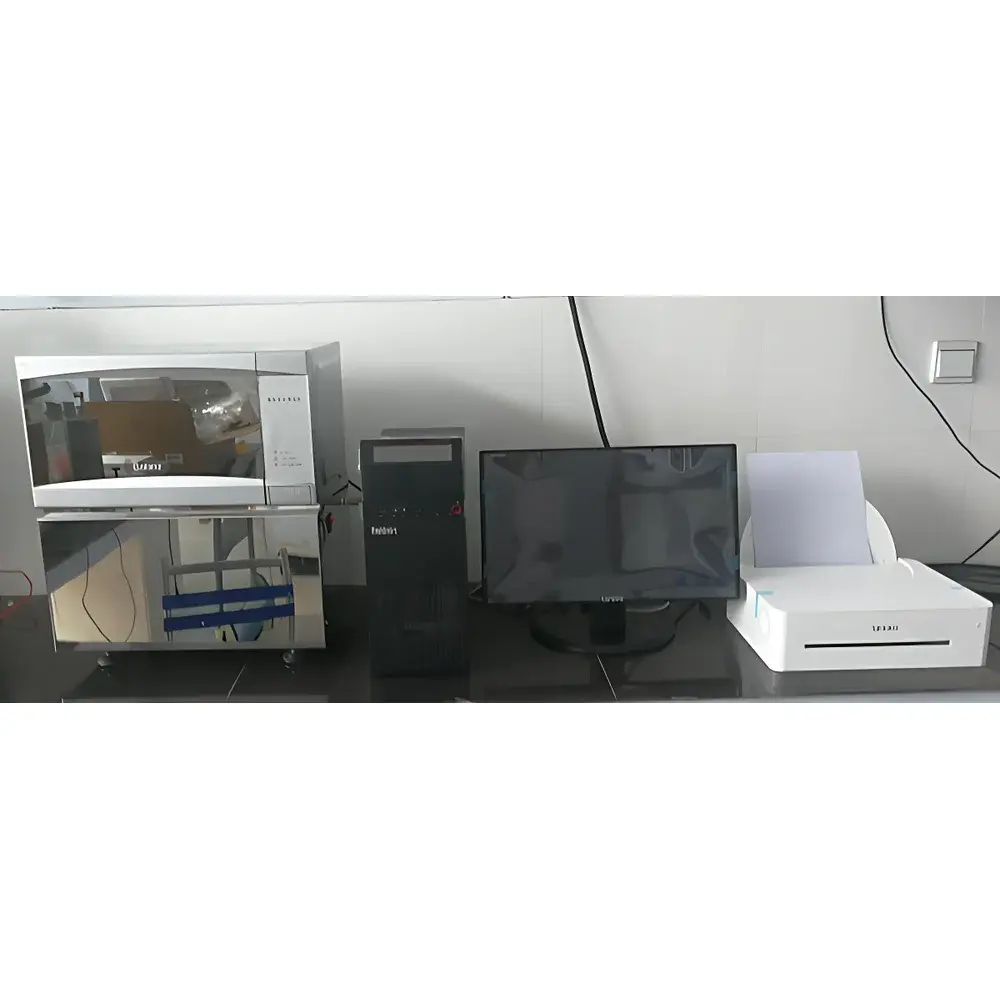
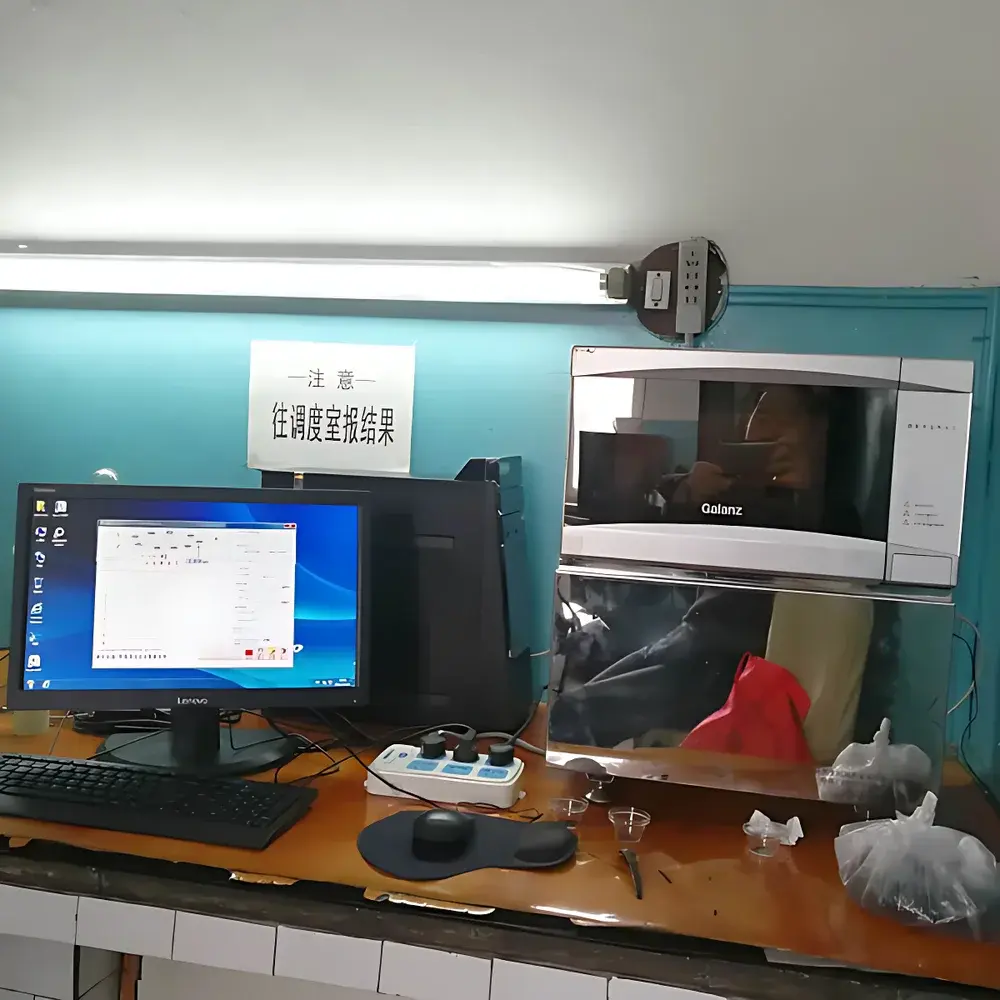
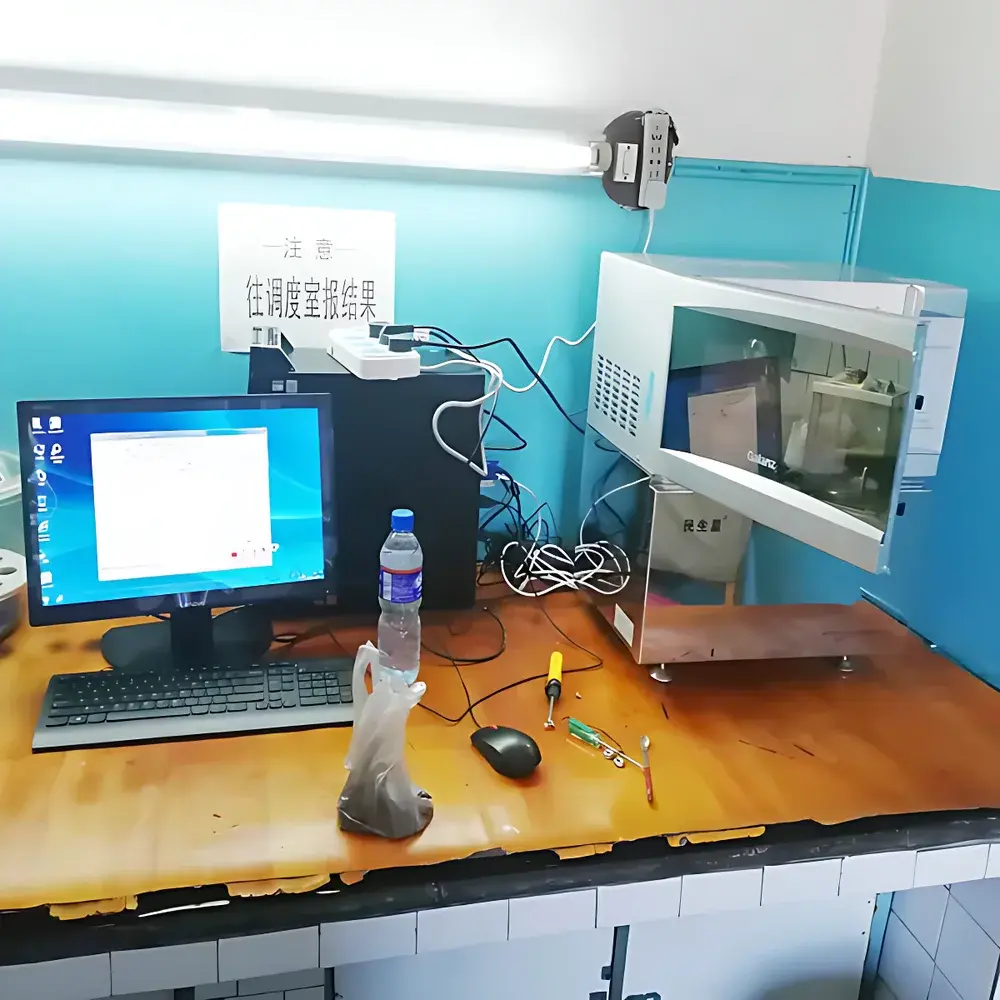
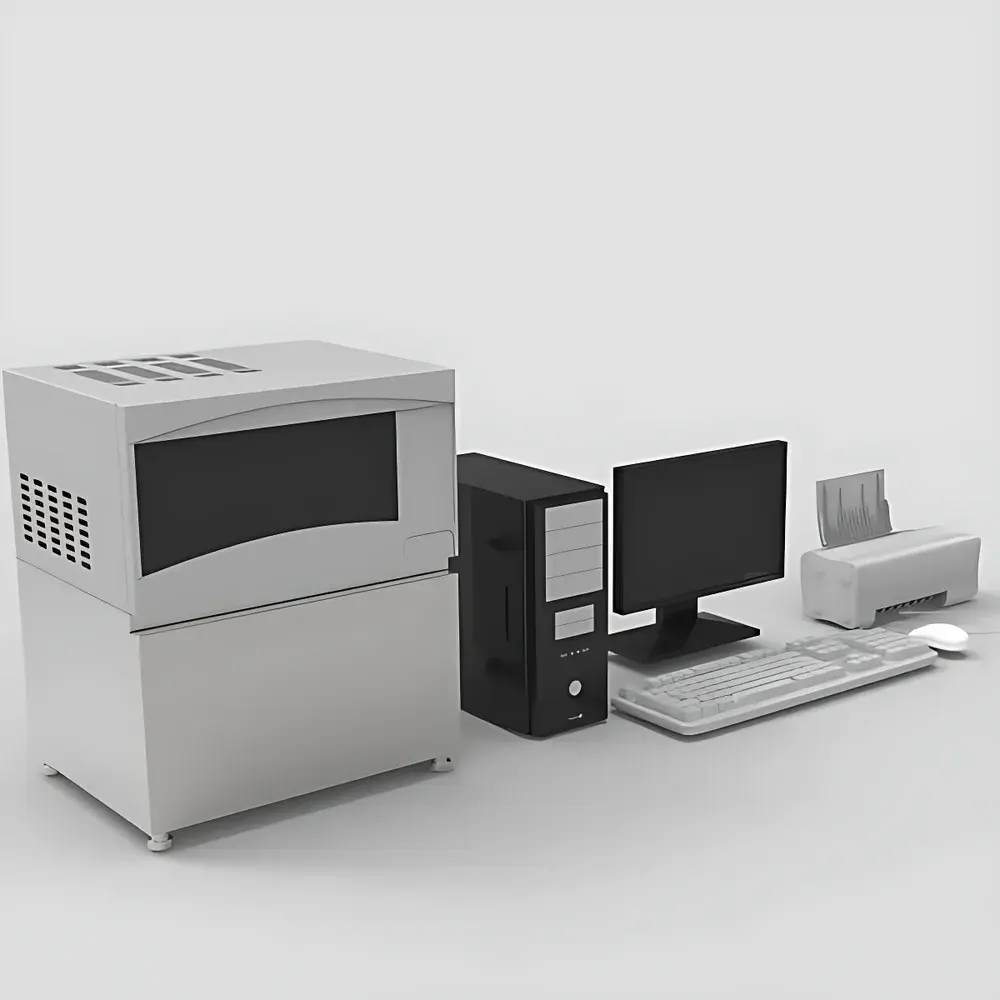
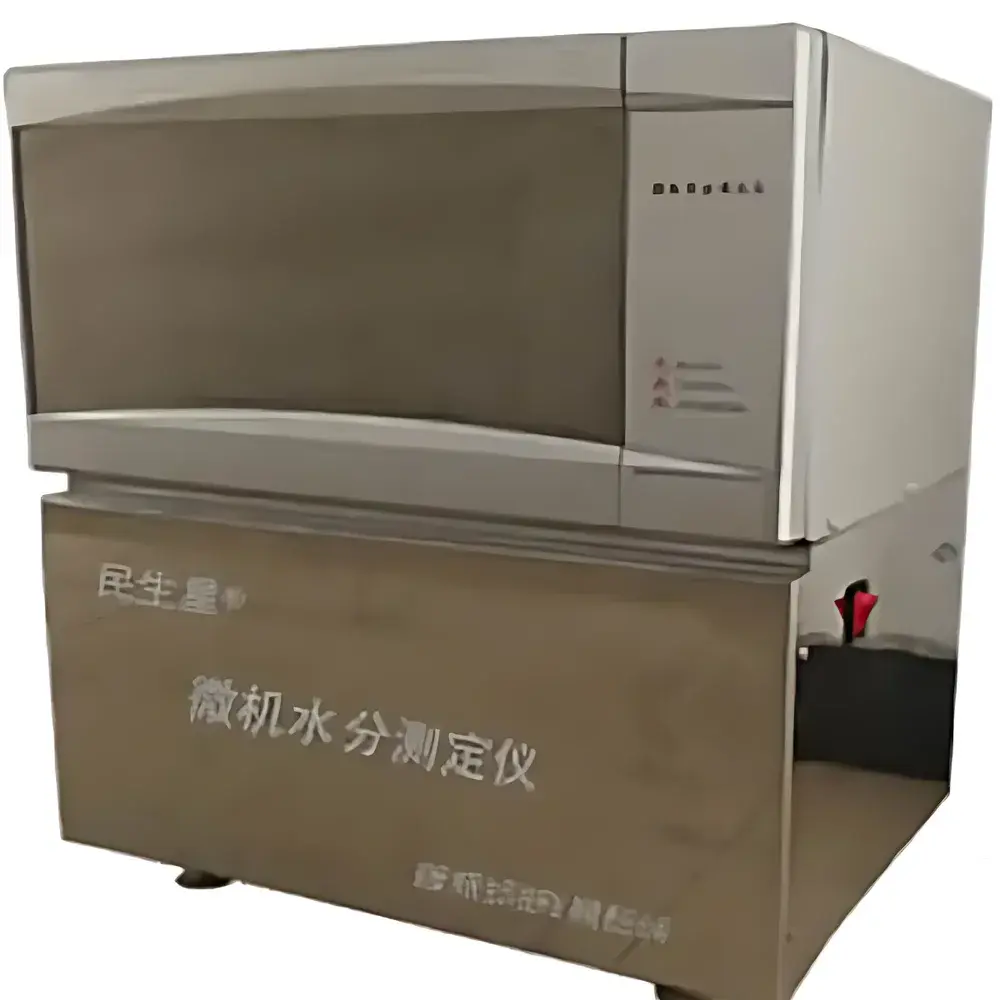
MingShen Science MSSC-5000 Microwave-Assisted Moisture Analyzer
| Brand | MingShen Science |
|---|---|
| Origin | Henan, China |
| Model | MSSC-5000 |
| Power Supply | AC 220 V ±10%, 50 Hz |
| Drying Methods | Microwave, Infrared, or Combined |
| Microwave Power | Adjustable via software |
| Sample Mass (Total Moisture) | 10–12 g, weighed to 0.001 g |
| Sample Mass (Analytical Moisture) | 1.45–1.55 g, weighed to 0.0001 g |
| Balance Resolution | 0.0001 g |
| Balance Capacity | 0–195 g |
| Total Moisture Drying Time | 12–15 min (adjustable) |
| Analytical Moisture Drying Time | ~10 min (adjustable) |
| Max. Sample Capacity per Batch | 9 specimens |
| Particle Size (Total Moisture) | <6 mm |
| Particle Size (Analytical Moisture) | ≤80 mesh |
| Operating Temperature | 0–40 °C |
| Relative Humidity | ≤85% RH |
| Dimensions (L×W×H) | 480 × 350 × 540 mm |
| Net Weight | 35 kg |
Overview
The MingShen Science MSSC-5000 Microwave-Assisted Moisture Analyzer is a precision laboratory instrument engineered for rapid, reproducible determination of moisture content in solid and granular materials—primarily employed in coal quality control, mineral processing, agricultural product testing, and industrial raw material certification. It operates on the principle of microwave-assisted thermal drying combined with high-resolution gravimetric measurement. Unlike conventional convection ovens, the MSSC-5000 utilizes controlled microwave energy to accelerate water evaporation uniformly throughout the sample matrix, significantly reducing drying time while minimizing thermal degradation risks. Simultaneously, an integrated analytical balance continuously monitors mass loss at 0.0001 g resolution, enabling real-time kinetic drying curve acquisition and automatic endpoint detection based on preset mass stability criteria (e.g., ≤0.001 g change over 60 s). The system supports two standardized operational modes: “Rapid Mode” for total moisture (Mt) determination and “Constant-Weight Mode” for analytical moisture (Mad), aligned with ASTM D3173, ISO 589, and GB/T 211–2017 methodologies.
Key Features
- Triple-drying methodology: Selectable microwave-only, infrared-only, or microwave-infrared hybrid heating—optimized for diverse sample matrices including coal, biomass, clay, feedstock, and pharmaceutical excipients.
- Programmable microwave power output: Enables fine-tuned energy delivery to prevent localized overheating or charring in thermally sensitive samples.
- Automated sample recognition: Integrated load-cell feedback and optical sensing detect presence/absence of crucibles, preventing erroneous runs and enhancing operator safety.
- Dual-precision weighing architecture: A high-stability electromagnetic force compensation balance (0.0001 g resolution, 195 g capacity) ensures trace-level mass tracking during dynamic drying cycles.
- RS232 serial interface compliant with standard laboratory data acquisition protocols; compatible with Windows-based host systems running custom dynamic control software for method sequencing, parameter logging, and audit-ready reporting.
- Batch processing capability: Up to nine independent samples can be loaded simultaneously and processed under identical or individually configured drying protocols.
Sample Compatibility & Compliance
The MSSC-5000 accommodates heterogeneous solid samples requiring strict particle size control: total moisture analysis requires specimens ground to <6 mm nominal top size, while analytical moisture determination mandates pulverization to ≤80 mesh (180 µm) to ensure homogeneity and representative subsampling. The instrument meets fundamental design requirements outlined in ISO/IEC 17025 for testing laboratories, and its operational logic supports compliance with GLP documentation standards—including user-defined method names, operator ID tagging, timestamped run logs, and immutable raw data export. While not certified to FDA 21 CFR Part 11 out-of-the-box, the software architecture permits integration with validated electronic lab notebook (ELN) systems when deployed in regulated environments.
Software & Data Management
The MSSC-5000’s Windows-compatible control software provides full method development, execution, and post-processing functionality. Users define drying profiles—including ramp rates, hold temperatures, power levels, and termination conditions—via intuitive graphical interfaces. All raw mass-vs.-time datasets are stored locally in CSV and proprietary binary formats, supporting traceable recalculations and third-party statistical analysis. Audit trails record every parameter change, start/stop command, and calibration event with user attribution and UTC timestamps. Export modules generate PDF reports compliant with internal QA templates or external submission requirements (e.g., CNAS, CMA, or customer-specific formats).
Applications
- Coal laboratories performing routine Mt and Mad determinations per ISO 589 and ASTM D3173 for commercial trading and calorific value correction.
- Mineral processing facilities monitoring moisture in iron ore fines, bauxite, and phosphate rock prior to pelletizing or sintering.
- Agricultural testing centers quantifying moisture in grains, oilseeds, and animal feed to assess storage stability and nutritional labeling accuracy.
- Building materials labs evaluating moisture in gypsum, limestone, and clay-based additives affecting setting time and compressive strength.
- R&D departments developing new composite formulations where residual solvent or hydration water must be characterized below 0.05% w/w.
FAQ
Does the MSSC-5000 comply with international coal testing standards?
Yes—it implements gravimetric drying protocols consistent with ISO 589 and ASTM D3173 for both total and analytical moisture, provided sample preparation adheres to specified particle size and weighing tolerances.
Can the instrument be validated for GMP environments?
The hardware and software support IQ/OQ documentation; however, formal PQ and 21 CFR Part 11 compliance require site-specific risk assessment, configuration control, and integration with qualified ELN or LIMS platforms.
What maintenance is required for long-term accuracy?
Annual recalibration of the integrated balance against certified weights (Class E2 or better) and verification of microwave cavity integrity and temperature uniformity using calibrated reference materials are recommended.
Is remote monitoring or network connectivity supported?
Native Ethernet or Wi-Fi is not included, but RS232-to-TCP/IP gateways enable centralized data collection in multi-instrument lab networks when paired with middleware software.
How does microwave drying compare to halogen or convection methods in terms of repeatability?
Microwave drying achieves superior intra-batch homogeneity for porous or dense particulates, yielding RSDs typically <0.2% for Mt in coal—comparable to or better than halogen methods when sample heterogeneity is controlled per standard guidelines.







