
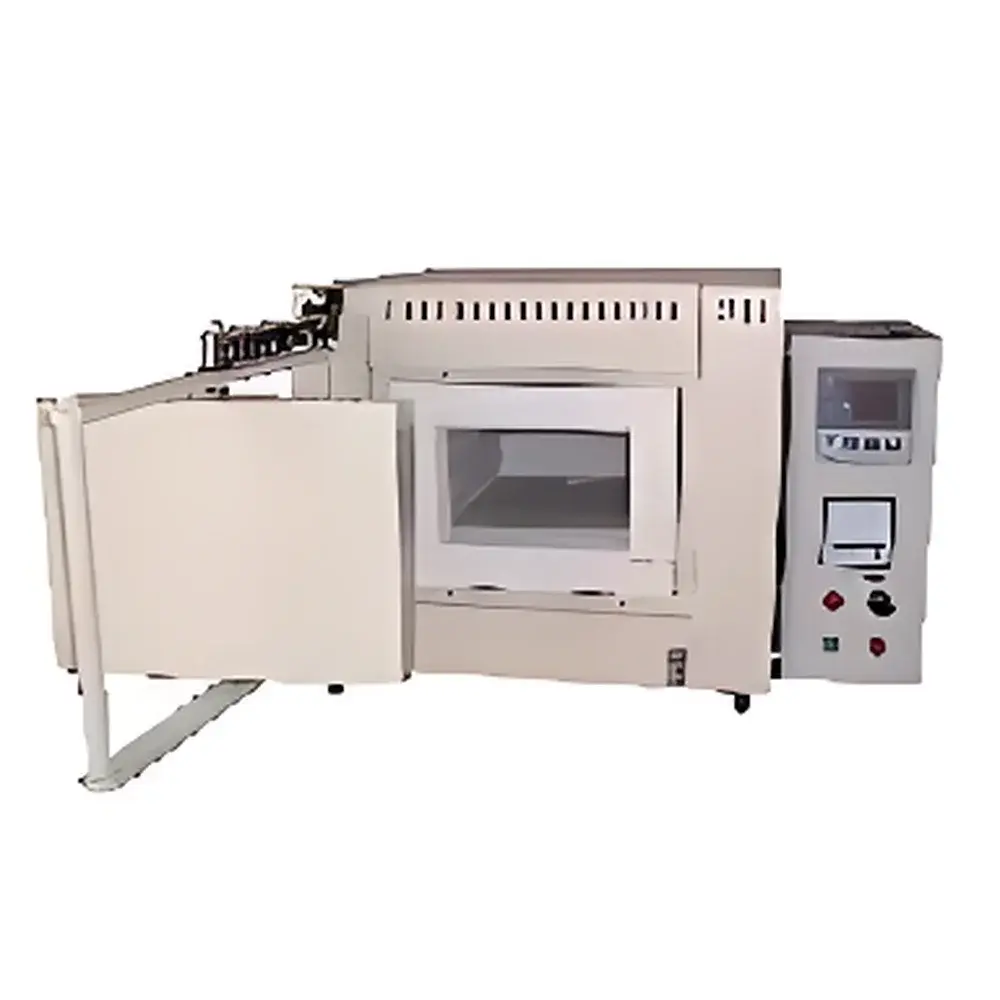
Jinhhu JH2 Series High-Temperature Muffle Furnace
| Brand | Jinhhu |
|---|---|
| Origin | Shanghai, China |
| Model | JH2-Series |
| Temperature Range | 1000°C / 1200°C / 1300°C / 1600°C / 1700°C |
| Chamber Dimensions (L×W×H, mm) | 200×120×80 to 800×500×400 |
| Power Rating | 2.5 kW to 36 kW |
| Heating Element | High-Temperature Alloy Wire (Spiral Wound) |
| Insulation | Silicon Carbide or High-Alumina Lightweight Refractory Lining |
| Door Mechanism | Hinged with Spring-Loaded Sealing |
| Thermocouple Port | Rear-Mounted Type K/S/R Insertion Port |
| Compliance | Designed for GLP/GMP-aligned laboratory environments per ISO/IEC 17025 guidance |
Overview
The Jinhhu JH2 Series High-Temperature Muffle Furnace is a robust, benchtop-to-floor-standing laboratory furnace engineered for precise thermal processing in materials science, metallurgy, ceramics, and quality control laboratories. Operating on resistive heating principles, the furnace employs high-alloy spiral-wound heating elements embedded within a fully sealed refractory chamber—ensuring uniform temperature distribution, minimal thermal loss, and long-term stability across extended dwell cycles. Unlike conventional ovens, the JH2 series utilizes muffle architecture: the sample chamber is thermally isolated from the heating elements by dense silicon carbide or high-alumina lightweight refractory linings, eliminating contamination risk and enabling inert or air-atmosphere annealing, ashing, sintering, calcination, and heat treatment up to 1700°C. Its modular design accommodates five standard maximum operating temperatures (1000°C, 1200°C, 1300°C, 1600°C, and 1700°C), each calibrated to meet ASTM E220 and ISO 17025 traceability requirements when paired with certified thermocouples.
Key Features
- Sealed muffle chamber constructed from high-purity silicon carbide or high-alumina lightweight refractory bricks—optimized for thermal shock resistance and low thermal conductivity.
- Spiral-wound high-temperature alloy heating elements mounted in precision-machined grooves on all four chamber walls (top, bottom, left, right), ensuring symmetrical heat flux and ±2°C uniformity at setpoint (per ISO 9001 validation protocol).
- Hinged door mechanism with spring-loaded compression seal; high-alumina firebrick door frame achieves gas-tight closure against the furnace mouth, minimizing ambient air ingress during high-temperature operation.
- Rear-mounted thermocouple port compatible with Type K, S, or R sensors—enabling real-time temperature monitoring and integration with external PID controllers or data loggers.
- Modular power configuration (2.5 kW to 36 kW) matched to chamber volume and target temperature class—supporting both energy-efficient small-batch processing and high-throughput industrial R&D workflows.
- Robust steel outer casing with folded and welded sheet metal construction—designed for mechanical durability and electromagnetic interference (EMI) mitigation in shared lab environments.
Sample Compatibility & Compliance
The JH2 furnace accommodates a broad range of solid samples—including metal powders, ceramic green bodies, geological specimens, catalyst substrates, and ash-residue crucibles—without requiring atmosphere control hardware (though optional vacuum or inert-gas purge kits are available upon request). All models comply with IEC 61000-6-3 (EMC emission standards) and IEC 61000-6-2 (immunity). While not intrinsically rated for hazardous area use, the furnace meets general-purpose laboratory safety requirements per EN 61010-1 and is routinely deployed in ISO/IEC 17025-accredited testing labs for method validation under USP , ASTM C114 (cement analysis), and ISO 5660 (fire reaction testing). Optional calibration certificates (NIST-traceable) and IQ/OQ documentation packages support GxP-regulated applications.
Software & Data Management
The JH2 operates as a standalone analog-controlled furnace with manual setpoint adjustment via front-panel potentiometer and analog meter display. For digital integration, third-party programmable temperature controllers (e.g., Eurotherm 2404 or Omega CN7500) can be interfaced via the rear thermocouple output and SSR trigger terminals. When configured with compliant controllers supporting audit trail functionality, full 21 CFR Part 11 compliance—including electronic signatures, user access levels, and change history—is achievable. Data logging is supported through RS485 Modbus RTU or 4–20 mA analog output (optional), enabling synchronization with LIMS or MES platforms for batch record generation and thermal profile archiving.
Applications
- Thermal gravimetric analysis (TGA) sample preparation and residue quantification.
- Ceramic sintering and densification studies at controlled ramp rates (0.1–20°C/min typical with external controller).
- Metallographic specimen heat treatment (annealing, normalizing, stress relieving) prior to microstructural evaluation.
- Ash content determination per AOAC 942.05, EPA Method 1631, and ISO 1171.
- Calibration of thermocouples and RTDs using fixed-point reference materials (e.g., Al, Zn, Sn ITS-90 points).
- Pre-firing of analytical crucibles and quartz ware in trace-metal analysis workflows.
FAQ
What maximum operating temperature is recommended for continuous duty?
For sustained operation (>8 h/day), continuous use is rated at 95% of maximum specified temperature—e.g., 1140°C for the 1200°C model—to ensure heating element longevity and thermal stability.
Can this furnace be used under vacuum or inert gas?
The base JH2 model is air-atmosphere only; however, flanged versions with gas inlet/outlet ports and vacuum-rated door seals are available as custom configurations (lead time applies).
Is NIST-traceable calibration included?
Factory calibration is performed with Class II thermocouples; NIST-traceable certification with uncertainty reporting is available as an add-on service.
What maintenance is required for optimal performance?
Annual inspection of heating element integrity, refractory lining cracks, and door gasket compression is advised; no lubrication or consumable replacement is required under normal usage.
Does the furnace meet CE marking requirements?
Yes—models shipped to EU markets include CE declaration of conformity per Machinery Directive 2006/42/EC and Low Voltage Directive 2014/35/EU.



