
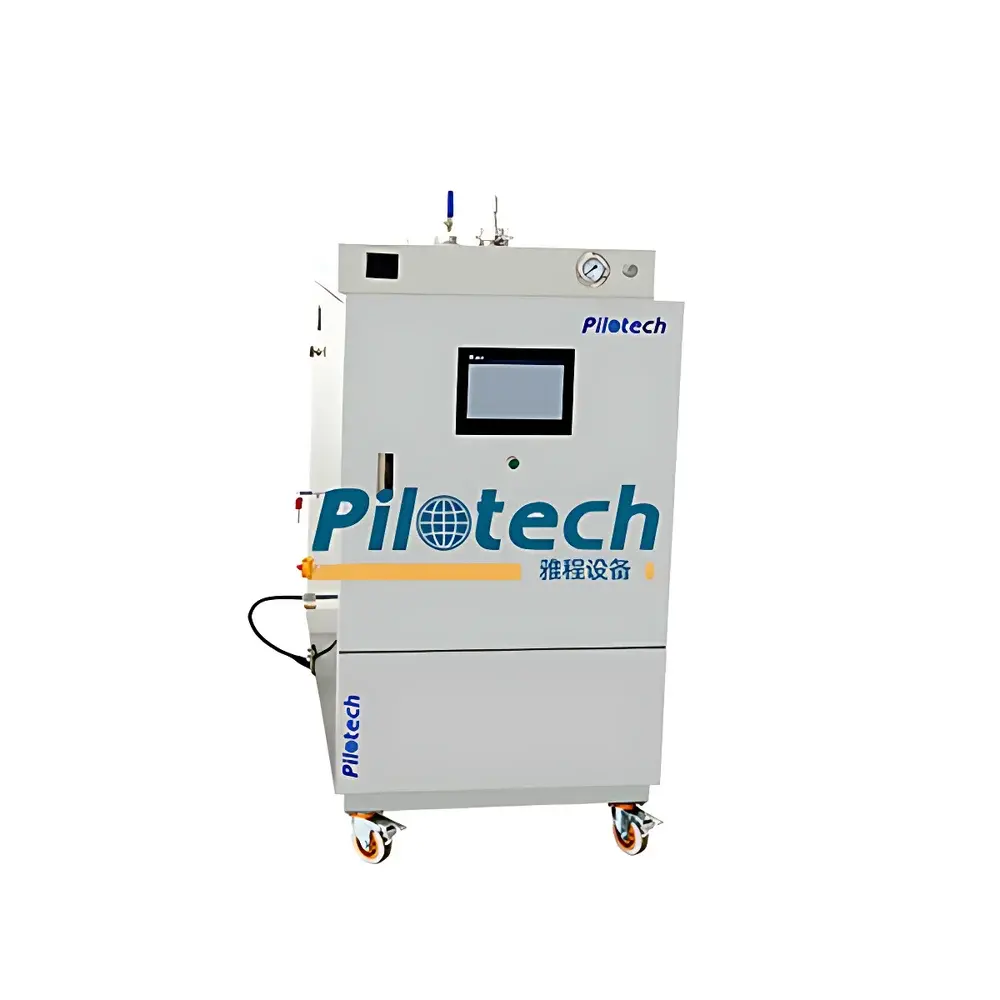
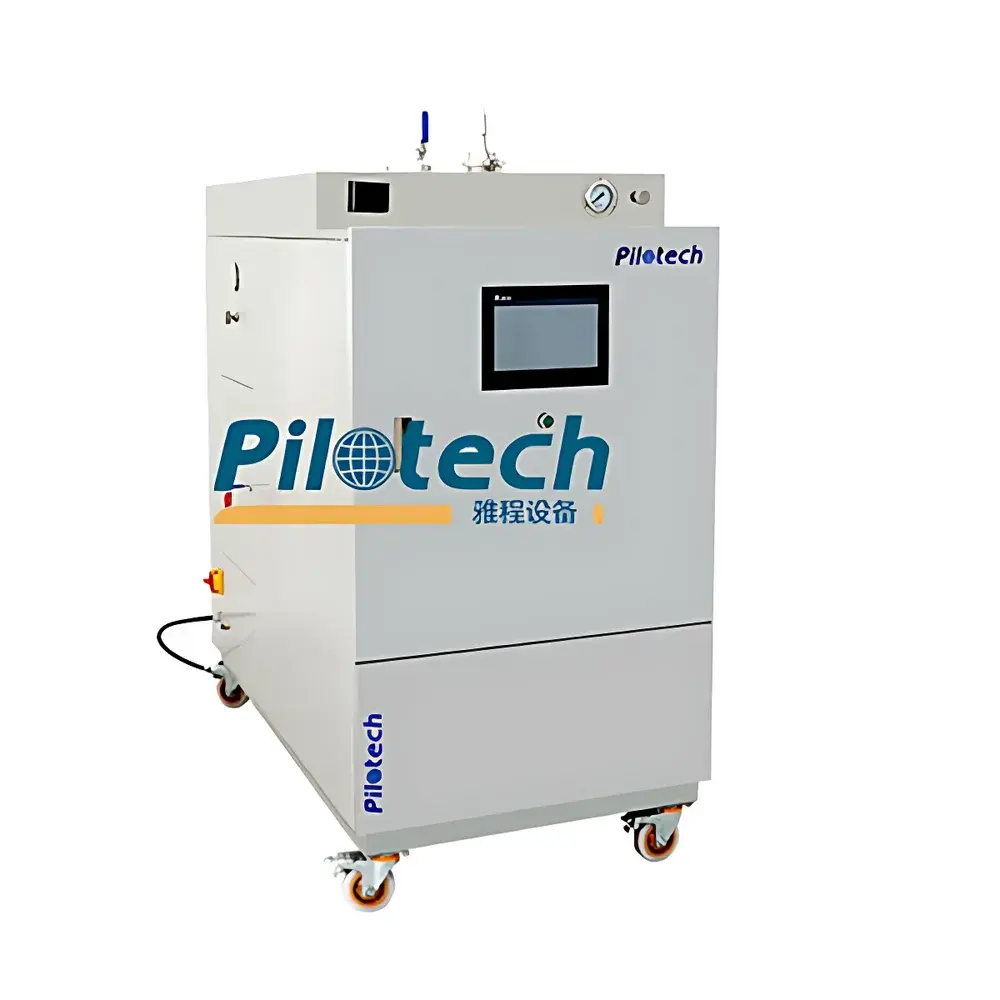
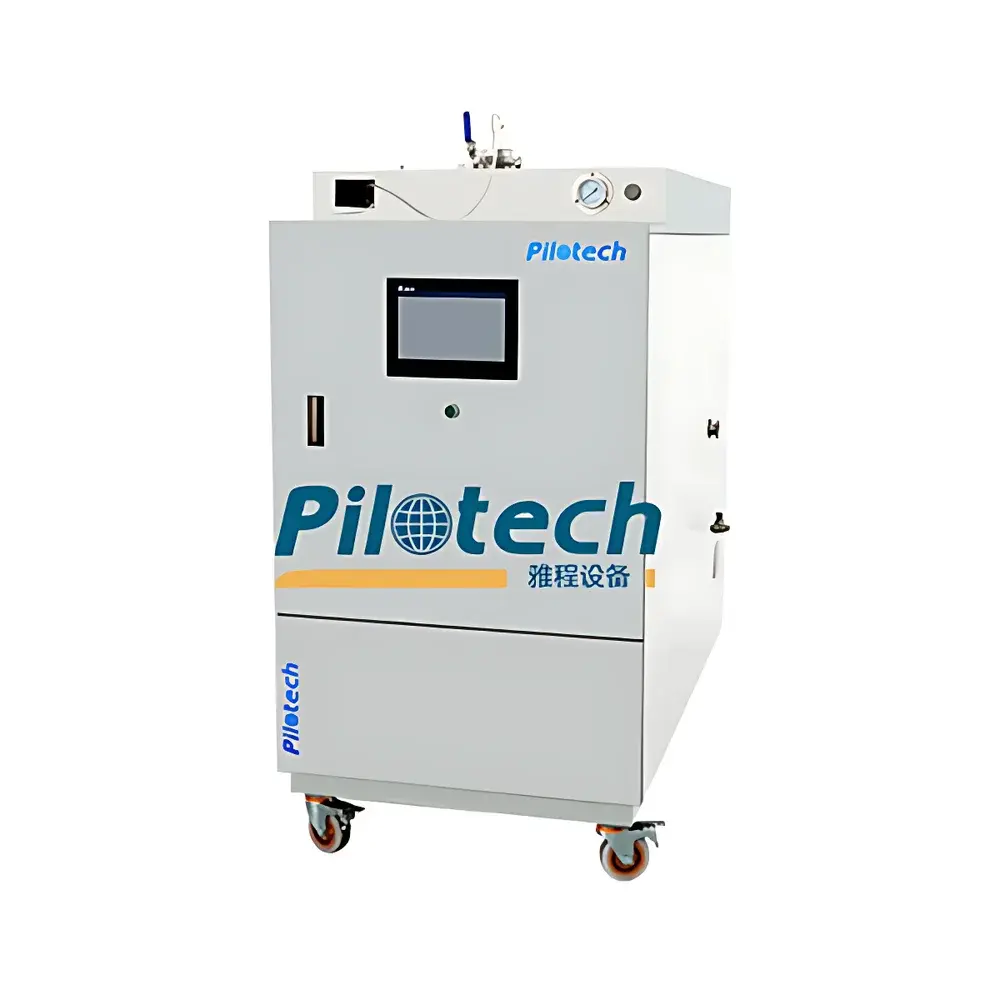
Yacheng YC-01 Laboratory Spray Freeze Dryer
| Brand | Yacheng / PILOTECH |
|---|---|
| Origin | Shanghai, China |
| Manufacturer Type | Direct Manufacturer |
| Product Category | Domestic |
| Model | YC-01 |
| Instrument Type | Standard Shelf-Type Freeze Dryer |
| Application Scope | Laboratory Use |
| Maximum Batch Capacity | 3 L per cycle |
| Spray Freezing Throughput | 300–2500 mL/h |
| Collection Efficiency | ≥98% (based on 15% dextrin solution) |
| Construction Material | SUS304 Stainless Steel |
| Control System | PLC with 10-inch Color Touchscreen |
| Integrated Refrigeration | Built-in Compressor |
| Power Supply | 220 V, 3 kW |
| Heating Method | Radiant Heating |
| Vacuum Interface & Compressed Air Inlet | Standardized Onboard Ports |
| Footprint | ~1 m² |
| Mobility | Equipped with Casters |
Overview
The Yacheng YC-01 Laboratory Spray Freeze Dryer is an integrated, benchtop-scale system engineered for the controlled production of freeze-dried particulates from liquid feedstocks via spray-freezing-into-liquid-nitrogen (SFLN) followed by primary and secondary drying under vacuum. Unlike conventional lyophilizers—which rely on static freezing of bulk solutions—the YC-01 employs a dynamic process: liquid samples are atomized through a precision nozzle into a cryogenic zone cooled by liquid nitrogen, inducing rapid nucleation and formation of uniform, spherical ice microgranules. This morphology yields high specific surface area, minimal solute migration, and preserved structural integrity—particularly critical for thermolabile biologics, enzymes, probiotics, and nanostructured active pharmaceutical ingredients (APIs). The system operates as a closed-loop, self-contained unit with onboard refrigeration, eliminating dependency on external chillers or cryogenic infrastructure. Its design aligns with fundamental principles of cryo-processing thermodynamics and mass transfer kinetics, enabling reproducible particle size distribution (PSD), residual moisture control (<2% w/w typical), and scalable process translation to pilot or production environments.
Key Features
- Integrated SFLN architecture: Combines ultrasonic or pneumatic atomization, liquid nitrogen–cooled freezing chamber, and vacuum sublimation chamber in a single compact frame.
- PLC-based control with 10-inch industrial touchscreen HMI: Real-time monitoring and logging of chamber temperature (−50°C to −80°C operational range), condenser temperature, vacuum pressure (down to ≤10 Pa), and heating plate setpoint (ambient to +60°C).
- SUS304 stainless steel construction throughout fluid-contact and vacuum zones: Ensures corrosion resistance, cleanability, and compliance with ISO 14644-1 Class 7 cleanroom-compatible handling protocols.
- Center-aligned spray gun assembly with adjustable nozzle geometry: Optimizes droplet trajectory, minimizes wall deposition, and enhances ice granule uniformity across batch cycles.
- Automated lift-type product collector: Positioned at chamber base with vertical actuation; enables full recovery of dried particles without manual scraping—validated ≥98% collection efficiency using 15% dextrin model formulations.
- Radiant heating system with PID-controlled thermal plates: Delivers spatially homogeneous energy input during desorption phase, reducing thermal gradients and preventing collapse or sintering of delicate matrices.
- Self-contained refrigeration: Integrated scroll compressor and condenser provide stable low-temperature operation without external glycol loops or LN₂ recirculation systems.
Sample Compatibility & Compliance
The YC-01 accommodates aqueous, alcoholic, and low-viscosity organic solvent-based solutions (e.g., acetone, ethanol, ethyl acetate), suspensions, and colloidal dispersions with solids content up to 25% w/v. It supports sterile processing when coupled with pre-sterilized nozzles and validated aseptic transfer protocols. The system meets mechanical safety requirements per IEC 61010-1 and electromagnetic compatibility per EN 61326-1. While not certified for GMP manufacturing, its architecture—including audit-trail-capable data logging, user-access-level controls, and configurable alarm thresholds—supports GLP-compliant documentation for preclinical formulation development. Process parameters are traceable and exportable in CSV format, facilitating alignment with FDA 21 CFR Part 11 expectations for electronic records when deployed within validated laboratory information management systems (LIMS).
Software & Data Management
The embedded control software logs all critical process variables at user-defined intervals (1–60 s resolution), storing timestamped datasets locally on internal flash memory (≥16 GB). Export is supported via USB port in comma-separated values (CSV) format for post-run analysis in MATLAB, Python (pandas), or statistical process control (SPC) platforms. Alarm events—including vacuum breach, temperature deviation >±2°C, or pump overload—are time-stamped and retained for root-cause analysis. Optional Ethernet connectivity enables remote monitoring and integration with centralized lab automation networks. No cloud storage or proprietary binary formats are used; raw data remains fully accessible and interoperable.
Applications
- Preformulation screening of protein therapeutics, mRNA-LNPs, and viral vectors requiring high reconstitution fidelity and stability.
- Rapid generation of inhalable dry powder aerosols with aerodynamic diameter <5 µm for pulmonary delivery studies.
- Stabilization of lactic acid bacteria, yeasts, and other live biotherapeutics without cryoprotectant overuse.
- Production of porous ceramic or polymer microparticles for controlled-release drug delivery or catalyst support matrices.
- Material science research involving amorphous solid dispersions, co-amorphous systems, and glass transition behavior under cryogenic stress.
FAQ
What types of solvents are compatible with the YC-01?**
Aqueous buffers, ethanol, methanol, acetone, and ethyl acetate are routinely processed; chlorinated or highly viscous solvents require prior validation.
Is liquid nitrogen consumption monitored or regulated?**
LN₂ flow is manually adjusted via needle valve; optional mass flow meter integration is available upon request.
Can the YC-01 be operated under inert gas purging?**
Yes—the system includes standardized N₂ purge ports compatible with standard Schrader or VCR fittings.
What maintenance intervals are recommended for the vacuum pump and compressor?**
Oil change every 500 operating hours for the dual-stage rotary vane pump; compressor service every 2,000 hours per manufacturer guidelines.
Does the system support automated recipe execution?**
Yes—up to 20 programmable profiles with multi-step ramp/soak sequences for freezing, primary drying, and secondary drying phases.



