
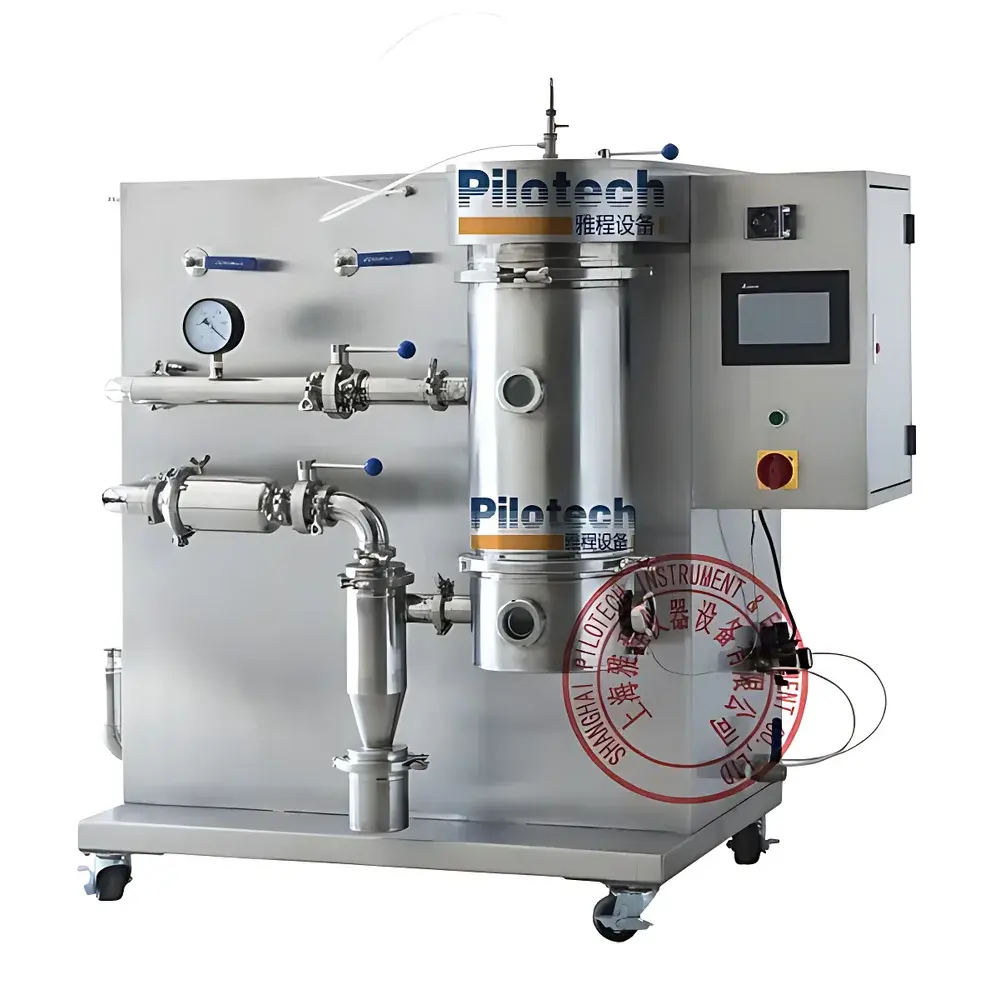
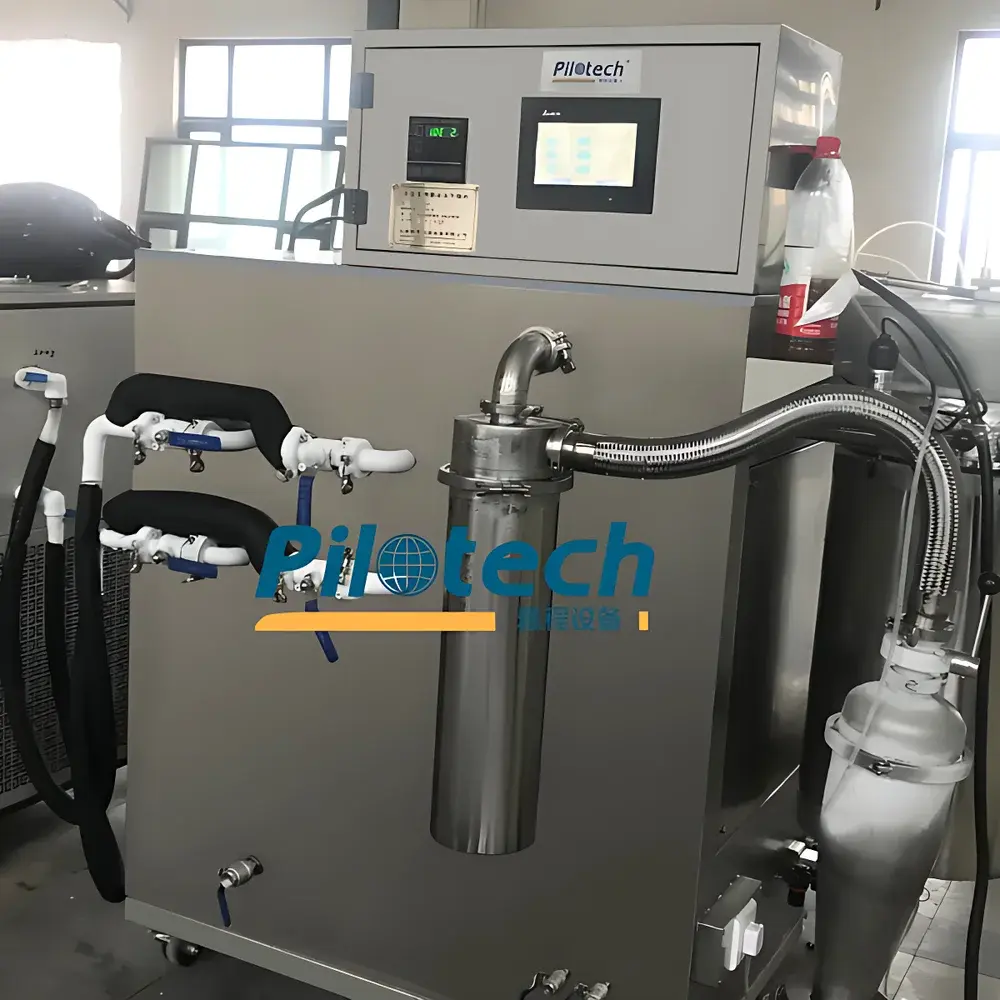
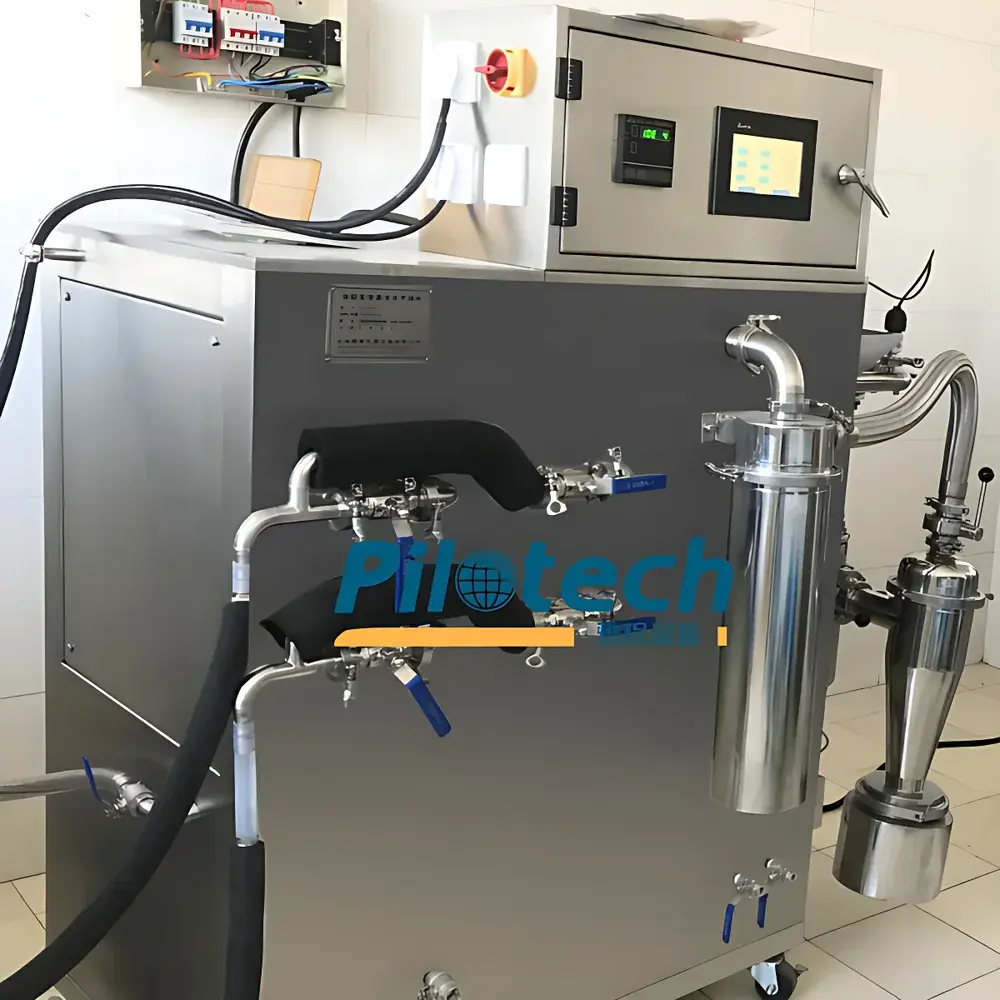
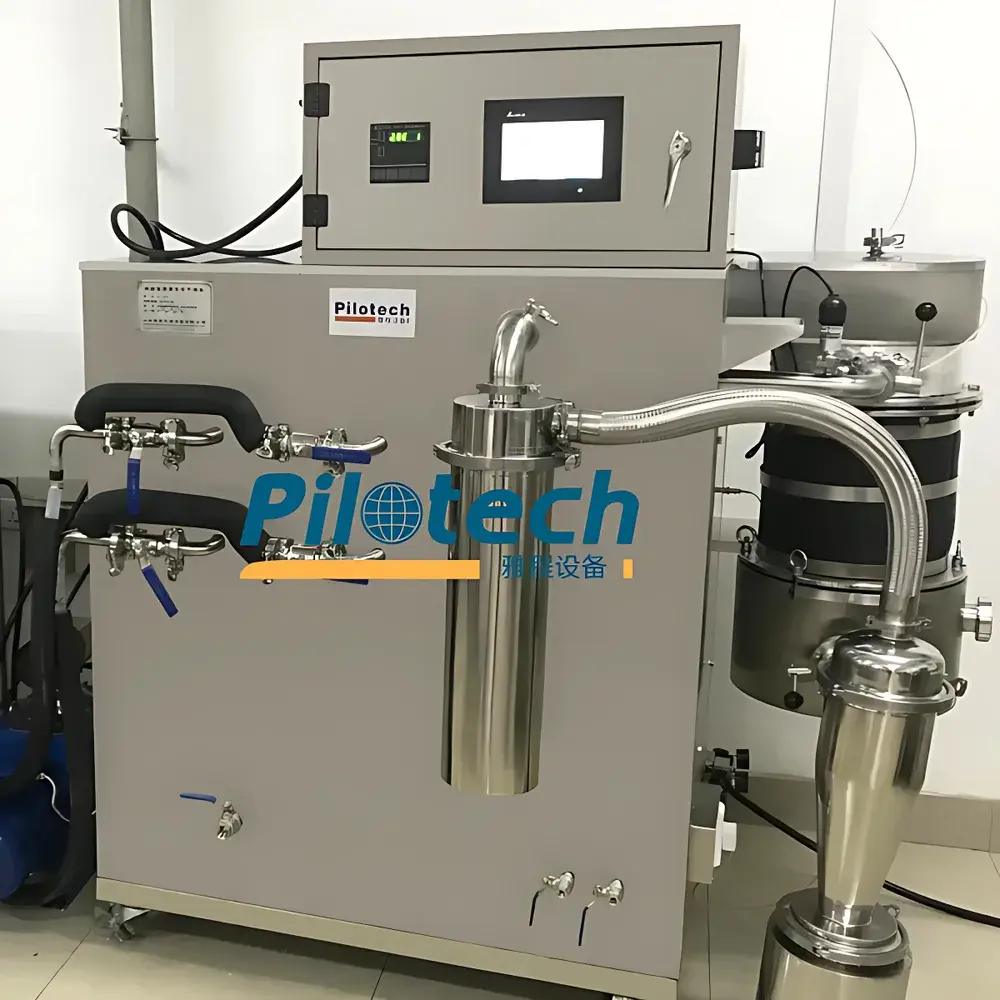
雅程YC-3000实验型喷雾冷冻干燥机
| Brand | Yacheng / PILOTECH |
|---|---|
| Origin | Shanghai, China |
| Manufacturer Type | Direct Manufacturer |
| Product Category | Domestic |
| Model | YC-3000 |
| Instrument Type | Standard Shelf-Type Freeze Dryer |
| Application Scope | Laboratory Use |
| Processing Capacity | 1500 mL/batch |
| Total Process Duration | <6 hours/batch |
| Inlet Air Temperature | ≤−50 °C |
| Cold Trap Temperature | ≤−60 °C |
| Ultimate Vacuum (Empty) | <20 Pa |
| Vacuum Pump Power | 1.1 kW |
| Spray Pressure Range | 1–3 bar |
| Compressed Air Flow Rate | 32 L/min |
| Nozzle Type | Adjustable Dual-Channel Coaxial Atomizer |
| Display Interface | Color LCD Touchscreen (showing inlet temperature, fan frequency, peristaltic pump speed, needle-cleaning frequency) |
Overview
The Yacheng YC-3000 Laboratory-Scale Spray Freeze Dryer is an integrated thermal processing system engineered to combine the rapid atomization capability of spray drying with the low-temperature preservation integrity of vacuum freeze drying. Unlike conventional lyophilizers that rely solely on sublimation under deep vacuum and prolonged holding times, the YC-3000 introduces a hybrid phase transition pathway: liquid feedstock is first atomized into fine droplets under controlled cryogenic inlet air conditions (≤−50 °C), enabling instantaneous flash freezing upon contact with the cold gas stream; frozen micro-droplets are then conveyed into a high-vacuum chamber (<20 Pa) where primary drying occurs via gentle, diffusion-controlled sublimation—without thermal input or radiant heating. This approach preserves thermolabile structures—including proteins, enzymes, polysaccharides, and labile phytochemicals—while yielding free-flowing, spherical powder particles with narrow size distribution and minimal aggregation. Designed for R&D laboratories engaged in formulation development, biopharmaceutical process screening, and natural product stabilization, the YC-3000 delivers reproducible batch outcomes within six hours per 1500 mL run—significantly reducing cycle time compared to standard shelf-based lyophilizers.
Key Features
- Hybrid drying architecture integrating cryogenic spray atomization and vacuum sublimation in a single closed-loop system
- Adjustable coaxial nozzle with vertical positioning control for optimized droplet size distribution and minimized wall deposition
- Digital touchscreen interface (color LCD) displaying real-time parameters: inlet gas temperature, peristaltic feed rate, atomization air pressure (1–3 bar), anti-clogging needle oscillation frequency, and fan speed
- Self-contained air-cooled refrigeration unit with dual-stage cascade compressor, achieving cold trap temperatures ≤−60 °C and high moisture capture efficiency
- Integrated vacuum pump power socket on main frame—no external electrical routing required
- ISO-KF standard quick-clamp vacuum connections ensuring leak-tight integrity and compliance with ISO 2861-1 vacuum component specifications
- Passive ambient-air heating during primary drying stage eliminates thermal stress and maintains sample structural fidelity
- Low-noise operation (<62 dB(A)) suitable for shared laboratory environments without dedicated acoustic enclosures
Sample Compatibility & Compliance
The YC-3000 is validated for processing heat-sensitive, viscous, and sugar-rich solutions commonly encountered in natural product research and biopharmaceutical development. Compatible feedstocks include—but are not limited to—botanical extracts (e.g., ginseng, goji, turmeric), dairy concentrates, enzyme suspensions, probiotic broths, fruit purees, polymer emulsions, and monoclonal antibody formulations. Its operating envelope meets foundational requirements for GLP-compliant documentation workflows: all critical process parameters (CPPs) are digitally logged with timestamped records, supporting audit-ready data traceability. While the system does not include built-in 21 CFR Part 11 compliance modules (e.g., electronic signatures, role-based access control), its parameter logging architecture supports integration with third-party LIMS or ELN platforms for regulated environments. The device conforms to IEC 61000-6-3 (EMC emissions) and IEC 61010-1 (safety for laboratory equipment).
Software & Data Management
The embedded control firmware enables manual and semi-automated operation modes. All operational parameters—including feed rate, atomization pressure, cooling setpoints, and vacuum ramp profiles—are programmable and storable as method templates. Raw sensor data (temperature, pressure, flow, motor speed) are exported via USB to CSV format for post-processing in MATLAB, Python (Pandas), or JMP. Optional Ethernet connectivity (via RS485-to-Ethernet gateway) allows remote monitoring and integration into centralized lab automation networks. Data retention follows ALCOA+ principles: attributable, legible, contemporaneous, original, accurate, complete, consistent, enduring, and available—when paired with external validation protocols and procedural SOPs.
Applications
- Rapid stabilization of unstable bioactive compounds prior to analytical characterization (HPLC, MS, NMR)
- Development of inhalable dry powder formulations for pulmonary delivery
- Preparation of standardized reference materials from complex plant matrices
- Scale-down modeling for downstream lyophilization process transfer (QbD-aligned design space exploration)
- Production of excipient-free powders for encapsulation or tablet compression trials
- Preservation of microbial cultures and bacteriophage suspensions without cryoprotectants
- Structural studies of amorphous solid dispersions using XRD and DSC
FAQ
What types of solvents or aqueous mixtures can be processed in the YC-3000?
The system is designed for water-based solutions and low-boiling-point co-solvent systems (e.g., ethanol/water ≤20% v/v). High-boiling solvents (e.g., DMSO, glycerol) require pre-dilution or formulation adjustment to avoid condensation in the cold trap.
Is the particle size distribution controllable?
Yes—droplet size (and thus final particle diameter) is modulated via nozzle geometry, feed concentration, and atomization pressure. Typical output ranges from 5–50 µm, with tightness improved by optimizing inlet temperature and feed rate.
Does the YC-3000 support GMP documentation requirements?
It provides raw parameter logging compatible with GMP data integrity frameworks when deployed alongside validated external software and procedural controls—but lacks native electronic signature or audit trail features per FDA 21 CFR Part 11.
Can the system handle high-viscosity feeds?
Viscosities up to 200 cP are supported with appropriate nozzle selection and pre-filtration; above this, pre-dilution or heated feed line options are recommended.
What maintenance intervals are recommended for the refrigeration system?
Compressor oil and filter driers should be replaced every 3,000 operating hours or biannually—whichever occurs first—per manufacturer service guidelines. Cold trap cleaning is advised after every 10–15 batches depending on feed solids content.



