
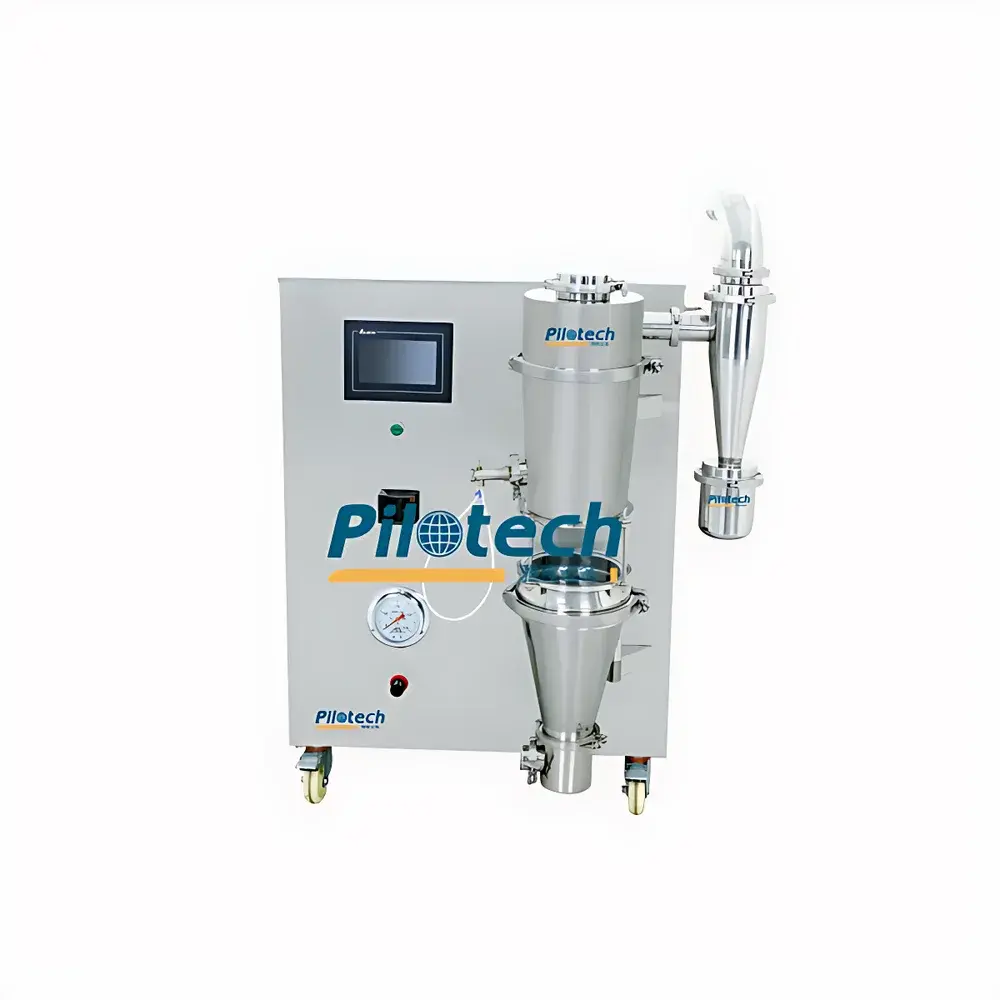
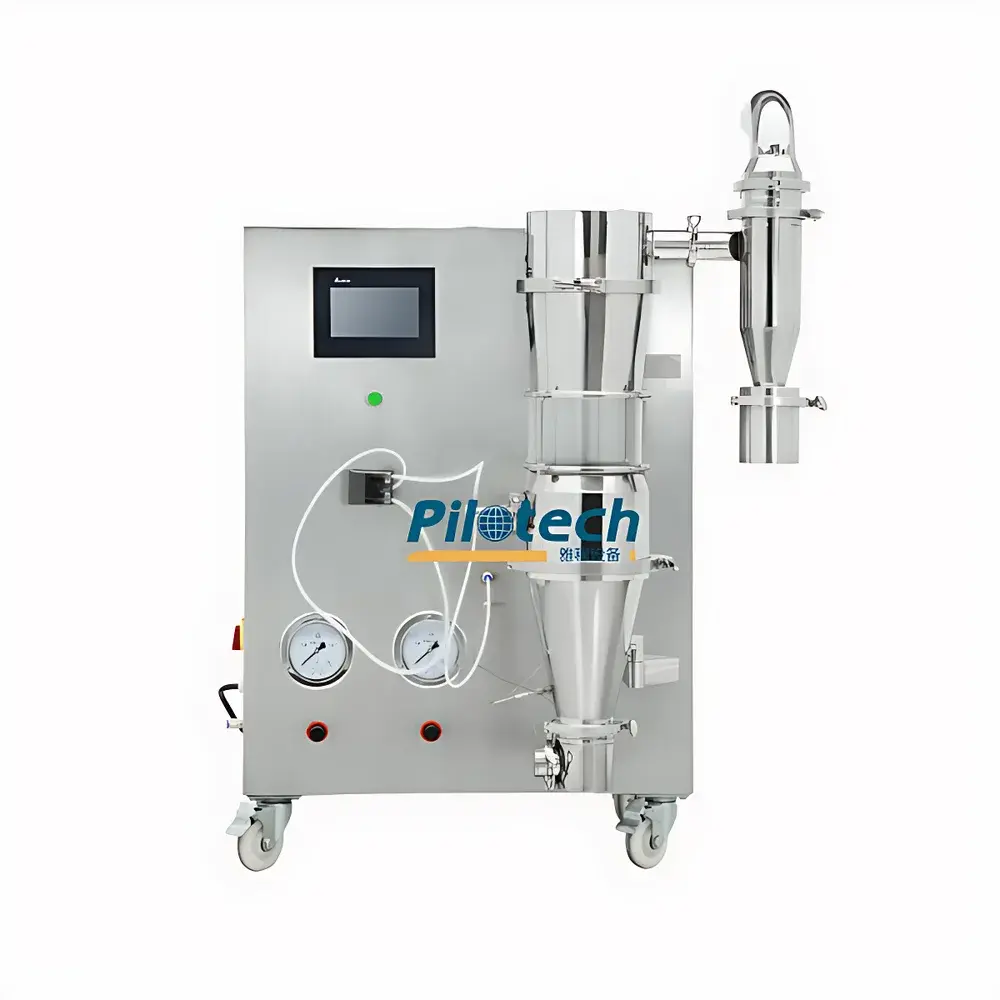
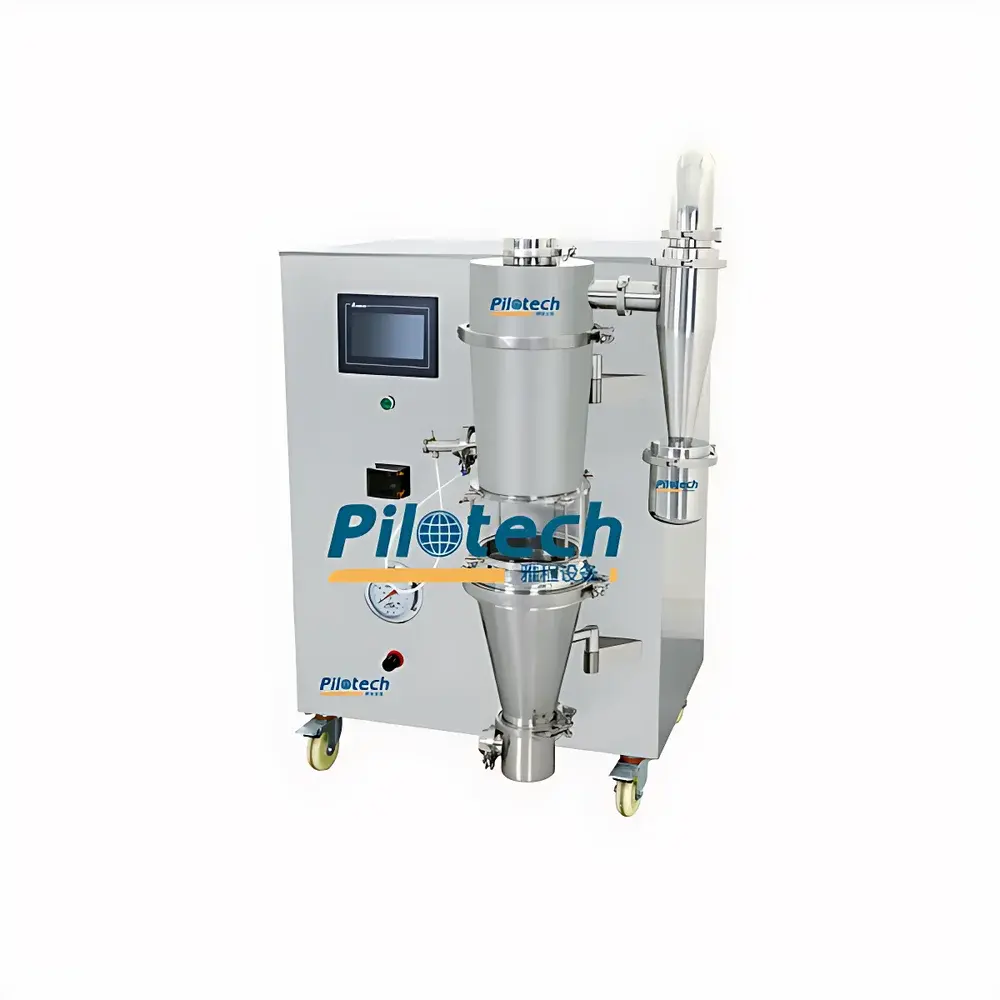
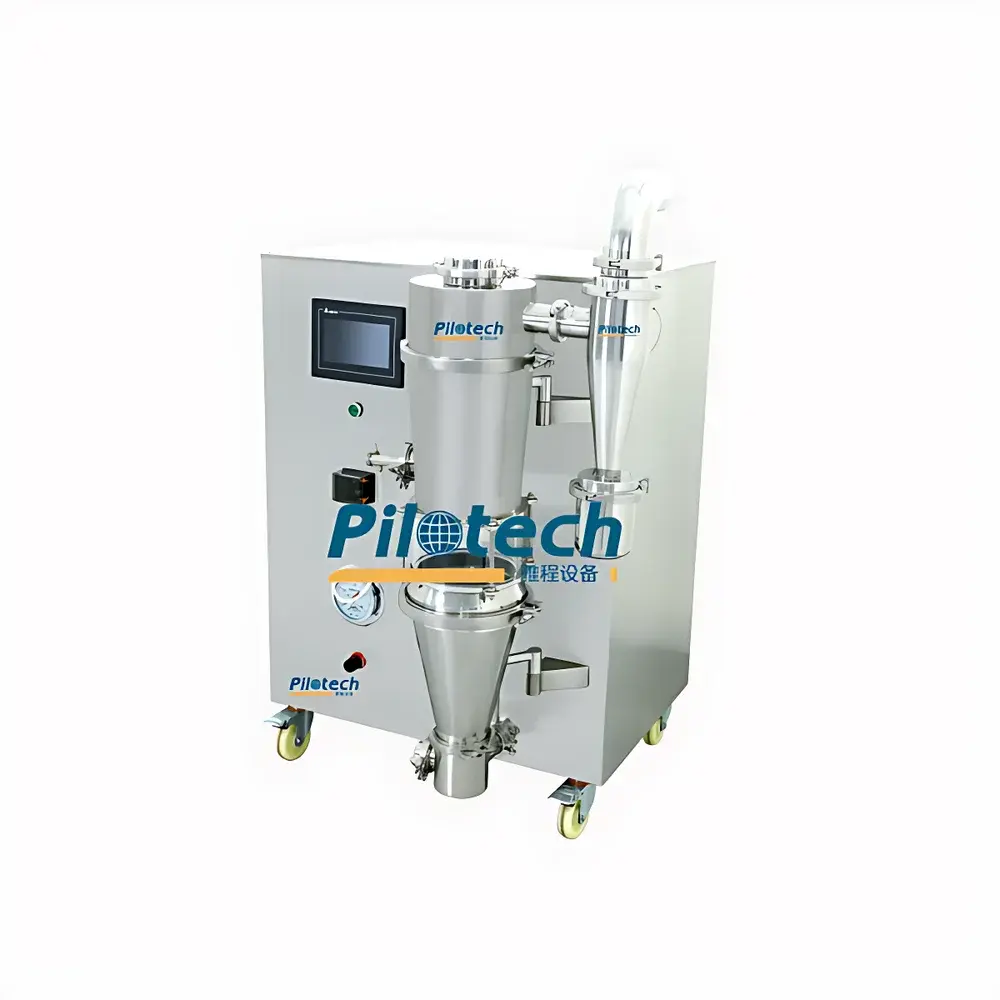
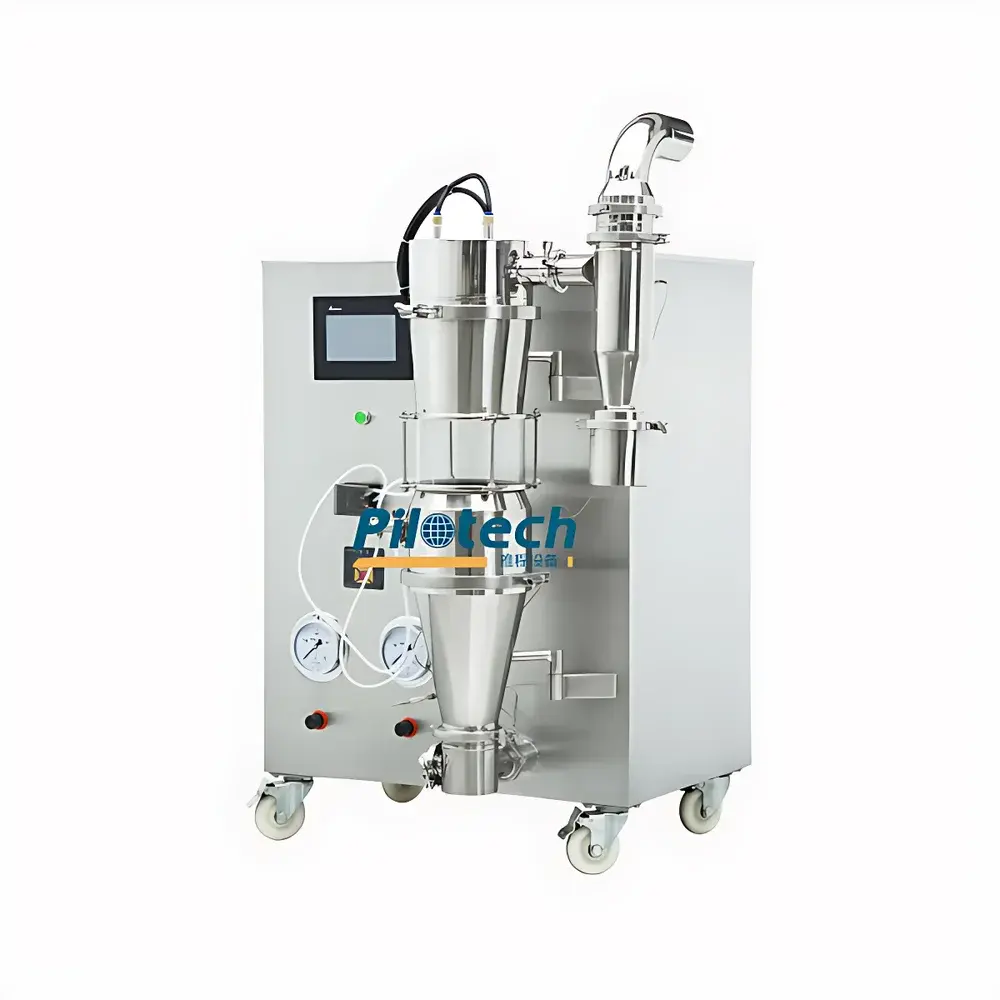
雅程 YC1800 Laboratory Low-Temperature Spray Dryer
| Brand | Yacheng / PILOTECH |
|---|---|
| Origin | Shanghai, China |
| Manufacturer Type | Direct Manufacturer |
| Country of Origin | China |
| Model | YC1800 |
| Quotation | Upon Request |
| Sample Types | Aqueous Mixtures, Water-Based Solutions |
| Max Feed Rate | 1500 mL/h |
| Inlet Air Temperature Range | 105–200 °C |
| Particle Size Distribution | 1–25 µm |
Overview
The Yacheng YC1800 Laboratory Low-Temperature Spray Dryer is an engineered solution for thermal-sensitive material processing in research and development environments. Unlike conventional spray dryers that rely on high inlet temperatures (often >140 °C), the YC1800 operates effectively at inlet air temperatures as low as 105 °C—enabling rapid solvent evaporation while minimizing thermal degradation. Its core principle leverages two-fluid nozzle atomization combined with precisely controlled convective drying kinetics in a compact, self-contained stainless-steel chamber. This architecture is especially suited for heat-labile biologics, polysaccharide-rich botanical extracts (e.g., traditional Chinese medicine decoctions), fruit juices, labile polymers, and volatile active pharmaceutical ingredients (APIs) prone to caramelization or Maillard reactions above 110 °C. The system achieves complete drying within seconds, preserving structural integrity, bioactivity, and powder flowability—critical for downstream characterization (e.g., XRD, DSC, dissolution testing) and formulation development.
Key Features
- Low-temperature operation: Full drying cycle achievable at inlet air temperatures down to 105 °C, validated for sustained performance at 110 °C with ±1 °C PID-controlled precision across the full 105–200 °C range.
- Two-fluid pneumatic nozzle system: Precision-machined stainless-steel nozzle (standard 1.0 mm orifice; optional 0.5/0.8/1.5/2.0 mm) ensures consistent droplet generation and narrow particle size distribution (1–25 µm, near-normal).
- Integrated touchscreen interface: 7-inch color LCD with intuitive Chinese-English bilingual GUI; real-time adjustment of inlet temperature, feed rate (via peristaltic pump), and airflow parameters.
- Self-contained design: No external compressed air supply or chiller required; all subsystems—including heating, atomization, cyclonic separation, and exhaust filtration—are housed within a single footprint (<1.2 m²).
- Optimized drying geometry: Central nozzle positioning supports both co-current and counter-current drying modes; adjustable residence time accommodates varying thermal sensitivity and viscosity profiles.
- Robust construction: Entire wetted path and drying chamber fabricated from electropolished 316L stainless steel; compliant with ISO 14644-1 Class 8 cleanroom-compatible surface finish standards.
Sample Compatibility & Compliance
The YC1800 is routinely deployed for aqueous-based suspensions and solutions containing thermally unstable solutes, including glycosides, flavonoids, enzymes, probiotics, hydrocolloids (e.g., pectin, alginate), and low-Tg polymers. It meets fundamental requirements for GLP-compliant R&D workflows: audit-trail-capable parameter logging (time-stamped temperature, feed rate, pressure), traceable calibration records, and mechanical design aligned with ISO 22000 and USP guidelines for equipment qualification. While not certified for GMP manufacturing, its reproducible drying profiles support Phase I–II formulation studies and analytical reference standard preparation under FDA 21 CFR Part 11–aligned data governance when paired with validated software protocols.
Software & Data Management
The embedded control firmware logs all operational parameters—including inlet/outlet temperature, feed rate, chamber pressure, and runtime—at 1-second intervals. Data export is supported via USB 2.0 to CSV format for post-processing in MATLAB, JMP, or Excel. Optional Ethernet connectivity enables remote monitoring and integration into laboratory information management systems (LIMS). All parameter changes are timestamped and user-ID tagged (where configured), fulfilling basic ALCOA+ principles (Attributable, Legible, Contemporaneous, Original, Accurate) for research documentation. No cloud storage or third-party telemetry is enabled by default.
Applications
- Phytochemical R&D: Stabilized drying of polyphenol- and sugar-dense herbal extracts without agglomeration or browning.
- Food science: Production of free-flowing juice powders (e.g., orange, pomegranate) retaining volatile aroma compounds and vitamin C content.
- Biopharmaceuticals: Lyophilization-alternative drying of protein-loaded nanoparticles and vaccine adjuvants.
- Polymer science: Solvent removal from thermoplastic elastomer dispersions without chain scission or crosslinking.
- Materials chemistry: Synthesis of uniform ceramic precursors (e.g., LiFePO₄ slurries) and MOF colloids with preserved crystallinity.
FAQ
What is the minimum sample volume required for a valid run?
Typical minimum volume is 30 mL for aqueous solutions; actual requirement depends on total solids content and desired powder yield.
Can the YC1800 handle organic solvents?
Standard configuration is rated for aqueous systems only; explosion-proof variants with nitrogen inerting and solvent recovery are available upon engineering review.
Is the particle size distribution reproducible across batches?
Yes—under fixed inlet temperature, feed rate, and nozzle orifice, CV of Dv50 remains ≤8% (n=5, same operator, same batch stock solution).
Does the system comply with CE or UL safety standards?
The YC1800 meets IEC 61000-6-3 (EMC) and IEC 61000-6-4; CE marking applies to EU-supplied units with localized electrical certification.
Is flow cytometry-grade powder achievable?
With optimized feed concentration and nozzle selection, sub-5 µm fractions can be isolated via post-drying sieving or分级 cyclone collection—validated for cellular encapsulation studies.



