
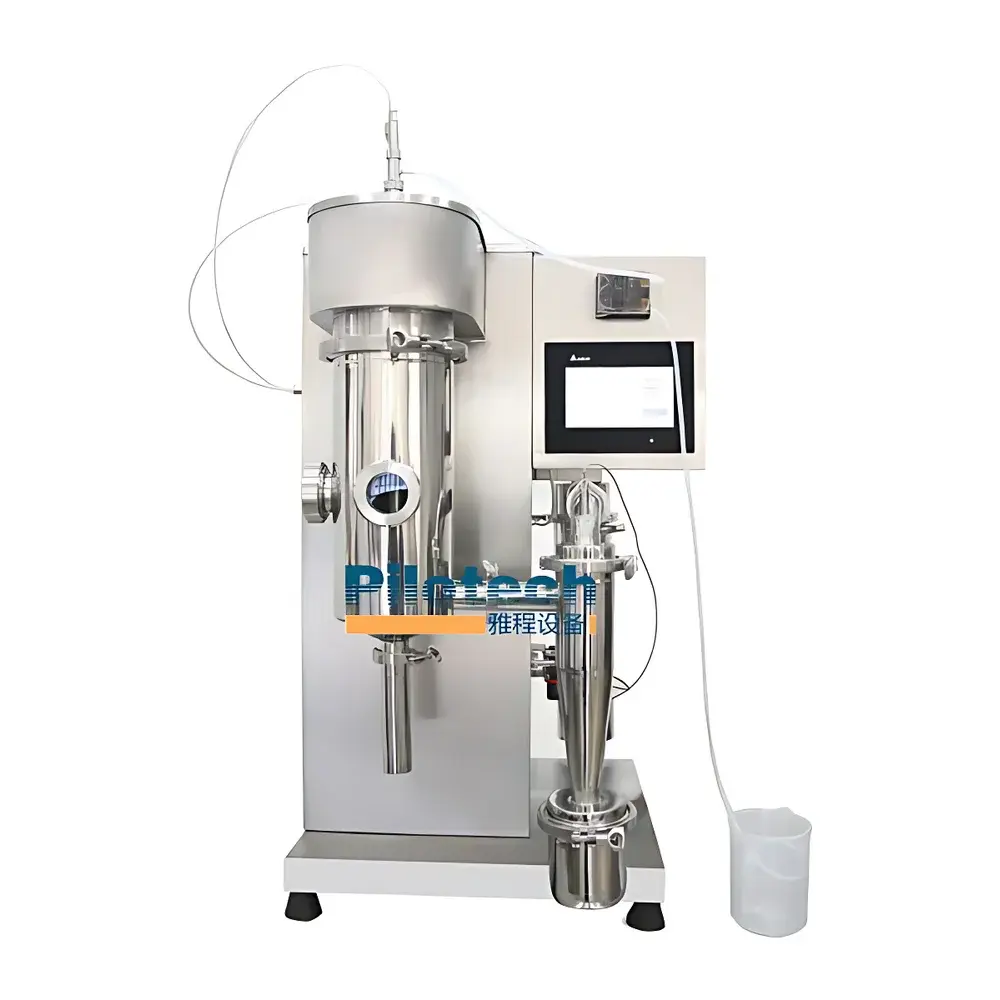
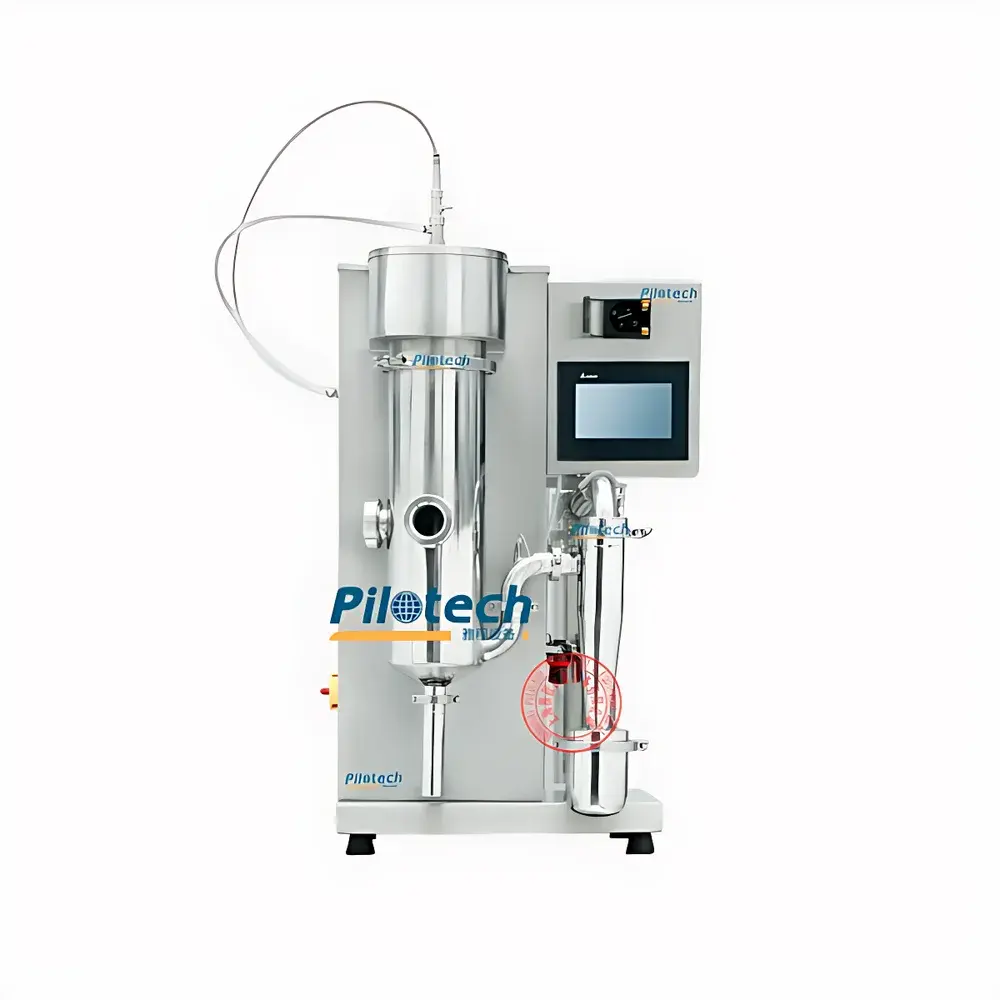
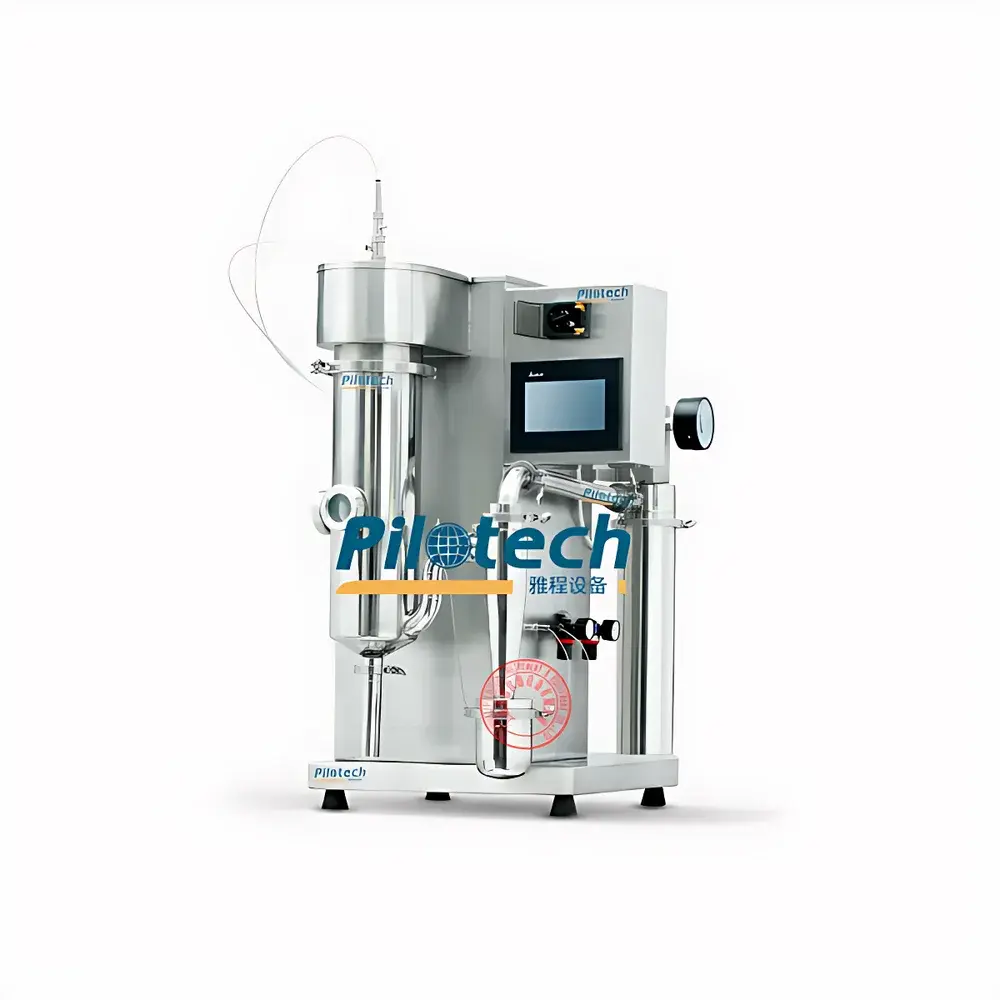
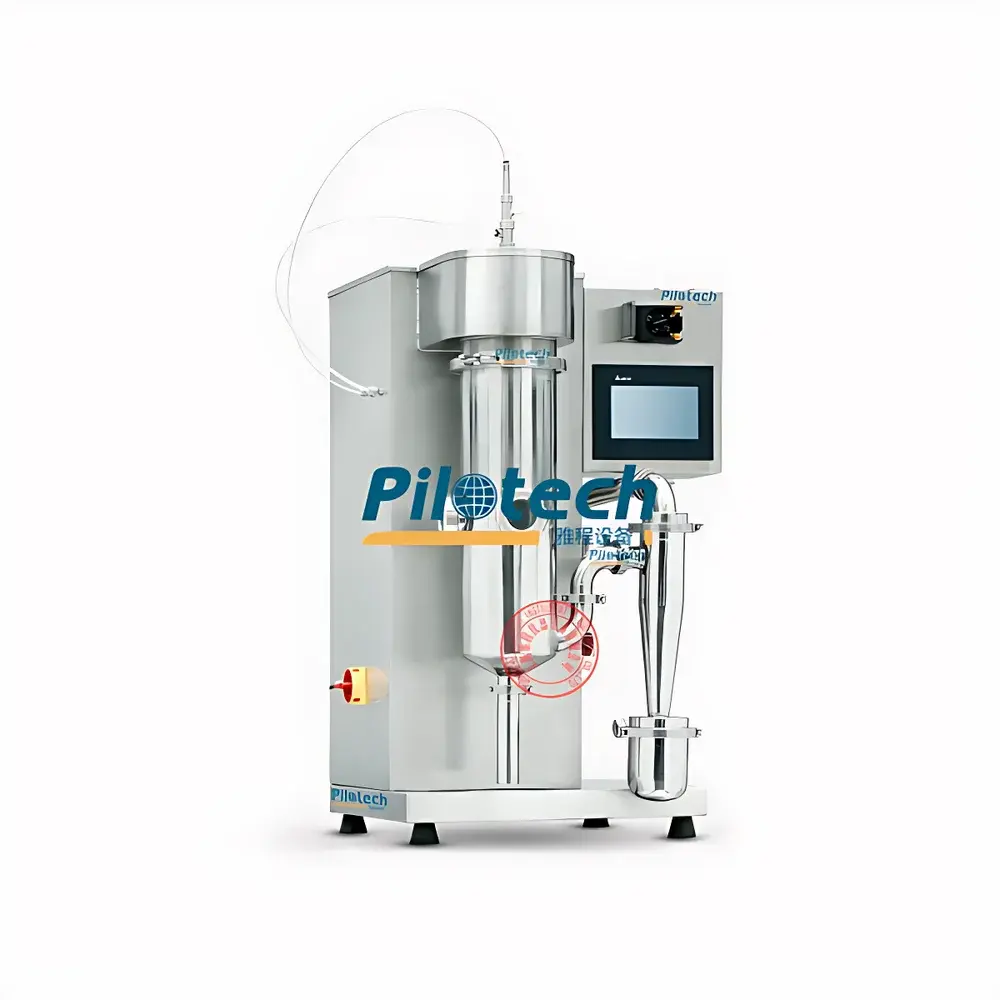
Yacheng YC-500 Benchtop Spray Dryer
| Brand | Yacheng / PILOTECH |
|---|---|
| Origin | Shanghai, China |
| Manufacturer Type | Direct Manufacturer |
| Country of Origin | China |
| Model | YC-500 |
| Max Feed Rate | 500 mL/h |
| Temperature Range | Up to 200 °C (Inlet), Down to 80 °C (Outlet) |
| Particle Size Range | 1–25 µm |
| Solvent Compatibility | Aqueous solutions |
| Nozzle Diameter | 1.0 mm standard (0.5/0.8/1.5/2.0 mm optional) |
| Construction Material | Full SUS304 stainless steel |
| Power Supply | 2 kW / 220 V |
Overview
The Yacheng YC-500 Benchtop Spray Dryer is an engineered solution for laboratory-scale particle formation via continuous single-stage spray drying. It operates on the principle of atomization—where liquid feed is dispersed into fine droplets using a dual-fluid (air or nitrogen) nozzle, followed by rapid solvent evaporation in a controlled hot-air stream. This process yields dry, free-flowing powders with narrow particle size distribution, suitable for formulation development, excipient screening, and early-stage material characterization in pharmaceuticals, food science, nanomaterials, and functional polymers. Designed for integration into standard fume hoods or benchtop workspaces, the YC-500 delivers reproducible drying performance without requiring floor-standing infrastructure. Its modular architecture supports both aqueous and organic solvent processing, enabling seamless transition between research workflows under inert atmosphere conditions when paired with the optional YC-501 nitrogen recirculation unit.
Key Features
- Compact benchtop footprint: Dimensions optimized for placement directly on laboratory workbenches or atop the YC-501 nitrogen recirculation system—eliminating space constraints typical of conventional spray dryers.
- Modular solvent compatibility: Base configuration supports aqueous feedstocks; upgrade to organic solvent drying via plug-and-play integration of the YC-501 closed-loop nitrogen system—no hardware modification required.
- Coaxial two-fluid nozzle: Precision-machined concentric design ensures consistent radial droplet dispersion, minimizing wall impaction and maximizing powder recovery (>85% typical for model APIs and model proteins).
- Adjustable nozzle positioning: Vertical translation mechanism allows real-time optimization of雾化 zone relative to drying chamber geometry—critical for viscous feeds (up to 500 cP) and heat-sensitive actives.
- Integrated particulate capture: Optional cyclonic exhaust filtration reduces airborne particulate emissions and improves yield for low-density or electrostatically charged powders.
- Durable thermal management: Reinforced heating element design with overtemperature cutoff mitigates filament burnout—a common failure mode in legacy lab-scale dryers.
- Full stainless-steel construction: Entire drying pathway—including atomization chamber, drying tower, and collection vessel—fabricated from electropolished SUS304 stainless steel with borosilicate observation viewport.
Sample Compatibility & Compliance
The YC-500 accommodates a broad range of feedstock rheologies and chemistries, including protein solutions (e.g., BSA, insulin), polymer dispersions (PLGA, chitosan), colloidal suspensions (SiO₂, TiO₂ nanoparticles), and thermolabile nutraceuticals (vitamin C, anthocyanins). For organic solvent operation (e.g., ethanol, acetone, dichloromethane), the YC-501 nitrogen recirculation system maintains oxygen concentration below 8% v/v, complying with OSHA and ATEX guidelines for Class I, Division 1 environments. All electronic controls meet IEC 61000-6-3 EMC standards. While not certified to ISO 9001 out-of-the-box, the system’s architecture supports full GMP/GLP documentation packages—including audit trails, user access levels, and electronic signature readiness—when deployed with validated SOPs and third-party IQ/OQ protocols.
Software & Data Management
Operation is managed via a 7-inch color TFT touchscreen interface with real-time graphical display of critical process parameters: inlet/outlet temperature, blower frequency (0–60 Hz), peristaltic pump speed (0–100 rpm), and needle cleaning cycle timing. All setpoints and runtime logs are timestamped and exportable in CSV format via USB port. The system records minimum 30 days of continuous operational history (configurable retention period), supporting retrospective analysis and deviation investigation per FDA 21 CFR Part 11 requirements when used with supplementary validation documentation. No cloud connectivity or proprietary software licensing is required—ensuring long-term data sovereignty and IT infrastructure compatibility.
Applications
- Pharmaceutical R&D: Preparation of amorphous solid dispersions, inhalable microparticles, and lyophilization pre-formulation analogues.
- Food & Nutraceuticals: Encapsulation of probiotics, omega-3 oils, and polyphenols for enhanced oxidative stability and controlled release.
- Materials Science: Synthesis of spherical ceramic precursors (e.g., LiFePO₄ cathode materials), metal oxide catalysts, and porous silica carriers.
- Academic Research: Teaching platform for mass/heat transfer principles, drying kinetics modeling, and aerosol process engineering.
- Biotechnology: Stabilization of enzymes, vaccines, and monoclonal antibody formulations without cryoprotectants.
FAQ
What is the minimum sample volume required for a valid drying run?
Typical minimum feed volume is 10–20 mL, dependent on solids content and viscosity. Lower volumes may be processed with reduced pump speed and extended run time—but recovery efficiency declines below 10 mL without optimized nozzle alignment.
Can the YC-500 handle high-viscosity feeds such as polysaccharide solutions?
Yes—the coaxial nozzle design and adjustable vertical positioning enable stable atomization of feeds up to 500 cP at 40 °C; pre-heating the feed line is recommended above 300 cP.
Is the YC-500 compliant with FDA 21 CFR Part 11 for electronic records?
The hardware supports Part 11 compliance when integrated into a validated environment: audit trail logging, role-based access control, and electronic signatures can be implemented via site-specific procedural controls and third-party validation services.
What maintenance intervals are recommended for the heating element and nozzle?
No scheduled replacement is required for the heating element under normal operation (200 °C max, <10 hrs/day); nozzle inspection is advised after every 50 hours of cumulative use—cleaning with ultrasonic bath and 0.1 M HNO₃ suffices for most applications.
Does the system include calibration certificates for temperature and flow sensors?
Factory calibration certificates are provided for inlet/outlet thermocouples and pump RPM encoder; field recalibration kits and traceable NIST-certified references are available upon request.
Related Products



