
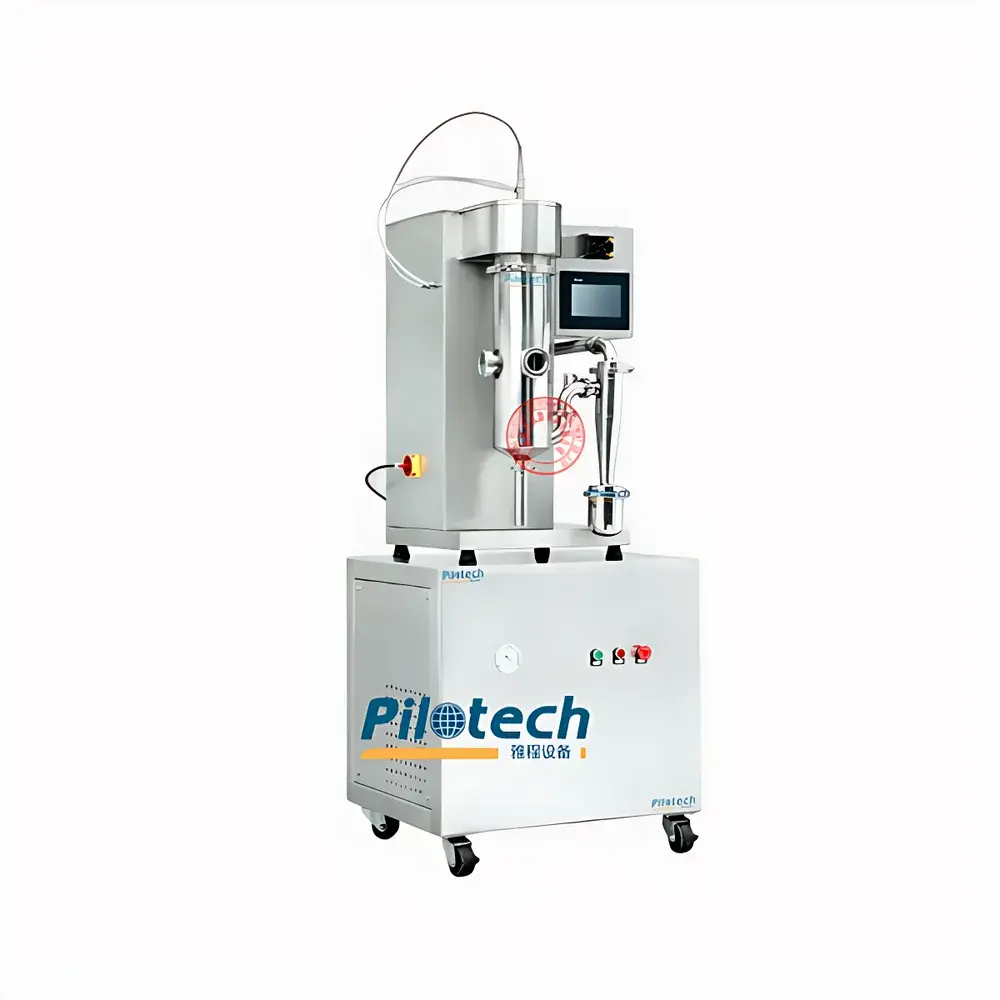
Yacheng YC-510 Benchtop Vacuum-Assisted Low-Temperature Spray Dryer
| Brand | Yacheng / PILOTECH |
|---|---|
| Origin | Shanghai, China |
| Manufacturer Type | Direct Manufacturer |
| Country of Origin | China |
| Model | YC-510 |
| Sample Type | Aqueous solutions only |
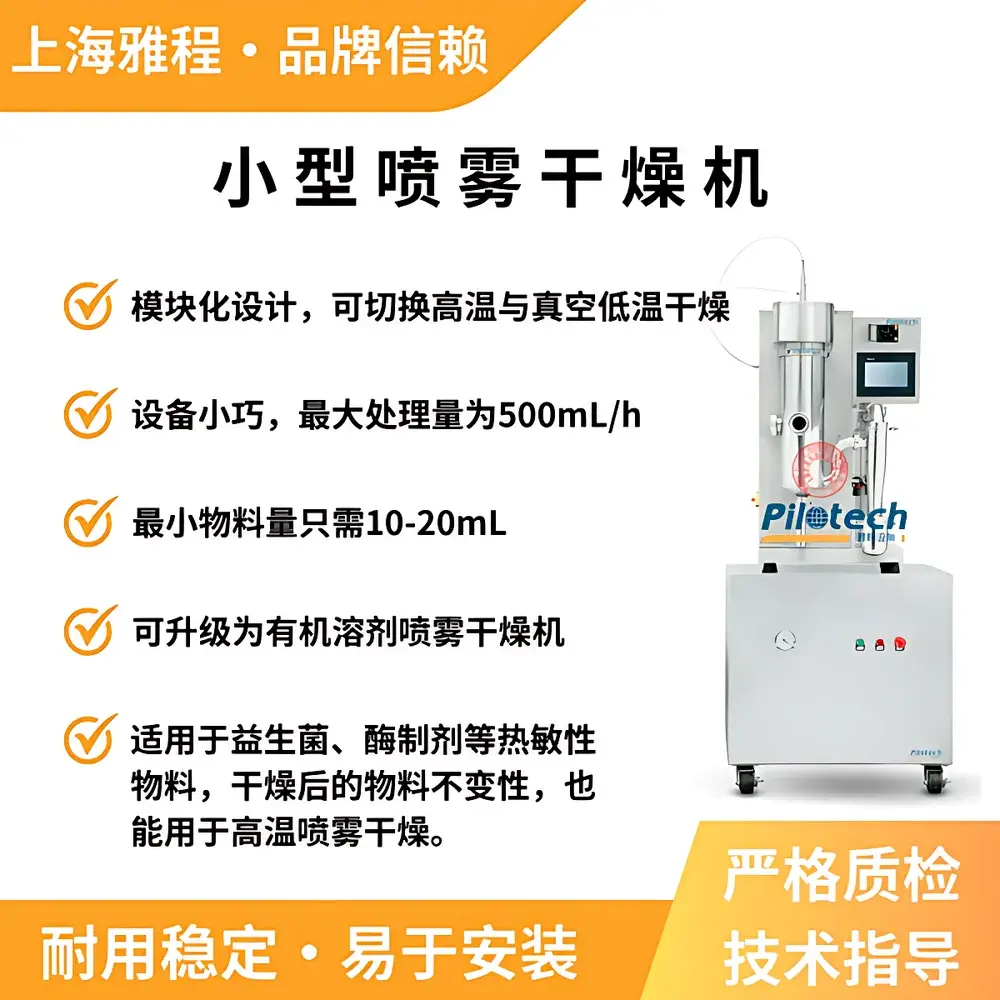
| Max Feed Rate | 500 mL/h |
| Inlet Air Temperature Range | 50–200 °C |
| Particle Size Distribution | 1–25 µm |
| Vacuum Level | −0.08 MPa |
| Temperature Control Accuracy | ±1 °C |
| Nozzle Diameter | 1.0 mm standard (optional: 0.5/0.8/1.5/2.0 mm) |
| Power Rating | 3.5 kW |
| Minimum Sample Volume | 10–20 mL (dependent on solids content) |
Overview
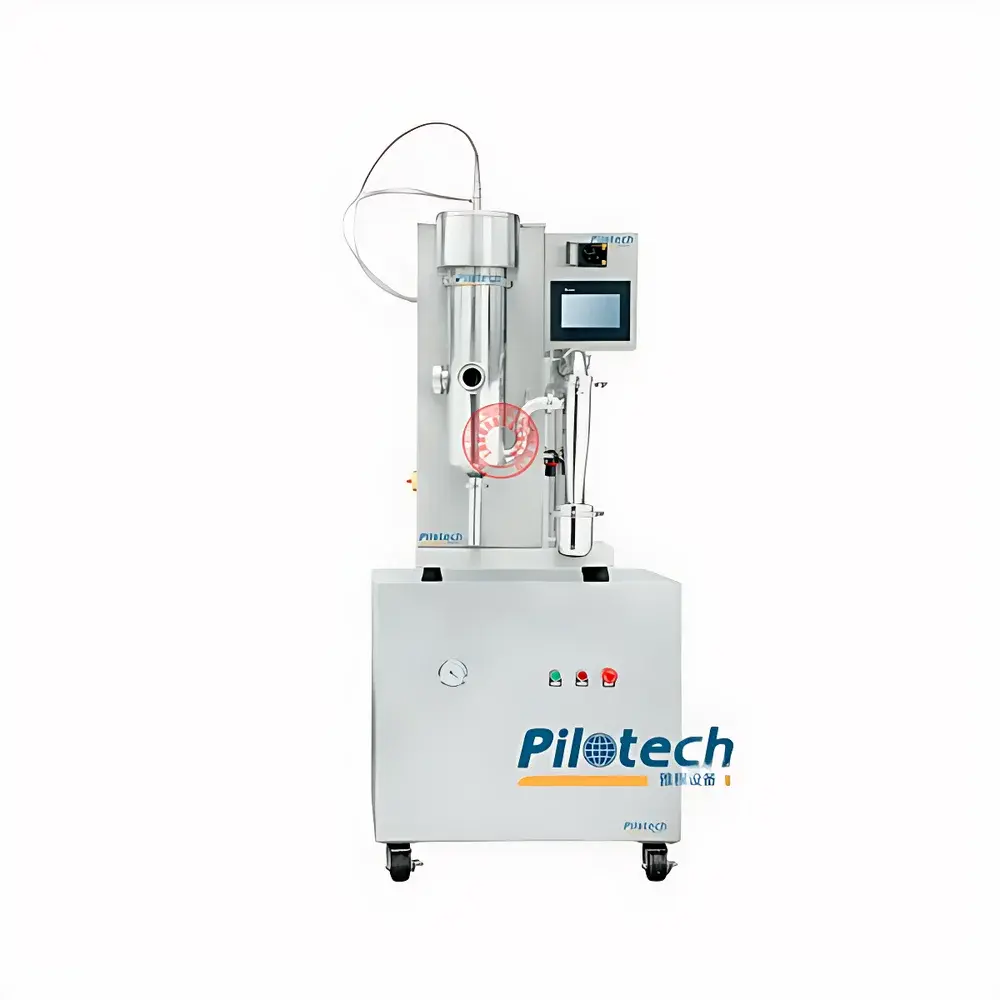
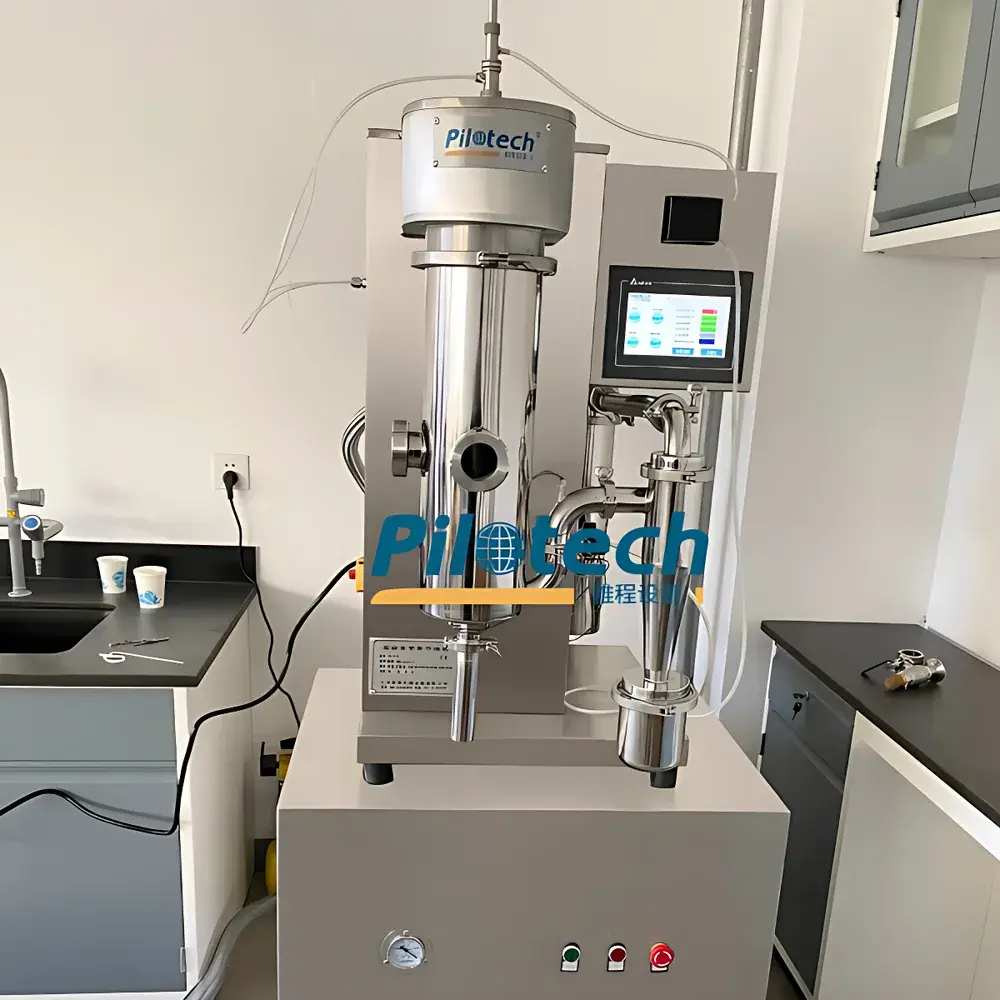
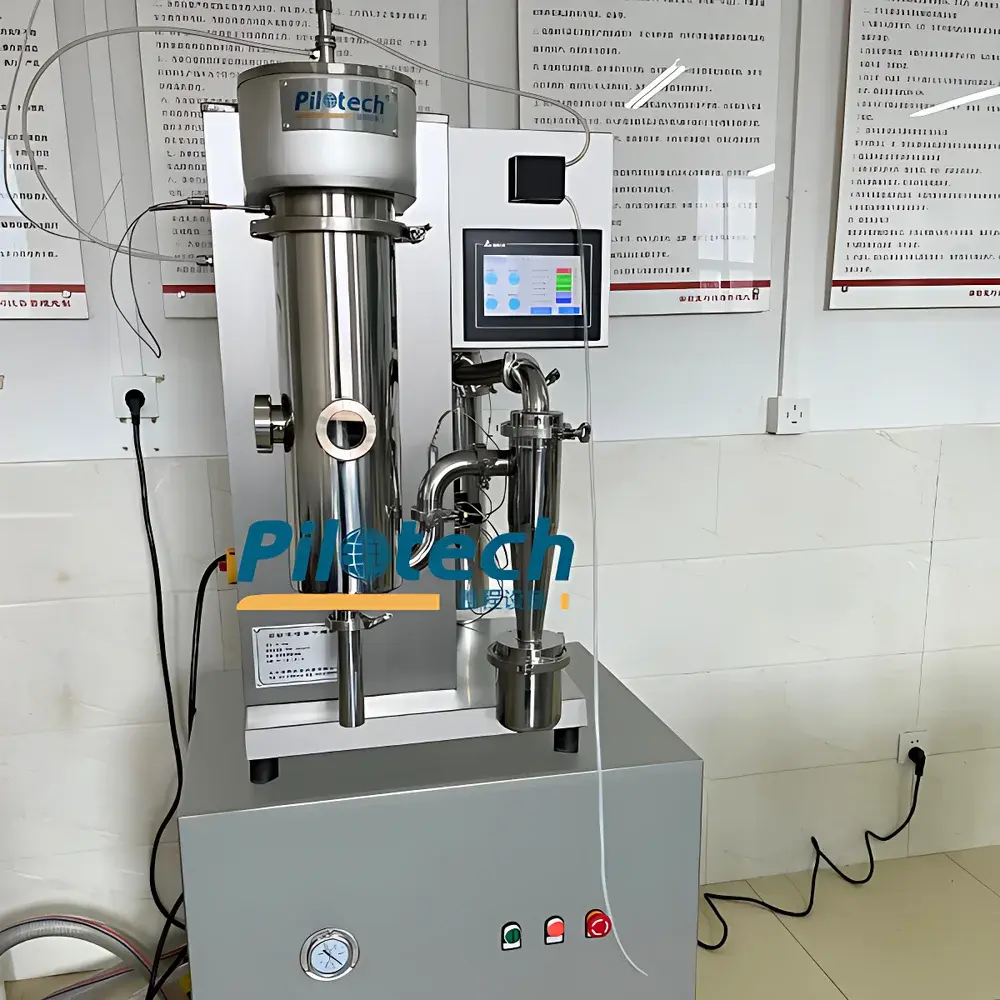
The Yacheng YC-510 Benchtop Vacuum-Assisted Low-Temperature Spray Dryer is an engineered solution for the gentle, rapid conversion of heat-sensitive aqueous solutions into free-flowing dry powders under controlled low-temperature and reduced-pressure conditions. Unlike conventional atmospheric spray dryers—whose inlet air temperatures often exceed 120 °C—the YC-510 integrates a modular vacuum system that lowers the boiling point of water and volatile solvents, enabling complete drying at inlet temperatures as low as 50 °C. This operational principle leverages the thermodynamic relationship between pressure and phase transition: by reducing system pressure to −0.08 MPa, water evaporates rapidly even at sub-60 °C temperatures, minimizing thermal degradation of labile biomolecules, enzymes, live probiotics, polysaccharide-rich botanical extracts, thermolabile polymers, and volatile active pharmaceutical ingredients (APIs). The system operates on a two-fluid nozzle atomization principle, generating fine, uniform droplets within a sealed stainless-steel drying chamber. Its dual-mode architecture—switchable between standard atmospheric spray drying and vacuum-assisted low-temperature drying—provides experimental flexibility without hardware reconfiguration.
Key Features
- Modular design: Separately housed benchtop spray dryer main unit and vacuum pumping module, enabling seamless transition between high-temperature (up to 200 °C) and low-temperature (as low as 50 °C) drying protocols.
- Precision temperature control: Real-time PID-regulated heating system with ±1 °C accuracy across the full 50–200 °C inlet air range; digital feedback loop ensures thermal stability during extended runs.
- Adjustable feed delivery: Integrated peristaltic pump with continuous flow rate adjustment (0–500 mL/h), supporting reproducible dosing for method development and scale-down studies.
- Optimized atomization: Concentric two-fluid stainless-steel nozzle (standard 1.0 mm orifice; optional sizes available) ensures symmetrical spray pattern, eliminating wall deposition and maximizing powder yield.
- Full stainless-steel construction (AISI 316L contact surfaces): Compliant with GLP laboratory hygiene standards; corrosion-resistant and cleanable for multi-product use.
- Intuitive human-machine interface: 7-inch color LCD touchscreen with native English language option; real-time display of inlet/outlet temperature, vacuum level, feed rate, and operating status.
Sample Compatibility & Compliance
The YC-510 is validated for aqueous-based feedstocks containing heat-labile actives—including but not limited to microbial cultures (e.g., Lactobacillus, Bifidobacterium), enzyme preparations (e.g., amylase, protease), protein hydrolysates, polysaccharide extracts (e.g., pectin, inulin, fucoidan), natural product concentrates (e.g., flavonoids, alkaloids), and polymer dispersions (e.g., PLGA, chitosan). It excludes organic solvents, highly viscous suspensions (>500 cP), or slurries containing abrasive particulates. While not certified to ISO 22000 or FDA 21 CFR Part 11 out-of-the-box, its digital logging capability (timestamped temperature, vacuum, and flow data) supports audit-ready documentation when integrated into validated laboratory workflows. The system meets CE machinery safety directives (2006/42/EC) and electromagnetic compatibility (2014/30/EU).
Software & Data Management
The embedded control firmware records all critical process parameters—including inlet temperature, outlet temperature, chamber vacuum, feed rate, and runtime—at 1-second intervals. Data export is supported via USB flash drive in CSV format for downstream analysis in MATLAB, Python, or statistical process control (SPC) platforms. Optional Ethernet connectivity enables remote monitoring and integration into centralized lab information management systems (LIMS). All parameter setpoints are password-protected to ensure method integrity; operator actions are logged with timestamps and user IDs, satisfying basic GLP traceability requirements. No cloud storage or third-party telemetry is enabled by default.
Applications
- R&D of oral solid dosage forms: Production of inhalable or dispersible microparticles from biopolymer-protein conjugates.
- Stabilization of probiotic powders: Preservation of viable cell counts (>10⁹ CFU/g) in dairy-free delivery matrices.
- Preparation of standardized herbal extract powders: Retention of polyphenolic integrity in Ginkgo biloba or Camellia sinensis formulations.
- Nanocarrier development: Fabrication of drug-loaded liposomes or polymeric nanoparticles with narrow PDI (<0.2) post-drying.
- Materials science: Synthesis of amorphous metal-organic framework (MOF) precursors or thermally unstable catalyst supports.
- Food ingredient engineering: Encapsulation of omega-3 oils or anthocyanins in maltodextrin-gum arabic matrices without Maillard browning.
FAQ
Can the YC-510 process organic solvents such as ethanol or acetone?
No. The system is designed exclusively for aqueous feed solutions. Organic solvents require explosion-proof enclosures, inert gas purging, and solvent recovery condensers—features not included in this configuration.
What is the typical residual moisture content of dried powders?
Under optimized vacuum-low-temperature conditions (50–60 °C inlet, −0.08 MPa), final moisture content is typically ≤1.0% w/w, as verified by Karl Fischer titration.
Is the vacuum pump included with the base system?
Yes—the YC-510 includes a dedicated oil-lubricated rotary vane vacuum pump rated for continuous operation at −0.08 MPa, with integrated oil mist filter and vibration damping mounts.
How is particle size distribution influenced by operating parameters?
Droplet size—and thus final particle diameter—is primarily governed by nozzle orifice diameter, feed viscosity, and atomizing gas pressure. At fixed 1.0 mm nozzle and 2 bar air pressure, median particle size (D50) falls within 1–25 µm for 1–15% w/w aqueous solutions.
Does the system support Good Manufacturing Practice (GMP) compliance?
The YC-510 is intended for laboratory-scale research and formulation development. For GMP manufacturing, users must implement additional controls—including equipment qualification (IQ/OQ/PQ), environmental monitoring, and batch record documentation—per ICH Q5C and USP .



