
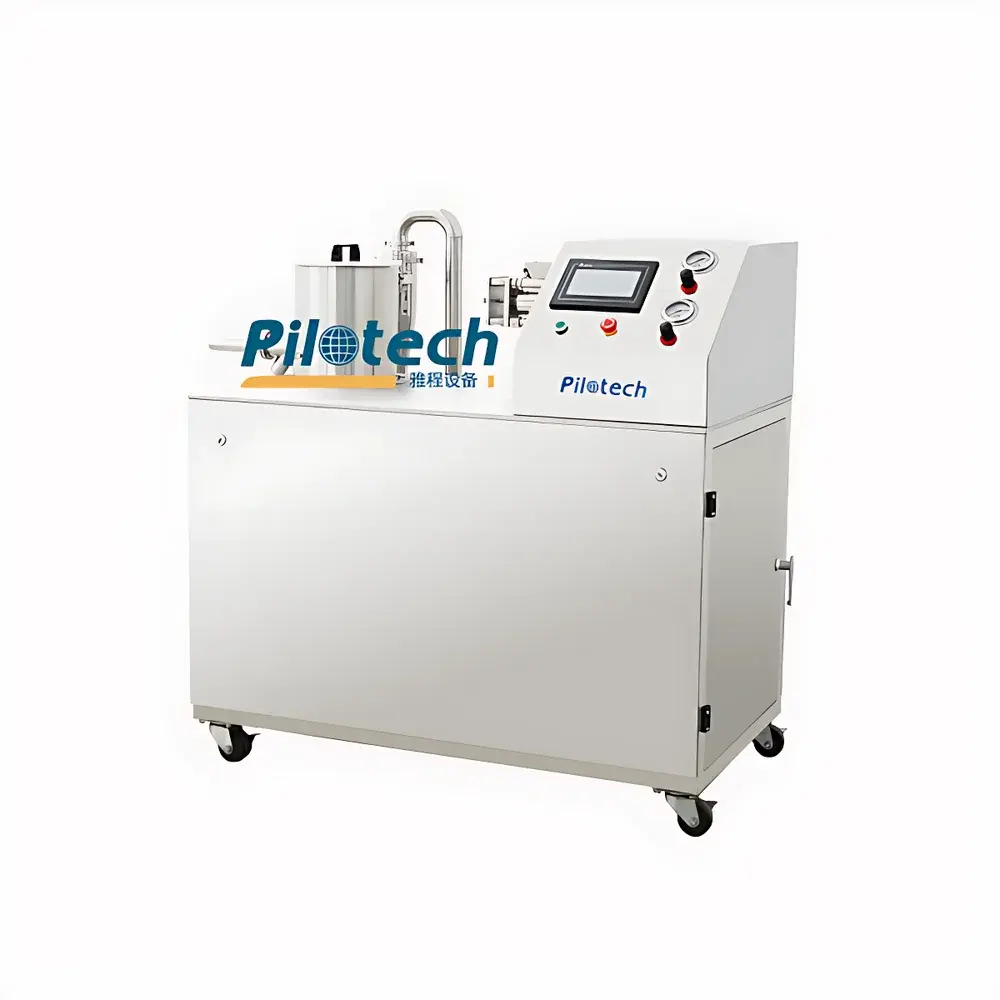
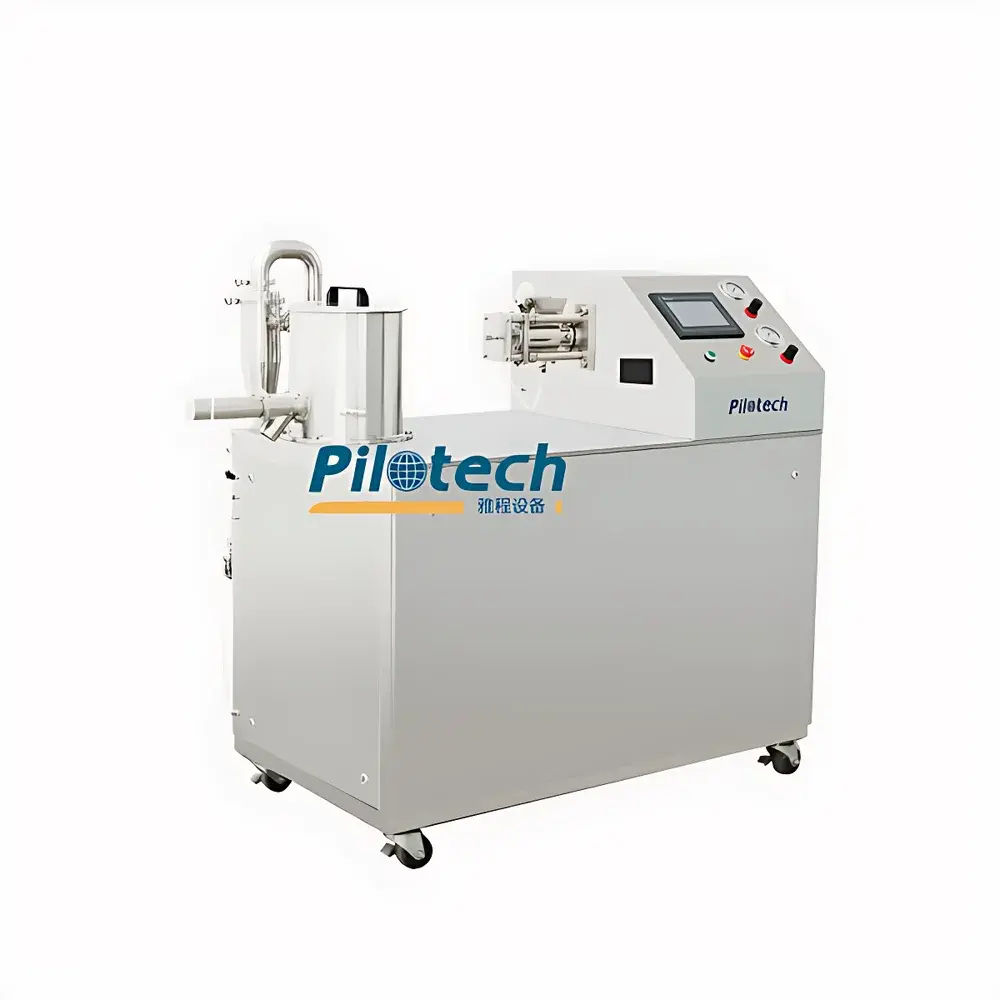
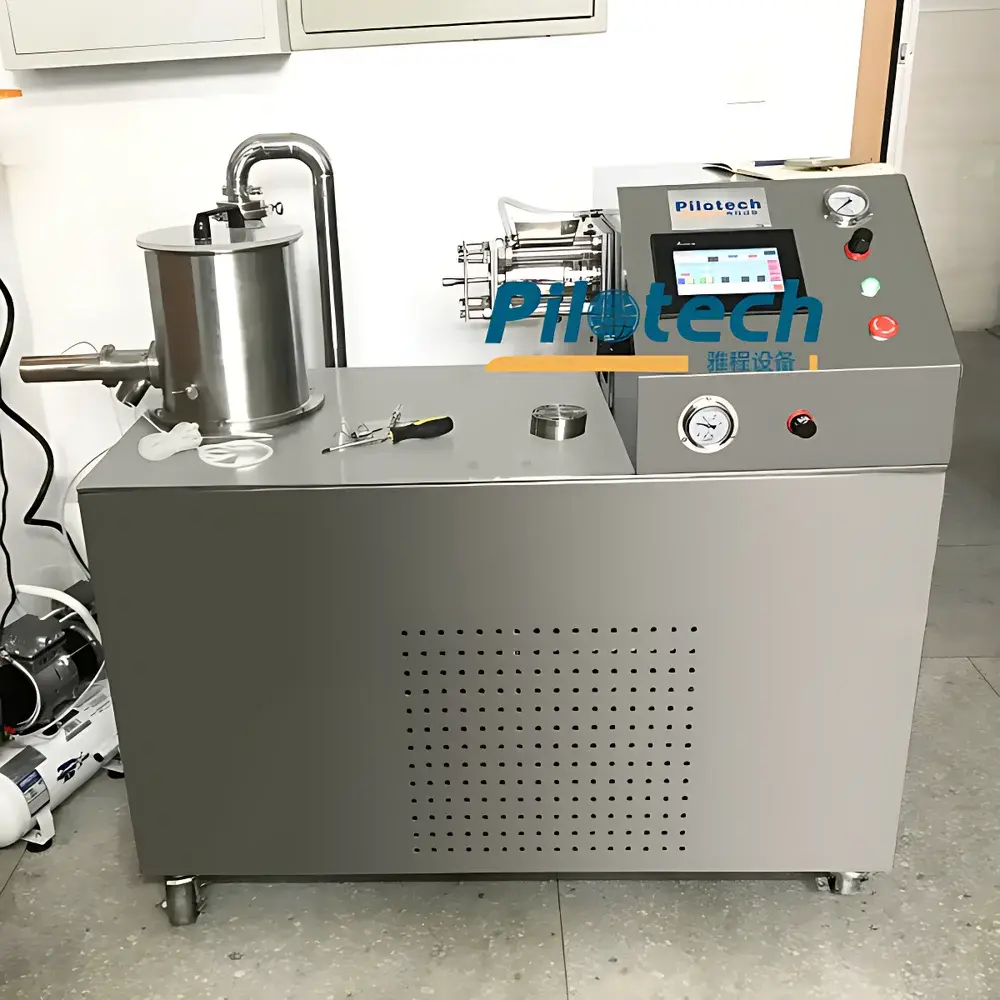
Yacheng YC-910 Benchtop Multi-Function Pelletizer, Extruder & Coater
| Brand | Yacheng / PILOTECH |
|---|---|
| Origin | Shanghai, China |
| Manufacturer Type | Direct Manufacturer |
| Country of Origin | China |
| Model | YC-910 |
| Pricing | Upon Request |
| Throughput | 1–3 kg/hr |
| Extrusion Speed | 50 rpm |
| Spheronization Speed | 1400 rpm |
| Pellet Diameter Range | 0.3–3 mm |
| Disc Diameter | 250 mm |
| Power Rating | 3 kW |
| Compressed Air Requirement | 0.3 m³/h |
| Integrated Cooling System | Built-in Chilled Water Circulation |
Overview
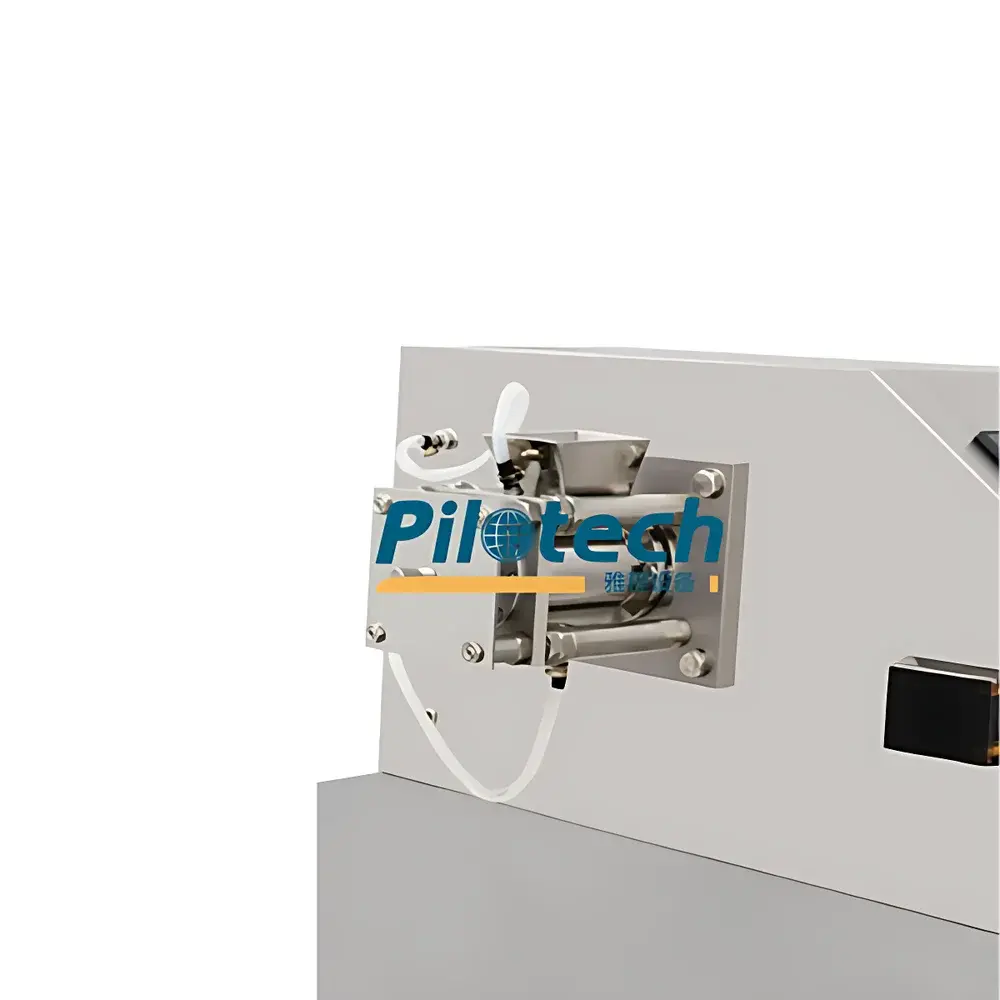
The Yacheng YC-910 Benchtop Multi-Function Pelletizer, Extruder & Coater is an integrated, GMP-aligned unit engineered for laboratory-scale and pilot-scale spherical pellet development in pharmaceutical, nutraceutical, food, and functional material research. It combines three critical unit operations—extrusion, spheronization (rotary granulation), and optional film coating—within a single compact benchtop platform. The system operates on the principle of wet extrusion followed by high-shear spheronization: powder blends (active pharmaceutical ingredients, excipients, and binder solution) are fed into a horizontally oriented extruder barrel, where a rotating screw conveys and compresses the mass through a perforated die plate to form cylindrical extrudates. These extrudates are immediately transferred into a high-speed rotating spheronization disc (250 mm diameter), where controlled centrifugal force, surface friction, and supplemental liquid addition induce plastic deformation and coalescence into near-perfect spheres. A built-in chilled water circulation system actively cools both the extruder screw and feed hopper, maintaining process temperatures below 35 °C—critical for thermolabile APIs, probiotics, enzymes, or heat-sensitive polymers.
Key Features
- Integrated extrusion–spheronization–coating architecture minimizes cross-contamination risk and eliminates intermediate handling, enhancing batch-to-batch reproducibility.
- Chilled water cooling loop maintains thermal stability during extrusion; validated for continuous operation with temperature-sensitive formulations without degradation or polymorphic shift.
- Adjustable extrusion speed (up to 50 rpm) and spheronization disc rotation (up to 1400 rpm) enable precise control over extrudate morphology and final pellet sphericity.
- Modular sieve plate options (0.3–3 mm aperture range) allow adaptation to diverse formulation rheologies and target pellet size distributions.
- Clean-in-place (CIP)-compatible design with smooth-welded stainless-steel surfaces (316L contact parts), fully compliant with ASME BPE and ISO 14644-1 Class 7 cleanroom requirements.
- Low-dust wet processing environment satisfies occupational exposure limit (OEL) requirements and aligns with ICH Q5C and Q5D guidance on particulate control.
- Single-batch spheronization cycle completes in ≤3 minutes, with typical yield >95% and minimal post-processing screening required.
Sample Compatibility & Compliance
The YC-910 accommodates a broad spectrum of formulation types—including direct-compression blends, high-viscosity hydrocolloid systems (e.g., HPMC, alginate), wax-based melt extrusions (with optional heated barrel module), and multi-layer core-shell compositions. It supports API loading up to 80% w/w while preserving content uniformity (RSD <3% across 30 pellets per batch). All wet-contact components meet USP Class VI biocompatibility standards. Process documentation adheres to ALCOA+ principles; electronic logs support 21 CFR Part 11-compliant audit trails when paired with optional data acquisition software. The system is routinely deployed in GLP-regulated preformulation studies and meets key clauses of ISO 9001:2015, ISO 13485:2016 (for medical device excipient development), and EU GMP Annex 15 (Qualification & Validation).
Software & Data Management
While the base YC-910 operates via intuitive tactile controls with real-time analog readouts (rpm, temperature, time), an optional Ethernet-enabled PLC interface enables integration with SCADA or MES platforms. Parameter logging includes timestamped extrusion torque, disc current draw, and chiller outlet temperature—exportable as CSV for statistical process control (SPC) analysis. Optional software modules provide automated method recall, deviation alerting (e.g., out-of-spec rpm drift), and electronic batch record (EBR) generation aligned with Annex 11 validation protocols.
Applications
- Development of immediate- and extended-release multiparticulate dosage forms (e.g., pellets for capsule filling or tablet compression).
- Rapid screening of binder viscosity, plasticizer ratio, and drying kinetics in early-phase formulation design.
- Production of placebo pellets for bioequivalence studies and dissolution method development (USP Apparatus 1/2 compatible).
- Encapsulation of volatile oils, probiotic strains, or labile peptides using low-temperature extrusion-spheronization.
- Functional food microencapsulation (e.g., omega-3, vitamins, polyphenols) with controlled release profiles.
- Preparation of catalyst supports, ceramic precursors, or polymer microbeads for materials science research.
FAQ
Is the YC-910 suitable for sterile processing?
No—the system is designed for non-sterile R&D and pilot manufacturing. Sterile applications require integration with isolator or RABS infrastructure and additional validation per ISO 14644 and EU GMP Annex 1.
Can the unit be validated for GMP production?
Yes. IQ/OQ/PQ protocols are available upon request; the equipment supports full qualification under ASTM E2500 and ISPE Baseline Guide principles.
What maintenance intervals are recommended for the extruder screw and spheronization disc?
Daily visual inspection and weekly lubrication of drive bearings; annual calibration of rpm sensors and chiller temperature probes per manufacturer’s service manual.
Does the system support regulatory submission documentation?
Yes—technical files include material certifications (3.1 EN 10204), electrical safety reports (IEC 61000-6-2/4), and mechanical drawings compliant with ISO 128-20.
Is remote monitoring supported?
Via optional OPC UA gateway, enabling real-time parameter streaming to cloud-based dashboards or local historian servers.





