
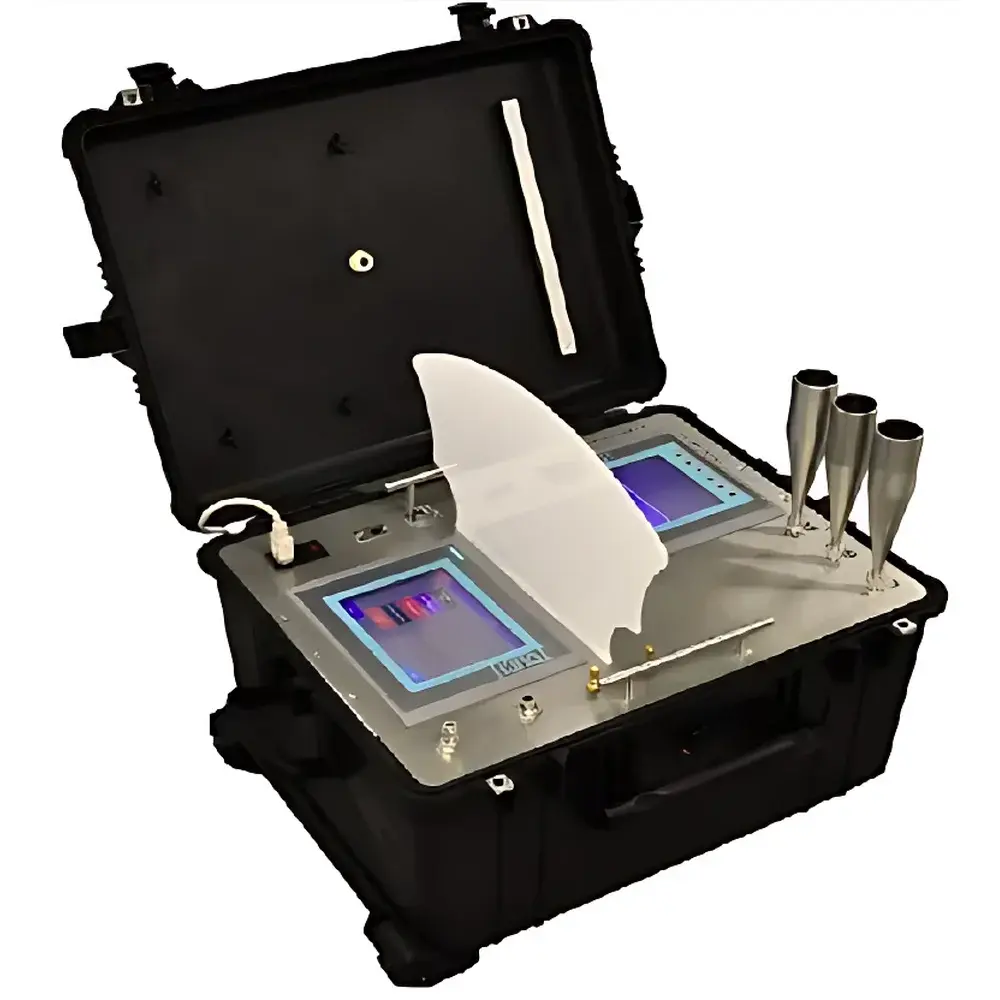
Scentroid SC300 Automated Dynamic Dilution Olfactometer
| Brand | IDES |
|---|---|
| Origin | Canada |
| Model | SC300 |
| Instrument Type | Portable |
| Detection Principle | Dynamic Dilution Olfactometry (DDO) |
| Accuracy | ≤ 5–10% (Dilution Ratio Reproducibility) |
| Flow Rate Range | 10–30 L/min |
| Analysis Time per Sample | 7 min |
| Operating Temperature | 10–28 °C |
| Operating Relative Humidity | 20–80% RH |
| Odor Panel Stations | 1 |
| Compliance | ASTM E679, EN 13725, ISO 13301, US EPA Method TO-15 (supporting odorant delivery) |
Overview
The Scentroid SC300 is a field-deployable, fully automated dynamic dilution olfactometer engineered for standardized human-panel-based odor concentration measurement in accordance with international odor assessment protocols. Unlike sensor-based gas analyzers, the SC300 employs human olfactory perception as the detection modality—leveraging trained odor assessors to determine odor threshold concentrations via serial dilution of ambient or source-emission air samples. Its core architecture implements a precision mass flow-controlled dilution system that delivers certified clean air (zero air) and sample air at programmable ratios—from undiluted (1:1) up to 1,000,000:1—enabling quantification of odor concentration in European Odour Units per cubic meter (ouE/m³). Designed for both mobile laboratory and on-site environmental monitoring applications, the SC300 integrates pneumatic control logic, real-time dilution ratio calibration, and panel response logging into a compact dual-cabinet platform compliant with ASTM E679–19, EN 13725:2022, and ISO 13301:2021 requirements.
Key Features
- Portable dual-cabinet configuration: Two IP65-rated, shock-absorbing transport cases—each under 20 kg—house the olfactometer main unit and zero-air generator, enabling rapid deployment in vehicles, wastewater treatment plants, landfills, and industrial fence-line locations.
- Single-station human-panel interface: Optimized for remote or mobile operation, the 1-position olfactometry station includes an ergonomically designed sniffing port, integrated audio cue system, and tactile response buttons, supporting blind, forced-choice triangle testing protocols.
- Full dynamic dilution range: Achieves dilution factors from 1× to 10⁶× using calibrated thermal mass flow controllers (MFCs), traceable to NIST standards, with automatic pressure and temperature compensation.
- Dual-computer architecture: Includes an embedded industrial control PC running real-time olfactometry firmware and a dedicated assessor workstation with bilingual (English/French/Chinese) GUI for odor panel training, session management, and real-time response capture.
- Zero-air generation: Integrated oil-free, desiccated, and hydrocarbon-scrubbed compressed air system producing <1 ppb THC, <0.1 ppm CO, and <0.05 ppm NOx, meeting EN 13725 Annex B specifications for background air quality.
Sample Compatibility & Compliance
The SC300 accepts gaseous samples delivered via Tedlar® bags, SUMMA canisters, or direct probe lines (with optional heated line kit for condensable compounds). It supports sampling of complex odorant mixtures—including hydrogen sulfide, mercaptans, volatile fatty acids, indoles, and reduced sulfur compounds—without chemical bias. All hardware and software components comply with GLP data integrity requirements, including electronic signatures, audit trails, and 21 CFR Part 11–ready user access controls. Calibration verification logs, dilution ratio certificates, and panel performance metrics are automatically archived in timestamped, tamper-evident format. The instrument meets the minimum technical criteria specified in EN 13725:2022 Clause 6.2 for field olfactometers and is validated for use in regulatory odor impact assessments under provincial environmental codes in Canada and EU Member States.
Software & Data Management
OlfacSoft™ v4.2 (included) provides full lifecycle support—from method setup and panel qualification to statistical analysis of odor thresholds using geometric mean algorithms per ASTM E679. Software features include: customizable test templates (triangle, ascending forced-choice, n-butanol reference calibration), real-time dilution ratio validation graphs, automated outlier rejection based on panel consistency thresholds (≥66% agreement), and export-ready reports conforming to ISO/IEC 17025 documentation standards. Raw data files are stored in open CSV and SQLite formats; metadata (flow rates, ambient T/RH, operator ID, sample ID) is embedded per IEC 61508–compliant tagging. Remote diagnostics and firmware updates are supported over secure TLS-enabled Ethernet or LTE modem connection.
Applications
- Regulatory odor compliance monitoring at municipal wastewater facilities, composting sites, rendering plants, and livestock operations.
- Fence-line odor characterization studies supporting environmental impact assessments (EIAs) and permitting submissions.
- Source identification and emission rate estimation using inverse dispersion modeling coupled with SC300-derived ouE/m³ values.
- Odor abatement technology validation—e.g., biofilter efficiency testing, chemical scrubber optimization, and activated carbon breakthrough evaluation.
- Academic research in sensory science, atmospheric chemistry, and human exposure modeling where perceptual endpoints are required over instrumental surrogates.
FAQ
Does the SC300 require annual third-party calibration?
Yes—annual verification of MFC accuracy, zero-air purity, and dilution ratio linearity is recommended per EN 13725 Annex C and must be performed by an ISO/IEC 17025-accredited laboratory.
Can the SC300 be used indoors without external ventilation?
Yes—the system operates in recirculation mode with internal catalytic oxidation and activated carbon filtration to maintain background odor-free conditions during repeated panel sessions.
Is training provided for odor panel recruitment and qualification?
Scentroid offers certified olfactometry trainer courses aligned with EN 13725 Annex D, including panel selection criteria, n-butanol threshold testing, and ongoing performance monitoring protocols.
What is the maximum allowable sample humidity for reliable dilution?
Samples with relative humidity >80% RH at inlet require optional chilled-mirror dew point conditioning to prevent condensation in flow paths and MFC drift.
How does the SC300 handle odor fatigue during extended testing sessions?
The software enforces mandatory rest intervals between samples, randomizes presentation order, and monitors individual assessor response latency and consistency to flag potential fatigue-induced bias.







