
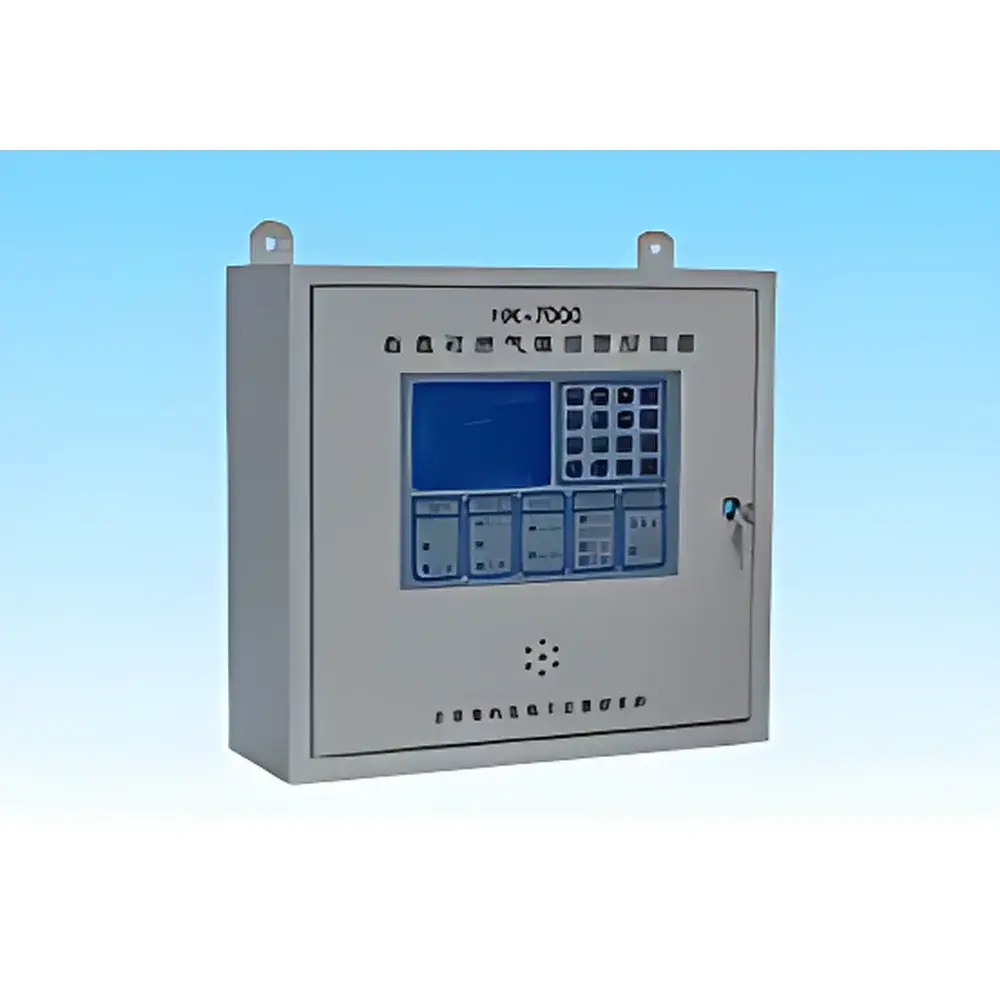
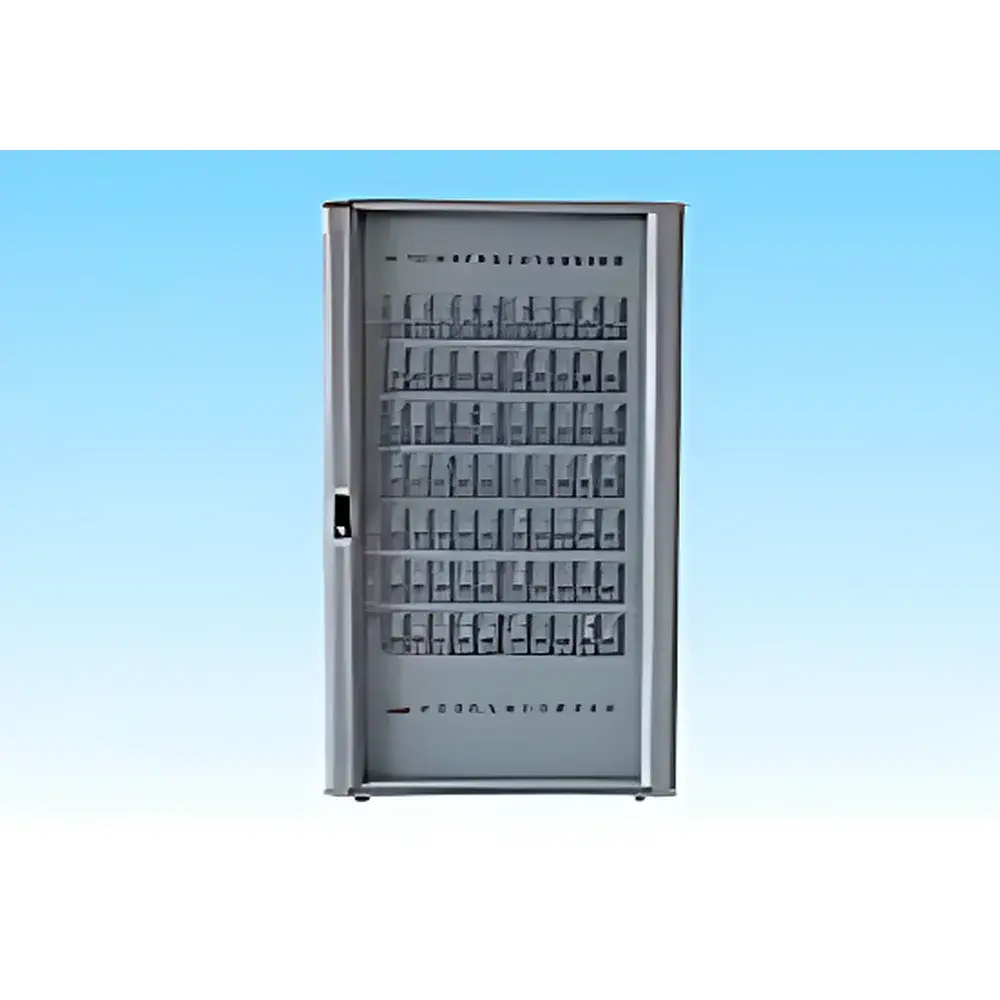
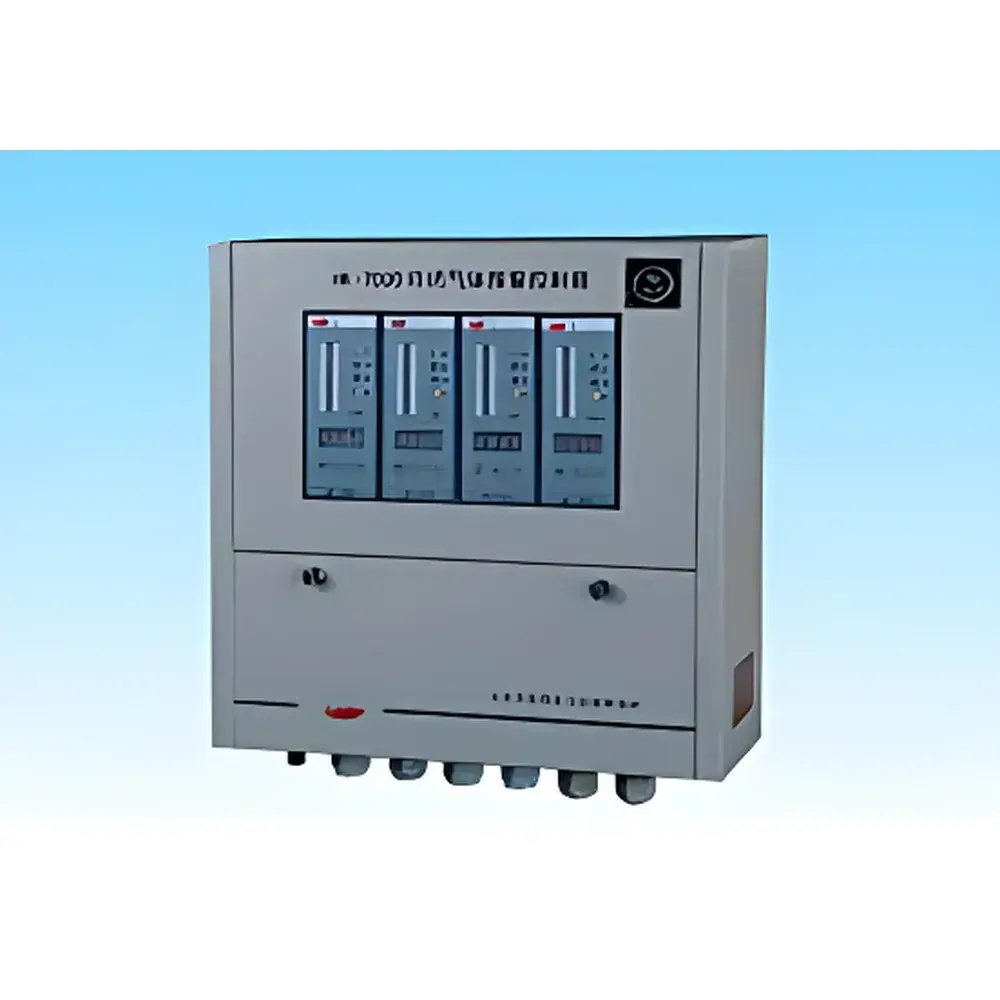
HK-7000 Flammable Gas Alarm Controller
| Brand | Huake Instrument |
|---|---|
| Origin | Beijing, China |
| Manufacturer Type | Authorized Distributor |
| Country of Origin | China |
| Model | HK-7000 |
| Pricing | Available Upon Request |
| Display | 320×240 dot-matrix LCD with Chinese interface, 8 channels per screen, configurable screen refresh interval (1–9 sec) |
| Measurement Range | Dependent on connected detector type |
| Accuracy | ±1% F.S. |
| Maximum Detector Capacity | 32 units |
| Alarm Levels | Dual-stage (Level 1 & Level 2), user-configurable thresholds |
| Alarm Output | 8 shared relays for 32-channel alarm and fault signaling (DC 24 V / 5 A or AC 220 V / 5 A) |
| Operating Temperature | 0–40 °C |
| Operating Humidity | ≤93% RH at 40 °C (non-condensing) |
| Atmospheric Pressure | 86–106 kPa |
| Input Signal | CAN bus or 4–20 mA analog |
| Maximum Communication Distance | ≤10 km |
| Power Supply | AC 220 V ±15%, 50/60 Hz |
| Detector Power Output | DC 24 V (max. 5 A) |
| Backup Power | 2 × 12 V / 7 Ah sealed lead-acid batteries |
| Power Consumption | ≤150 W |
| Compliance Standard | Q/HDHKY023-2006 |
Overview
The HK-7000 Flammable Gas Alarm Controller is a centralized monitoring and alarm management system engineered for industrial safety applications requiring real-time detection and response to combustible gas hazards. Designed in accordance with China’s enterprise standard Q/HDHKY023-2006, the controller functions as the central processing unit in distributed gas detection networks—receiving, interpreting, and acting upon signals from up to 32 field-mounted detectors via robust CAN bus or standardized 4–20 mA analog interfaces. Its core operational principle relies on digital signal acquisition, threshold-based logic evaluation, and deterministic relay actuation to initiate audible, visual, and process-level alarms. The system is not a standalone sensor but a certified control hub intended for integration into larger safety instrumented systems (SIS) or plant-wide environmental monitoring infrastructures. It supports heterogeneous detector configurations, enabling simultaneous monitoring of multiple flammable gases—including methane, propane, hydrogen, and hydrocarbon vapors—each with independent calibration and alarm parameter assignment.
Key Features
- Centralized management of up to 32 addressable or analog gas detectors, with individual configuration per channel for measurement range, alarm setpoints, gas type, and physical location tagging.
- High-visibility 320×240 dot-matrix LCD display with full Chinese UI; dynamically cycles through 8-channel concentration readings per screen, with adjustable refresh interval (1–9 seconds).
- Dual-stage alarm architecture: independently programmable Level 1 (pre-alarm/warning) and Level 2 (critical shutdown) thresholds for each channel.
- Eight high-capacity relays multiplexed across all 32 channels for alarm and fault indication—rated at DC 24 V / 5 A or AC 220 V / 5 A, suitable for interfacing with sirens, strobes, ventilation controls, or emergency shutdown valves.
- Integrated dual-power architecture: primary AC 220 V input with automatic switchover to redundant 12 V / 7 Ah battery backup (2×), ensuring continuous operation during grid failure.
- Onboard non-volatile memory retains up to 1024 timestamped alarm and fault events—preserved even after power loss—with queryable history via front-panel navigation.
- Comprehensive self-diagnostic capability covering communication integrity, power status, relay functionality, and detector connectivity verification.
Sample Compatibility & Compliance
The HK-7000 is compatible with a wide range of catalytic bead (pellistor), infrared (IR), and semiconductor-type flammable gas detectors—provided they output standardized 4–20 mA signals or support CAN bus protocol per ISO 11898-2. It does not perform direct gas analysis; rather, it interprets validated concentration data from certified third-party sensors. While the controller itself complies with Q/HDHKY023-2006, end-use compliance with international safety standards (e.g., IEC 61508 SIL 2, EN 50194, or NFPA 72) depends on the full system design—including detector certification, installation methodology, and integration with higher-level safety controllers. The device meets electromagnetic compatibility requirements for industrial environments (IEC 61000-4 series) and operates reliably under ambient conditions of 0–40 °C and ≤93% RH (non-condensing).
Software & Data Management
Configuration, calibration, and event review are performed locally via the front-panel keypad and LCD interface—no external PC software or proprietary drivers required. All settings—including channel-specific alarm values, display units (e.g., %LEL or ppm), and screen timeout—are stored in EEPROM and persist across power cycles. Alarm logs include date/time stamps, channel ID, gas type, measured value at trigger, and alarm level—enabling traceability for internal audits or incident investigations. Though the HK-7000 lacks native Ethernet or Modbus TCP support, optional gateway modules (sold separately) can extend its data export capability to SCADA or DCS platforms via RS-485 or Modbus RTU.
Applications
Typical deployment environments include natural gas distribution stations, petrochemical refineries, LNG terminals, paint spray booths, solvent storage areas, biogas upgrading facilities, and municipal wastewater treatment plants—where early detection of hydrocarbon or hydrogen accumulation is critical to preventing fire or explosion. The controller is also employed in laboratory fume hood monitoring networks, pharmaceutical cleanroom utility corridors, and university research facility gas cabinets—serving as the primary alarm interface in multi-point safety architectures.
FAQ
Does the HK-7000 include built-in gas sensors?
No. It is a controller-only unit and requires external certified flammable gas detectors connected via CAN bus or 4–20 mA wiring.
Can alarm thresholds be customized per channel?
Yes. Each of the 32 supported channels allows independent configuration of Level 1 and Level 2 alarm concentrations, units, and gas identification.
What happens during mains power failure?
The system automatically switches to the dual 12 V / 7 Ah backup battery bank, sustaining full functionality—including display, relay outputs, and logging—for ≥2 hours under typical load.
Is remote configuration possible?
Local configuration only. Remote setup requires an optional communication gateway and external host software—not included with the base unit.
Does it support Modbus or BACnet protocols?
Not natively. It communicates via CAN bus (ISO 11898-2 compliant) or analog 4–20 mA. Protocol translation requires add-on interface hardware.







