
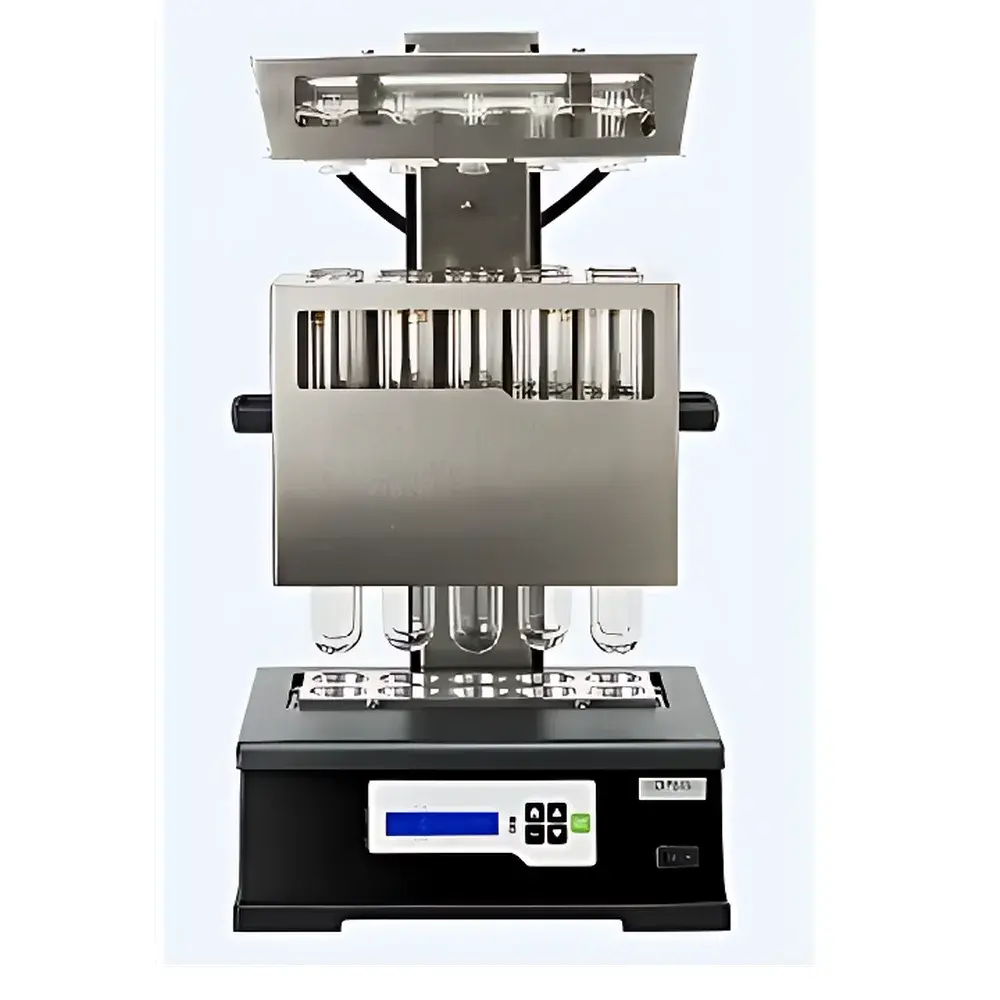
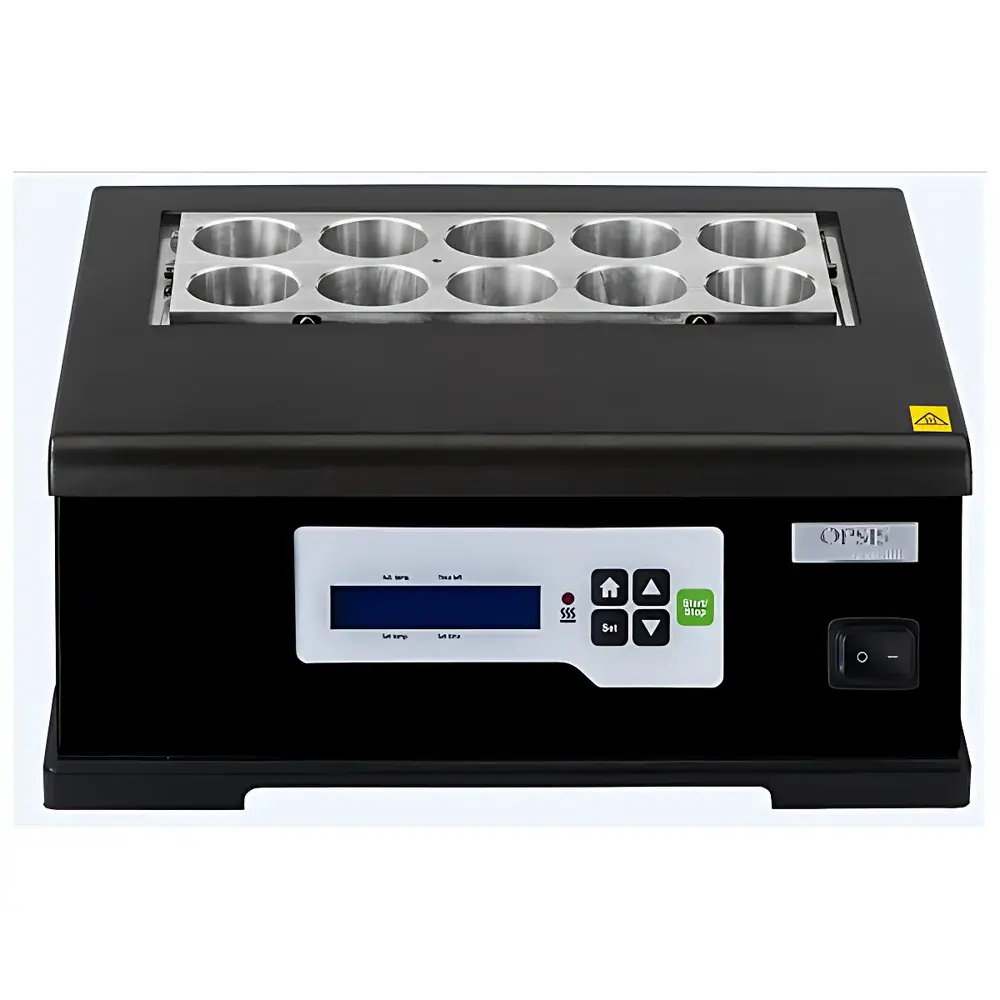
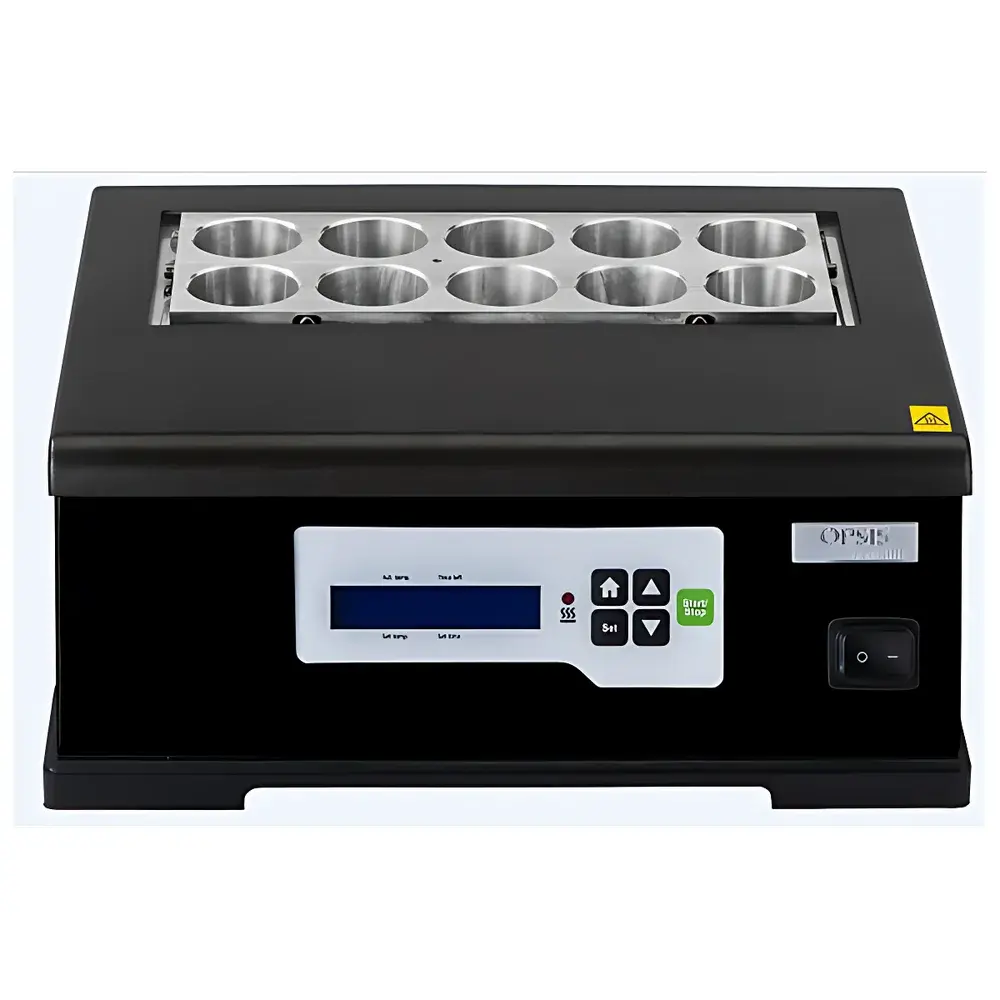
OPSIS DI-320 Automated Kjeldahl Digestion System
| Brand | OPSEUS/OPSIS |
|---|---|
| Origin | Sweden |
| Manufacturer Type | Authorized Distributor |
| Origin Category | Imported |
| Model | DI-320 |
| Instrument Type | Electric Heating Digestion System |
| Automation Level | Fully Automatic |
| Digestion Positions | 20 |
| Max. Heating Temperature | 450 °C |
| Temperature Control Accuracy | ±0.5 °C |
| Heating Principle | Resistive Electric Heating |
| Reagent Channels | 20 |
Overview
The OPSEUS DI-320 Automated Kjeldahl Digestion System is a precision-engineered, fully automated electric heating digestion instrument designed for high-throughput, reproducible sample preparation in compliance with classical Kjeldahl nitrogen determination protocols. Based on resistive heating principles, the system delivers uniform thermal energy across all 20 digestion positions using calibrated stainless-steel heating blocks and integrated Pt100 temperature sensors. Its operational architecture adheres to the fundamental requirements of AOAC Official Method 984.27, EPA Method 351.2, DIN EN ISO 14891, and ISO 5983–1, ensuring methodological traceability for food, feed, environmental, and agricultural laboratories conducting regulatory-compliant nitrogen analysis. The DI-320 operates within a programmable temperature range of ambient to 450 °C, with digital real-time monitoring and automatic overtemperature cutoff at 500 °C — a critical safety threshold aligned with IEC 61010-1 safety standards for laboratory equipment.
Key Features
- Fully automated lifting and lowering mechanism for the digestion rack — engineered to reduce manual handling, minimize operator exposure to hot surfaces and corrosive fumes, and improve ergonomics via placement at optimal working height (approx. 85 cm).
- Programmable lift motor control embedded within digestion methods, enabling synchronized timing between heating phases and mechanical positioning.
- Manual override capability: operators may load or unload digestion tubes at any stage without interrupting system integrity or calibration status.
- Dual-layer corrosion protection: fluororubber tubing, borosilicate glass exhaust hoods, and thick-walled PTFE sealing rings ensure long-term resistance against concentrated H2SO4, catalyst mixtures (e.g., CuSO4/K2SO4), and aggressive digestate vapors.
- Self-diagnostic firmware: performs automatic sensor validation, heater continuity checks, and thermal drift compensation upon startup; alerts users via visual indicators if calibration deviation exceeds ±0.3 °C.
- Integrated overtemperature safeguard with audible and visual alarm, coupled with automatic power cutoff at 500 °C — independent of main controller logic for fail-safe operation.
Sample Compatibility & Compliance
The DI-320 accommodates standard 100–500 mL Kjeldahl digestion tubes (e.g., borosilicate glass, 25 × 200 mm or 30 × 300 mm formats) across all 20 positions. It supports both macro- and semi-micro digestion protocols per ISO 8586 and AOAC guidelines. All wetted materials comply with USP Class VI biocompatibility requirements and are inert to sulfuric acid concentrations up to 98 % v/v at 450 °C. The system meets CE marking requirements under the EU Machinery Directive 2006/42/EC and Electromagnetic Compatibility Directive 2014/30/EU. Optional acid gas scrubbing modules enable full integration into fume hood infrastructure compliant with ANSI Z9.5 and EN 14175-3.
Software & Data Management
While the DI-320 operates via an intuitive front-panel interface with tactile buttons and LED status indicators, it supports optional RS-232 or USB-to-serial connectivity for external method logging and audit trail generation. Each digestion run records timestamped temperature profiles, lift actuation events, duration metrics, and fault codes — data exportable as CSV for integration into LIMS platforms supporting 21 CFR Part 11-compliant electronic records. Firmware updates maintain alignment with evolving GLP/GMP documentation expectations, including user-access logs, method versioning, and parameter change history.
Applications
- Routine nitrogen quantification in cereals, dairy products, meat, and plant-based proteins per AOAC 984.27 and ISO 14891.
- Crude protein estimation in animal feed formulations under EN ISO 5983–1 and FDA 21 CFR §106.30.
- Environmental monitoring of total Kjeldahl nitrogen (TKN) in wastewater, sludge, and soil extracts per EPA Method 351.2 and DIN 38409-H5.
- Method development and validation studies requiring strict thermal reproducibility (±0.5 °C) and inter-batch comparability across ≥20 samples.
- High-volume contract testing laboratories requiring reduced hands-on time, minimized rework due to inconsistent digestion, and auditable process documentation.
FAQ
Does the DI-320 support gradient temperature programming?
Yes — users can define up to 5 sequential ramp-hold segments per method, with independent time (1–999 min) and setpoint (ambient to 450 °C) parameters.
Is the system compatible with third-party fume extraction systems?
Yes — the exhaust port is configured for direct coupling to standard 100 mm ducting; optional active scrubbers (NaOH/H2O₂) are available for complete H2SO4 vapor neutralization.
How is temperature calibration verified?
The built-in Pt100 sensor undergoes automatic zero-point and span verification during boot-up; field calibration is supported using NIST-traceable dry-block calibrators.
What maintenance intervals are recommended?
Visual inspection of PTFE seals and glass hoods every 200 runs; annual verification of thermal uniformity across all 20 zones using calibrated thermocouple mapping.
Can digestion tubes from other manufacturers be used?
Yes — provided they conform to ISO 10523 dimensions and are rated for continuous use at 450 °C in concentrated sulfuric acid environments.



