Internal Pressure-Type Micro/Nano Bubble Generator SPG MN-20S
| Brand | SPG |
|---|---|
| Origin | Japan |
| Manufacturer Type | Authorized Distributor |
| Origin Category | Imported |
| Model | MN-20S |
| Pricing | Available Upon Request |
| Operating Pressure | Up to 0.3 MPa |
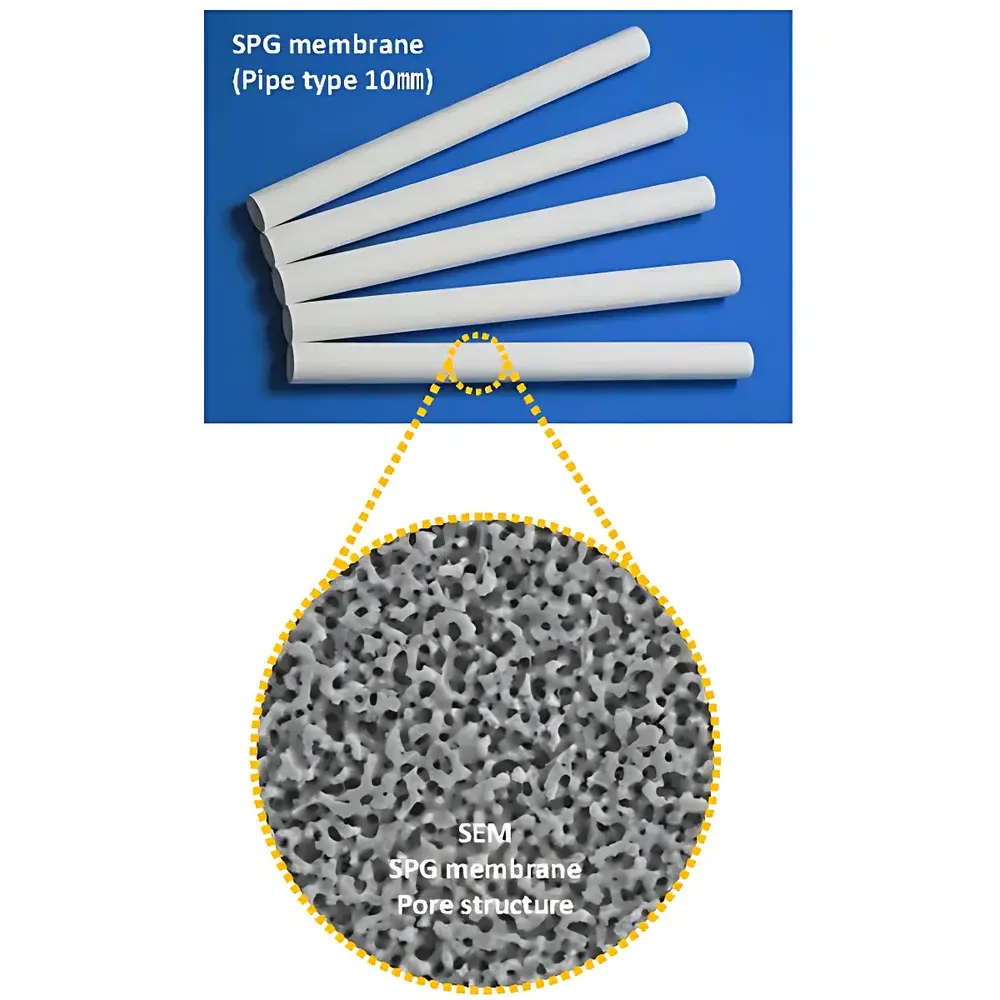
| Membrane Tube Dimensions | Ø10 mm × 20 mm (Effective Length: 10 mm) |
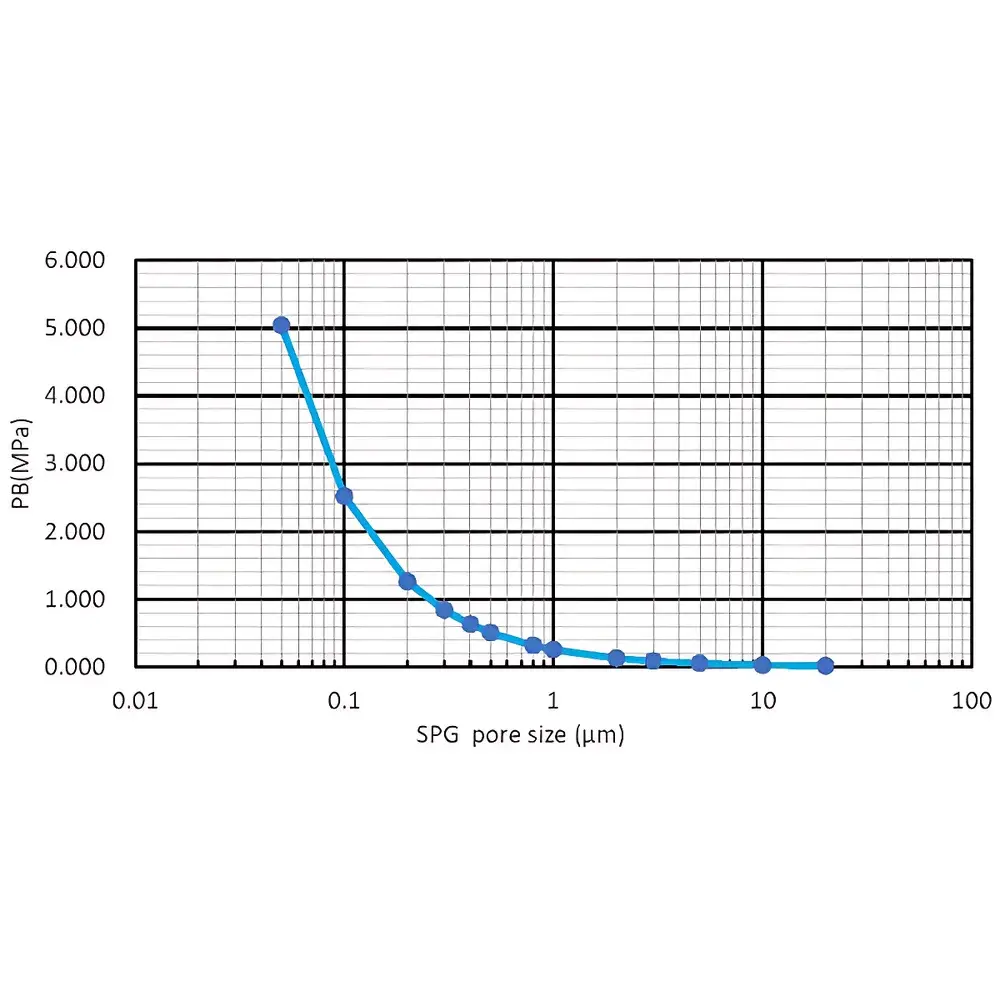
| Pore Size | 1 µm (Standard) |
| Optional Materials | SUS304, SUS316 Stainless Steel |
| Sealing Material | FKM O-Ring |
| Gas Inlet Connection | 6 mm OD Tubing |
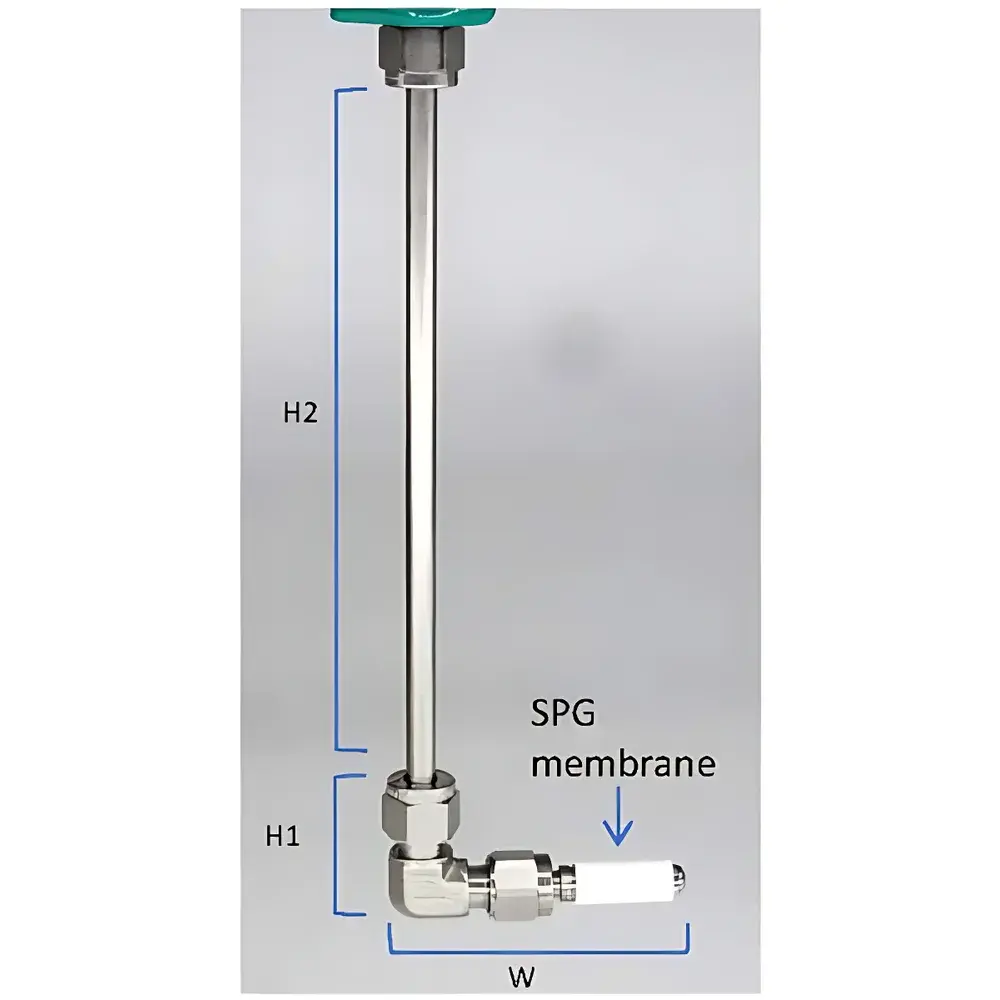
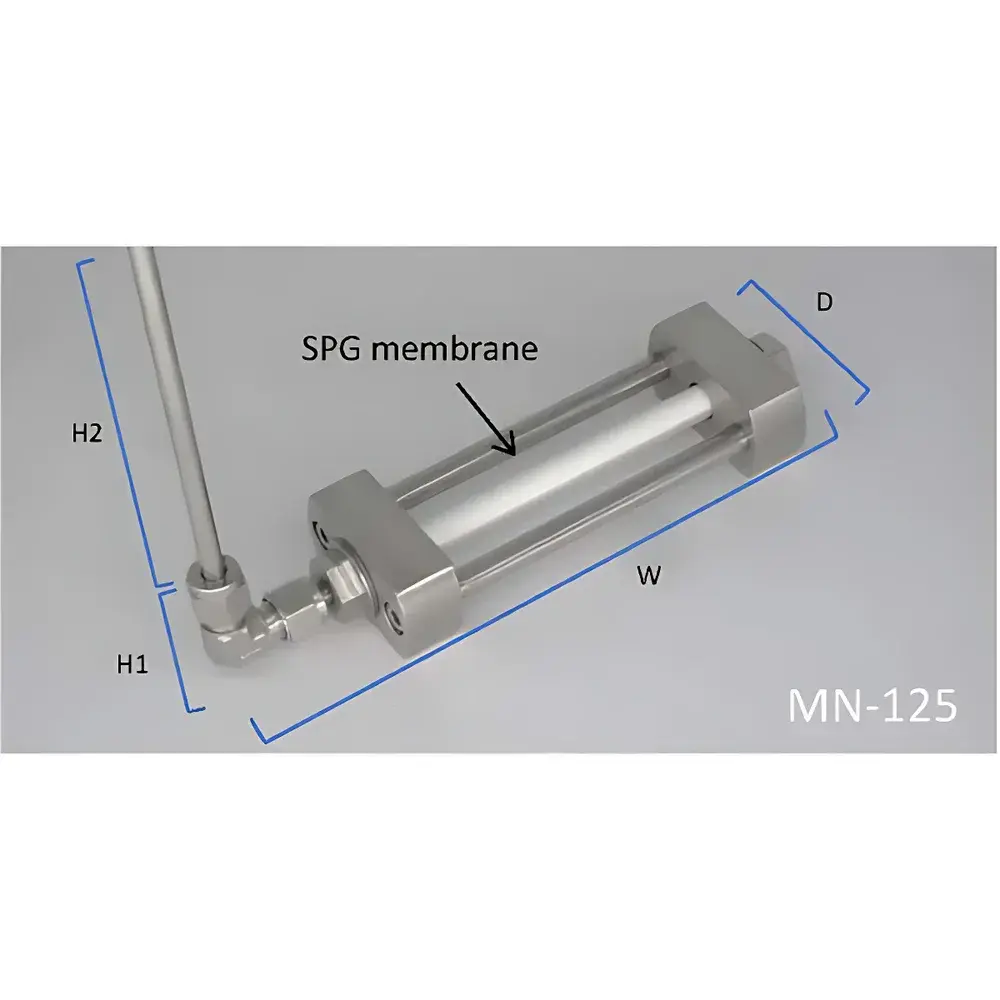
| Device Footprint | W 62 mm × H₁ 34 mm |
| Adjustable Shaft Length (H₂) | 20–500 mm |
| Sample Volume Range | 100 mL – 2 L |
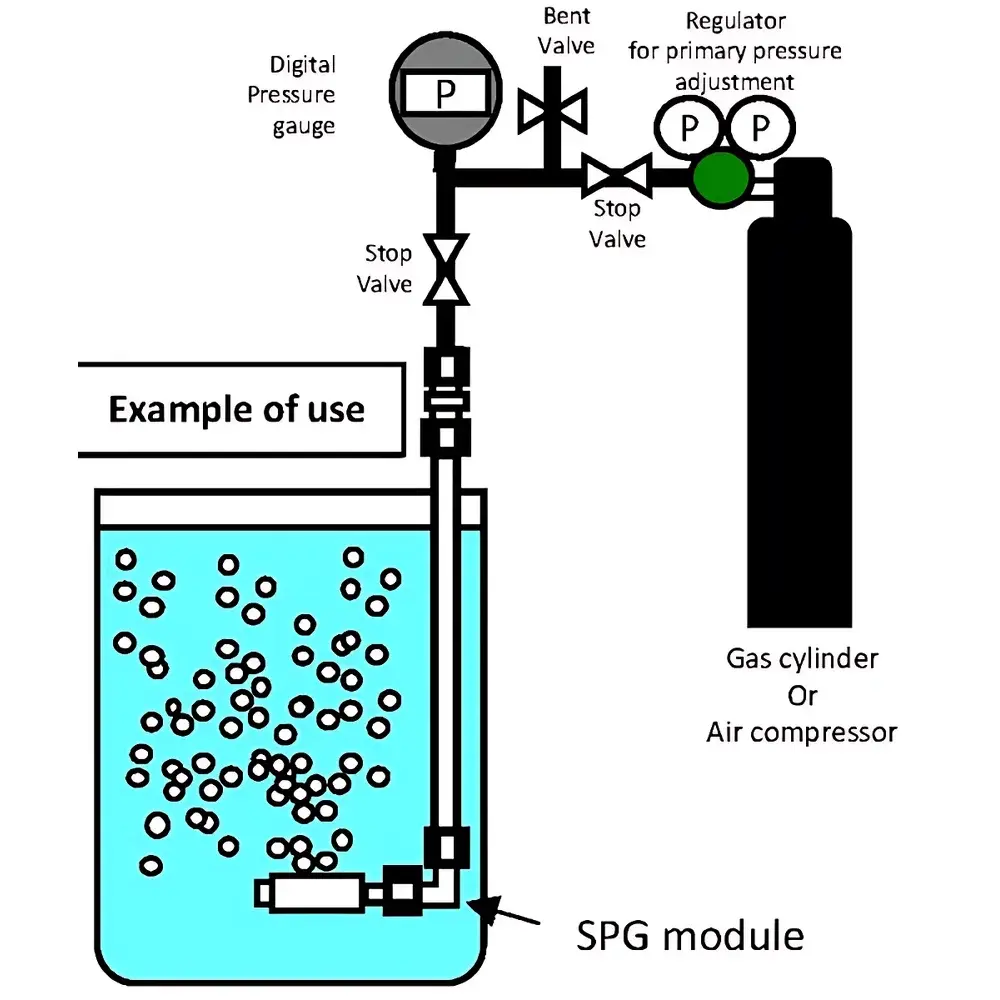
| Accessories Not Included | Main pressure gauge, gas cylinder, primary pressure regulator, shut-off valve, vent valve, secondary pressure regulator, tubing, or pressure gauges |
| Optional Accessories | Regulated gas supply kits, calibrated pressure manifolds, stainless-steel fluidic manifolds, and ISO-compliant mounting fixtures |
Overview
The SPG MN-20S Internal Pressure-Type Micro/Nano Bubble Generator is an engineered membrane-based dispersion system designed for controlled generation of stable microbubbles (1–50 µm) and nanobubbles (<1 µm) in liquid phases under precisely regulated gas-over-liquid pressure conditions. Unlike shear-based or ultrasonic methods, the MN-20S employs a sintered metal membrane (SPG® — Shirasu Porous Glass-derived microstructure, adapted for stainless-steel fabrication) operating on the principle of pressure-driven gas extrusion through uniform submicron pores. This mechanism ensures deterministic bubble size distribution governed primarily by pore geometry, surface tension of the liquid phase, and applied transmembrane pressure—enabling reproducible bubble nucleation without cavitation-induced degradation or thermal perturbation. The device is optimized for benchtop laboratory use in volumes ranging from 100 mL to 2 L, making it suitable for formulation screening, aqueous process development, and fundamental interfacial science studies where bubble size stability, gas dissolution kinetics, and minimal sample disturbance are critical.
Key Features
- SPG®-derived stainless-steel sintered membrane with certified 1 µm nominal pore size (SUS304 or SUS316 options available for corrosion resistance and cleanability)
- Modular shaft design with user-selectable H₂ length (20–500 mm), enabling vertical immersion depth optimization for varying vessel geometries and mixing dynamics
- FKM O-ring sealing system compliant with ISO 3601-1 for repeatable leak-tight performance at up to 0.3 MPa operating pressure
- Gas inlet compatible with standard 6 mm OD instrumentation tubing; supports nitrogen, oxygen, ozone, CO₂, and compressed air
- Compact footprint (W 62 mm × H₁ 34 mm) for integration into fume hoods, gloveboxes, or automated liquid handling platforms
- No internal moving parts—ensuring long-term mechanical stability, low maintenance, and compatibility with GLP/GMP-aligned validation protocols
Sample Compatibility & Compliance
The MN-20S operates across a broad range of aqueous and low-viscosity non-aqueous media, including deionized water, buffer solutions, dilute polymer dispersions (<50 mPa·s), and pharmaceutical vehicle formulations. Bubble size output is empirically correlated to liquid surface tension (γ), gas solubility, and applied pressure per the Young–Laplace relationship (ΔP = 4γ/r). While nominal pore size defines upper bound diameter, actual generated distributions require empirical calibration per fluid-gas pair—particularly for surfactant-stabilized systems. The device meets mechanical safety requirements per ISO 10218-1 for collaborative equipment interfaces and conforms to material biocompatibility standards (ISO 10993-5/10) when specified with SUS316 and FKM. It supports traceable operation within FDA 21 CFR Part 11–enabled environments when integrated with validated pressure control and data logging modules.
Software & Data Management
The MN-20S is a standalone hardware module and does not include embedded firmware or proprietary software. However, it is fully compatible with third-party industrial control systems (e.g., LabVIEW, MATLAB Data Acquisition Toolkits, or Siemens S7 PLCs) via analog 4–20 mA pressure feedback loops and digital I/O triggers. When paired with optional secondary pressure regulators and calibrated digital manometers (e.g., Druck DPI 620 series), users can implement closed-loop pressure control with ±0.005 MPa repeatability. Audit trails, parameter logging, and electronic signatures may be established using compliant LIMS or ELN platforms—provided all connected instrumentation carries documented calibration certificates and change-control records aligned with ISO/IEC 17025 requirements.
Applications
- Enhanced oxidation kinetics in advanced water treatment (e.g., ozone nanobubble-mediated contaminant degradation per ASTM D7262)
- Stabilization studies of functional beverages and nutraceutical emulsions requiring dissolved gas retention
- Cell culture aeration optimization in bioreactors using oxygen microbubbles to improve mass transfer coefficients (kLa)
- Material surface cleaning and nano-coating pre-treatment via controlled cavitation-free bubble collapse
- Reference generation for particle sizing instrument calibration (e.g., laser diffraction, electrical sensing zone)
- Interfacial rheology investigations involving gas–liquid monolayer formation and lifetime analysis
FAQ
Does the MN-20S include a pressure regulator or gas supply system?
No. The unit requires external pressure regulation: a primary high-pressure source (e.g., gas cylinder), main pressure-reducing valve, secondary fine-adjustment regulator, and calibrated pressure gauge must be supplied separately.
Can pore size be customized beyond 1 µm?
Yes. SPG offers custom sintered membranes with nominal pore sizes of 0.5 µm, 2 µm, and 5 µm upon request—subject to minimum order quantities and extended lead times.
Is the device suitable for sterile applications?
When configured with SUS316 membrane, FKM seals, and autoclavable housing components, the MN-20S supports SIP (steam-in-place) cycles per ASME BPE-2022 guidelines, provided proper validation of thermal expansion and seal integrity is performed.
What validation documentation is provided?
Each unit ships with a Certificate of Conformance (CoC), dimensional inspection report, and material test reports (MTRs) for SUS304/SUS316 components. IQ/OQ protocols are available as optional engineering services.
How is bubble size verified experimentally?
Recommended methods include high-speed microscopy with diffraction-limited resolution, resonant mass measurement (Archimedes™), or nanoparticle tracking analysis (NTA)—all requiring independent calibration against NIST-traceable standards.