
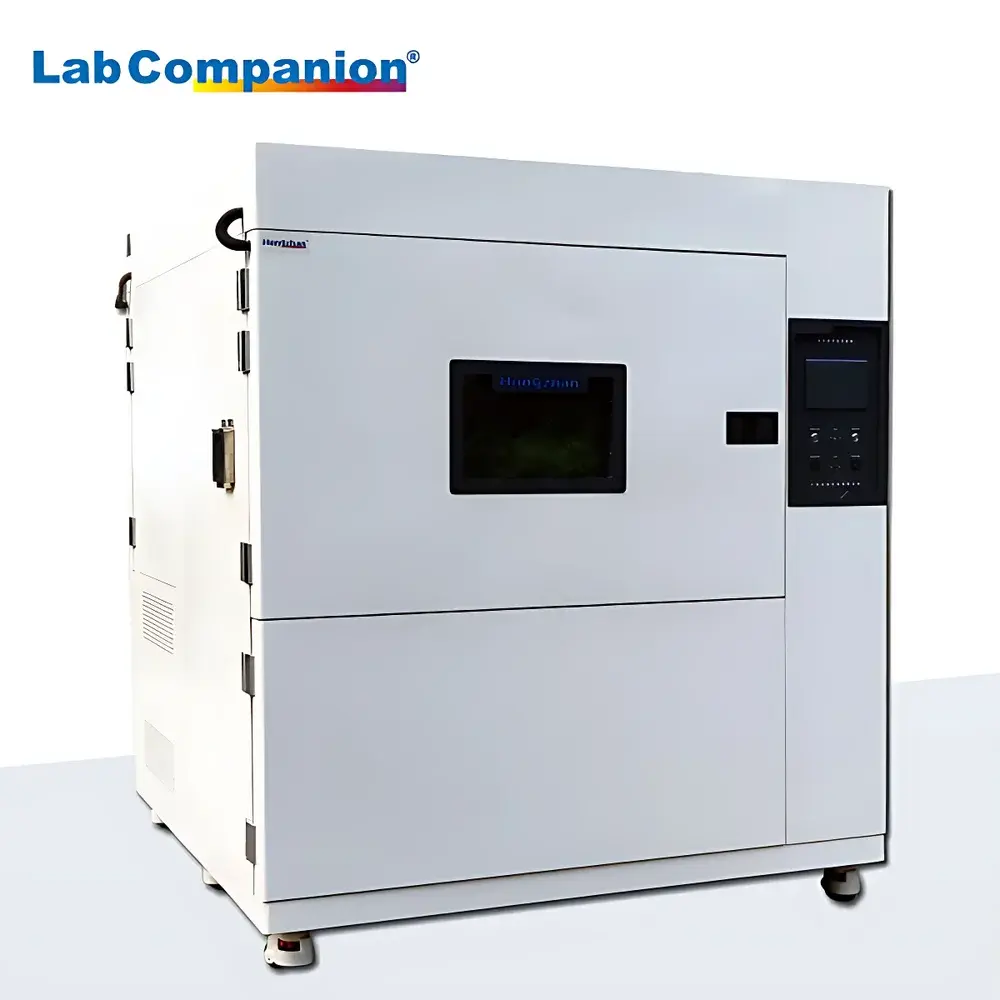
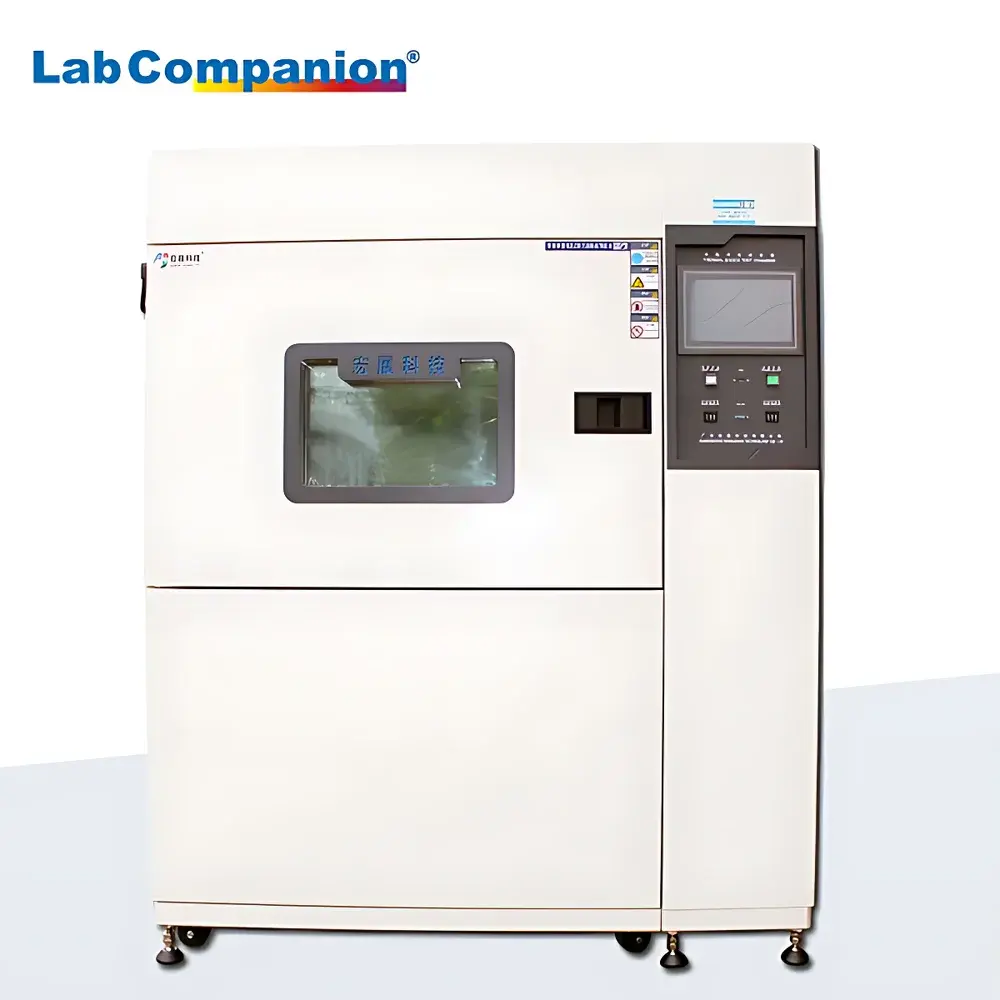
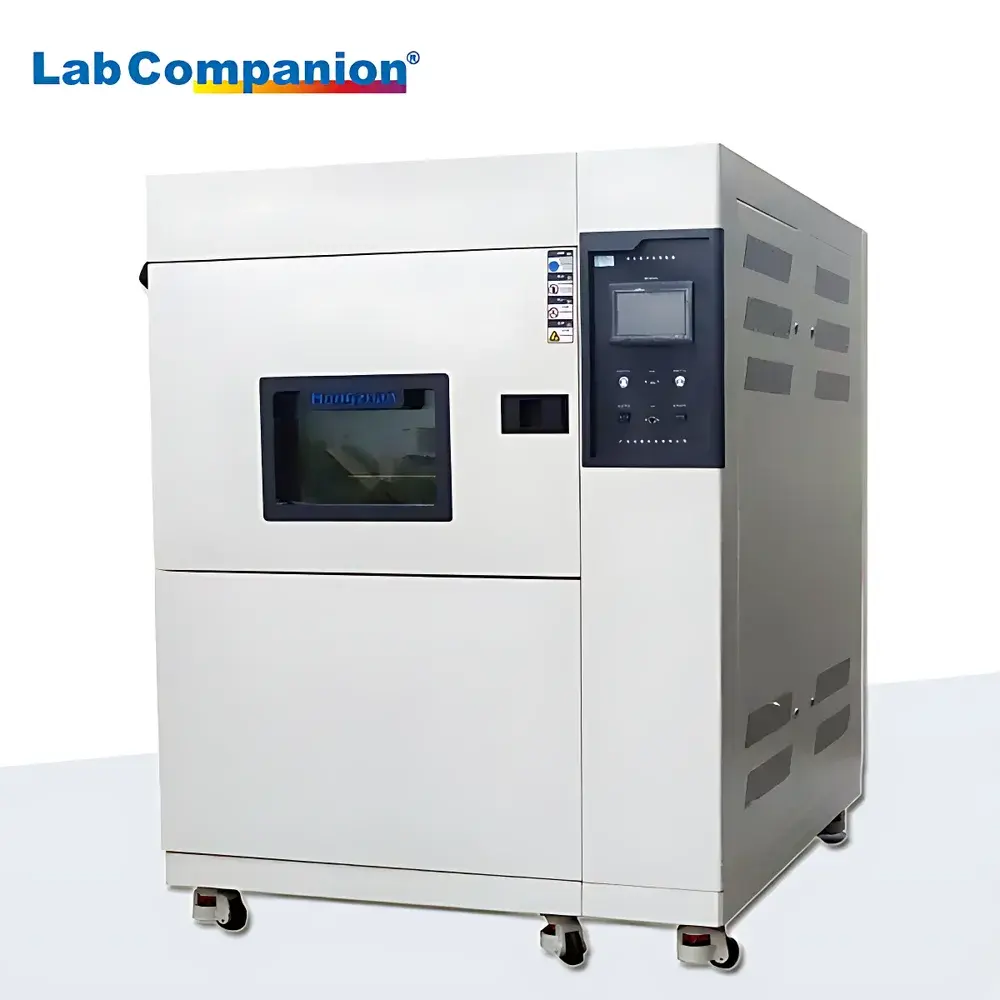
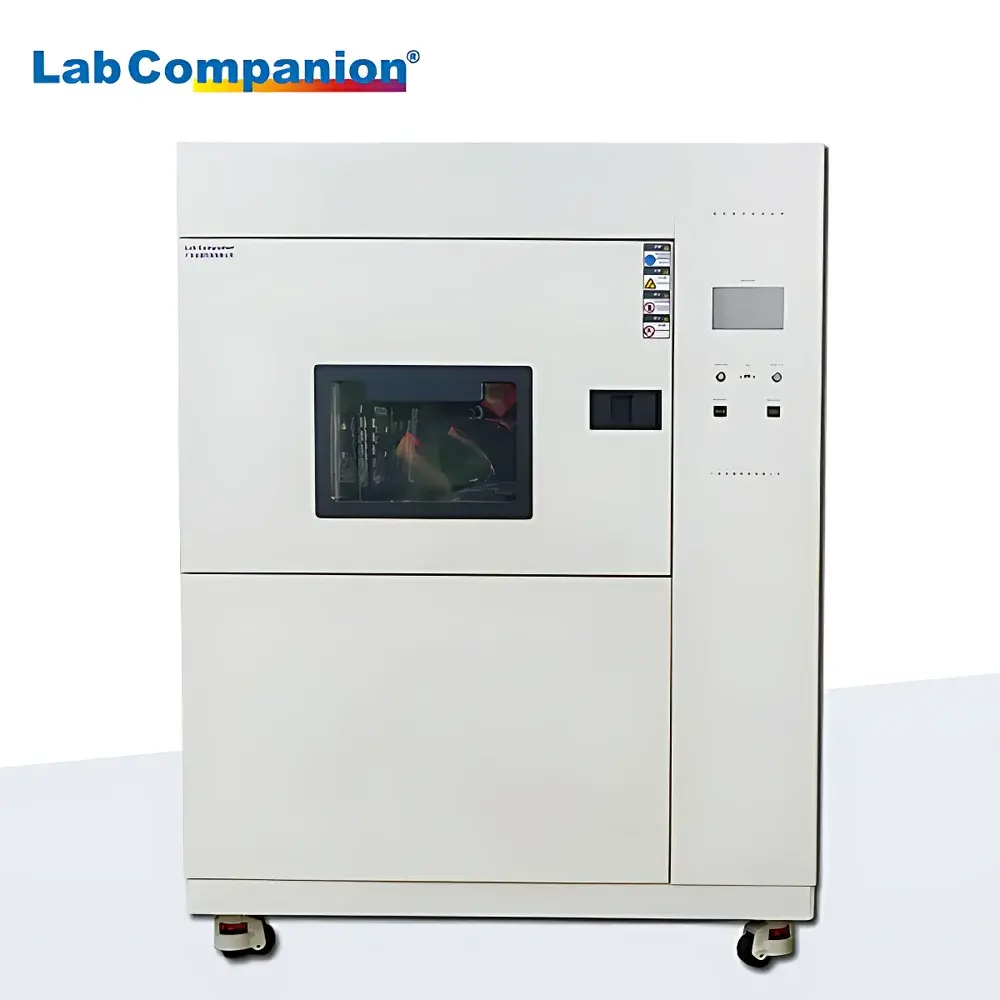
LabCompanion TSL-408W Thermal Shock Test Chamber
| Brand | LabCompanion |
|---|---|
| Origin | Guangdong, China |
| Manufacturer Type | Direct Manufacturer |
| Model | TSL-408W |
| High-Temperature Range | +60 °C to +200 °C |
| Low-Temperature Range | −78 °C to 0 °C |
| Thermal Shock Range | −40 °C to +150 °C |
| Temperature Stability | ±2 °C |
| Heating Rate | +60 °C to −200 °C ≤ 20 min |
| Cooling Rate | +20 °C to −75 °C ≤ 60 min |
Overview
The LabCompanion TSL-408W Thermal Shock Test Chamber is an industrial-grade, two-zone (hot/cold) rapid temperature transition system engineered for accelerated reliability assessment of electronic components, aerospace materials, automotive modules, and hermetically sealed packages. It operates on the principle of pneumatic door actuation between thermally isolated chambers—enabling precise, repeatable thermal cycling without mechanical refrigerant throttling or heater overshoot. Unlike single-chamber ramp-based systems, this dual-zone architecture ensures true step-change thermal shock exposure per IEC 60068-2-14, MIL-STD-810H Method 503.5, and JESD22-A104D. The chamber’s core function is to subject test specimens to abrupt transitions between extreme high- and low-temperature environments—simulating field stresses such as solder joint fatigue, polymer embrittlement, interfacial delamination, and coefficient-of-thermal-expansion (CTE) mismatch failure modes.
Key Features
- Dual independent chamber design with pneumatically actuated insulated transfer door—ensuring minimal cross-contamination and <5-minute temperature recovery time after specimen transfer
- High-efficiency cascade refrigeration system using environmentally compliant R404A/R23 mixed refrigerants for stable sub-zero operation down to −78 °C
- Pt100 Class A precision sensors (IEC 60751) mounted at chamber center and specimen zone, calibrated traceable to NIST standards
- Industrial PLC-based controller with 7-inch TFT touchscreen interface, supporting programmable multi-step profiles, real-time trend logging, and alarm event history
- Stainless steel 304 interior chamber (W850 × H600 × D800 mm), reinforced structural frame, and double-glazed observation window with anti-fog heating
- Integrated safety interlocks: over-temperature cutoff, refrigerant pressure monitoring, door position verification, and emergency stop circuit per EN 61000-6-2/6-4
Sample Compatibility & Compliance
The TSL-408W accommodates test specimens up to 10 kg mass and 30 kg static load on its adjustable stainless steel shelf—compatible with JEDEC-standard trays, QFP/BGA packages, PCB assemblies, molded plastic housings, and thin-film sensors. Its thermal shock range (−40 °C to +150 °C) aligns with qualification requirements for AEC-Q200 passive components and IPC-9701 solder joint reliability testing. The system meets essential compliance benchmarks including ISO/IEC 17025 calibration traceability, CE marking under the Machinery Directive 2006/42/EC, and RoHS 2011/65/EU material restrictions. Optional validation packages support IQ/OQ/PQ documentation per GMP Annex 15 and FDA 21 CFR Part 11-compliant electronic records when paired with LabCompanion’s optional Audit Trail Module.
Software & Data Management
The embedded control firmware supports CSV export of time-stamped temperature data at user-defined intervals (1–60 sec resolution). For advanced analysis, LabCompanion’s optional PC-based LabControl Suite enables remote monitoring via Ethernet/IP, automated report generation (PDF/Excel), statistical process control (SPC) charting, and deviation alerting via email/SNMP traps. All logged data includes metadata: operator ID, test ID, chamber serial number, sensor calibration expiry, and environmental ambient conditions. Audit trail functionality records every parameter change, profile upload, and manual override—retained for ≥36 months with SHA-256 hashing integrity verification.
Applications
- Qualification testing of semiconductor devices per JEDEC JESD22-A104D (Temperature Cycling) and A106 (Highly Accelerated Temperature and Humidity Stress Test)
- Failure analysis of MEMS sensors, optical modules, and battery management systems exposed to automotive under-hood thermal transients
- Validation of conformal coating adhesion and potting compound integrity in defense electronics per MIL-STD-883 Method 1010.8
- Reliability screening of medical device PCBs subjected to sterilization-cycle thermal gradients (e.g., ethylene oxide or steam autoclave preconditioning)
- Material science research on glass transition behavior, crystallinity shifts, and creep deformation in thermoplastic composites
FAQ
What is the difference between a two-zone and three-zone thermal shock chamber?
Two-zone systems like the TSL-408W use separate hot and cold chambers with specimen transfer; three-zone units add a dedicated ambient soak zone for extended dwell periods—increasing cycle time but improving repeatability for complex profiles.
Does the TSL-408W support custom thermal shock profiles beyond standard ranges?
Yes—the controller allows user-defined ramp rates, dwell times, and cycle counts within hardware limits; however, sustained operation above +200 °C or below −78 °C requires optional upgrades and is not covered under standard warranty.
Is calibration certification included with shipment?
A factory-as-built calibration certificate (per ISO/IEC 17025) is provided, listing as-installed sensor accuracy, uniformity mapping, and recovery time verification at three reference points.
Can the chamber be integrated into an existing MES or LIMS environment?
Via Modbus TCP or OPC UA protocol support (optional firmware module), enabling bidirectional communication with manufacturing execution systems for automated job dispatch and result ingestion.
What maintenance intervals are recommended for long-term stability?
Refrigerant oil replacement and filter dryer service every 24 months; annual verification of door seal integrity, sensor drift, and pneumatic actuator response time—documented in the included Preventive Maintenance Logbook.



