
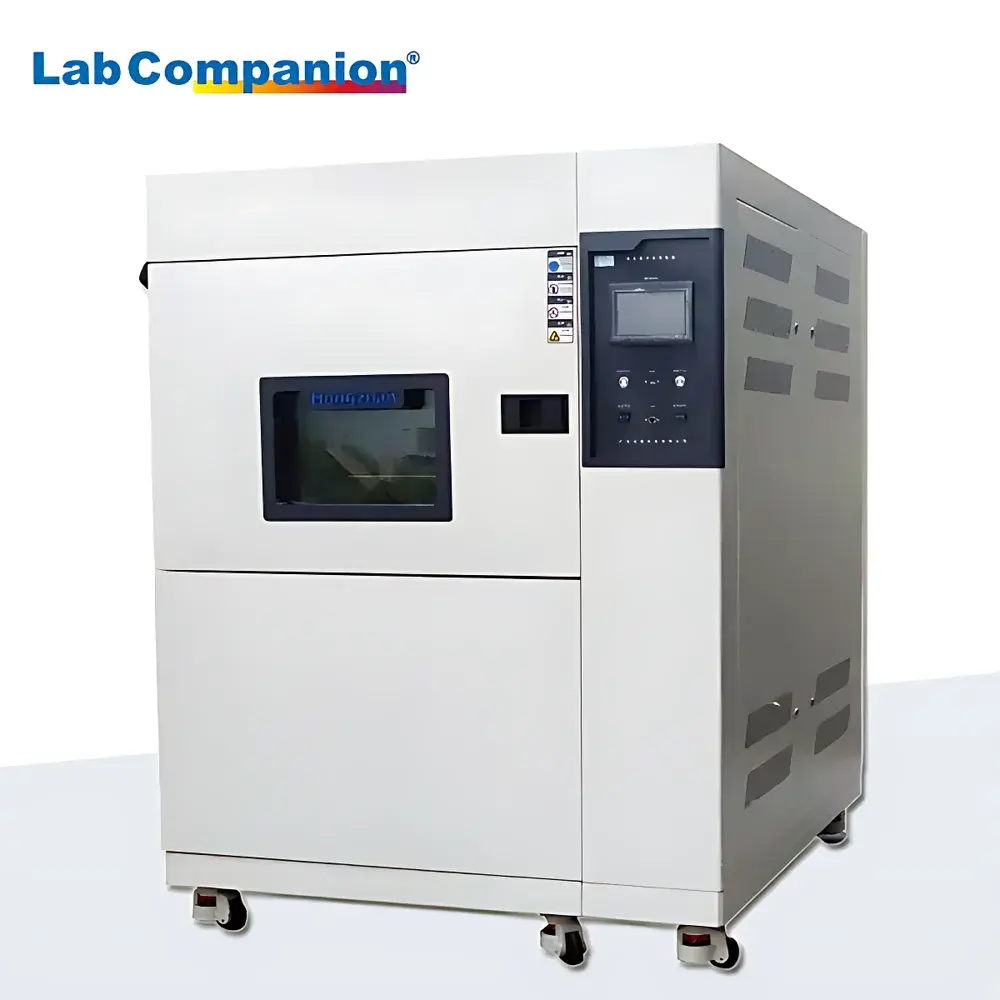
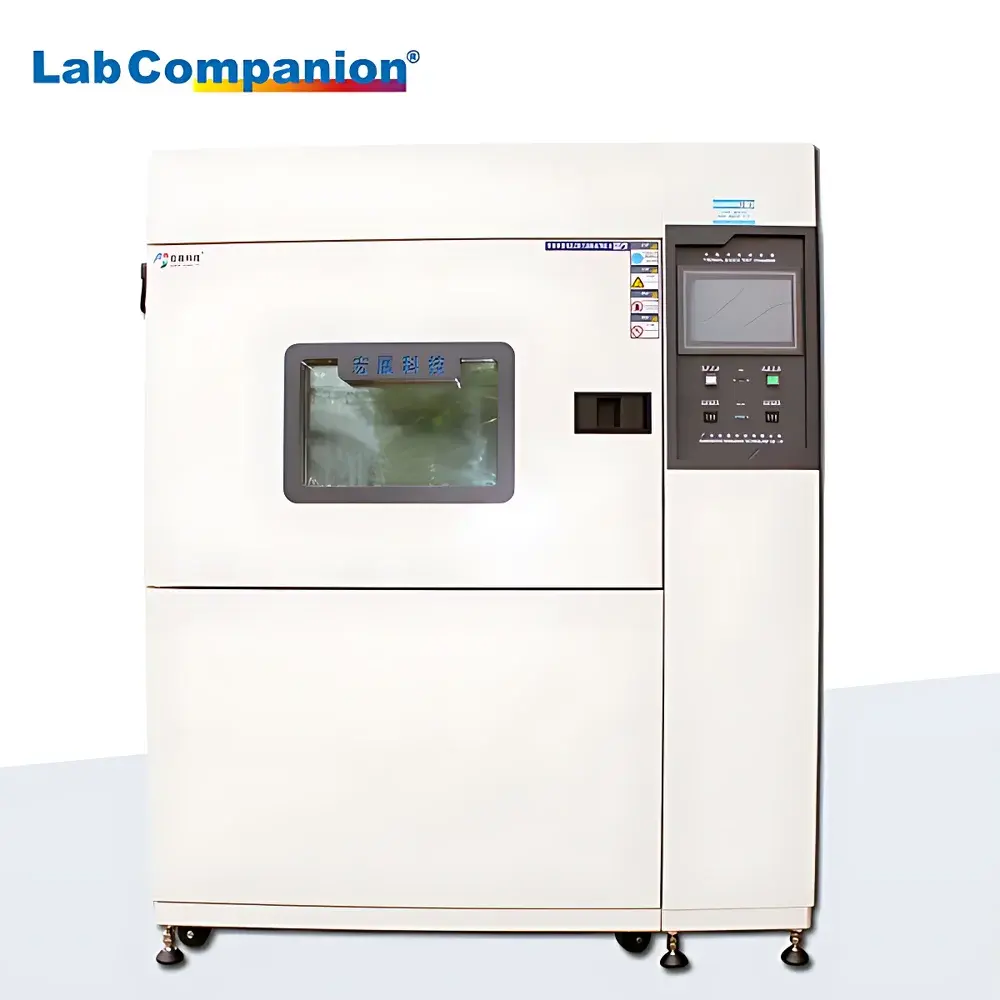
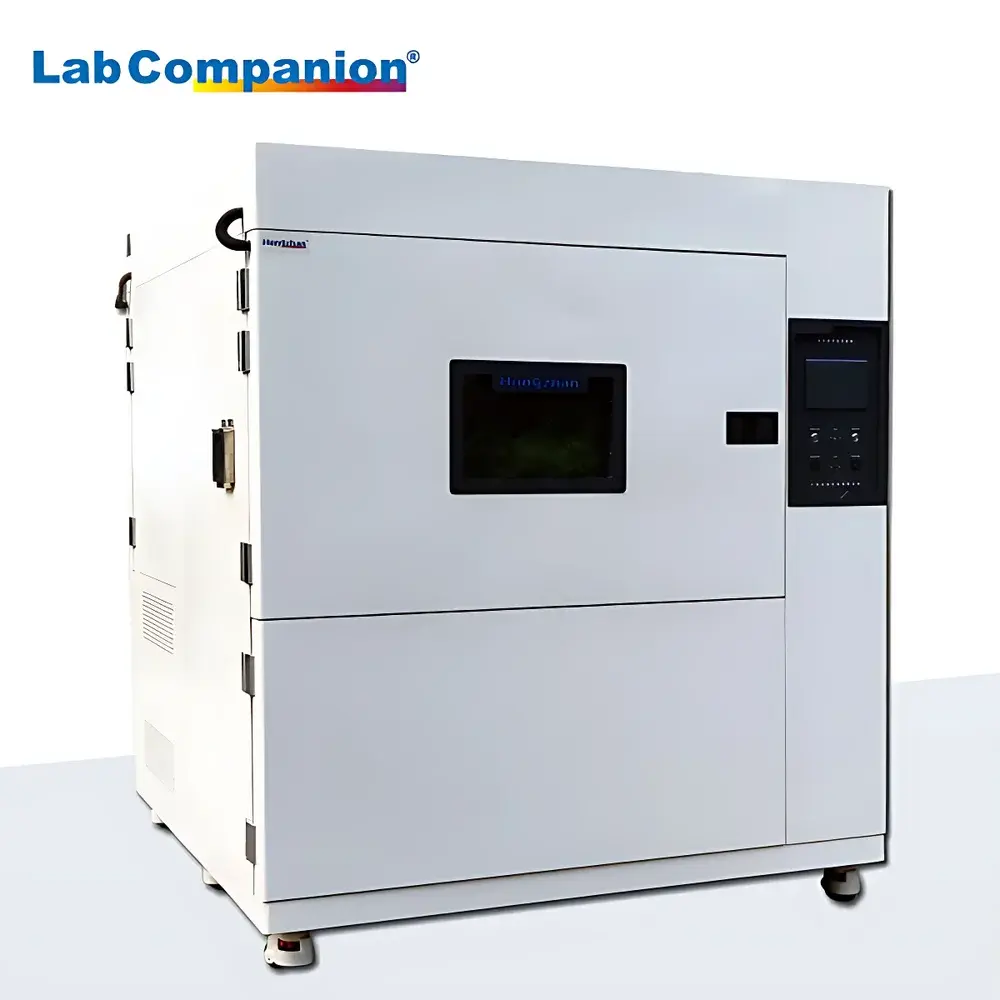
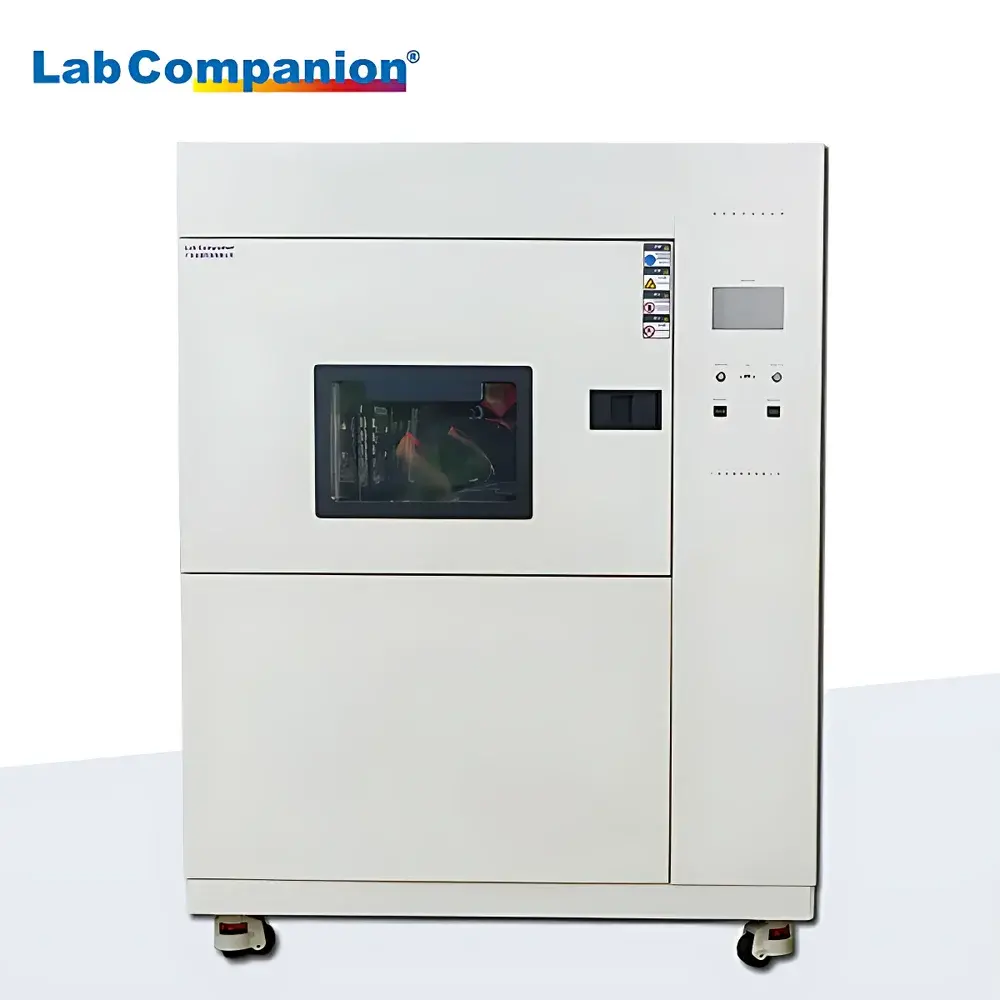
LabCompanion TSU-150A Thermal Shock Test Chamber
| Brand | LabCompanion |
|---|---|
| Model | TSU-150A |
| Origin | Guangdong, China |
| Manufacturer | LabCompanion (OEM/ODM Producer) |
| Temperature Range (High Chamber) | +60 °C to +200 °C |
| Temperature Range (Low Chamber) | −78 °C to 0 °C |
| Thermal Shock Range | −55 °C to +150 °C |
| Temperature Stability | ±2 °C |
| Heating Rate | +60 °C → −200 °C ≤ 20 min |
| Cooling Rate | +20 °C → −75 °C ≤ 60 min |
| Internal Dimensions (W×H×D) | 600 × 500 × 500 mm |
| Test Chamber Recovery Time | ≤ 5 min (under standard conditions: ambient +25 °C, chilled water at +25 °C, plastic-encapsulated IC sample) |
| Load Capacity per Shelf | 30 kg |
| Max. Sample Weight | 7.5 kg |
| Test Method | Pneumatically Actuated Dual-Chamber or Triple-Chamber Switching |
Overview
The LabCompanion TSU-150A Thermal Shock Test Chamber is an engineered environmental test system designed for accelerated reliability evaluation of electronic components, automotive modules, aerospace assemblies, and polymer-based packaging under rapid, repetitive transitions between extreme high and low temperature extremes. It operates on the principle of two- or three-chamber thermal shock methodology—where samples are physically transferred via pneumatic lift-and-shift mechanisms between independently controlled high-temperature (+60 °C to +200 °C) and low-temperature (−78 °C to 0 °C) zones—enabling precise, repeatable exposure without thermal lag or chamber cross-contamination. Unlike single-chamber ramp-based systems, this architecture ensures true step-function thermal transients with minimal dwell time deviation, critical for simulating field-induced stress in solder joints, die attach interfaces, and conformal coatings.
Key Features
- Robust dual-zone or triple-zone configuration with independent PID-controlled heating and cryogenic cooling circuits
- Pneumatically actuated transfer mechanism with <5 s positioning repeatability and fail-safe interlocked door sequencing
- High-stability temperature control: ±2 °C uniformity across the full working volume (600 × 500 × 500 mm internal dimensions)
- Cryogenic capability down to −78 °C using cascade refrigeration with environmentally compliant R404A/R23 mixed-refrigerant system
- Heating rate of ≥10 °C/min (from +60 °C to +200 °C within ≤20 minutes) and cooling rate of ≥0.8 °C/min (from +20 °C to −75 °C within ≤60 minutes), verified per IEC 60068-2-14
- Integrated real-time monitoring of chamber pressure differential, transfer arm position, and thermal gradient profiles
- Stainless-steel 304 interior with reinforced insulation (≥120 mm polyurethane foam, λ ≤ 0.022 W/m·K)
Sample Compatibility & Compliance
The TSU-150A accommodates standard JEDEC trays, PCB panels up to 300 mm × 300 mm, and molded packages including QFP, BGA, and stacked-die ICs. Its 30 kg shelf load capacity and 7.5 kg maximum sample mass support both single-unit qualification and batch-level screening. The system complies with key international test standards including IEC 60068-2-14 (Change of Temperature), MIL-STD-810H Method 503.5 (Temperature Shock), and JESD22-A104F. All operational parameters—including cycle count, dwell time, transition time, and recovery verification—are logged with timestamped audit trails to support GLP/GMP documentation requirements. Optional validation kits (IQ/OQ/PQ protocols) and NIST-traceable calibration certificates are available upon request.
Software & Data Management
Controlled via LabCompanion’s proprietary WinTest Pro v4.2 software suite running on embedded industrial PC, the TSU-150A supports fully programmable multi-step shock profiles with up to 999 cycles, variable dwell times (1 min–999 h), and conditional branching logic (e.g., pause on sensor fault, auto-restart after power recovery). Data acquisition records temperature at ≥1 Hz from six calibrated PT100 sensors (three per zone), plus positional feedback and compressor status. Export formats include CSV, PDF test reports, and XML for LIMS integration. Software meets FDA 21 CFR Part 11 requirements when configured with user role management, electronic signatures, and immutable audit logs—fully traceable to individual operator, session, and timestamp.
Applications
- Qualification testing of lead-free solder interconnects per IPC-J-STD-020
- Thermal fatigue analysis of MEMS devices and optical sensor housings
- Validation of conformal coating adhesion under cyclic thermal strain
- Reliability screening of EV battery modules and power electronics
- Material compatibility assessment for encapsulants, underfills, and thermal interface materials (TIMs)
- Failure mode identification in plastic-encapsulated microcircuits (PEMs) per NASA-HDBK-4002A
FAQ
What is the difference between a two-chamber and three-chamber thermal shock configuration?
A two-chamber system uses separate hot and cold zones with a transfer basket; a three-chamber adds a dedicated ambient soak zone to improve thermal stabilization before each transition—reducing overshoot and enhancing repeatability for ultra-sensitive devices.
Can the TSU-150A perform tests per MIL-STD-810H Method 503.5?
Yes—the chamber’s certified transition times, temperature stability, and recovery performance meet all mandatory criteria for Category I and II thermal shock profiles defined in that standard.
Is remote monitoring and alarm notification supported?
Yes—via optional Ethernet/IP or Modbus TCP interface, enabling integration into facility-wide SCADA systems with SMS/email alerts for out-of-spec conditions, door open events, or compressor shutdown.
Does the system support automated calibration verification?
Yes—built-in self-test routines verify thermocouple linearity, PID loop response, and pneumatic actuator timing against reference standards; results are stored in the audit log with ISO/IEC 17025-aligned metadata.



